
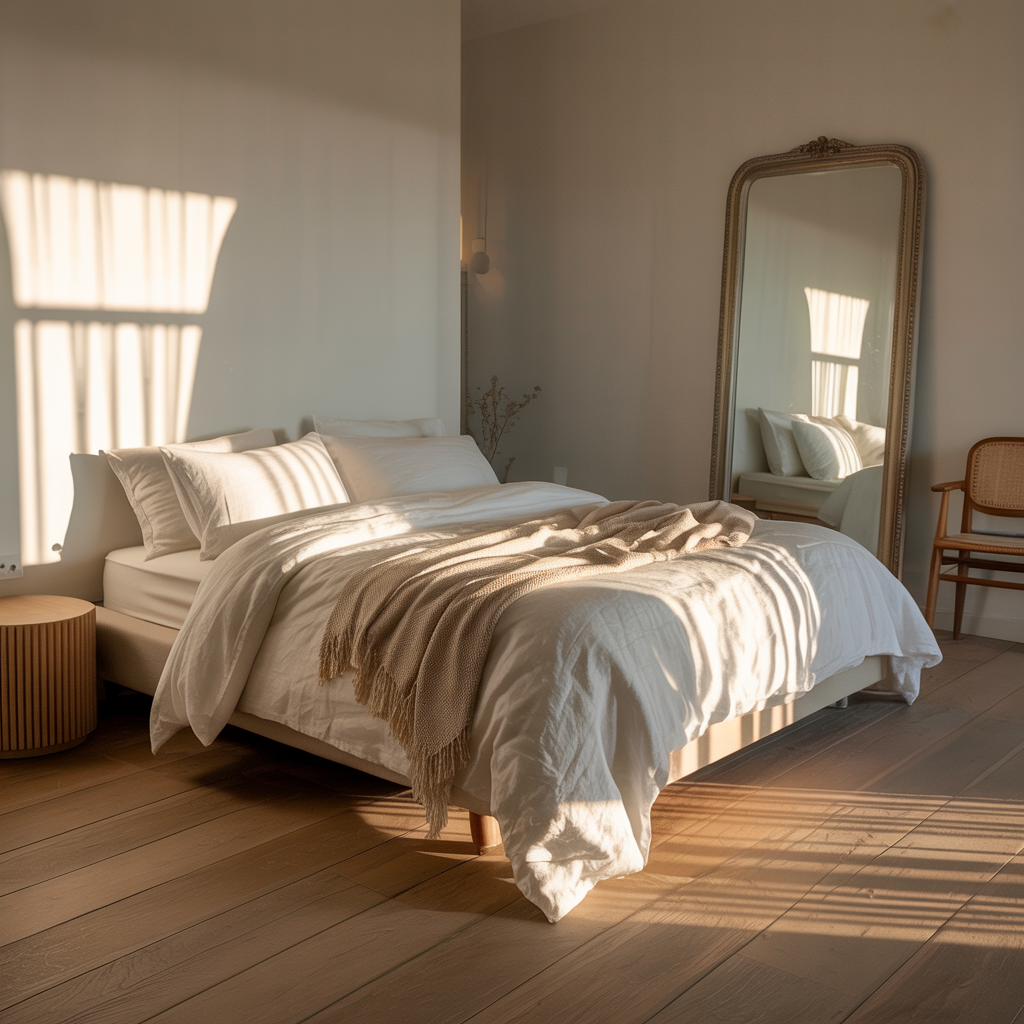
You know that feeling when you walk into a boutique hotel room and everything just feels right? The bed looks impossibly fluffy, the lighting is warm and flattering, and somehow the space feels both stylish and calm even if the room itself is not that big. Here is the thing: that feeling is not reserved for expensive hotels or sprawling master bedrooms. With a few intentional changes, your small bedroom can give off that exact same energy. No major renovations, no sky-high budget. Just smart, visual tricks that punch way above their weight. Whether you are working with a studio apartment, a compact rental, or simply a bedroom that feels more chaotic than cozy, these ten ideas will help you transform it into a space you actually want to come home to.
1. Start With the Bed as Your Visual Anchor
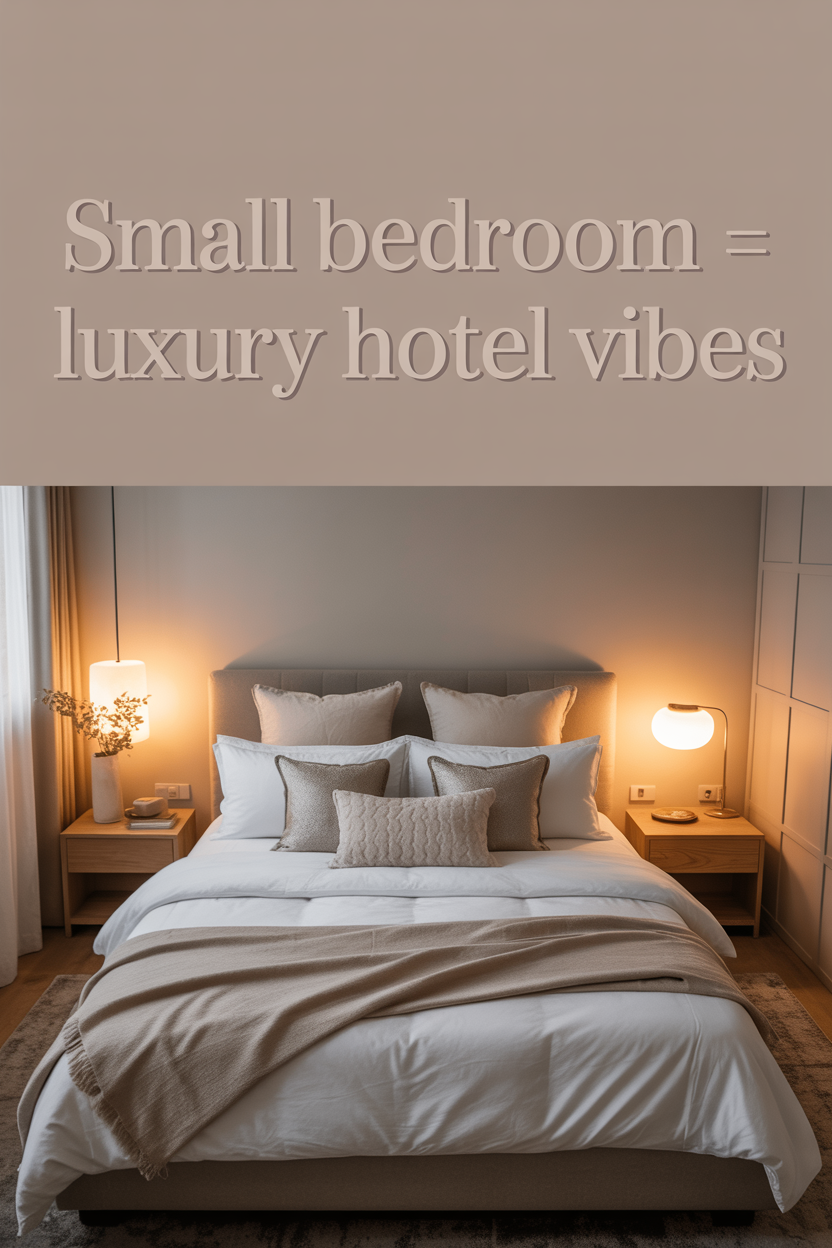
In any boutique hotel room, the bed is the star of the show, and yours should be too. The trick is not necessarily buying an expensive mattress or frame. It is about layering. Start with a clean, fitted base sheet, then add a duvet or comforter in a neutral tone like white, ivory, or warm linen. Fold the duvet back about a third of the way down the bed. Layer two sleeping pillows behind two slightly smaller accent pillows, and finish with one or two throw pillows at the front. This setup takes about two extra minutes every morning and makes your bed look like something out of a design magazine. The visual impact on the entire room is immediate and honestly a little satisfying.
The frame matters too, but it does not have to cost a fortune. A simple upholstered headboard in a neutral fabric instantly makes a bedroom feel more polished and finished. If buying a new frame is not in the budget right now, consider a freestanding headboard that attaches to the wall, or even a large piece of fabric or a tapestry hung behind the bed to create that same framed, intentional look. The goal is to make your eye land on the bed and feel a sense of calm rather than chaos.
2. Use Floating Shelves Instead of Bulky Nightstands
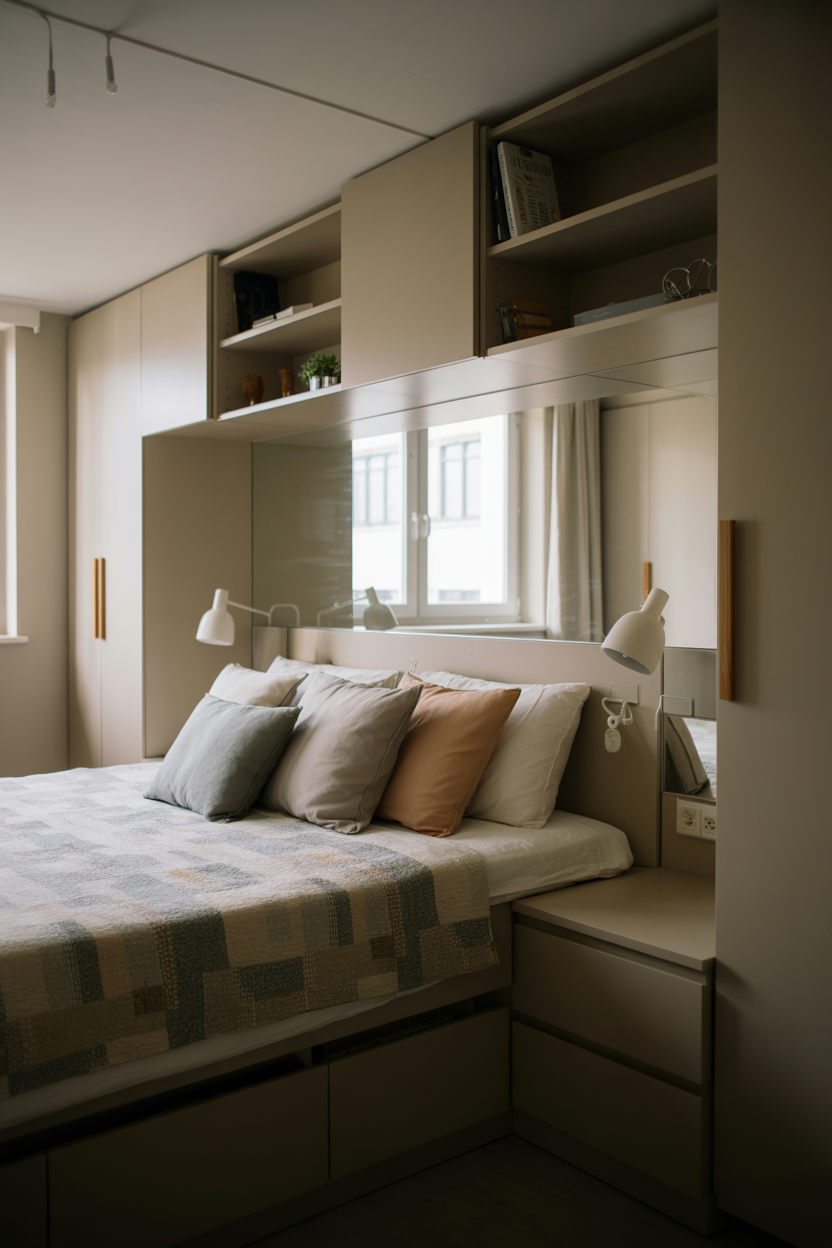
Traditional nightstands take up precious floor space and can make a small bedroom feel cramped and cluttered. Swapping them out for floating wall shelves is one of the easiest upgrades you can make, and it immediately gives the room a more modern, hotel-like feel. Install two matching shelves at the same height on either side of the bed, or just one if you are working with an especially tight layout. Keep what you place on them minimal: a small lamp, a glass of water, maybe a single book or a small plant. That restrained styling is exactly what makes boutique hotel rooms feel so peaceful rather than overwhelming.
Under-bed storage is the quiet hero of small bedroom organization. Flat storage bins or rolling drawers tucked beneath the bed frame keep extra linens, off-season clothes, or shoes completely out of sight. When your floor is clear and your surfaces are tidy, the room automatically feels larger and more intentional. Pair this with a bed skirt or a frame with a solid base panel and the whole setup looks clean and deliberate, exactly the kind of effortless-looking organization that boutique hotels seem to pull off so naturally.
3. Maximize Natural Light and Layer Your Artificial Lighting
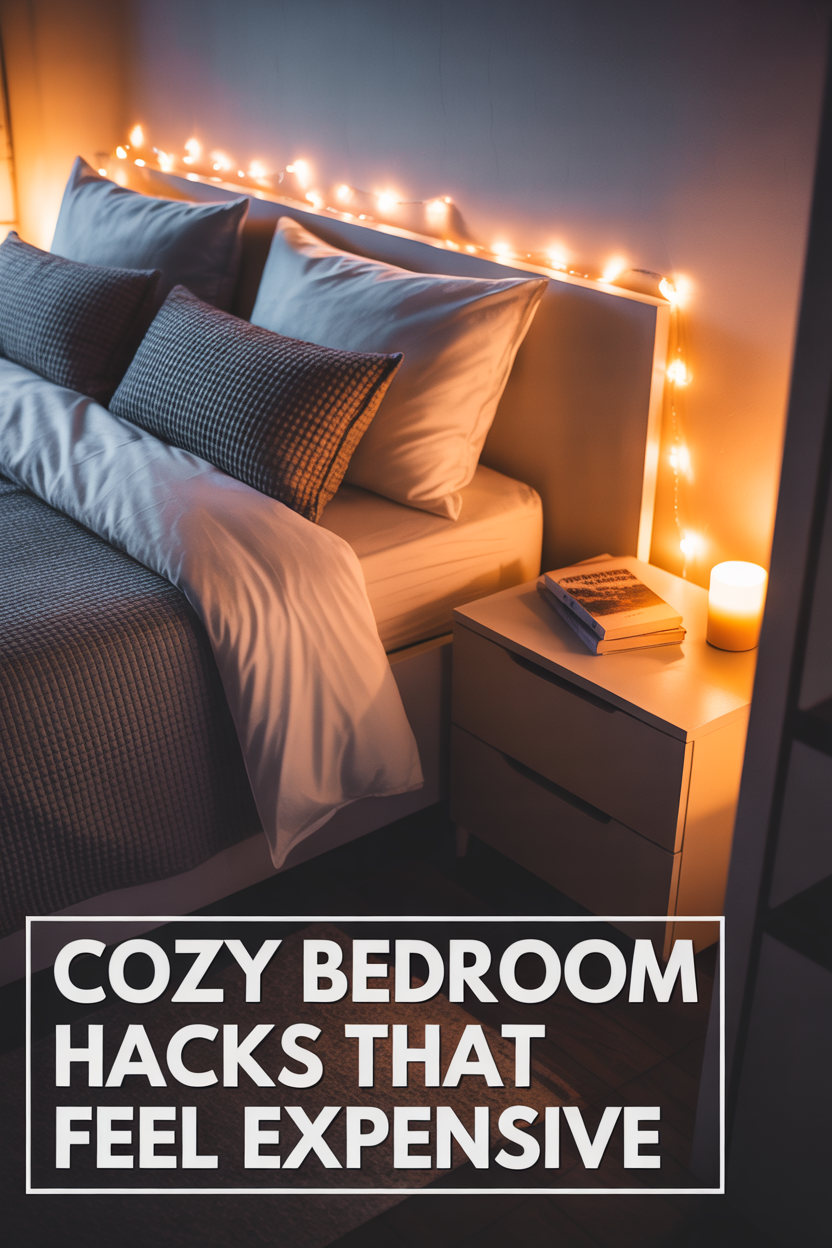
Lighting is probably the single most underrated element in small bedroom design. Hotels understand this deeply. They never rely on one harsh overhead light. Instead, they layer multiple light sources at different heights to create warmth and depth. In your bedroom, this means having a ceiling light for general illumination, bedside lamps or wall sconces for task lighting, and something softer like a string of warm Edison bulbs, a small table lamp on a dresser, or even a LED strip tucked behind the headboard for ambient glow. When all three layers work together, the room feels cozy and expansive at the same time, which is a genuinely tricky balance to strike but very achievable on a budget.
Natural light is just as important. If you have a window, make it work harder for you. Swap out heavy drapes for sheer linen curtains in white or warm cream, and hang the rod as close to the ceiling as possible. This draws the eye upward, making the ceiling feel higher, while also letting in maximum daylight. At night, those same curtains soften the artificial light beautifully. If privacy is a concern, layer a blackout roller blind underneath the sheers. You get the best of both worlds: bright and airy during the day, dark and restful at night.
4. Create a Cohesive, Calming Color Palette
Walk into almost any well-designed boutique hotel room and you will notice the colors feel unified. Nothing is fighting for attention. That is not an accident. Hotels stick to a tight palette, usually two or three tones that relate to each other, and they repeat those tones across the bedding, walls, curtains, and decor. You can do the exact same thing in your own bedroom without painting a single wall. Choose a base neutral, think soft white, warm greige, dusty sage, or muted terracotta, and then carry that color through your throw pillows, a cozy blanket, a rug, and even small accessories like a candle or a vase. Suddenly the room feels curated rather than collected.
If you do want to add a wall color, consider painting just the wall behind your bed in a slightly deeper shade of your chosen palette. This accent wall creates a focal point that frames the bed beautifully, mimics the way many boutique hotels use architectural detail to add depth, and makes the room feel intentionally designed rather than default. It is one of the more satisfying small bedroom upgrades you can do on a weekend afternoon with a single can of paint.
5. Invest in One Quality Textile and Build Around It
You do not need to splurge on everything. In fact, one of the most budget-savvy tricks in interior styling is to pick one quality piece and let it anchor the entire room. For a bedroom, that anchor is almost always the duvet cover or a throw blanket. A good-quality duvet cover in a natural fabric like cotton percale or linen has a texture that photographs beautifully and feels genuinely luxurious to sleep in. Find one you love, even if it is the one thing you spend a little more on, and then fill in the rest of the room with more affordable finds that complement it.
The texture you choose matters as much as the color. Bouclé, waffle-knit, and washed linen all add visual interest without needing bold patterns. Layering textures, a smooth pillowcase paired with a chunky knit throw and a velvet accent pillow, gives the bed that rich, layered look that makes hotel rooms feel so inviting. It is the kind of detail that guests always notice and ask about, even if they cannot quite put their finger on why the room feels so good.
6. Use Mirrors Strategically to Expand the Space
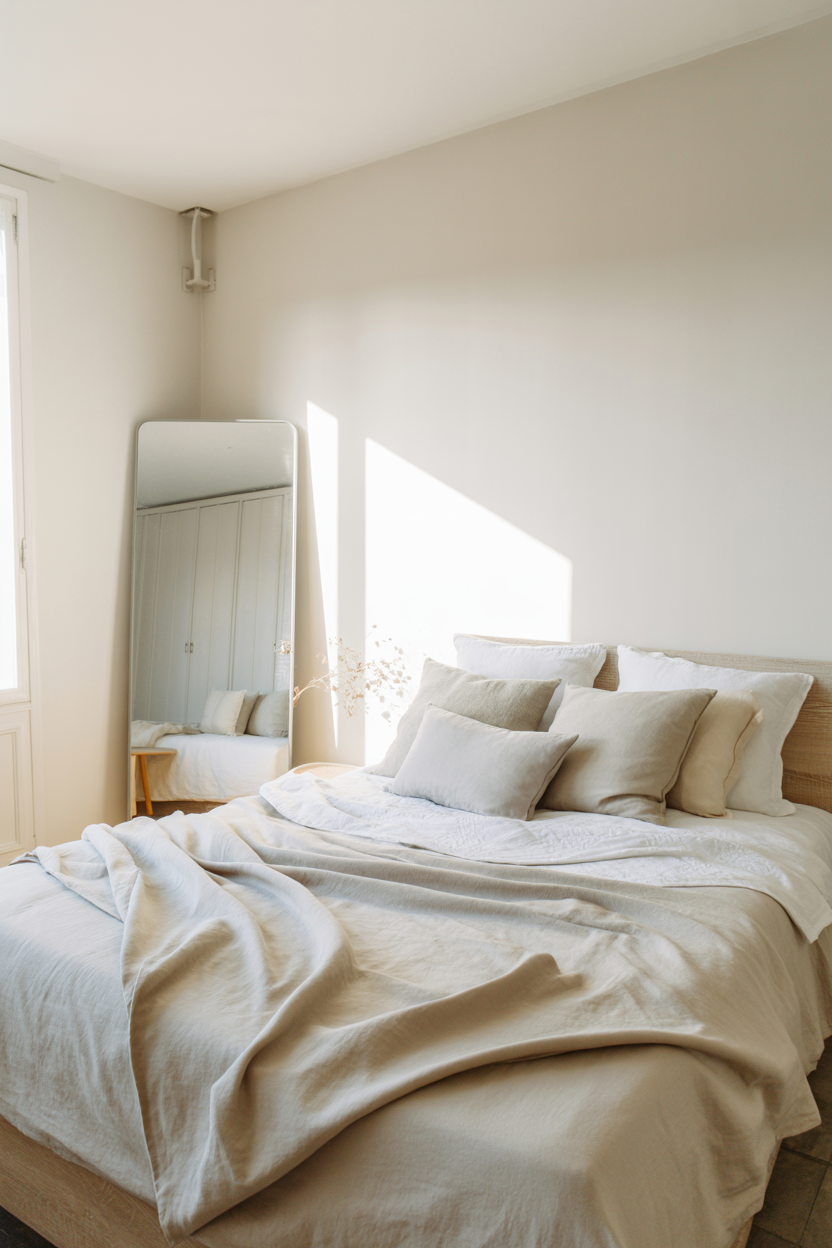
Mirrors are one of the oldest tricks in the small space playbook, but the way you use them makes all the difference. A large floor mirror leaned casually against the wall beside a dresser or in a corner does double duty: it reflects light back into the room and creates the illusion of a second window or doorway, making the space feel like it extends beyond its actual walls. Look for simple frames in warm wood tones or brushed gold to keep the look feeling elevated rather than dated.
If floor space is limited, a full-length mirror mounted on the back of the bedroom door is a genius solution that adds zero footprint to the room. Alternatively, a round mirror hung above the dresser or on a bare wall adds a sculptural element that feels very boutique-hotel in the best way. Round shapes soften the hard angles of furniture and walls, which is particularly helpful in small, boxy rooms. The key is placement: hang mirrors where they will reflect either light or a pleasant view of the room, never directly reflecting a cluttered corner.
7. Add Scent and Sensory Details That Seal the Experience
Think about the last time you walked into a hotel and immediately noticed the scent. Boutique hotels are meticulous about this. They understand that atmosphere is not just visual. It is something you feel and smell and sense the moment you enter the room. In your bedroom, a simple reed diffuser, a soy candle in a warm fragrance like sandalwood, vanilla, or linen, or even a small bundle of dried eucalyptus tucked near the window can completely shift the way the space feels. It is a small detail that creates a surprisingly powerful emotional response, the sense that this room was designed with care.
Beyond scent, consider other small sensory upgrades: a soft, plush rug beside the bed so your feet hit something warm when you wake up, a bedside carafe of water styled on a small tray, or a single framed print or photograph that makes you genuinely happy every time you look at it. These are the finishing touches that separate a room that looks nice in photos from a room that actually feels like a sanctuary every single day.
8. Edit Ruthlessly and Embrace Intentional Minimalism
Here is the hardest trick on this list, but also the most impactful one: remove things. Boutique hotel rooms feel so calm because every single object in them has a reason to be there. There is no pile of random items on the dresser, no tangle of cables on the nightstand, no overflow of books and clothes that did not make it back to where they belong. You do not have to become a minimalist in your entire life. Just apply that thinking inside your bedroom. Go through everything that lives on surfaces and in visible storage. If it does not serve a function or genuinely bring you joy, find it a home elsewhere or let it go entirely.
A good rule of thumb borrowed directly from boutique hotel design: if a surface has more than three items on it, it is probably too busy. A nightstand looks intentional with a lamp, one small plant, and a book. Add a charging cable, a half-empty water bottle, a hand cream, and three other things and it starts to read as clutter. Editing is free. It costs no money at all. And it might be the single most transformative thing you do for your bedroom in 2026.
9. Hang Curtains High and Wide to Fake Taller Ceilings
This is one of those tricks that sounds almost too simple to work, and then you try it and immediately wonder why you did not do it sooner. Most people hang curtain rods directly above the window frame, which is the default and also the least flattering option for a small room. Instead, mount your rod as close to the ceiling as possible, and extend it six to twelve inches beyond the window frame on each side. When the curtains hang from near the ceiling all the way to the floor, the eye reads the entire wall as one tall, elegant panel. The window looks bigger, the ceiling feels higher, and the room gains a sense of grandeur that has absolutely nothing to do with square footage.
The fabric you choose matters just as much as the placement. Lightweight linen or cotton in white, off-white, or a soft neutral will billow gently and catch light in a way that makes the whole room feel airier. Avoid stiff, heavy fabrics in small bedrooms as they tend to absorb light and visually close in the walls. If you are renting and cannot drill into the walls, tension rods paired with lightweight curtain panels work surprisingly well and leave zero damage behind when you move.
10. Define the Space With a Well-Chosen Rug
A rug does something quietly powerful in a small bedroom: it anchors the entire layout and gives the space a sense of intentional design that bare floors simply cannot achieve. The most common mistake people make is choosing a rug that is too small. A rug that only sits under the nightstands without extending beneath the bed tends to look like an afterthought. For a boutique hotel feel, go larger than you think you need. Ideally the rug should extend at least eighteen to twenty-four inches beyond each side of the bed so that when you step out in the morning, your feet land on something soft. That small sensory detail makes the room feel genuinely luxurious every single day.
In terms of style, low-pile rugs in natural materials like wool, jute, or cotton work beautifully in small bedrooms because they add texture without visual weight. Stick to your established color palette and choose a tone that either blends quietly into the background or adds one subtle layer of pattern, like a gentle stripe or a tonal geometric. Avoid anything too bold or busy, which can overwhelm a compact space quickly. A well-chosen rug is often the element that pulls the whole room together and makes everything else feel like it belongs.
Turning a small bedroom into a space that feels like a boutique hotel retreat is less about what you add and more about how thoughtfully everything comes together. A beautifully made bed, layered lighting, a cohesive palette, smart storage, and a few carefully chosen details can completely change how your room feels to wake up in every morning. You do not need a renovation budget or a bigger space. You just need a clear vision and a willingness to be a little intentional. Start with one or two of these tricks this weekend and see how quickly the rest of the room starts to follow. Your dream bedroom is probably a lot closer than you think.