
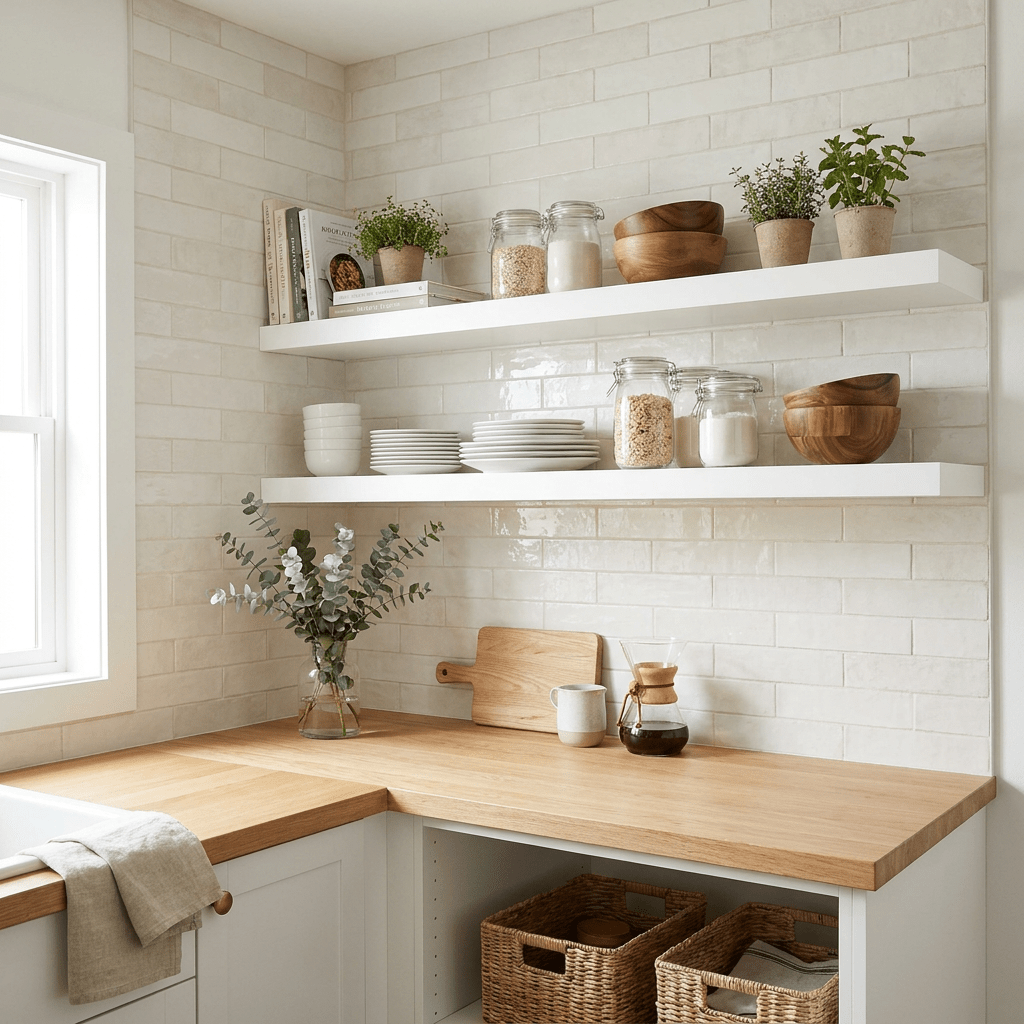
In a tiny kitchen, the counter is the only real work surface, and everything ends up on it, from the coffee maker and toaster to a knife block and the mail. By the time you want to cook, there's a square foot left to chop on.
The aim is to keep at least one clear stretch of counter, ideally 24 to 36 inches wide, next to the stove or sink. The twelve ideas below get there mostly by moving things up onto the wall or into cabinets. The four kitchens in these photos each use a different mix, from a jar rack to an appliance garage.
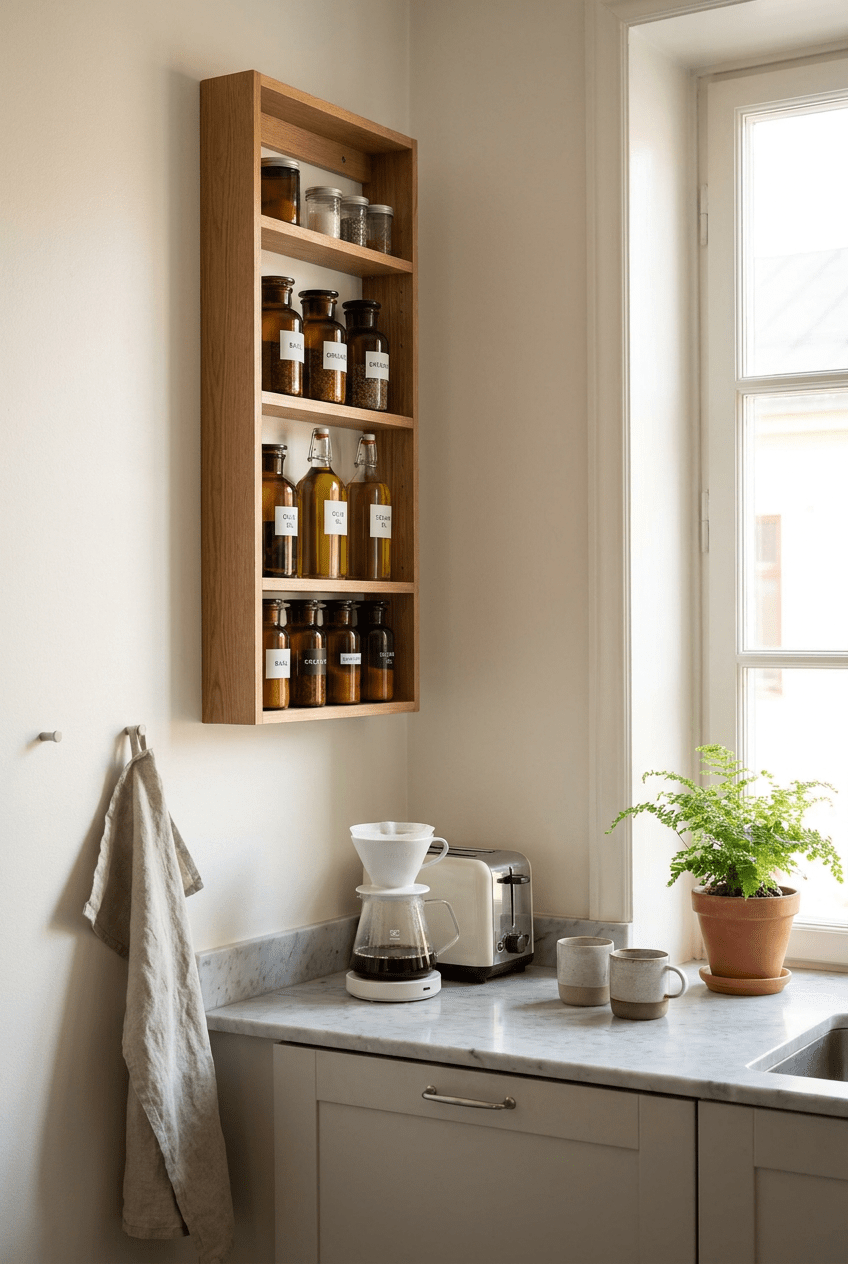
1. Move jars onto a wall rack
Spices, oils and dry goods take up a surprising amount of counter. A shallow wall rack, like the wood one beside the window in this photo, holds them in matching labeled jars at eye level and frees the counter underneath.
Racks 3 to 4 inches deep hold standard spice jars and small bottles. Mount it into a stud or with anchors rated for the weight, since a full rack of glass is heavy, and keep it away from the stove, where heat dulls spices faster.
Matching jars look calmer than a row of mixed brands. A set of 12 to 24 glass spice jars with labels costs about $20 to $35.
The rest of this counter holds only a pour-over coffee maker, a toaster and two mugs, with a towel on a hook rather than draped over the counter edge.
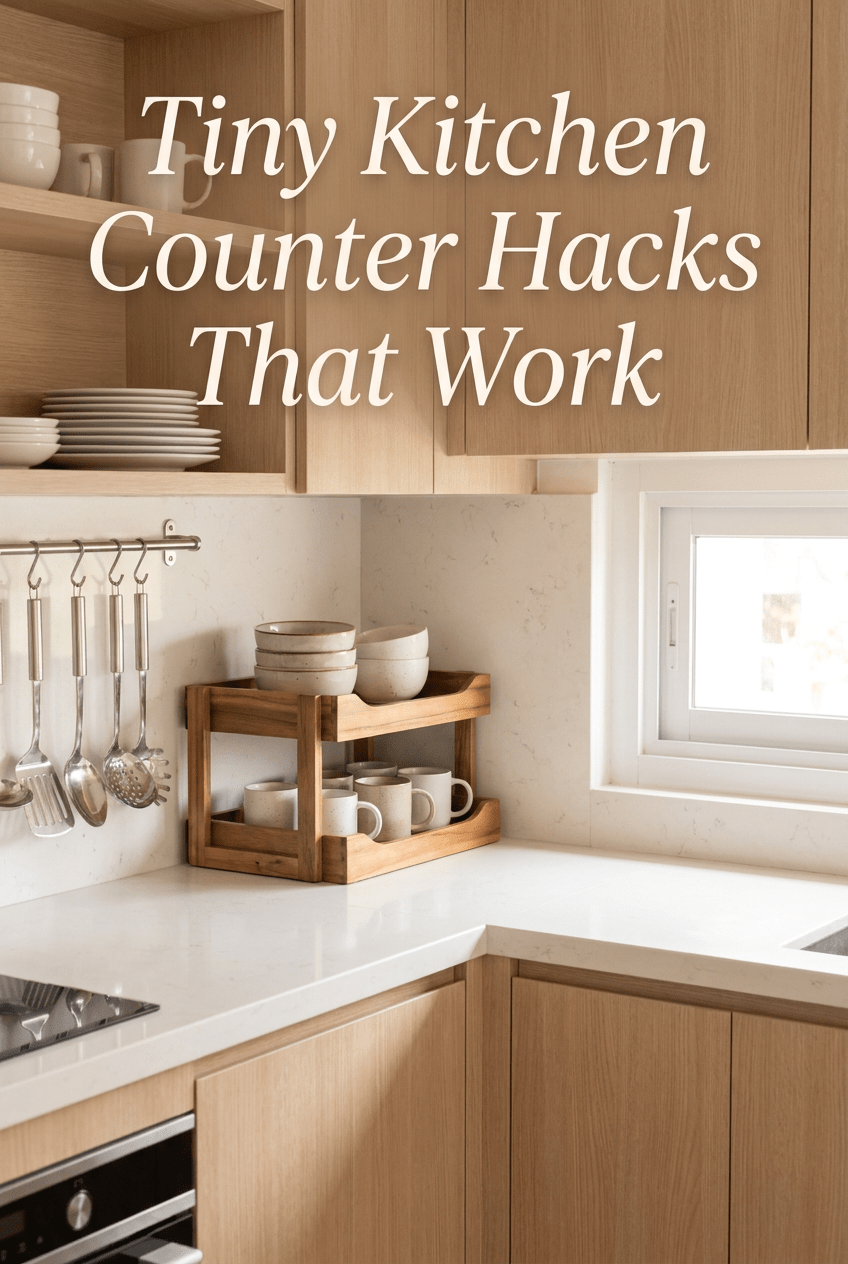
2. A tiered organizer and a utensil rail
A two-tier organizer, like the wooden one in this corner, doubles the storage on the same patch of counter. Here it holds bowls on top and mugs underneath, in a corner that's hard to use for chopping anyway.
A rail with S-hooks on the backsplash holds ladles, whisks and spatulas, which frees a drawer and clears the utensil crock from the counter. Rails cost about $15 to $30; adhesive versions work on smooth tile, but screw-mounted rails hold heavier tools.
Corners are the best spot for organizers, since they're the least useful counter space for prep. Keep the organizer to the size of the corner, so it doesn't creep onto the work area.
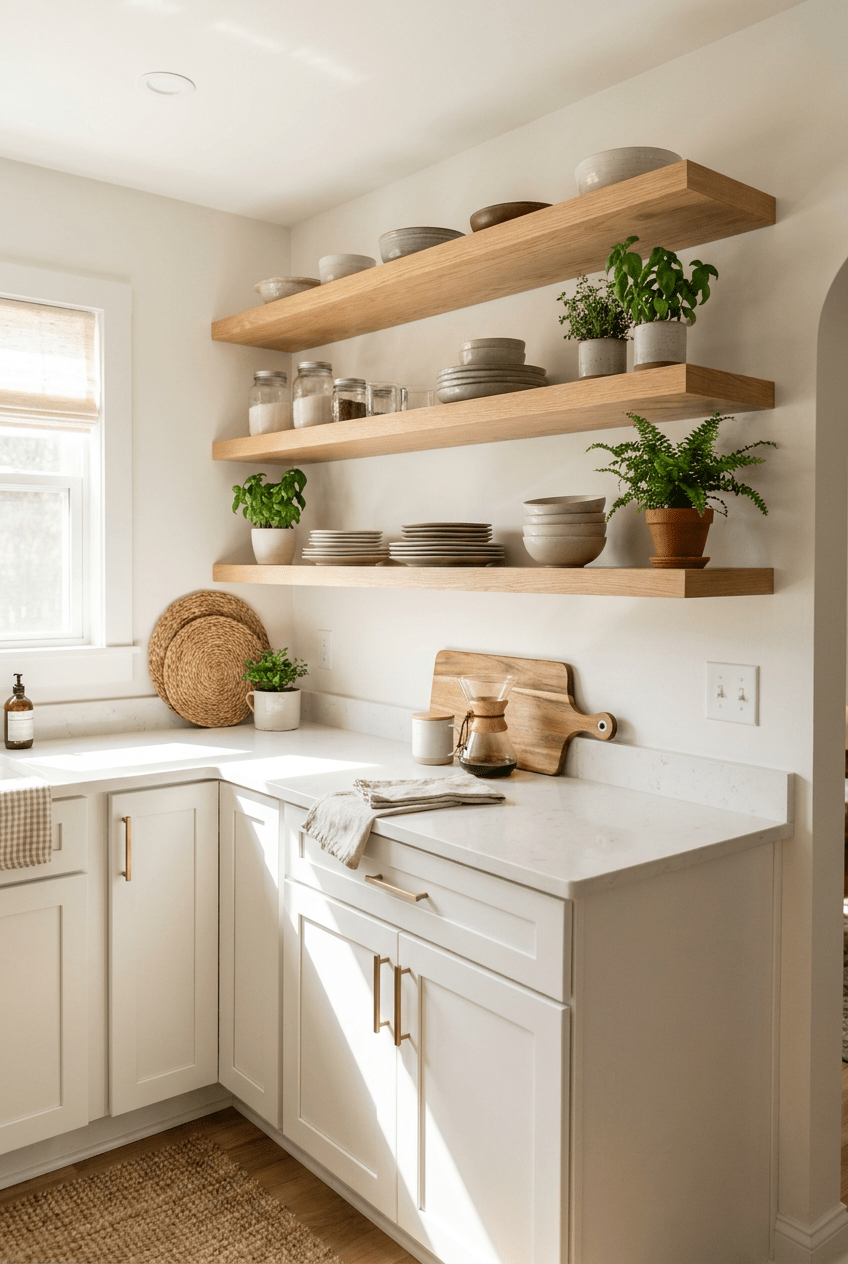
3. Floating shelves for everyday dishes
Floating shelves on a bare wall, like the three wood shelves in this photo, hold plates, bowls and jars that would otherwise live on the counter. The counter below stays almost empty, with just a cutting board and a coffee dripper.
Shelves 10 to 12 inches deep hold dinner plates. Hang the lowest shelf about 18 to 20 inches above the counter so you can still use the space underneath, and screw brackets into studs. Plates and bowls are heavy, so check the shelf's weight rating.
Open shelves gather dust and kitchen grease, so use them for dishes you use every day, which get washed often anyway. A couple of herbs or small plants, like these, add life.
In a rental, check your lease before drilling, or ask the landlord. Shelf holes are small and easy to fill.
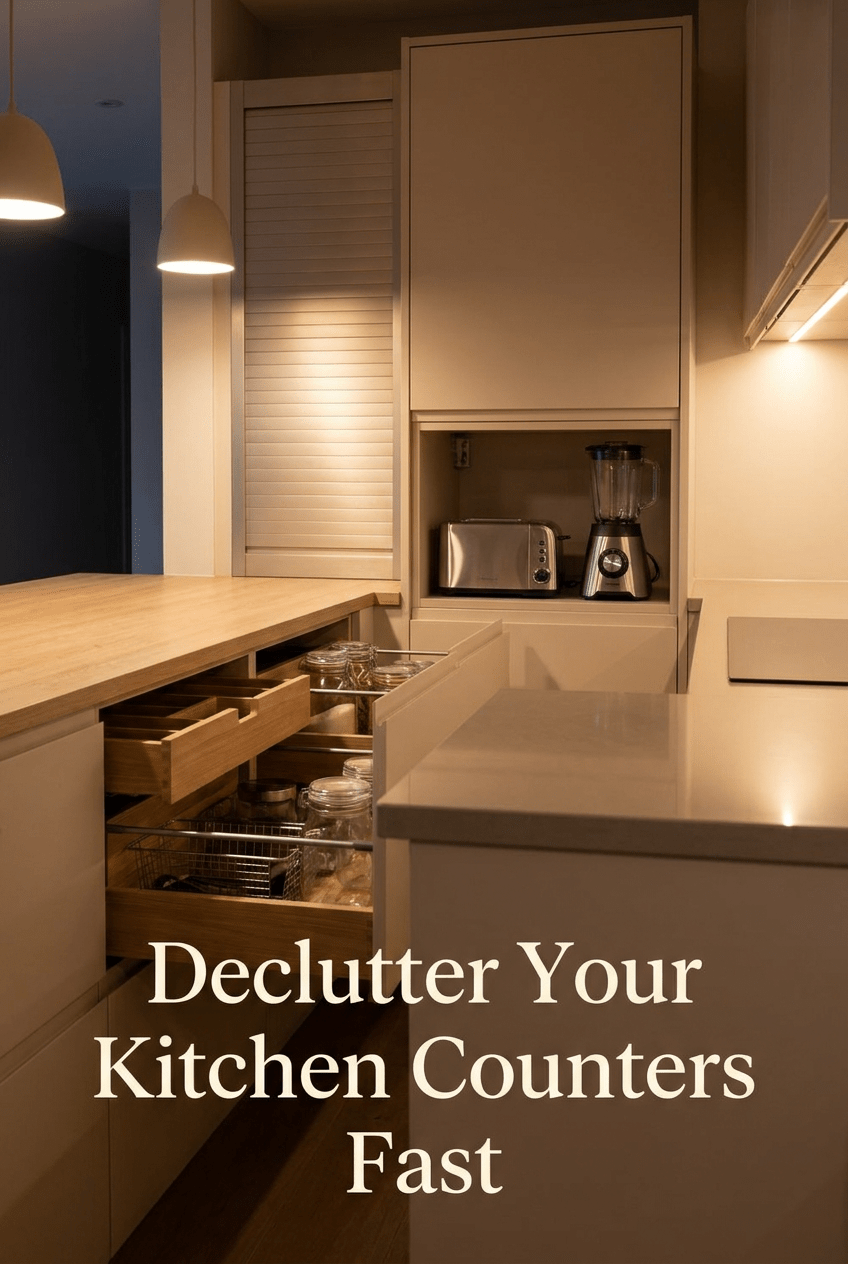
4. Clear the counter before buying organizers
Organizing comes after clearing. Take everything off the counter, then put back only what you use every day. A blender used twice a month or a stand mixer that only comes out at the holidays can go into a cabinet.
The kitchen in this photo has an appliance garage: a cabinet with a tambour door that hides the toaster and blender but keeps them plugged in and ready. A deep cabinet with a door you can leave open while cooking works the same way.
Drawers with organizers, like the pull-outs here, take utensils and gadgets off the counter. Drawer dividers cost $10 to $25 and fit most standard drawers.
5. A coffee or tea station
Coffee gear spreads across the counter if it doesn't have a home. Group the coffee maker with the mugs and coffee in one spot, on a tray or a small shelf, so it's contained.
A tray makes it easy to wipe under. If the counter is very tight, put the station on a small cart or a shelf near an outlet outside the main work area.
Keep the station close to where you fill the kettle or coffee maker, usually beside the sink, so you aren't carrying water across the kitchen. Mugs on a few hooks under a shelf above the station free up a whole cabinet shelf.
6. The inside of cabinet doors
Cabinet doors are free storage. Adhesive hooks or a small rack inside a door hold measuring cups and pot lids, or cleaning cloths inside the door under the sink.
Check that whatever you mount clears the shelves when the door closes. Leave at least an inch of space.
A slim over-the-door rack inside the pantry or under-sink door works well for foil, plastic wrap and baking paper, which otherwise slide around in a drawer.
7. Fewer, multipurpose appliances
Every appliance on the counter takes up space. A toaster oven that also air-fries replaces two machines, and an electric kettle can replace a coffee maker if you use pour-over or a French press.
Before buying a new gadget, decide where it'll live when you're not using it. If the answer is the counter, think twice.
8. Make what stays out look good
Some things have to stay on the counter. Choose versions that look good there: a wooden cutting board leaned against the backsplash, or a ceramic crock for wooden spoons. Glass canisters suit flour and sugar.
Keep what stays out in one or two materials and colors, like the natural wood and white in these photos.
Fruit keeps better in a hanging basket or a bowl on a shelf than spread across the counter, and it frees a surprising amount of space.
9. Tension rods inside cabinets
A tension rod fitted vertically inside a cabinet makes slots for cutting boards, baking sheets and trays, which otherwise end up leaning against the backsplash. A rod under the sink holds spray bottles by their triggers, freeing the cabinet floor.
Tension rods cost a few dollars each and need no tools.
10. A rolling cart for extra surface
If the counter is simply too small, a rolling kitchen cart adds a second work surface and storage underneath. Roll it next to the stove when you cook and against a wall when you don't.
Choose one with a solid top and locking wheels, so it doesn't move while you chop. Our guide to small kitchen islands covers sizes and clearances.
11. A magnetic spice rack or knife strip
Magnetic spice tins stick to the side of the fridge or a metal panel, taking spices off the counter entirely. A magnetic knife strip on the wall replaces a bulky knife block.
Mount knife strips into studs or with strong anchors, out of reach of children, and away from the edge of the counter where you might brush against the blades. Keep magnetic spices off the front of the fridge door if it gets bumped often.
Don't stick magnetic racks on the fridge side next to the stove, where heat can reach them.
12. A weekly counter reset
Clutter creeps back. Once a week, clear the counter completely, wipe it down and put back only the daily things. Mail, receipts and bags go somewhere else, like a tray by the door.
A clear counter in the evening also makes the next morning easier, since you start the day with space to work.
Common questions
What should you keep on a small kitchen counter?
Only what you use every day: usually the coffee maker or kettle, a knife strip or block, a utensil crock and maybe a cutting board. Everything else goes in a cabinet, on the wall or on a cart.
How do you organize a kitchen with no counter space?
Use the walls for shelves, rails and racks, add a rolling cart or a fold-down shelf for prep space, and store appliances in cabinets.
Start by clearing everything off the counter, then add one wall solution at a time. For more small-kitchen ideas, see our guides to kitchen pegboard setups and small kitchen organization hacks.