
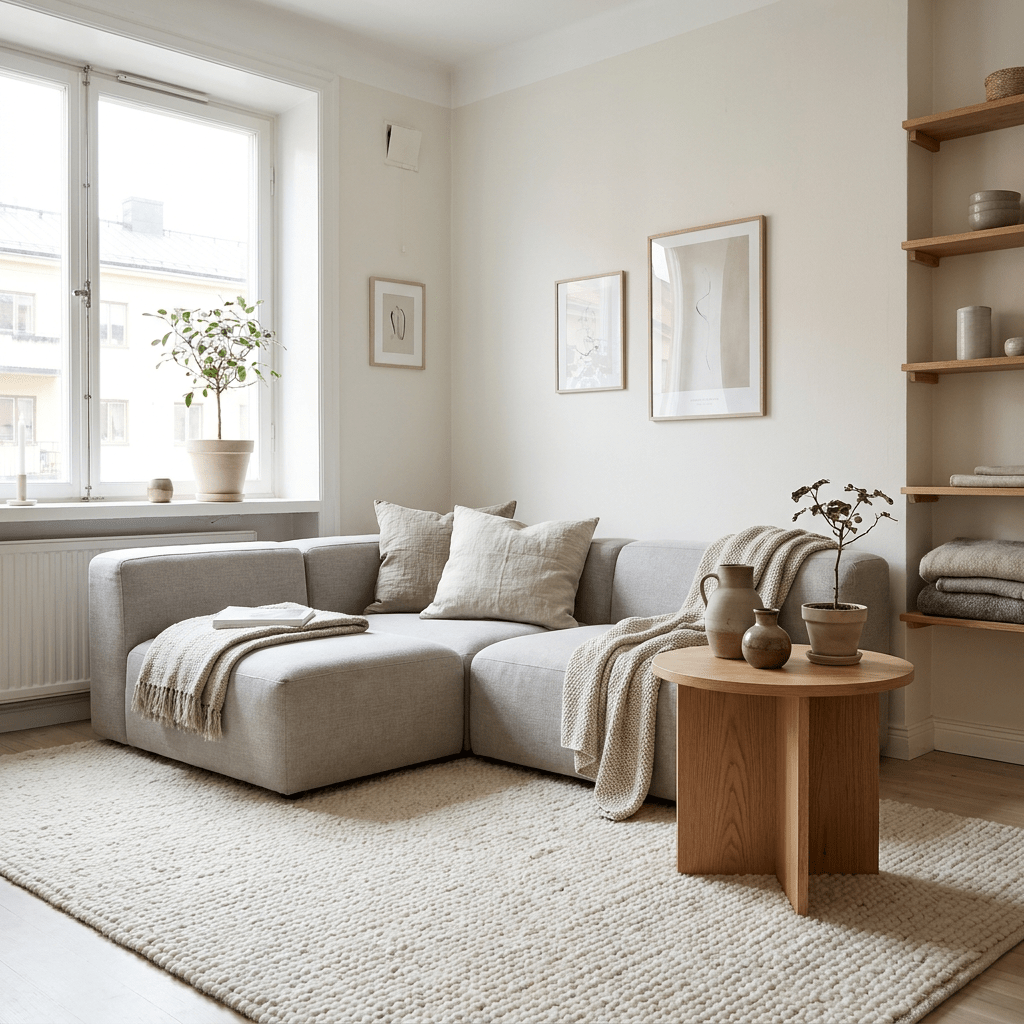
A small living room can have nice furniture and a good color scheme and still feel cold. Usually the problem is that everything is smooth: a microfiber sofa, flat cotton pillows, a laminate floor and painted walls. Texture is what makes a room look warm, because the eye reads rough and soft surfaces as comfortable.
The four rooms in these photos range from a bright, neutral space to a dark, moody one, but each mixes several materials. The nine ideas below are ordered from the cheapest and easiest to the bigger projects. The aim is three to five textures in the room, repeated a couple of times each, so it feels layered without looking cluttered.
1. A chunky knit throw on the sofa
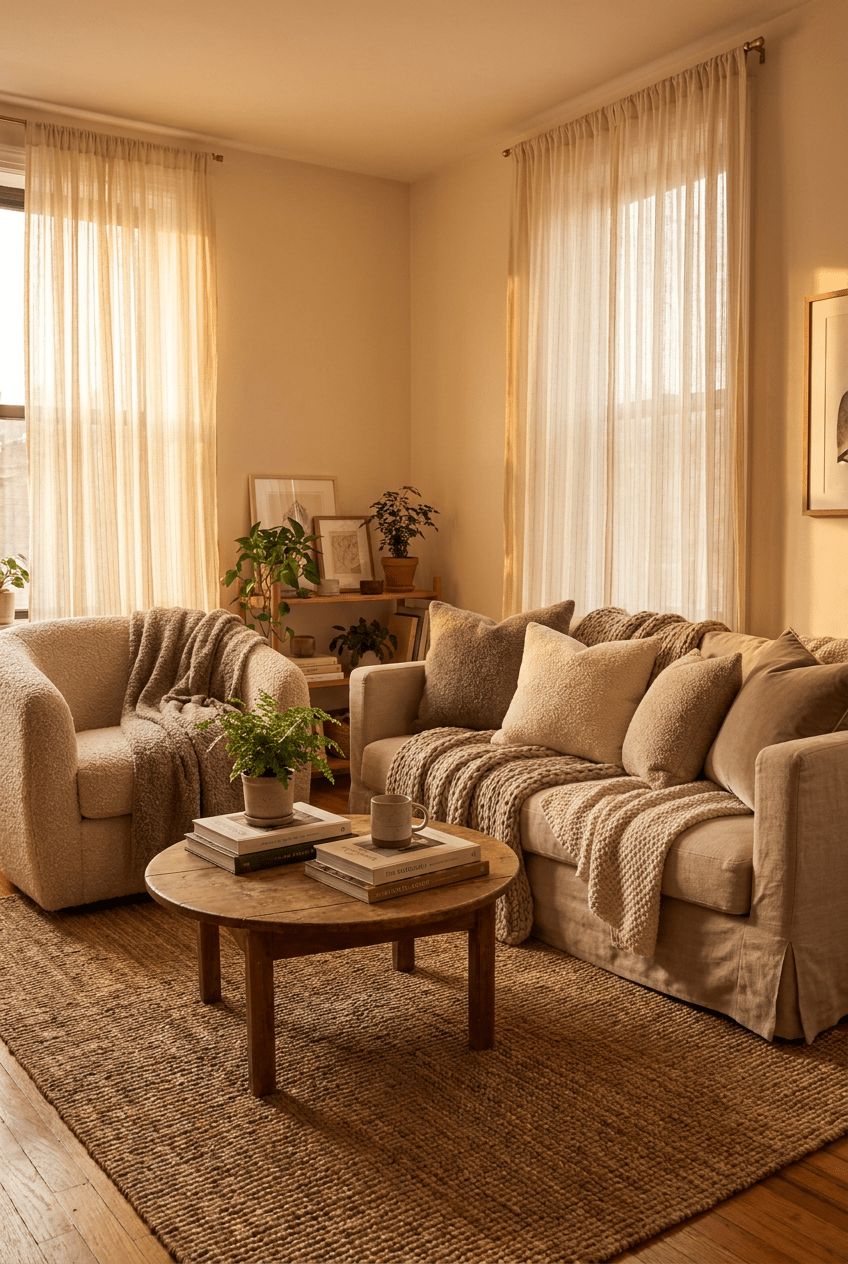
A big, loose-knit throw is the fastest way to add texture. In this room, chunky knits over the arm of a slipcovered sofa and the back of an armchair make the seating look softer and more inviting.
Drape a throw over one arm or the corner of the sofa rather than folding it neatly on the seat. Chunky knit blankets cost about $25 to $60; acrylic and cotton versions wash more easily than wool.
Two throws in different textures, such as a chunky knit and a waffle or faux fur, look more layered than one. Keep them in similar colors so the sofa doesn't look busy.
Very loose chunky knits catch on pet claws and shed, so a tighter knit is better with cats or dogs.
2. Velvet and linen pillows together
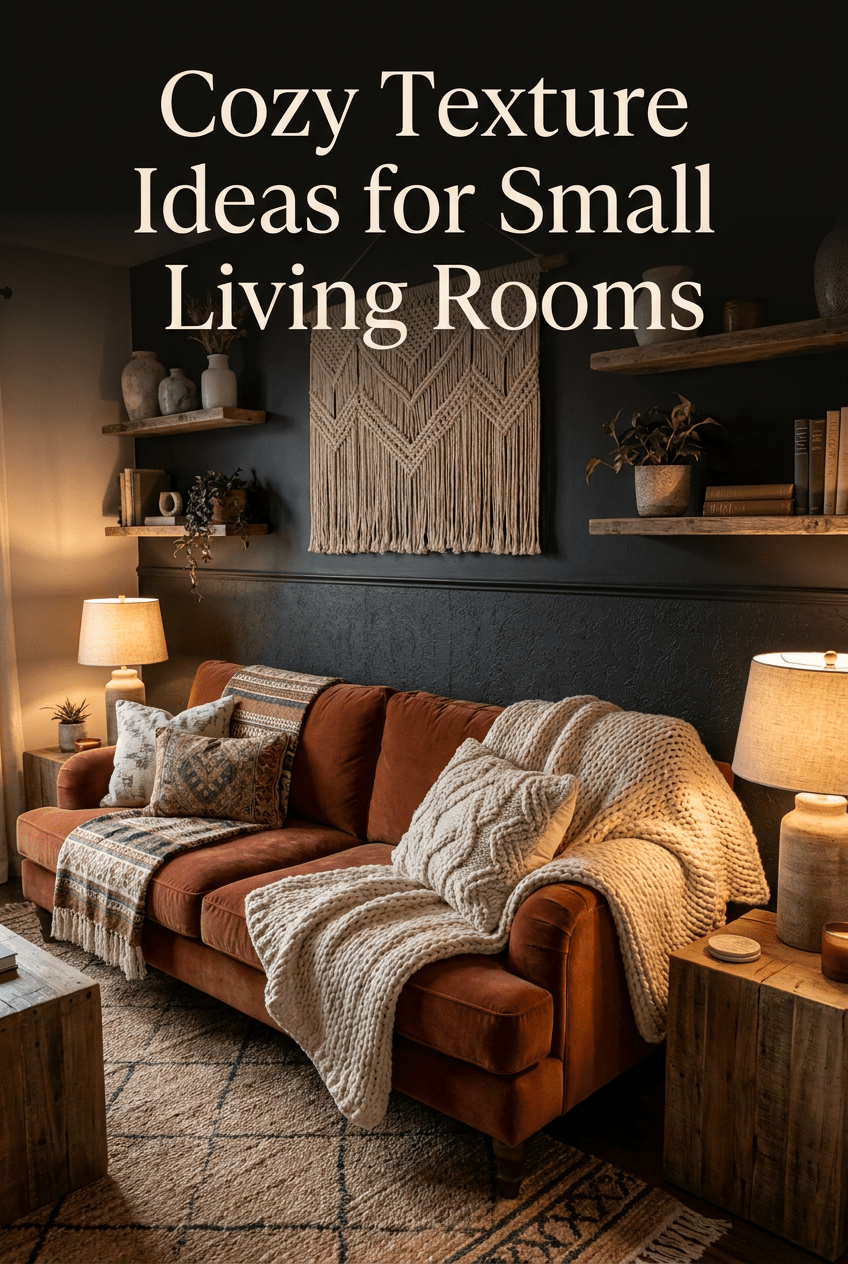
Pairing a smooth, glossy fabric with a rough, matte one gives a sofa depth. The rust velvet sofa in this photo has a cable-knit throw and patterned woven pillows, and the contrast between them is what makes it look rich.
On a plain sofa, try one or two velvet pillow covers with linen or nubby cotton ones. Pillow covers cost $8 to $20 each, so you can change the mix every season.
The dark wall, the macrame hanging and the rough wood shelves in this room add more texture around the sofa. A darker wall color also makes a small room feel enclosed and cozy in the evening, though it suits rooms with decent daylight best.
3. A rug with depth, or two layered
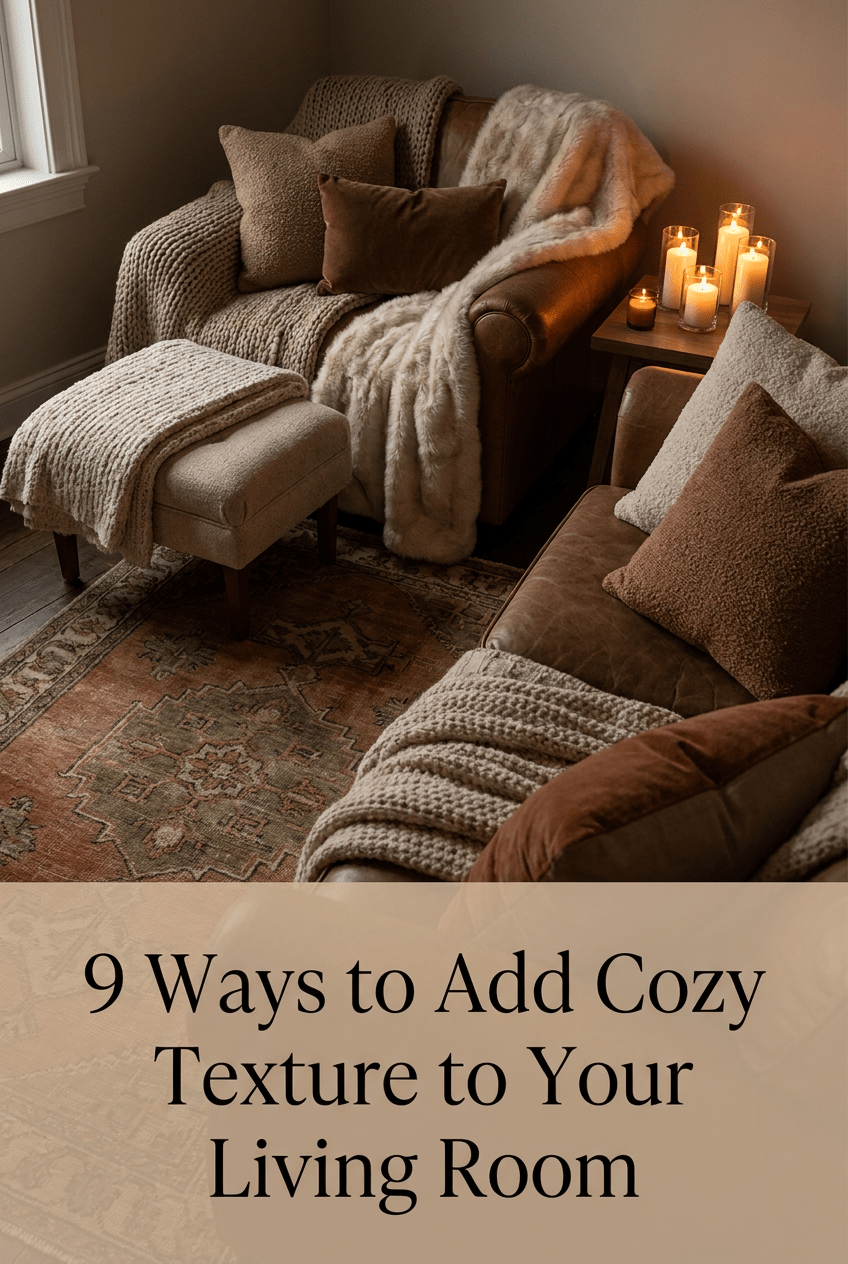
A rug covers the largest surface in the room after the walls, so its texture does a lot. The vintage-style rug in this photo adds pattern and a worn, soft look under a sofa piled with faux fur and knit.
Flat jute or sisal rugs, like the one in the first photo, add a natural, nubby texture and handle traffic well. Shaggy and high-pile rugs feel cozy underfoot but trap crumbs and pet hair. A short-pile wool or a vintage-look polyester is a good middle ground.
Layering a smaller patterned or sheepskin rug over a larger jute one adds two textures at once. Use a rug pad under both so they don't slide on a hard floor.
Size the main rug so at least the front legs of the sofa and chairs sit on it, usually 5 by 8 feet or larger in a small living room.
4. Natural wood
Wood adds warmth that paint and fabric can't. The round coffee table in the first photo and the rough-cut wood side tables in the second bring grain and a natural, slightly uneven surface into the room.
Look for wood with visible grain or a rough, matte finish rather than a high gloss. Thrifted wooden side tables, trays, bowls and picture frames are inexpensive ways to add it.
Mix one or two wood tones rather than matching everything exactly. A mid-tone oak with a darker walnut or a weathered gray looks more collected than a single color.
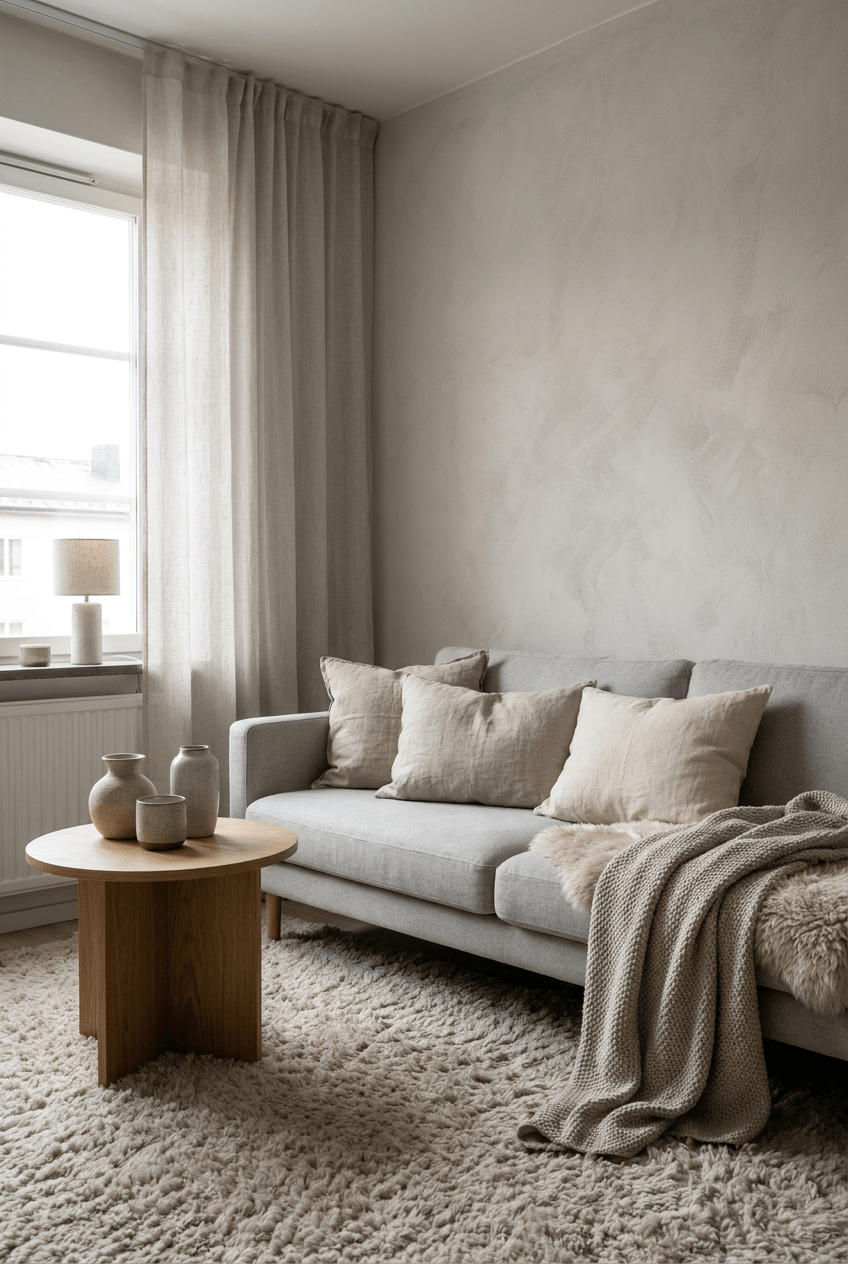
5. A limewash or textured wall
A wall with soft, cloudy variation, like the limewash finish in this photo, adds texture to the whole room without any objects. It suits minimal spaces where you don't want more things on display.
Limewash and mineral paints go on with a large brush in crossing strokes, leaving a soft, uneven look. A quart covers roughly 100 to 150 square feet and costs about $30 to $60. Practice on a board first, since the result depends on your brush strokes.
In a rental, ask before painting. Limewash on a painted wall may need a special primer, and it's harder to cover than regular paint. Peel-and-stick wallpaper in a grasscloth or plaster look is a removable alternative.
The sheepskin and knit throws on the gray sofa in this room add softness, so the room feels cozy despite its pale palette.
6. Baskets for storage and texture
Woven baskets in seagrass, rattan or wicker add texture and hide clutter at the same time. A large basket beside the sofa holds throws and blankets; smaller ones on shelves hold remotes and chargers.
Group baskets in two or three sizes and similar tones. Baskets with handles are easier to pull off shelves.
Lined baskets are better for blankets, since rough weaves can snag knits.
7. Heavier curtains
Curtains in linen, cotton slub or a light velvet add texture and soften hard window frames. Sheer linen, like the curtains in the first and third photos, keeps a small room bright while still adding a soft surface.
In winter, heavier lined curtains also help with drafts. Hang them close to the ceiling and let them just touch the floor, so they look generous rather than skimpy.
Use a rod rated for the curtain's weight, and screw it into studs or proper anchors, since lined or velvet curtains are much heavier than sheers.
8. Lamps with fabric or woven shades
Soft light shows texture off. The ceramic lamps with linen shades in the second photo cast warm light across the knit throw and the velvet sofa, which makes both look richer.
Choose shades in linen, pleated fabric, rattan or paper, which diffuse light softly. Use warm white bulbs, around 2700K, and put lamps at different heights around the room.
A cluster of candles, like those on the side table in the fourth photo, adds flickering light. Use LED candles near throws and curtains, and put real candles on a stable tray away from fabric.
9. A coffee table with natural objects
Finish with small, tactile pieces on the coffee table: a stack of books, a ceramic vase with a rough glaze, a wooden bowl or a small plant. The tables in these photos each hold only two or three things.
Arrange objects on a tray in a group of three at different heights. Keep the rest of the table clear so it stays usable.
Handmade ceramics from thrift stores and craft fairs often have more texture than mass-produced ones, and cost about the same.
How to mix textures without clutter
Too many textures in a small room can look messy. Keep the colors in one family, like the creams and browns in the fourth photo, so the textures stand out instead of the colors fighting. Repeat each texture at least twice, for example knit on the sofa and on a pouf, wood in the coffee table and a picture frame.
Balance soft with hard and rough with smooth. A room of only fluffy textures looks like a bedroom; a room of only hard ones looks cold. Aim for roughly equal amounts of soft textiles and hard natural materials like wood, ceramic and stone.
Common questions
How do you add texture to a small living room on a budget?
Start with a knit throw, two or three pillow covers in different fabrics and a woven basket. Together they cost under $60 and change the feel of the room.
How many textures should a room have?
Three to five, each repeated at least twice, usually works well. Keep the colors close so the room doesn't look busy.
Start with the sofa and the rug, since they're the largest soft surfaces, then add wood and baskets as you find them. For more ideas, see our guides to textured wall treatments for renters and living room rugs for small spaces.