
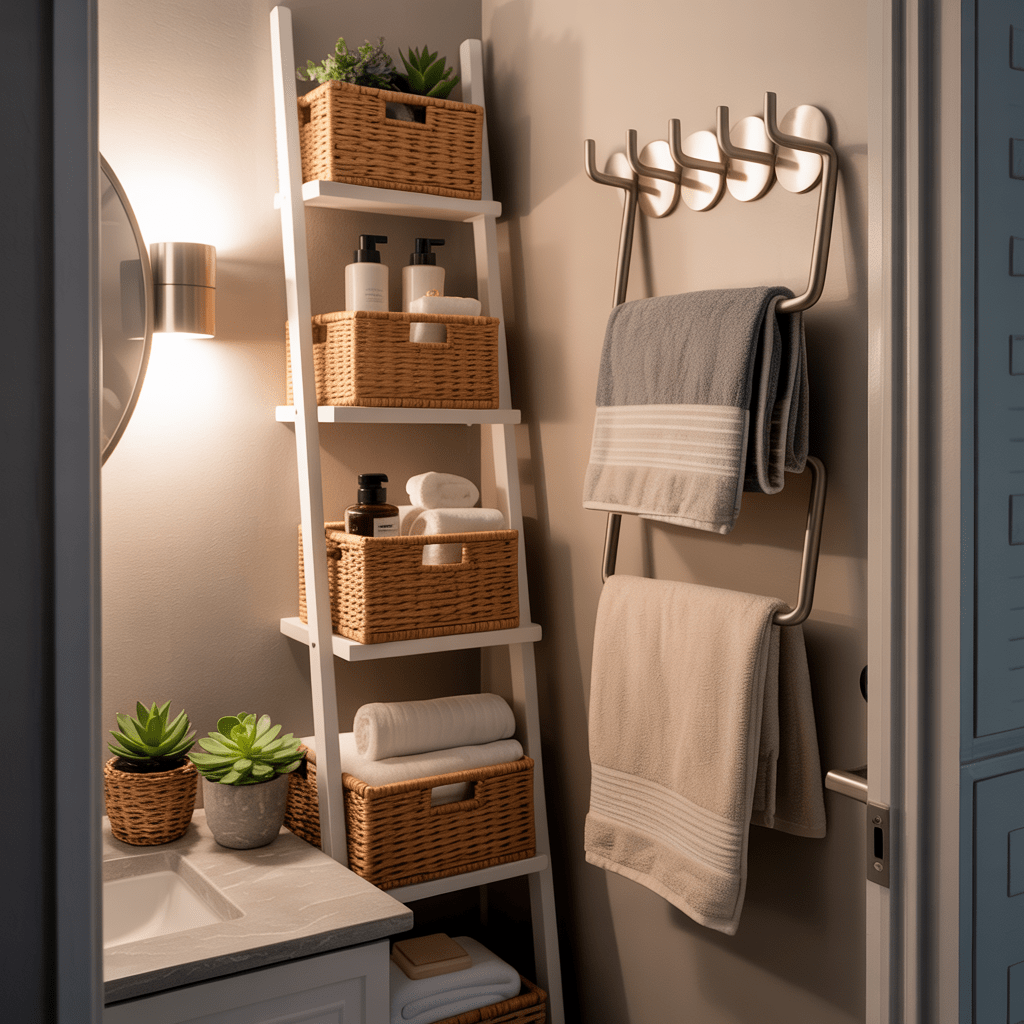
A small bathroom has to hold toiletries and towels for everyone who uses it, plus cleaning supplies and spare toilet paper, usually with one small vanity and a mirror cabinet. Without a plan, it all ends up on the counter and the back of the toilet.
The four bathrooms in these photos show the two approaches that work: hide most things behind doors and in drawers, and keep only a few attractive things on show. The nine ideas below cover both, with sizes for tight spaces and notes on what renters can do without drilling.
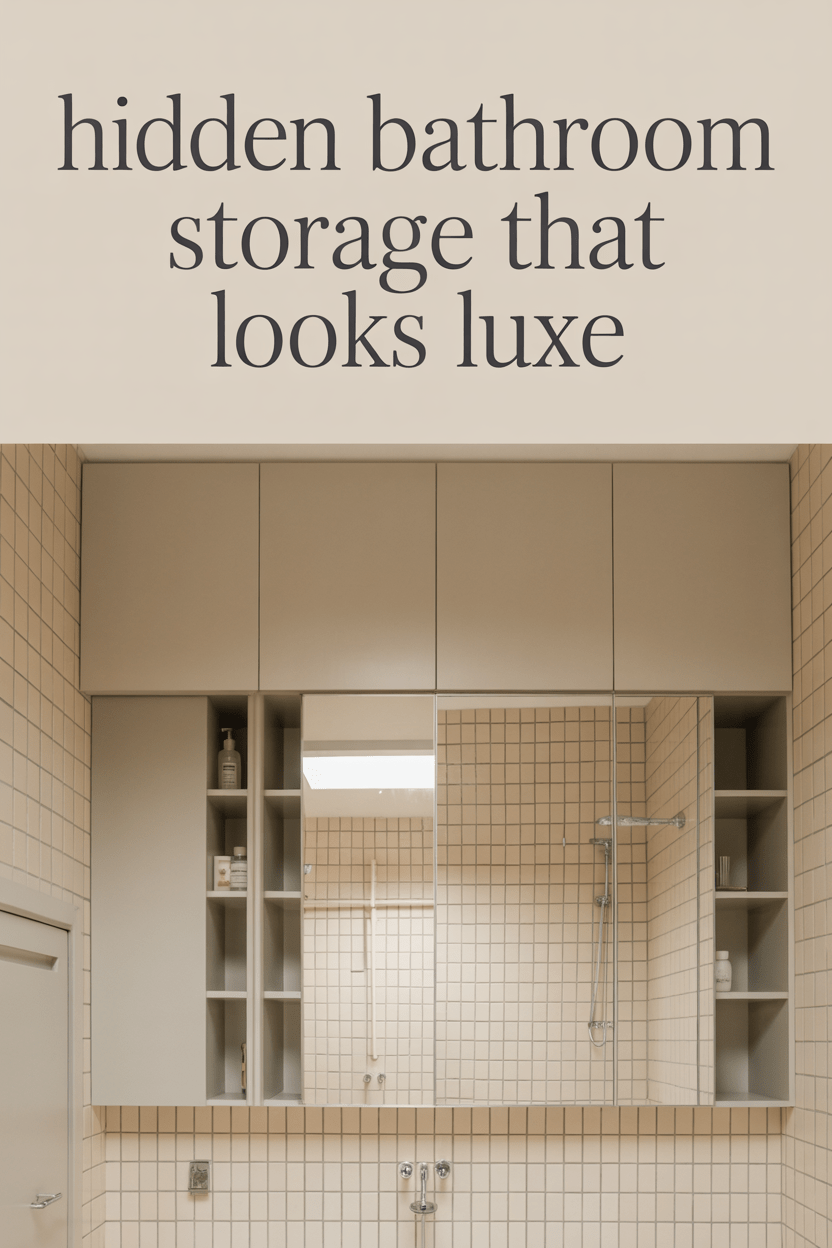
1. Mirrored cabinets around the vanity
A mirrored cabinet hides toiletries and medication behind the glass while still giving you a mirror. The bathroom in this photo takes it further, with a full wall of mirrored doors, narrow open cubbies on each side and cupboards above.
Surface-mounted mirror cabinets cost about $60 to $250 and screw onto the wall over the existing mirror location. Recessed cabinets sit inside the wall and look neater but need cutting into drywall, which isn't a renter job.
Store medication in a cool, dry place out of children's reach. A bathroom cabinet gets humid during showers, so check the labels; some medications are better kept elsewhere.
Inside the cabinet, small clear bins group things like dental care and first aid, so you can lift out what you need.
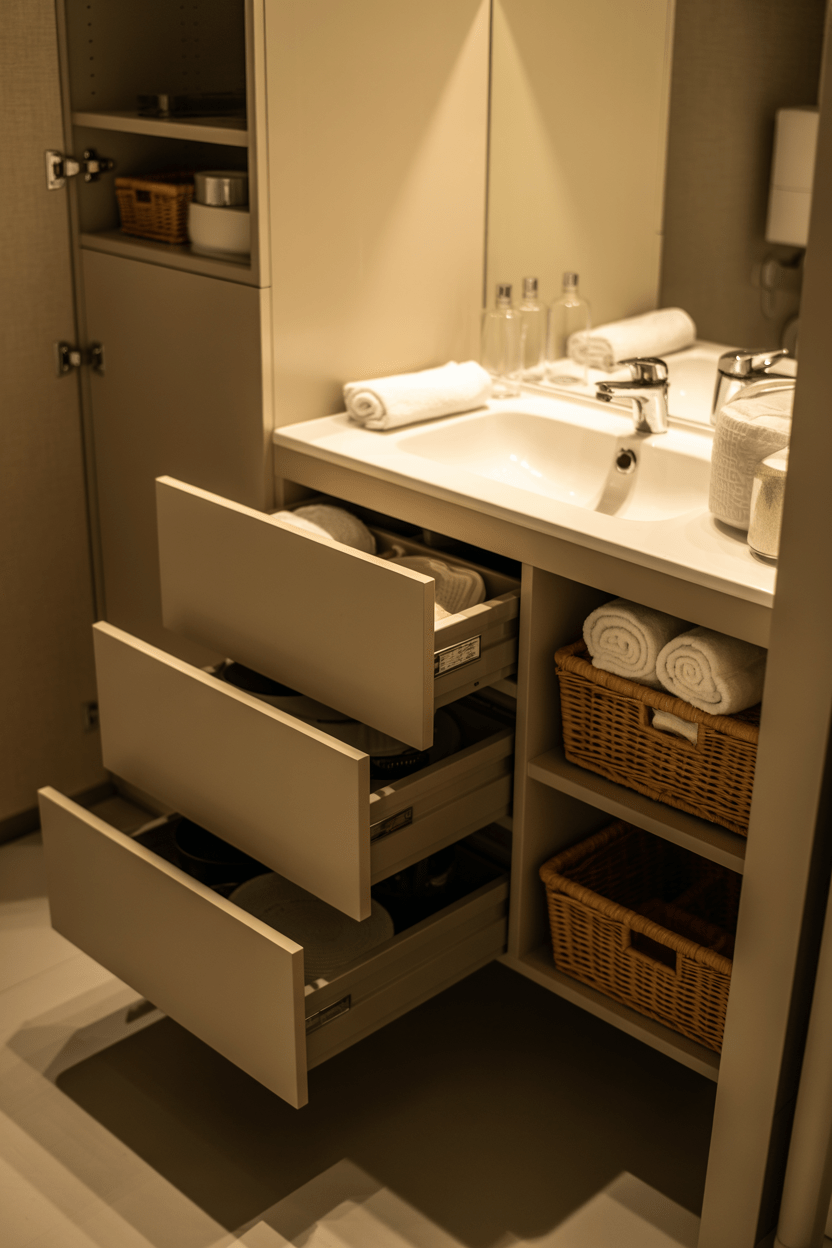
2. Drawers and baskets in the vanity
Deep drawers hold far more usable storage than a cupboard under the sink, because you can see everything when they open. The vanity in this photo has three pull-out drawers beside open cubbies with baskets and rolled towels.
If your vanity has only doors, slide-out organizers and stacking drawers can fit inside the cabinet, around the pipes. Measure the space, including the pipe positions, before buying. Most cost $20 to $40.
Use drawer dividers so small things like hair ties and razors don't end up in a pile, and line the bottom of each drawer with a wipeable liner.
Put a small waterproof tray under the sink trap, so a slow drip shows up before it damages the cabinet floor.
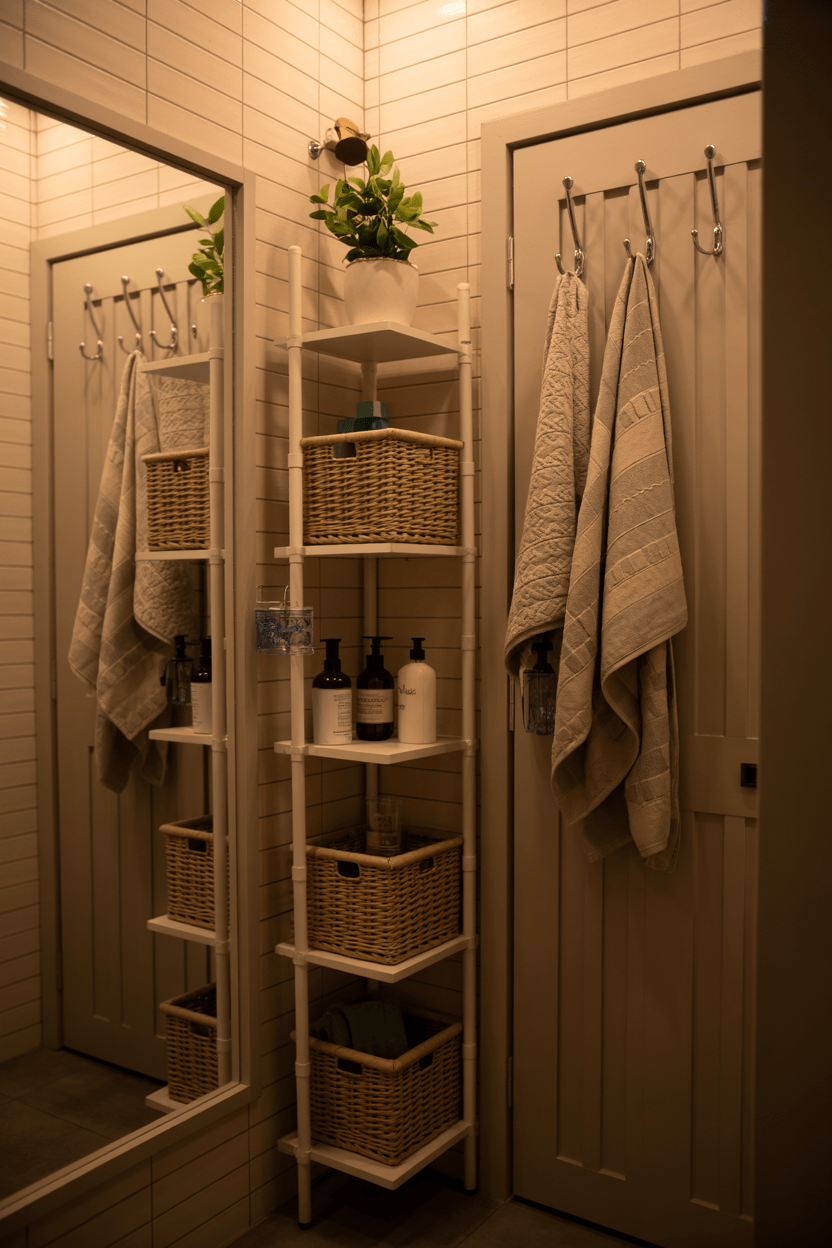
3. A slim shelf tower and door hooks
A narrow shelf tower, like the one between the shower and the door in this photo, uses a gap that would otherwise be wasted. Baskets on its shelves hide toilet paper and spare toiletries, while the open shelf holds the bottles you use daily.
Towers 10 to 14 inches wide fit beside most toilets and showers. Choose one in a water-resistant finish, and anchor tall towers to the wall so they can't tip.
The hooks on the back of the doors here hold towels and robes without any wall drilling. Over-the-door hooks cost about $10 to $20.
Woven baskets look warm but trap moisture near a shower. Plastic-lined or seagrass baskets with a sealed finish dry faster, and a quick wipe every couple of weeks stops mildew from starting.
4. Open shelves for rolled towels
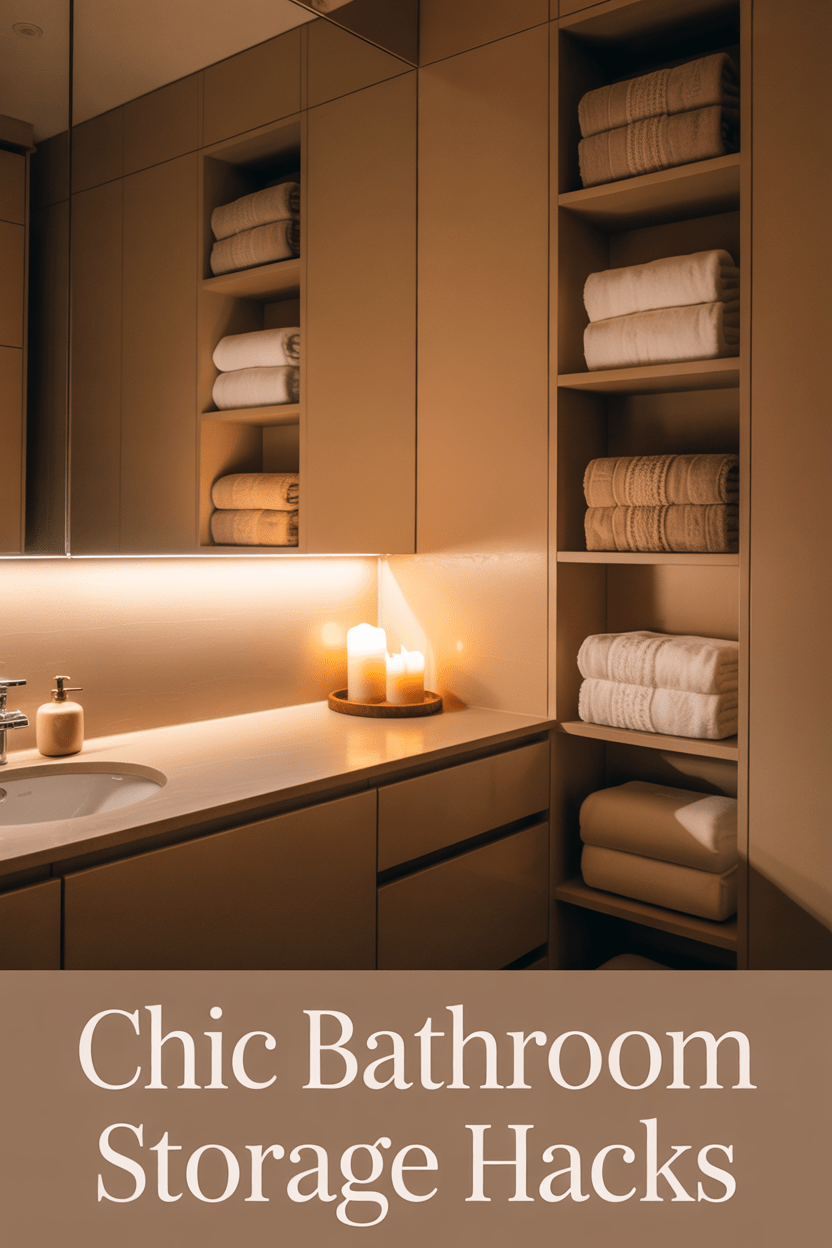
Some things look good on display. Folded or rolled towels on open shelves, like the stack beside this vanity, look like a hotel and free up the linen closet.
Keep the open shelves for towels and a few attractive containers, and put everything else behind doors. Shelves 10 to 12 inches deep hold folded bath towels.
Fold every towel the same way, and keep the shelves away from the shower, where steam makes them damp.
Rolled hand towels in a basket on the counter or a low shelf work well for guests, who can take a fresh one without asking. Wash and refill the basket once a week.
5. Magnetic strips inside cabinet doors
A small magnetic strip stuck inside a cabinet door holds tweezers and bobby pins where you can find them.
Adhesive magnetic strips cost a few dollars. Check that the door still closes over the shelves.
The inside of the vanity door is useful too. A small adhesive basket holds a hair dryer or a flat iron once it has cooled, and a hook takes a straightener cord so it doesn't tangle.
6. A tray on the counter
A tray groups the few things you keep on the counter, like soap, a toothbrush cup and lotion. It looks tidier than loose bottles and makes wiping the counter quick.
Choose a waterproof material like marble, ceramic or sealed wood.
Limit the tray to what you use every morning and evening. If it starts filling with products you reach for once a week, move those into a drawer and keep the counter clear for getting ready.
7. A rolling cart beside the toilet
The gap between the toilet and the wall or vanity is often 6 to 8 inches, enough for a slim rolling cart. It holds toilet paper or cleaning supplies and rolls out when you need it.
Slim carts cost about $20 to $40. Measure the gap's width and depth before buying.
Choose a cart with a lip on each shelf so things don't slide off when you pull it out, and with wheels that lock if the floor isn't level. Plastic and coated metal carts handle bathroom humidity better than wood.
8. Shelves above the toilet or the door
The wall above the toilet is usually empty. Two or three floating shelves, or an over-the-toilet stand that needs no drilling, hold towels and spare supplies.
Hang the lowest shelf at least 24 inches above the tank so you can lift the lid. A shelf above the door holds rarely used items like spare toiletries.
In a rental, an over-the-toilet stand is the easiest option. Look for one with adjustable feet, and fix the top to the wall with a single small screw or a strap if it wobbles, since it holds weight above the tank.
9. A vintage cabinet as a linen cupboard
If the bathroom has floor space, a narrow vintage cabinet or a small hutch can work as a linen cupboard and adds character. Thrift stores often have them for less than new bathroom storage.
Seal the wood with a water-resistant finish, and keep it away from the shower.
Line the shelves with a wipeable liner, and add a small hook or two inside the door for a robe or a laundry bag. Measure the doorway before buying, since older cabinets can be deeper than they look in photos.
Clear out before you buy storage
Most bathrooms hold far more than they need: half-used bottles and expired medication, plus hotel toiletries nobody uses. Empty everything, throw away what's expired or unused, and only then work out what storage you need.
Return unused medication to a pharmacy take-back program rather than flushing it or throwing it in the trash.
What to keep where
Keep the things you use every day within reach of the sink, in the top drawer or the mirror cabinet. Store backups, like extra toothpaste and toilet paper, higher up or in baskets on the shelf tower, where you can see when you're running low.
Cleaning supplies belong low down, in a bin under the sink or on the rolling cart, and behind a child lock if young children visit. Towels and linens go on open shelves or in the linen cupboard, away from the steam of the shower.
Common questions
How do you add storage to a small bathroom without drilling?
Use an over-the-toilet stand, a slim rolling cart, a freestanding shelf tower, over-the-door hooks and organizers inside the vanity.
Where should towels go in a small bathroom?
Rolled or folded on open shelves away from the shower, on hooks on the back of the door, or on shelves above the toilet.
Clear out first, then add storage where you use things most. For more ideas, see our guides to bathroom shelf styling and first apartment bathroom must-haves.