
Loading...
Studio apartments ask a lot of you. They want you to sleep, live, eat, work, relax, and entertain all within the same four walls, often without any natural dividers to help you figure out where one zone ends and another begins. The living room layout is usually the hardest puzzle to solve because it has to do the most work. It needs to feel like a proper lounge when you want to unwind, function as a dining area when you need to eat, and still leave enough open floor space that the whole place does not feel like a furniture warehouse. The good news is that a well-thought-out layout can make a studio feel genuinely spacious and intentional rather than cramped and compromised. These fourteen layouts cover a wide range of studio configurations, furniture styles, and lifestyle needs, so whether you are starting from scratch or rearranging what you already have, there is a setup here that will work for your specific space.
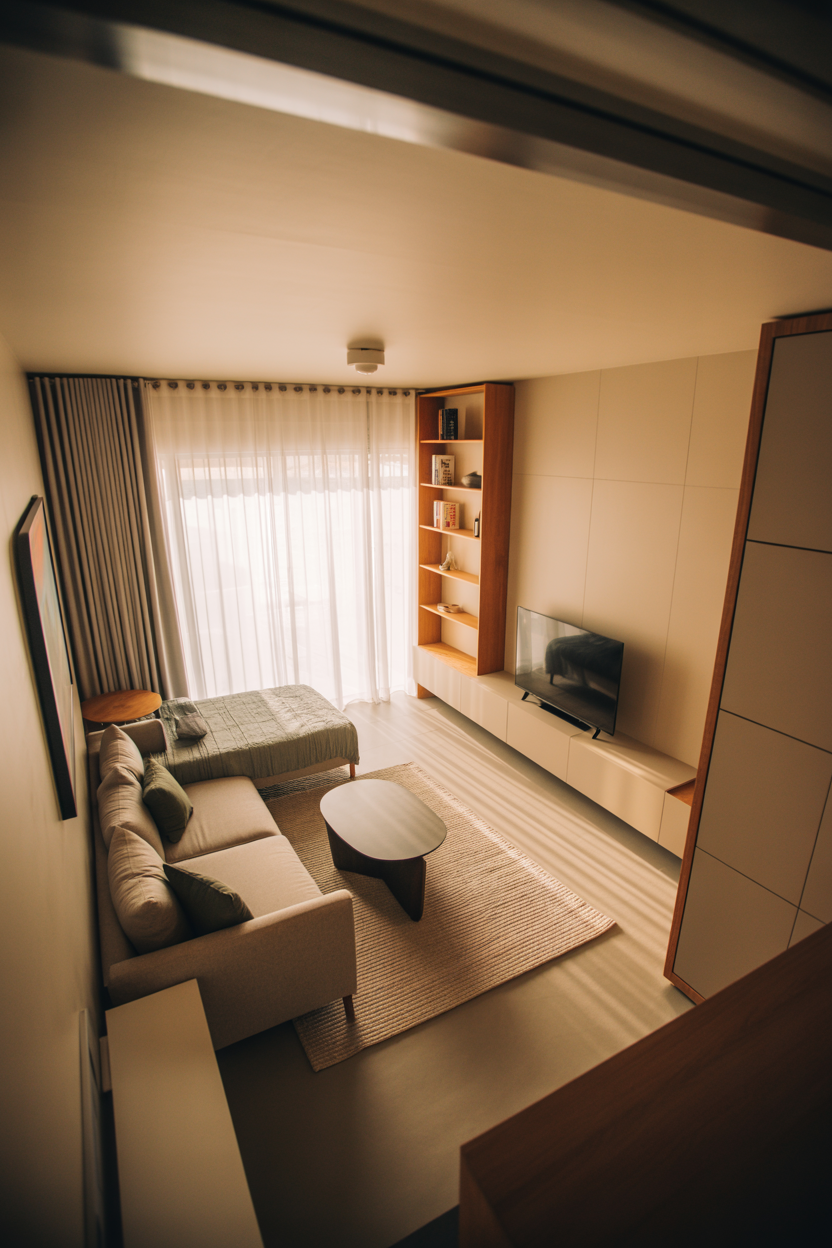
1. Use a Sectional Sofa as a Room Divider
A sectional sofa with an L-shaped configuration is one of the most powerful layout tools available in a studio apartment. When you position the longer arm of the sectional perpendicular to the wall and facing into the room rather than flush against it, the back of the sofa creates a natural visual barrier between the living zone and the sleeping zone behind it. You get a proper, defined lounge area on one side and a more private bedroom feel on the other, without building a single wall or hanging a single curtain. The result is a studio that reads as two distinct spaces rather than one big room where everything competes for attention.
The key to making this layout work is choosing a sectional that is proportionate to your space. In a studio, a smaller L-shaped sofa with a chaise extension is usually the better pick over a full-size corner sectional, which can overwhelm a compact floor plan and block natural pathways. Keep the sectional in a neutral tone so it does not visually dominate the room, and place a rug underneath the seating area to anchor the living zone further. A coffee table in front and a floor lamp in the corner complete the setup and make the living area feel fully realized, like a room within a room.
2. Float Your Furniture Away From the Walls
The instinct in a small space is always to push everything against the walls to free up the center of the room. It seems logical, but it almost always produces the opposite effect of what you want. When all your furniture lines the perimeter, the middle of the room becomes an awkward empty corridor and the seating feels disconnected and cold, like a waiting room rather than a living space. Floating your sofa and chairs slightly away from the wall, even just twelve to eighteen inches, creates a more intimate grouping that feels intentional and cozy. The open space around the furniture actually makes the room feel larger, not smaller.
In a studio specifically, floating your living room furniture toward the center of the apartment creates a natural zone that separates it from the kitchen and sleeping areas. Position your sofa facing the television or a focal wall, with a small loveseat or two accent chairs across from it if space allows. Keep a clear walkway of at least twenty-four inches between pieces so movement through the room still feels easy and natural. A well-chosen rug underneath the entire grouping ties it together and tells the eye exactly where the living room begins and ends, which is half the battle in an open-plan studio layout.
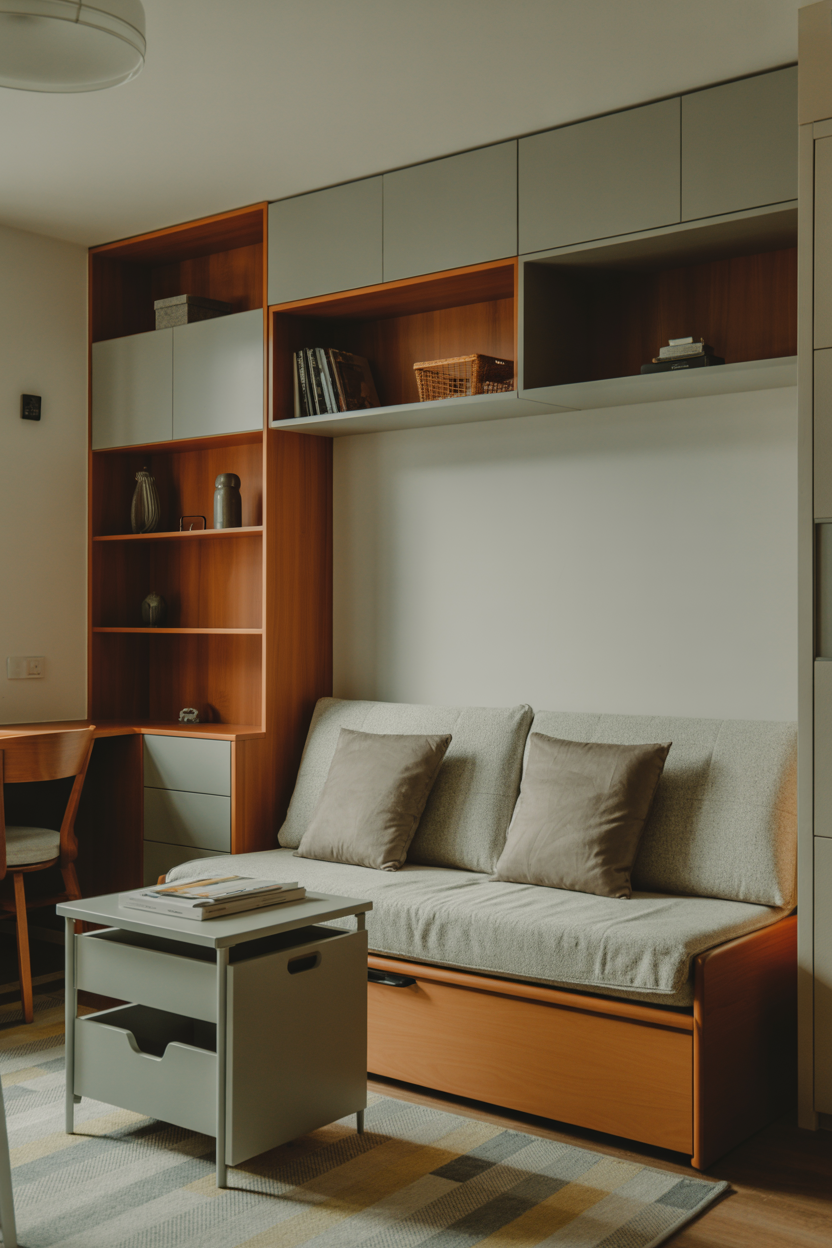
3. Build Around a Sofa Bed for Maximum Flexibility
For studios where the sleeping and living areas genuinely cannot be separated, a sofa bed is the layout anchor that makes everything work. Modern sofa beds have come a long way from the uncomfortable pull-out frames of the past. Many now feature memory foam mattresses, clean-lined designs that look indistinguishable from a regular sofa during the day, and easy conversion mechanisms that do not require relocating every cushion in the room first. Position the sofa bed as the central piece of your living layout during the day, styled with throw pillows and a blanket, and it reads entirely as a lounge sofa. At night, it transforms the same footprint into a sleeping space without displacing any other furniture.
The smartest way to style a sofa bed layout is to surround it with furniture that stores things. An ottoman with interior storage at the foot of the sofa holds extra bedding. A console table behind the sofa when it is in sofa mode holds lamps, books, and daily essentials and slides out of the way at night. Wall-mounted shelving above keeps your surfaces clear. The goal is a layout that converts smoothly from day mode to night mode without requiring a full room reset each time, because if it is too much effort you simply will not do it, and the room will end up feeling permanently stuck in one configuration.
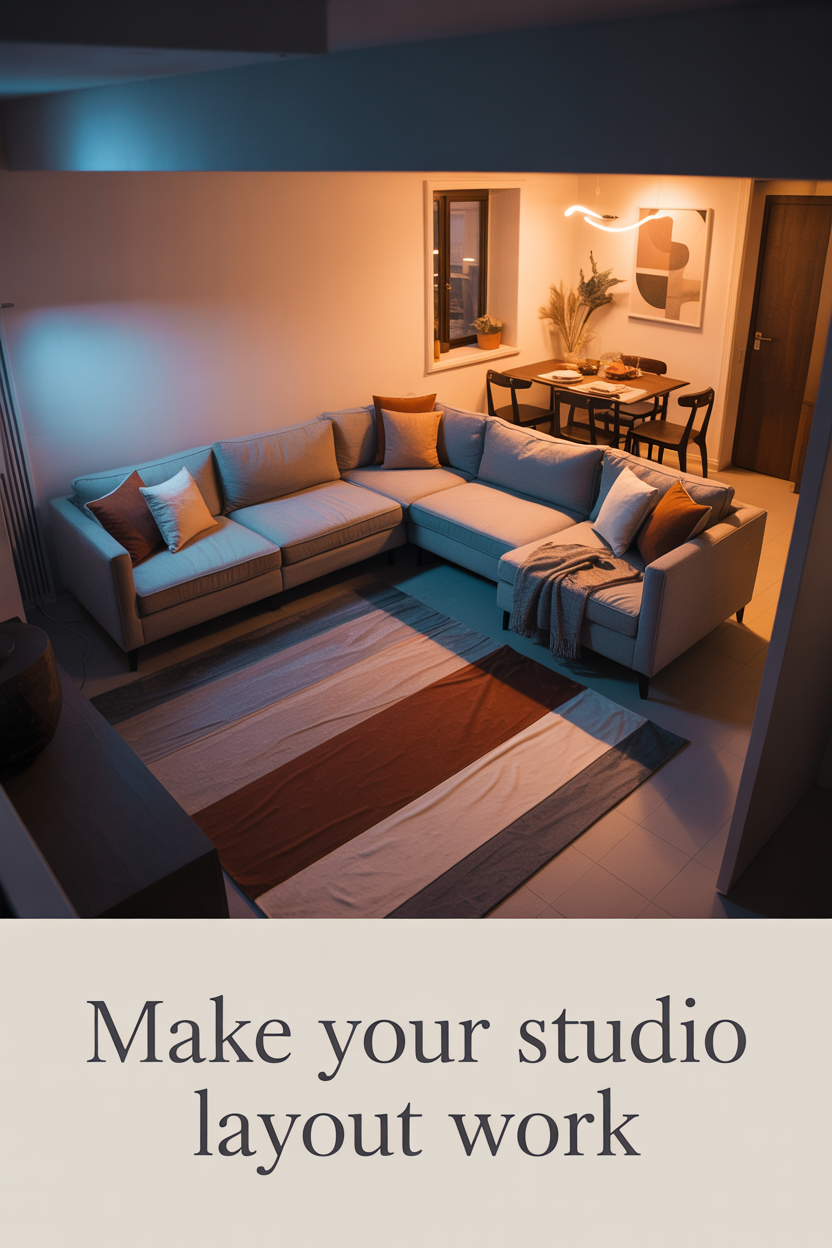
4. Define Zones With Rugs Instead of Walls
In an open studio floor plan, rugs are the most accessible and effective zoning tool you have. A rug placed under your living room furniture group signals to both the eye and the brain that this specific area of the floor belongs to the lounge, even without any physical separation from the rest of the space. The psychological effect is surprisingly powerful: rooms with clearly defined rug zones feel more organized, more intentional, and more spacious than rooms where everything flows together without any visual anchoring. You can use one large rug under the living area and a smaller one under the dining table to create two distinct zones within the same open plan.
When choosing the rug for your living room zone, size is everything. The most common mistake is going too small. In a studio, a rug that only fits under the coffee table while leaving the sofa legs floating on bare floor looks disconnected and actually makes the room feel smaller. Aim for a rug large enough that at least the front two legs of every piece of seating sit on it. If budget is a concern, layering a smaller patterned rug over a larger neutral one is a cost-effective way to get the size coverage you need while adding visual texture and personality to the space. This technique is genuinely one of the more satisfying styling tricks in small apartment decorating.
5. Place the TV on the Wall, Not on a Stand
A television on a bulky stand takes up floor space, creates a surface that inevitably collects clutter, and visually anchors a large piece of furniture to a wall in a way that limits your layout flexibility. Mounting the TV directly to the wall solves all three of those problems at once. It frees up the floor entirely, eliminates the clutter-magnet surface, and lets you choose exactly the right height for comfortable viewing from your specific seating arrangement. In a studio living room, this freed-up floor space is significant. Even gaining eighteen inches of depth where a TV stand used to be can be the difference between a layout that feels tight and one that flows naturally.
Once the TV is wall-mounted, you can position a slim console table or a floating wall shelf below it for any components or decorative items, keeping everything low-profile and intentional. In a studio where the living room wall is shared with the sleeping area, a wall-mounted TV that swivels slightly can serve both zones without requiring a second screen or an awkward furniture arrangement. For renters who cannot mount anything permanently, a tall, slim TV stand with a minimal footprint is a reasonable compromise, though you should still avoid anything with wide shelving that eats into the room unnecessarily.
6. Try a Loveseat Instead of a Full Sofa for Breathing Room
Not every studio needs a full three-seat sofa. In fact, for many compact floor plans, a loveseat is genuinely the smarter choice because it frees up significant square footage while still providing comfortable seating for two people and a guest who does not mind pulling up an accent chair or a floor cushion. A loveseat paired with one or two lightweight accent chairs creates a living room grouping that feels complete and balanced without the visual bulk that a large sofa introduces. You can angle the chairs slightly toward each other and the loveseat to create a more conversational arrangement, which also makes the living area feel warmer and more intimate.
The layout works especially well when the loveseat is placed facing the window or a focal point in the room, with the accent chairs on either side slightly angled in. A round coffee table in the center of the grouping keeps pathways clear and avoids the sharp corners that make navigating small spaces feel hazardous. This entire setup takes up considerably less floor space than a standard sofa-and-coffee-table arrangement, which means more open floor between the living zone and the kitchen or sleeping area. That open floor is what makes the studio feel breathable rather than crowded, and it is worth prioritizing even if it means resizing your seating.
7. Create a Reading Nook Within the Living Zone
One of the qualities that makes a studio feel more like a home than a hotel room is the sense that different activities have their own dedicated space within the overall layout. Carving out a small reading nook within your living room zone does exactly this. A single armchair positioned beside the window with a floor lamp beside it and a small side table for your coffee or your book creates a secondary seating spot that serves a specific purpose. It breaks the layout out of the one-sofa-facing-TV formula that makes many studio living rooms feel one-dimensional, and it gives you a genuinely cozy spot that is separate from the main seating even though it is in the same room.
The nook does not need much space to work. An armchair with a forty-inch footprint, a slim floor lamp, and a small round side table can fit into a corner or beside a window without disrupting the rest of the layout at all. Choose a chair in a slightly different texture or tone from your main sofa to give the nook its own visual identity within the space. A small bookshelf or a stack of coffee table books nearby reinforces the reading-zone feeling and adds personality to a corner that might otherwise sit empty. It is the kind of thoughtful layout detail that makes a studio feel curated rather than purely functional.
8. Incorporate a Dining Table That Doubles as a Desk
In a studio apartment, a dedicated dining room is simply not an option, but that does not mean eating has to happen on the sofa indefinitely. A small dining table positioned between the kitchen and the living room creates a transitional zone that feels natural and purposeful. Choose a table sized for two to four people, round tables work particularly well in small spaces because they have no corners to navigate around, and position it close enough to the kitchen to feel connected to the cooking zone while remaining visually part of the living area. This placement also gives the studio a sense of having distinct areas without any physical separation between them.
The smartest version of this layout uses the dining table as a desk during working hours as well. A table at a comfortable dining height with a proper chair can function as a workspace during the day and revert to a dining surface at mealtimes with almost no transition effort, just moving your laptop and papers aside. This dual-purpose approach is particularly valuable in 2026 when working from home has become part of everyday life for so many studio dwellers. Fold-down wall tables or drop-leaf tables that expand when needed and collapse to almost nothing when not in use are an even more space-efficient version of this layout strategy.
9. Use Open Shelving as a Decorative Room Divider
A bookshelf or open shelving unit placed perpendicular to a wall and extending into the room creates a partition that separates zones without blocking light or making the space feel enclosed. Unlike a solid room divider or a curtain, an open shelf lets you see through to the other side while still creating a clear sense of visual separation. The back of the shelf faces one zone and the front faces another, and both sides can be styled deliberately so the unit looks good from any angle. This is a particularly effective way to define the boundary between the living area and the sleeping area in a studio that lacks any architectural separation.
For this to work well, choose a shelving unit that is tall enough to read as a divider, ideally at least five feet high, but not so tall that it blocks light from traveling across the room. A unit with a mix of open and closed compartments gives you flexibility: display items you are happy to have visible on the open shelves and hide everything else behind cabinet doors or in baskets. Style the living-room-facing side with books, plants, and decorative objects. Keep the bedroom-facing side more functional with items you need accessible from that zone. The result is a layout solution that works structurally and looks genuinely beautiful from every angle.
10. Hang Curtains From Ceiling to Floor to Separate Sleeping and Living
Floor-to-ceiling curtains are one of the most dramatic and effective ways to create a true sense of separation in a studio without any permanent construction. A ceiling-mounted curtain track or a tension rod system installed across the width of the room allows you to draw a curtain closed at night, completely concealing the sleeping area from the living space, and pull it open during the day to restore the open-plan feel. The transformation is immediate and genuinely impressive. Suddenly the living room feels like a separate room rather than just a section of a larger space.
For the most polished look, choose curtains in a fabric that hangs well and pools slightly on the floor, linen, velvet, and cotton canvas all work beautifully. A neutral tone that complements both zones is usually the safest choice since the curtain will be visible from both sides. When open and pushed to one side, the gathered curtain adds a soft, layered texture to the living room wall that actually improves the overall aesthetic of the space. This solution is renter-friendly when using ceiling-mounted tracks with adhesive or tension systems, and it is one of the more affordable ways to genuinely transform the layout and livability of a studio apartment.
11. Angle the Sofa for a Dynamic, Less Boxy Feel
Most people default to placing furniture parallel to the walls, which is logical but can make a studio feel rigid and boxy. Angling your sofa at forty-five degrees in a corner creates diagonal lines that lead the eye across the room in a more dynamic way, breaking up the predictable grid of a rectangular floor plan. It also naturally creates a small triangular space behind the sofa that is perfect for a tall plant, a floor lamp, or a slim side table, turning what would otherwise be dead corner space into something both functional and visually interesting.
This layout works best in studios with a square or nearly square floor plan where there is enough clearance on all sides of the sofa to move comfortably. It tends to make the room feel more expansive and less formulaic than a straight parallel arrangement, which can be the exact energy shift a studio needs to stop feeling like a compromise and start feeling like a genuinely well-designed home. Pair the angled sofa with a round coffee table to complement the diagonal orientation and keep the flow of the room feeling open and easy to navigate.
12. Go Vertical With Storage to Keep the Floor Plan Open
In any studio layout, the less furniture you have touching the floor, the more open and spacious the room feels. Going vertical with your storage is the most direct way to achieve this. Tall bookshelves, wall-mounted cabinets, floating media consoles, and wall-hung shelving all move storage upward rather than outward, preserving the precious floor area that makes the living room feel breathable. When your floor is mostly clear of bulky storage furniture, even a compact studio can accommodate a living room layout that looks and feels genuinely generous.
In practical terms, this means replacing a large entertainment unit with a wall-mounted media shelf and a few floating shelves above it for books and decor. It means using a tall, slim bookshelf rather than a wide, low credenza for your storage needs. It means choosing a coffee table with a small footprint or even opting for a pair of nesting tables that can be tucked away when not needed. Every piece of furniture that moves upward or shrinks its footprint contributes to a layout that feels less cluttered and more livable, which in a studio is always the ultimate goal.
13. Layer Lighting to Make the Layout Feel Larger After Dark
The way a layout feels during the day and after dark can be completely different experiences, and lighting is almost entirely responsible for that shift. A studio living room with only one overhead ceiling light will always feel flat and slightly institutional after sunset, no matter how well the furniture is arranged. Layering multiple light sources at different heights transforms the same space into something warm and dimensional. A floor lamp in the corner behind the sofa, a table lamp on the console or side table, and perhaps a small pendant or string of lights along a shelf all contribute to an atmosphere that makes the room feel larger and more inviting than the daytime footprint might suggest.
Warm-toned bulbs in the 2700K to 3000K range are the most flattering for living spaces and create the cozy, amber glow that makes a small room feel like a sanctuary rather than a cramped box. Dimmer switches, where your rental allows them, give you control over the intensity so the space can shift from bright and functional in the afternoon to soft and relaxed in the evening without changing a single piece of furniture. This lighting approach costs very little to implement but has an outsized impact on how your layout feels to live in every single day.
14. Keep One Wall Completely Clear as a Visual Breathing Space
This final layout principle is less about a specific furniture arrangement and more about a design philosophy that applies to every studio living room regardless of how it is set up. In a small space, the temptation is to use every available wall for storage, shelving, art, or furniture. Resisting that temptation and intentionally leaving at least one wall completely clear, or with only a single large piece of art or a mirror, gives the room a visual breathing space that makes everything else feel less crowded. The eye needs somewhere to rest, and a clear wall provides exactly that.
In practice, this means choosing where to concentrate your storage and decor and leaving the opposite wall as open as possible. In a studio living room, this clear wall is often the one that the sofa backs up to, since the furniture itself becomes the focus rather than the wall behind it. A single large-scale piece of art or a full-length mirror on the clear wall adds presence without visual clutter and can make the room feel significantly wider than its actual dimensions. This restraint, the deliberate choice not to fill every surface, is one of the defining qualities of a studio that feels considered and calm rather than chaotic and compressed.
Finding a living room layout that genuinely works in a studio apartment is less about finding the perfect formula and more about understanding your specific space, your daily habits, and what you need the room to do for you at different times of day. These fourteen layouts offer a wide range of starting points, from sectional dividers and floating furniture to curtain partitions and vertical storage strategies, and the most effective approach is often a combination of two or three ideas working together rather than any single solution on its own. Take measurements, sketch it out if that helps, and try a layout before committing to any new furniture purchases. You might find that simply rearranging what you already own makes a bigger difference than you expected. Your studio has more potential than it is currently showing, and the right layout is the thing that unlocks it.