
Loading...
Upper cabinets in a small kitchen have a complicated relationship with the space they are supposed to help. Yes, they offer storage, but they also create visual walls that chop the room into sections and make an already compact kitchen feel like a narrow corridor with doors swinging into your face. Open shelving flips that dynamic entirely. When you remove those cabinet fronts or skip upper cabinets altogether and replace them with floating shelves, the wall becomes part of the room rather than a barrier. Light travels further. The ceiling feels higher. The whole kitchen exhales. The catch, of course, is that open shelves require a level of organization and intentional styling that closed cabinets do not. Everything is visible, all the time. But when you get it right, the result is a kitchen that looks designed, spacious, and genuinely inviting rather than cramped and closed-in. These six ideas show you exactly how to make open shelving work in a small kitchen, from the layout choices to the styling details that make the biggest visual difference.
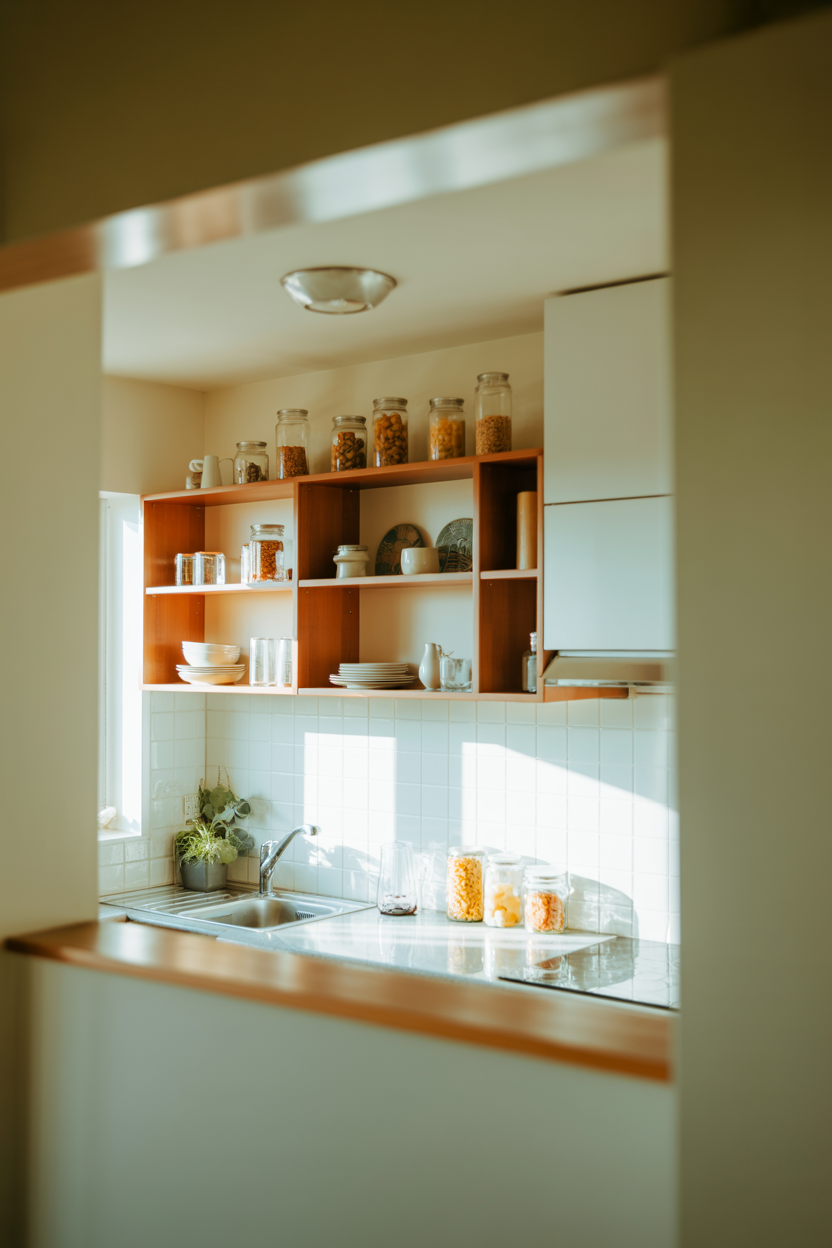
1. Replace Upper Cabinets With Floating Shelves on the Longest Wall
The single most impactful open shelving move you can make in a small kitchen is removing or replacing the upper cabinets on your longest wall with floating shelves. Upper cabinets, particularly the type with solid wood or laminate doors, create a visual ceiling that sits well below the actual ceiling, making the room feel shorter and tighter than it really is. Floating shelves in the same position hold the same items but allow the eye to travel upward past them to the actual ceiling, which immediately makes the kitchen feel taller and more open. The wall itself becomes part of the decor rather than something hidden behind cabinet doors, and if your kitchen has a nice backsplash tile or even just a clean painted wall, that surface now gets to contribute to the overall aesthetic.
When installing floating shelves on a long kitchen wall, aim for two to three shelves rather than a single one. Spacing them about twelve to fourteen inches apart gives enough clearance for most everyday items, from stacked plates and bowls to glasses and mugs, without making the shelves feel cramped. Use brackets that complement your kitchen hardware, matte black brackets on warm wood shelves are a consistently popular combination that reads modern but warm at the same time. If your lease does not allow permanent installation, there are now heavy-duty adhesive shelf brackets that hold surprising amounts of weight and leave no lasting marks, making this idea genuinely accessible even in strict rental situations.
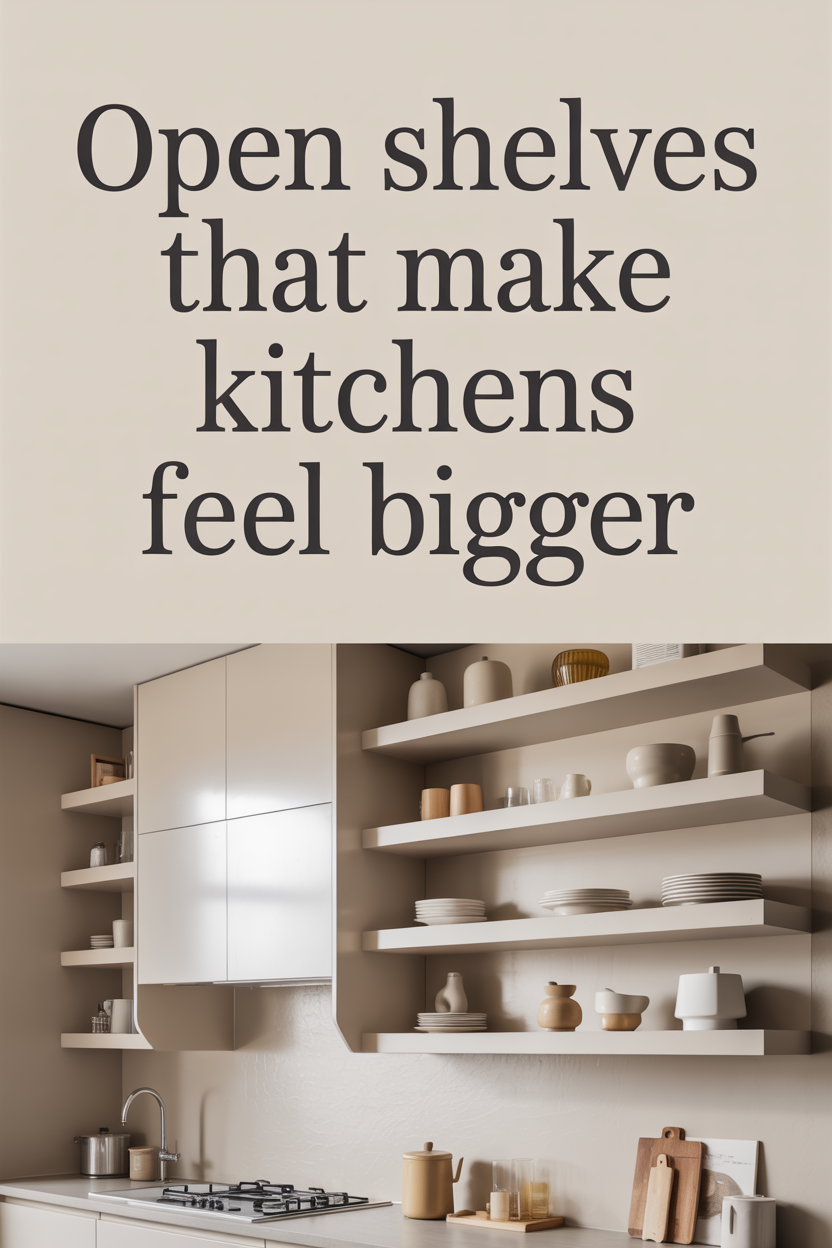
2. Use a Cohesive Color Palette on Your Shelves to Create Visual Calm
Open shelving only makes a small kitchen look bigger when the items on those shelves work together visually rather than competing with each other for attention. A shelf full of mismatched mugs in every color of the rainbow, random appliances, and half-used products in different packaging creates visual noise that actually makes the room feel more cluttered than closed cabinets would. The solution is a cohesive shelf palette. Choose two or three tones that relate to your kitchen's overall color scheme and stick to them across everything that lives on the shelves. White dishes with natural wood accents and a few green plants is a classic combination that photographs beautifully and suits almost any kitchen. Earthy terracotta tones with cream and warm brass work equally well for a warmer, more organic feel.
This does not mean you need to throw out everything you own and replace it with a matching set. Start with what you already have and edit. Move the items that clash with your chosen palette into lower cabinets or drawers where they are still accessible but not visible. Display only the pieces that fit the color story on the open shelves. You will likely find that you already own more cohesive pieces than you realized once you separate them from the visual noise of everything else. The restraint involved in this process is genuinely satisfying, and the resulting shelf display looks far more intentional and expensive than the price of what is on it would suggest.
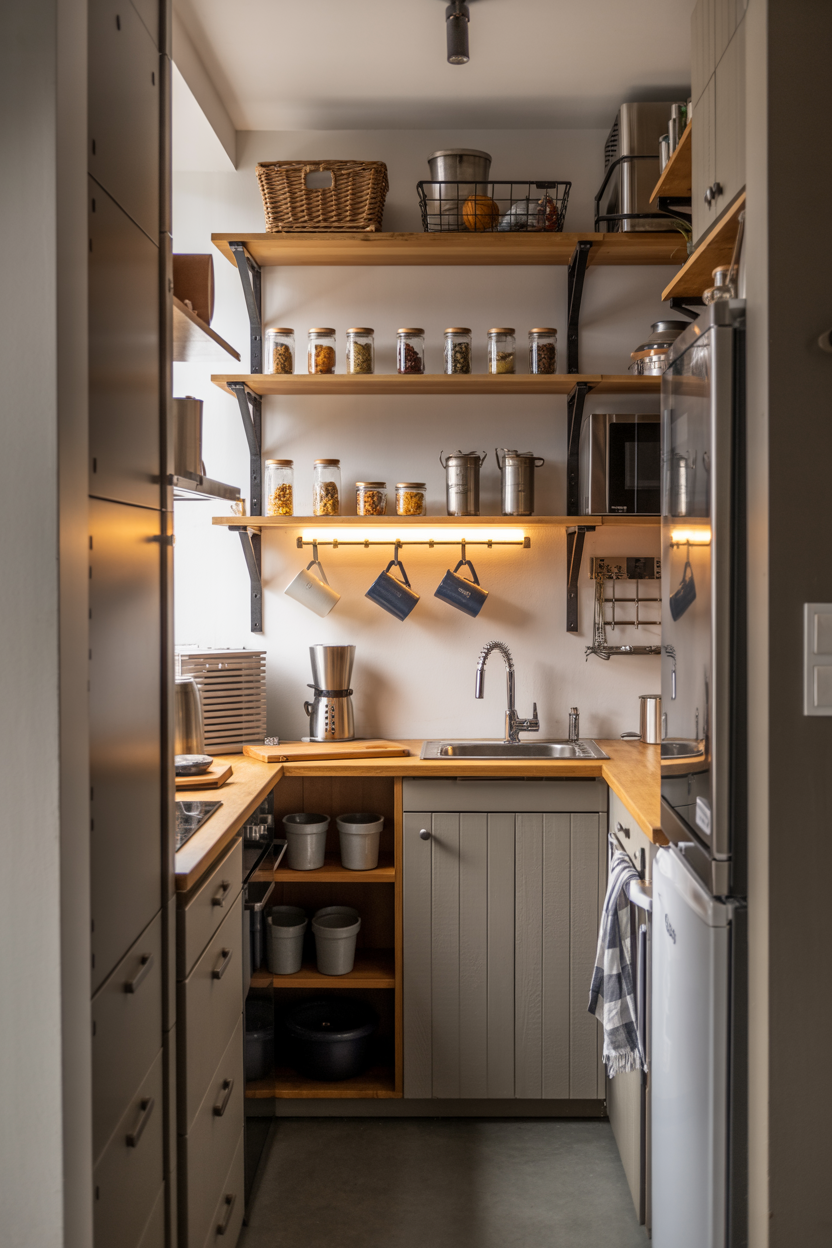
3. Decant Pantry Staples Into Matching Jars for a Streamlined Look
One of the most transformative things you can do for open shelving in a narrow or galley kitchen is decant your dry pantry staples into matching glass or ceramic jars. Pasta, rice, oats, lentils, coffee, sugar, flour: all of it transferred from their original packaging into uniform containers immediately reduces visual clutter by about seventy percent. Original product packaging varies wildly in color, font, and size, and when lined up on a shelf it creates the kind of visual chaos that makes a small kitchen feel overwhelming. Matching jars, by contrast, create a clean, repeating rhythm that reads as organized and intentional, like a proper pantry in a home three times the size.
Glass jars with bamboo lids are currently one of the most popular choices for this approach because they are clear enough to see the contents, the bamboo adds warmth, and they stack neatly when needed. Simple clip-top glass jars work equally well and tend to be airtight, which keeps food fresher longer. Label them with small adhesive labels or a chalk marker for easy identification, keeping the font consistent across all jars for a unified look. In a narrow kitchen where every shelf is visible from across the room, this level of organization makes the entire space feel calmer and more considered. It is a small investment of time and money that pays off in visual dividends every single day.
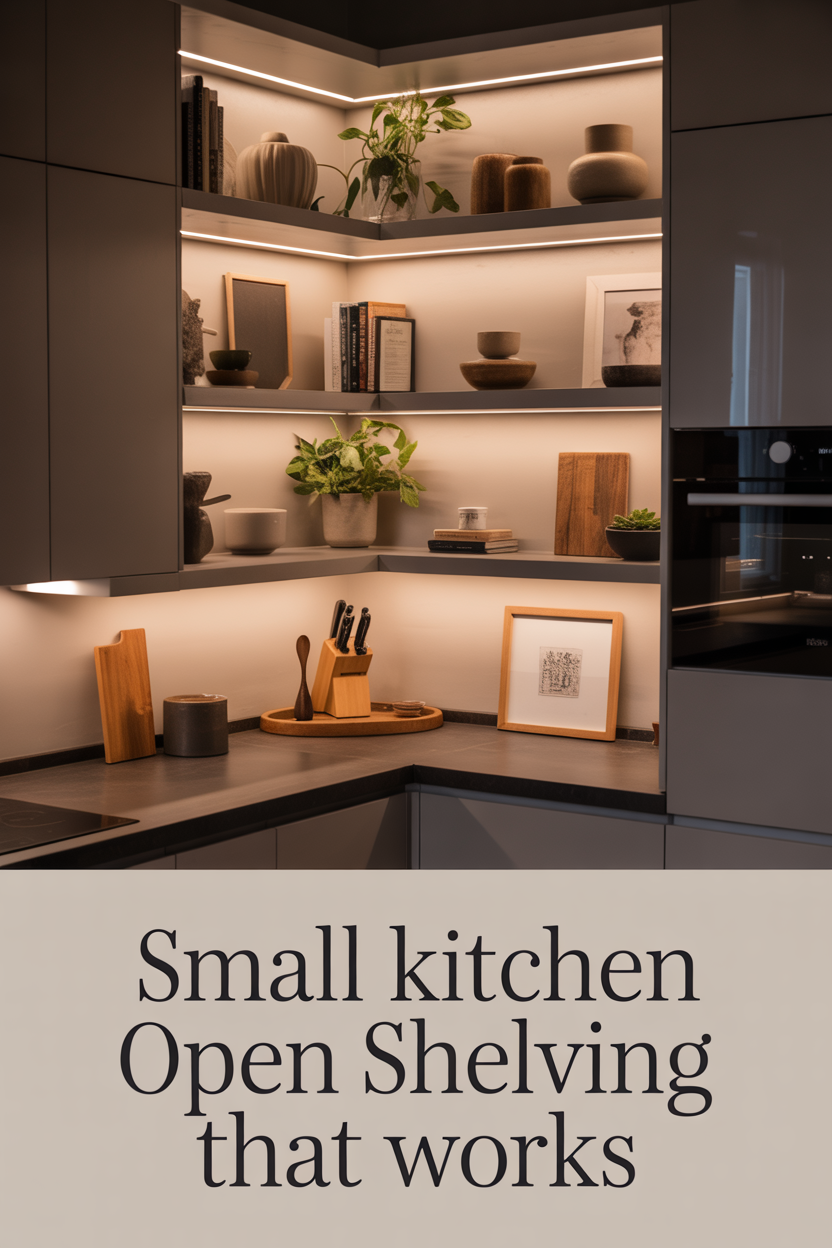
4. Add Under-Shelf Lighting to Brighten the Space and Add Depth
Lighting is one of the most underused tools in small kitchen design, and open shelving gives you the perfect opportunity to use it well. Installing a strip of warm LED lights along the underside of your shelves does two things simultaneously: it illuminates the counter workspace below, which is genuinely useful for food prep, and it casts a warm glow across the items on the shelf, making the whole display look more curated and inviting. The light adds depth and dimension to what might otherwise be a flat wall of objects, drawing the eye into the space and creating a sense of warmth that makes even the smallest kitchen feel less institutional and more like a proper home kitchen.
LED strip lights with a warm white tone in the 2700K to 3000K range are the most flattering option for a kitchen setting. They are inexpensive, easy to install with adhesive backing, and many now come with a plug-in option rather than requiring any wiring, which makes them completely renter-friendly. If you want even more drama, puck lights recessed into the shelf above can create a downlighting effect that spotlights your best pieces. In 2026, rechargeable versions of these lights are also widely available, meaning no cord management at all. The effect at dusk, when the kitchen lighting shifts and the shelf lights glow against the wall, is genuinely beautiful and costs almost nothing to achieve.
5. Mix Functional Items With One or Two Decorative Touches
The biggest mistake people make when transitioning to open shelving is treating the shelves as purely functional storage and displaying only kitchen items, or going the opposite direction and loading them with so much decorative stuff that there is no room for anything practical. The sweet spot is a deliberate mix: roughly eighty percent functional items styled well, and twenty percent decorative touches that add personality without taking over. A shelf that holds stacked white plates, a row of matching mugs, and a small potted herb plant is both completely functional and genuinely beautiful to look at. Add a small ceramic vase or a single cookbook stood upright and the shelf tells a story without feeling overcrowded.
Plants are particularly effective on kitchen shelves because they add color, texture, and life without requiring the eye to process complex shapes or patterns. A small trailing pothos, a compact succulent, or a pot of fresh herbs like basil or rosemary all look at home in a kitchen setting and take up minimal space. The green against white dishes or natural wood shelving is a combination that consistently photographs well and feels fresh rather than staged. Rotate your decorative touches seasonally if you enjoy switching things up, but keep the functional core of the shelves consistent so the room always feels organized even when the styling shifts slightly between May and the months that follow.
6. Extend Shelving Into Unused Corner or Alcove Space
Corner spaces and shallow alcoves in a small kitchen are among the most commonly wasted areas in the entire apartment. Standard cabinets handle corners awkwardly, often requiring a lazy Susan mechanism or just accepting that the back of the cabinet is effectively unreachable. Open corner shelves solve this problem elegantly. L-shaped floating shelves that wrap around a corner use every inch of that wall junction efficiently, display items from two angles, and actually make the corner feel like a purposeful design feature rather than a dead zone. In a galley kitchen where the walls run parallel and space is extremely tight, corner shelving at the end of one run can hold a surprising amount without adding any bulk to the main kitchen corridor.
Shallow alcoves beside windows, above doorframes, or in the narrow wall between a refrigerator and a cabinet are also perfect candidates for a slim floating shelf. Even a shelf that is only eight inches deep and thirty inches wide can hold a row of spice jars, a small plant, or a collection of cookbooks that would otherwise take up valuable counter space. The key is identifying the spaces in your kitchen that currently do nothing and asking whether a shelf could activate them. In most small kitchens, there are at least two or three such spots hiding in plain sight. Finding and using them is one of the more satisfying small space problem-solving exercises there is, and the result makes the entire kitchen feel more thoughtfully designed from top to bottom.
Open shelving is not right for every kitchen or every lifestyle, but when it is approached thoughtfully, it has the genuine ability to make a small kitchen feel twice as spacious and ten times more personal. The ideas here range from structural changes like replacing upper cabinets to simple styling shifts like decanting your pantry staples, and most of them can be implemented gradually rather than all at once. Start with the idea that feels most achievable in your current setup and build from there. Once you see how much lighter and more open your kitchen feels with even one wall of shelving done well, the rest tends to follow naturally. Your small kitchen has more visual potential than those upper cabinet doors are currently letting it show.