
There is a persistent myth in small space decorating that says you should keep everything light, neutral, and plain if you want a tiny bedroom to feel bigger. The logic sounds reasonable on the surface: less visual information means less visual clutter, which should mean more perceived space. But anyone who has lived in a small bedroom painted entirely in flat white knows the reality. Blank walls in a small room do not feel minimal and airy. They feel empty and unfinished, like a space still waiting to become something. The truth is that a well-chosen accent wall does the exact opposite of what most people fear. It creates a focal point that gives the eye somewhere to land, adds depth and dimension to a flat room, and when done correctly with the right colors, patterns, and placement, it genuinely makes a tiny bedroom feel dramatically larger and more intentional. These seven accent wall ideas are all designed with small spaces specifically in mind, and each one is achievable on a realistic budget.
1. Vertical Stripes to Draw the Eye Upward and Fake a Taller Ceiling
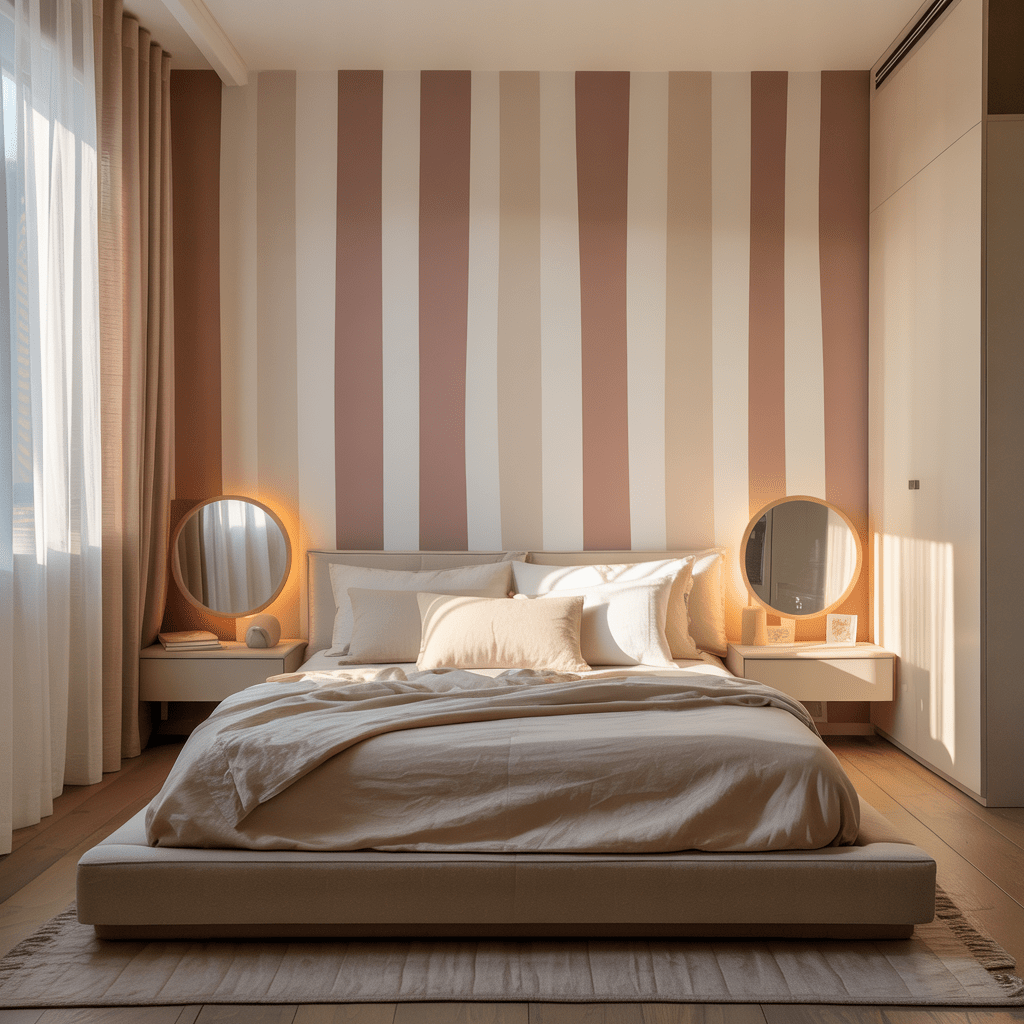
Vertical stripes are one of the oldest tricks in the interior design playbook, and they work just as reliably in a tiny bedroom as they do in a tailored suit. When the eye follows a line upward, the brain reads that vertical movement as height, which makes ceilings feel taller and rooms feel less boxed-in. Painting a stripe pattern on the wall behind your bed using two tones from the same color family, think a warm beige paired with a slightly deeper taupe, or soft white alongside a barely-there greige, creates this effect without introducing any visual chaos. The tones are close enough that the stripes feel subtle and sophisticated rather than bold and overwhelming, which is exactly what a small bedroom needs.
The technique itself is more forgiving than it looks. Use painter's tape and a level to mark out even vertical stripes, typically between four and eight inches wide depending on how graphic you want the final result to be. Paint the entire wall in your lighter base coat first, let it dry completely, then tape off and paint the darker stripes. Peel the tape back while the paint is still slightly wet for the cleanest edge. If painting is not an option in your rental, peel-and-stick wallpaper in a tonal stripe pattern achieves the exact same visual effect and removes cleanly when you move out. Either way, the finished wall adds height to the room in a way that no amount of plain paint can replicate.

2. A Single Bold Dark Wall Paired With White Bedding and Light Furniture
This one genuinely surprises people every time. The idea of painting a wall in a tiny bedroom a deep, saturated color feels counterintuitive at first. Surely a dark wall will make a small room feel smaller and more closed-in? In practice, it does the exact opposite when executed correctly. A deeply saturated accent wall, a rich navy, a forest green, a warm charcoal, or a moody terracotta, creates a sense of depth that a plain white wall simply cannot. The dark tone visually pushes the wall backward, making it appear further away than it actually is. The result is a bedroom that feels like it has more depth from front to back, which translates directly into a perception of more space.
The key to making a bold dark accent wall work in a tiny bedroom is in the contrast you build around it. Pair it with white or very light bedding, light-toned furniture, and reflective surfaces like mirrors or metallic hardware. The high contrast between the dark wall and the bright, light elements in front of it maximizes the sense of depth while keeping the room from feeling gloomy. Natural light helps enormously too, so if your bedroom has a window, make sure the curtains are sheer enough to let maximum daylight in during the day. In 2026, some of the most beautifully photographed small bedrooms on Pinterest are the ones brave enough to go dark on the feature wall, and the results speak for themselves.
3. Peel-and-Stick Geometric Wallpaper for a Renter-Friendly Statement
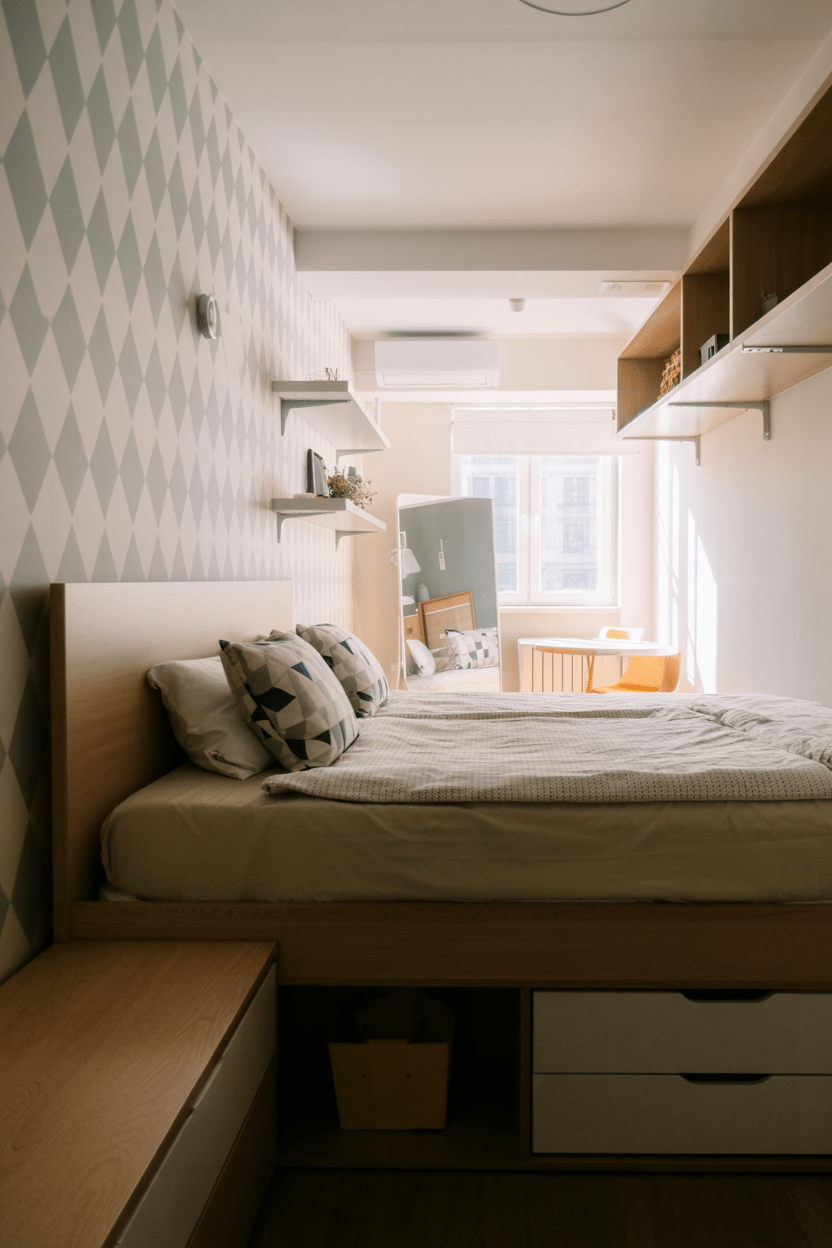
Peel-and-stick wallpaper has completely transformed the accent wall game for renters, and the quality and variety available in 2026 is genuinely impressive. For a tiny bedroom specifically, geometric patterns in a small-to-medium repeat scale are particularly effective because they add visual rhythm and movement to a wall without overwhelming a compact space. A tonal geometric in warm sand and cream tones, for example, adds texture and pattern interest while remaining calm enough to live with every day and to sleep comfortably beside every night. More graphic options like a black-and-white diamond repeat or a subtle arch pattern make a bolder statement that gives the room a designed, editorial quality that plain paint simply cannot achieve.
The installation process for peel-and-stick wallpaper has become significantly more manageable as the products have improved. Most quality versions now reposition without tearing or leaving residue, which takes away the fear of making a mistake mid-installation. For a tiny bedroom accent wall, you are typically working with a relatively small surface area, which makes this a genuinely achievable solo project on a weekend afternoon. Measure carefully, start from the center of the wall and work outward, use a smoothing tool to eliminate air bubbles as you go, and the result can look genuinely professional. Pair the patterned wall with simple, uncluttered furniture and bedding to let the wallpaper read as the intentional focal point it is meant to be.
4. A Half-Painted Color Block Wall to Visually Raise the Ceiling
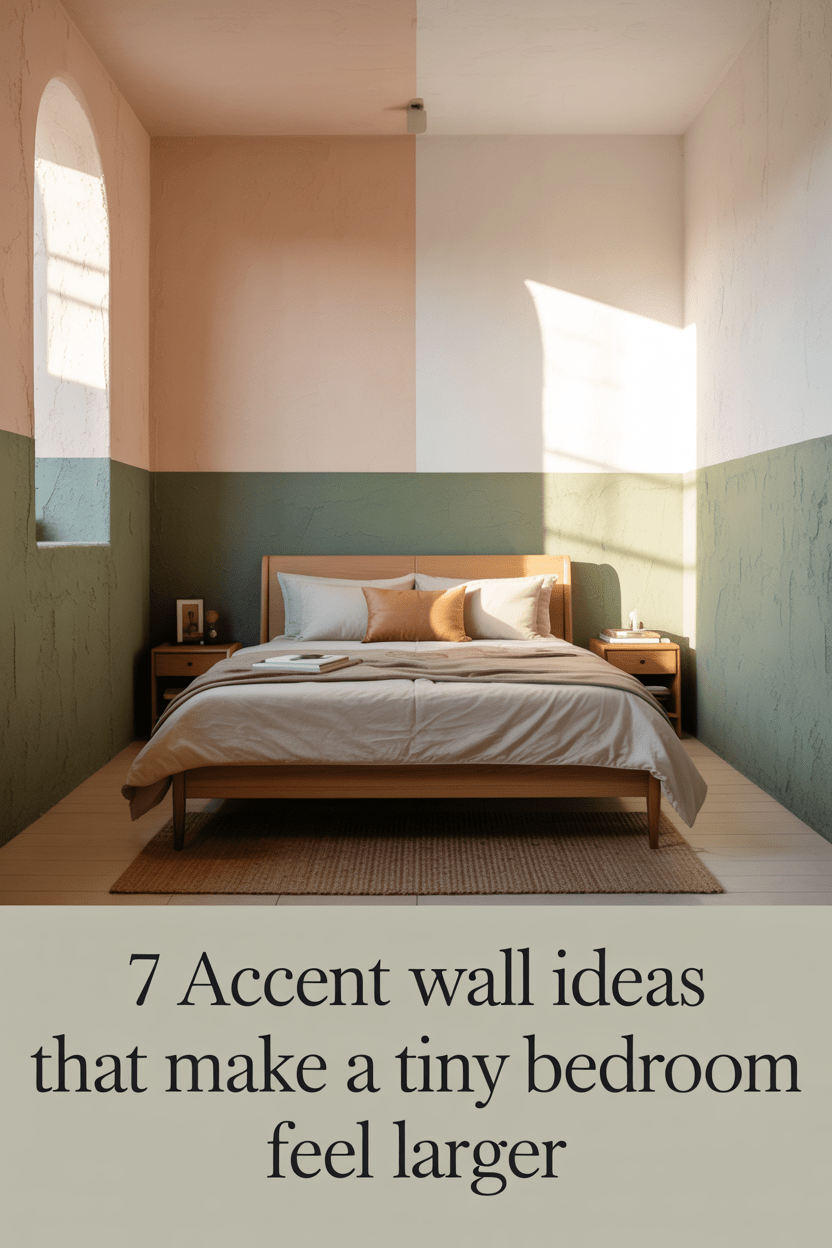
The color block accent wall is one of the most sophisticated and design-forward approaches to small bedroom styling, and it works particularly well in rooms with low or average ceiling heights. The idea is to paint the lower portion of the wall in a color, stopping at roughly two thirds of the wall height, and leaving the upper third in white or the same color as the ceiling. A crisp horizontal line painted with tape creates a clean boundary between the two tones. The effect is striking: by keeping the upper wall and ceiling the same light tone, they visually merge into a single continuous surface that makes the ceiling feel significantly higher than it actually is. The colored lower section, meanwhile, acts as a grounding element that adds depth and calm to the room.
Sage green is currently one of the most popular choices for this treatment because it has a naturally calming, organic quality that suits bedroom spaces beautifully. Dusty rose, warm terracotta, soft slate blue, and muted mustard are all equally effective options depending on your existing color palette and personal taste. The color block approach uses less paint than a full wall treatment, which is both more budget-friendly and easier to execute cleanly since you are working on a smaller surface area. It is also more forgiving in a tiny room because the lighter upper wall keeps things feeling open and airy while the color still does the work of creating a focal point and adding visual interest to what would otherwise be a very plain space.
5. A Textured Limewash Wall for Depth Without Pattern
If you want an accent wall that adds serious visual depth and an expensive, artisanal quality without any actual pattern, limewash paint is the answer. Limewash creates a layered, slightly mottled finish that mimics the look of aged plaster or stone, and the way it catches light from different angles throughout the day means the wall is never quite the same color twice. In a tiny bedroom, this kind of organic variation adds dimension that a flat painted wall simply cannot replicate, and because the tones within the finish are all closely related, it never feels busy or visually overwhelming. The result is a wall that looks like it has always been there, like the bedroom has real architectural history even if it was built ten years ago in a modern apartment block.
Limewash paint is more widely available now than it has ever been, with several affordable versions on the market specifically designed for DIY application. The technique involves applying the paint in irregular strokes with a large brush and then working back over wet areas with a damp cloth or a dry brush to create the characteristic variation. It is genuinely one of the more enjoyable accent wall techniques to apply because there is no wrong way to do it, imperfection is the entire point. Choose a warm, earthy tone like aged linen, pale terracotta, or weathered stone for the most flattering result in a small bedroom, and pair the finished wall with simple, natural-material furniture and bedding to complement its organic character.
6. A Mirrored or Reflective Panel Wall to Double the Visual Space
Mirrors make small rooms feel larger because they reflect light and create the impression of a space that extends beyond the actual wall. Taking this principle to the accent wall level by covering a significant portion of the wall behind the bed with mirrors or reflective panels amplifies the effect dramatically. You do not need to cover the entire wall to achieve this, a single large mirror hung horizontally above the headboard, or a grouping of three or four mirrors arranged in a considered composition, reflects enough of the room back at you to create a convincing sense of expanded depth. The bedroom appears to have a twin on the other side of the wall, which effectively doubles the perceived floor space in a way that no amount of paint or wallpaper can quite match.
For a more contemporary approach, consider a single large arch-shaped mirror or an oversized rectangular one with a thin frame in warm metal or natural rattan. These shapes have a sculptural quality that makes the mirror itself a piece of decor rather than just a functional object, which suits the accent wall role particularly well. If your budget allows for something more substantial, a wall of antiqued mirror panels in a grid arrangement creates a glamorous, boutique hotel quality that feels genuinely luxurious in even the tiniest bedroom. Position a light source nearby so the mirror catches and reflects warm light back into the room, maximizing both the spatial and the atmospheric effect of the reflective surface.
7. Shiplap or Wood Slat Paneling for Warmth and Architectural Interest
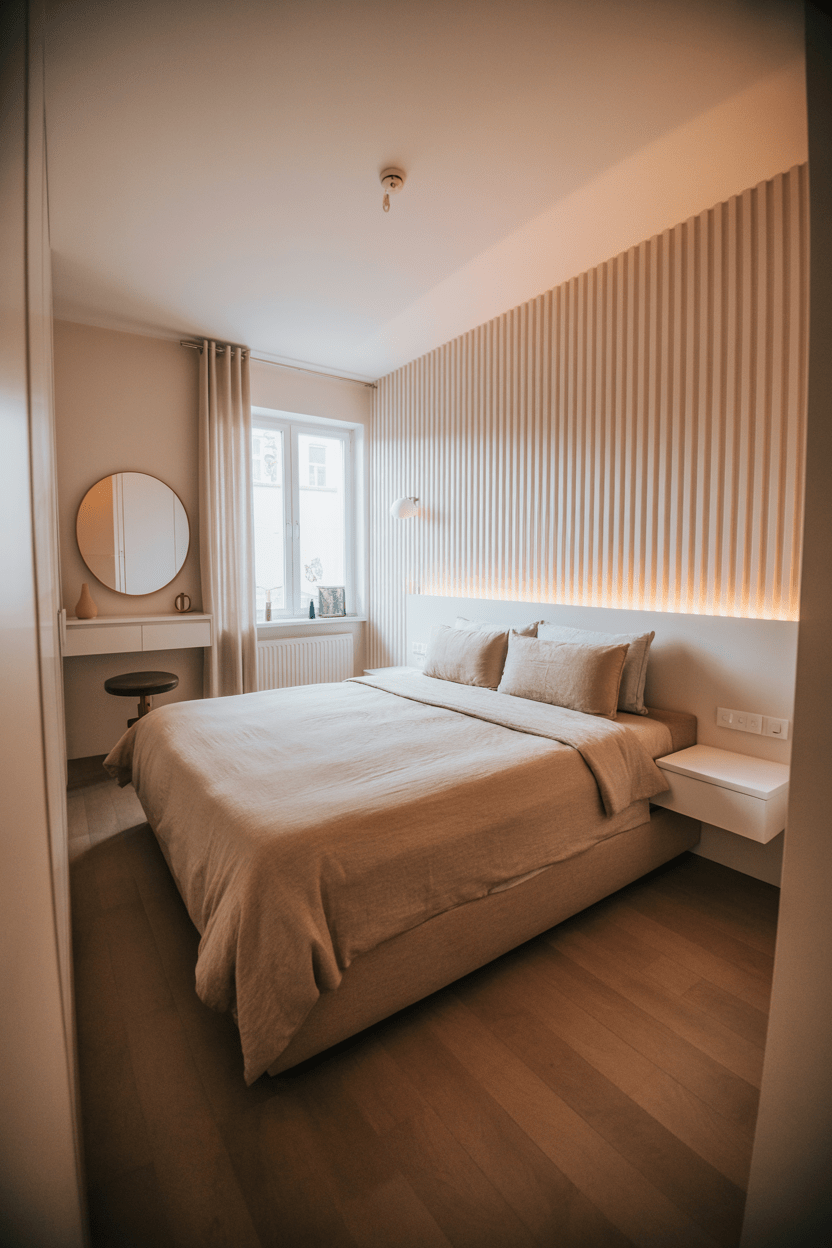
A paneled accent wall adds something that paint and wallpaper fundamentally cannot: actual physical texture and dimension. Whether you opt for horizontal shiplap boards, vertical wood slats, or a more graphic slatted panel system, the result is a wall that has real depth and shadow play that changes subtly as the light in the room shifts throughout the day. In a tiny bedroom, this kind of architectural detail elevates the entire space instantly. The room stops looking like a plain box and starts feeling like a considered interior with genuine design investment behind it. The natural material quality of wood also adds warmth that balances perfectly against the cooler tones of white bedding and neutral walls.
The most budget-friendly approach is to use thin poplar or pine boards from a hardware store, cut to length and attached to the wall with construction adhesive rather than nails if you need a renter-friendly method. Paint them in the same tone as the surrounding walls for a subtle, tonal effect that adds texture without color contrast, which is the most space-expanding approach for a very small room. Alternatively, paint the paneled wall in a deeper tone than the surrounding walls and let the color contrast between the paneling and the plain walls do the work of defining the space and creating depth. Pre-made slatted wood panel systems, which clip together and mount with minimal hardware, are also increasingly available and make the installation process much more straightforward than working with individual boards from scratch.
An accent wall is one of the most powerful tools available for transforming a tiny bedroom, precisely because it works on a psychological level rather than a purely physical one. It shifts where your eye goes when you enter the room, creates a sense of depth that the actual dimensions do not provide, and gives the space a feeling of intention and design that makes it genuinely more pleasant to spend time in. You do not need a large budget or permanent changes to try most of these ideas, and you do not need to commit to all seven at once. Pick the one that feels most aligned with your current bedroom and your personal aesthetic, give it a weekend afternoon, and see what a single well-executed accent wall can do for a space you might have been underestimating all along.