
Loading...
Small kitchens have a particular talent for becoming chaotic very quickly. One grocery run, a few cooking sessions, and suddenly the counter is covered in things that have nowhere logical to live, the cabinet you need is blocked by the one you do not, and finding the right lid for a pot feels like a small daily archaeological expedition. The frustrating part is that the problem is rarely about having too much stuff. More often it is about storage that has not been thought through, space that is going completely unused, and organizational systems that worked fine in theory but collapsed the moment real life showed up. These eleven hacks are the ones that actually make a difference in a small kitchen, not in a vague, inspirational way, but in the very specific, practical sense of making daily cooking and tidying noticeably easier and more satisfying. Most of them cost very little, some cost nothing at all, and all of them are the kind of thing you will genuinely wish someone had told you about sooner.
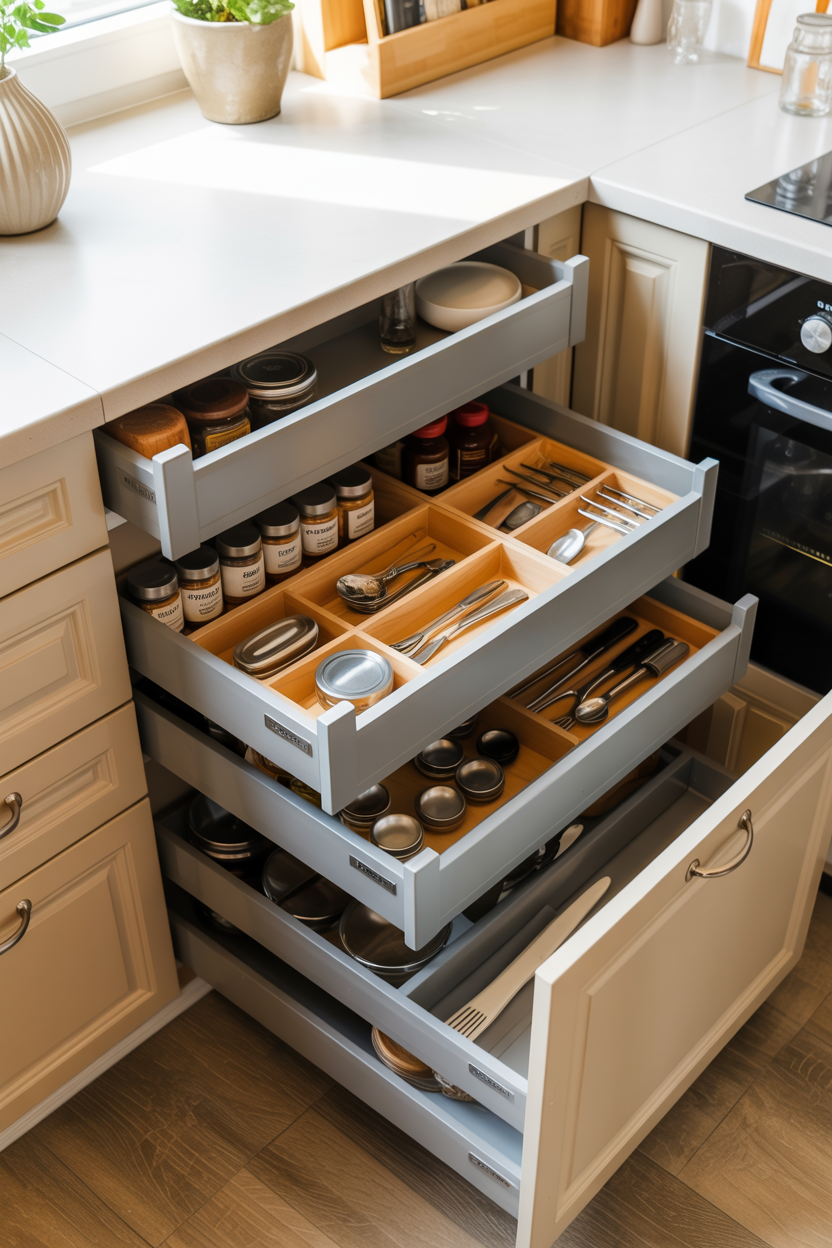
1. Use Drawer Dividers to Turn Chaotic Drawers Into Functional Ones
The kitchen junk drawer is practically a universal experience, but in a small kitchen where every drawer needs to pull its organizational weight, the chaos-drawer approach wastes space that the kitchen genuinely cannot afford. Drawer dividers are one of the most immediately satisfying kitchen organization purchases you can make because the before-and-after difference is so stark and the improvement to daily function is so immediate. Adjustable bamboo or acrylic dividers create dedicated compartments for utensils, measuring spoons, peelers, and all the small tools that currently mix together into an indistinguishable pile. Once everything has a designated section, finding what you need takes a second rather than a frustrating rummage every single time.
The key to making drawer dividers work long-term is editing the contents of the drawer at the same time as installing them. Pull everything out, be honest about what you actually use, and remove anything that has not been touched in months. A drawer with twelve items in clearly divided sections is dramatically more functional than a drawer with thirty items divided into the same sections. In a small kitchen where you might only have two or three drawers to work with, each one needs a clear purpose: one for cutlery, one for cooking utensils and tools, one for miscellaneous items like twist ties, batteries, and takeout menus. Assign the purpose before you organize and the dividers will keep everything in order almost automatically from that point forward.
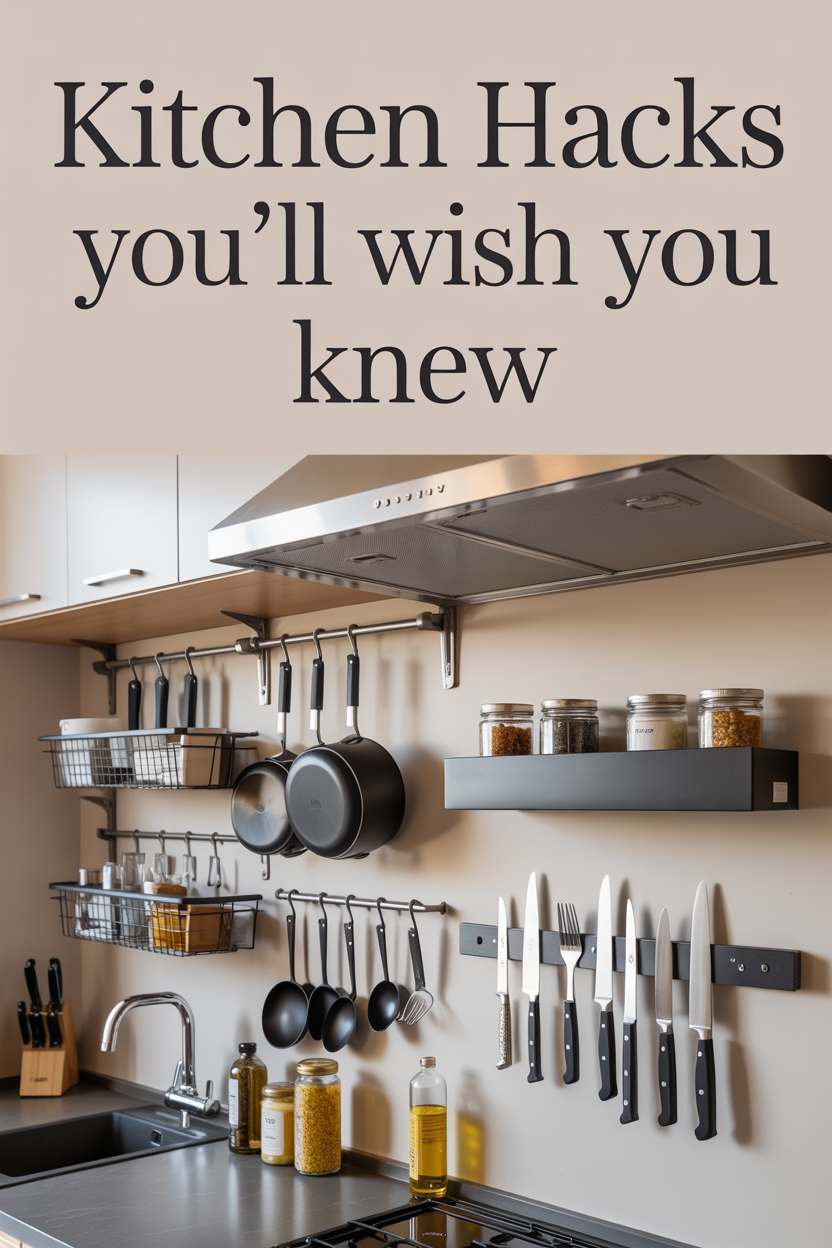
2. Mount a Magnetic Knife Strip and Pegboard to Free Up Counter and Drawer Space
Wall space in a small kitchen is storage space waiting to be activated, and two of the most effective wall-mounted solutions available are the magnetic knife strip and the pegboard. A magnetic knife strip mounted on the wall beside or above the counter keeps knives immediately accessible, eliminates the bulky knife block that takes up precious counter real estate, and actually keeps blades sharper for longer since they are not knocking against each other in a drawer. The strip itself takes up no counter or drawer space at all, costs very little, and adds a professional, organized quality to the kitchen that the most well-photographed home kitchens consistently feature.
A pegboard mounted on an available kitchen wall takes the concept further and creates a fully customizable vertical storage system for pots, pans, utensils, small appliances, and even spice jars. Hooks, shelves, and bins attach to the pegboard grid and can be rearranged freely as your needs change, which makes it far more adaptable than fixed shelving. Paint the pegboard the same color as the wall for a seamless, built-in look, or choose a contrasting tone, matte black on a white wall is a combination that consistently looks both practical and stylish, and let it become a feature of the kitchen rather than just a storage solution. In a narrow kitchen where floor and counter space are genuinely limited, moving storage to the walls is one of the highest-impact organizational decisions you can make.
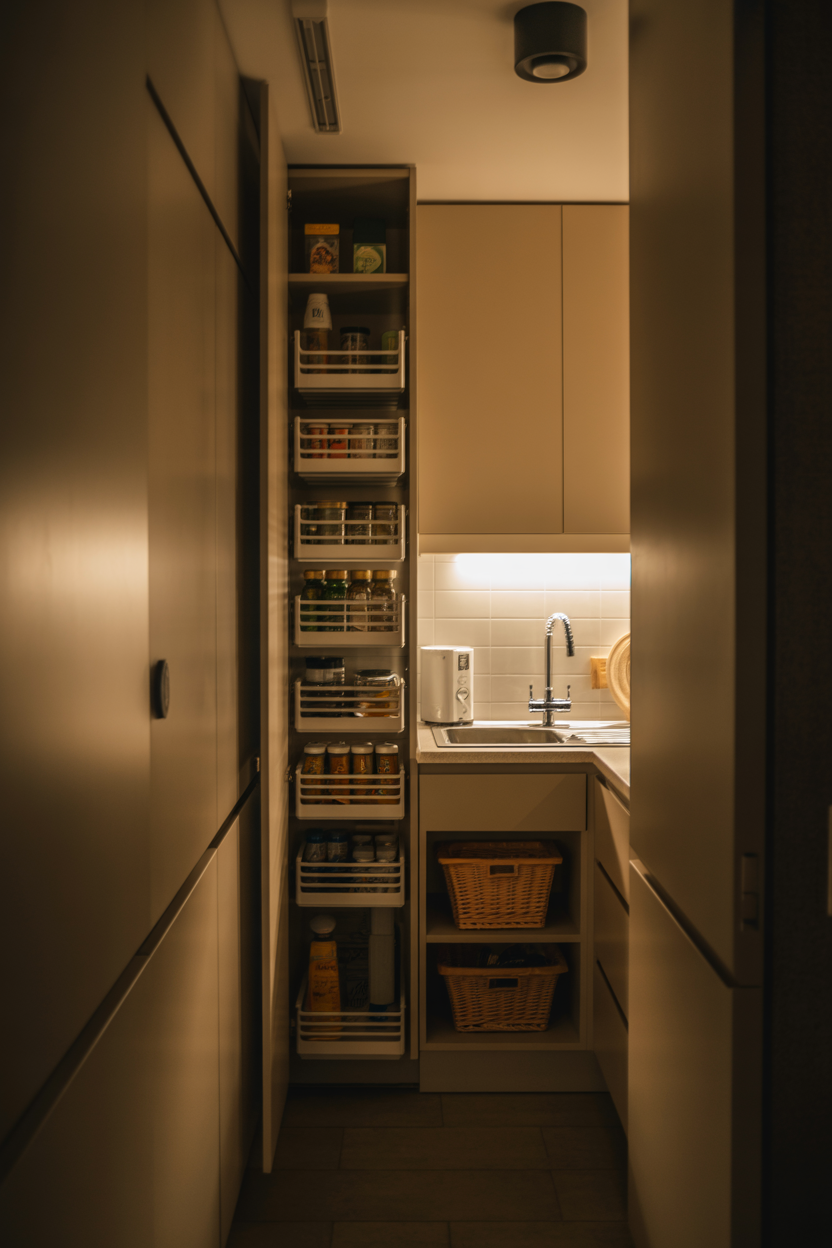
3. Add a Slim Pull-Out Pantry to Fill the Gap Between Appliances
The narrow gap between your refrigerator and the adjacent cabinet or wall is one of the most commonly wasted spaces in a small kitchen. It is usually between four and eight inches wide, which seems too narrow to be useful, but is actually the perfect dimension for a slim pull-out pantry cart. These rolling units slide into the gap and roll out smoothly on small wheels to reveal multiple shelves stacked with canned goods, spice jars, oils, vinegars, and other pantry staples that would otherwise be crowded into already overstuffed cabinets. When pushed back in, the cart is invisible from the front and the kitchen looks completely unaltered. When pulled out, the amount of additional pantry storage it provides is genuinely impressive for a space that was previously doing nothing.
Measure the gap precisely before purchasing a pull-out pantry cart, since the width varies enough that a few centimeters can be the difference between a perfect fit and a cart that either will not slide in or rattles around with too much room on either side. Most quality versions come in adjustable widths or several standard sizes to accommodate the most common gap dimensions. Once installed, organize the shelves by category and frequency of use, most-used items at eye level, less frequently accessed things on the higher or lower shelves. The resulting pantry is one of those organizational solutions that makes you genuinely wonder how you managed without it, not because it is technically impressive but because the amount of cabinet space it frees up elsewhere in the kitchen changes the way the entire space functions.
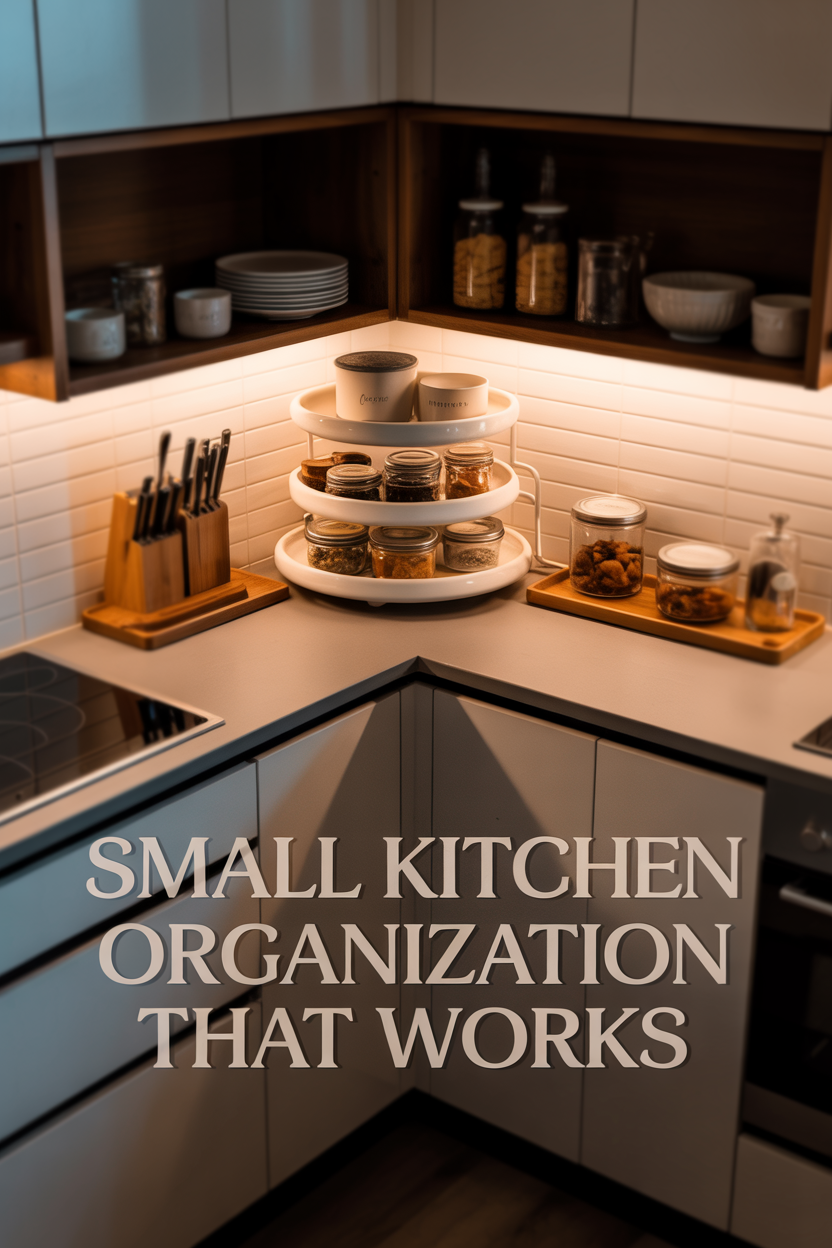
4. Keep Countertops Clear by Relocating Everything That Does Not Earn Its Spot
Counter space in a small kitchen is the most valuable real estate in the room, and the things that live on it permanently need to genuinely earn that placement through daily use. The toaster that gets used every morning earns its counter spot. The blender that comes out twice a month does not. The decorative fruit bowl that holds one sad lemon and a few rubber bands definitely does not. Going through every item currently on your counter and honestly assessing how frequently it is used is one of the most effective kitchen organization exercises available, and it costs absolutely nothing. Move anything that is not used daily into a cabinet, a drawer, or a dedicated appliance storage area and watch the kitchen immediately feel larger, calmer, and easier to cook in.
For the items that do earn counter space, organizing them onto a small tray or into a contained area gives them a sense of intentionality rather than scattered presence. A small wooden tray holding the salt, pepper, and a small olive oil bottle beside the stove keeps those daily cooking essentials within reach while containing them visually into a single unit rather than three separate objects taking up three separate patches of counter. This same logic applies to the coffee station, the fruit bowl, and any other countertop zone you choose to keep. Containing things into defined areas, even on open counter space, gives the kitchen a sense of order that makes the whole room feel more organized than the actual amount of tidying involved would suggest.
5. Install a Tension Rod Under the Sink to Double Your Cleaning Supply Storage
The cabinet under the kitchen sink is one of the most universally chaotic storage spots in any small apartment kitchen. The irregular shape of the space, broken up by pipes and plumbing, makes it difficult to fit standard storage solutions, and the result is usually a jumble of cleaning products, spare sponges, and garbage bags piled in without any system. A simple tension rod installed horizontally across the inside of the cabinet at a height that clears the plumbing immediately transforms the situation. Hang spray bottles from the rod by their trigger handles and the entire base of the cabinet is freed up for flat-bottomed items organized in small bins. The installation takes under two minutes and the cost is negligible.
Take the under-sink organization a step further by adding a small adhesive hook on the inside of the cabinet door to hold a pair of cleaning gloves, and a narrow tension-mounted shelf above the rod for smaller items like sponges, dish tablets, and bottle brushes. The combination of the rod, the hooks, and the additional shelf turns a previously wasted under-sink cabinet into a genuinely efficient cleaning supply zone where everything has a designated place and nothing gets buried or forgotten. When the cabinet door is closed, none of it is visible, which means the kitchen looks tidy from the outside while being impressively organized on the inside. That hidden functionality is exactly the kind of hack that makes daily life in a small kitchen meaningfully easier.
6. Stack Pots and Pans With Lid Organizers to Reclaim Cabinet Space
Pots, pans, and their lids are among the most space-inefficient items in any kitchen cabinet because they stack imperfectly and the lids in particular have no good place to live. They slide around, fall over, and turn the process of retrieving any single pot into a minor engineering challenge involving carefully removing everything else first. A dedicated lid organizer, either a vertical rack that holds lids upright like files or a wall-mounted or door-mounted version that stores lids in a row, solves this immediately. Lids stored vertically in a rack take up a fraction of the space they occupy when lying flat or balanced precariously on top of stacked pots, and the pot cabinet becomes genuinely accessible rather than something to be approached with caution.
For the pots themselves, a stackable pot organizer with removable dividers allows you to nest cookware more efficiently while keeping each piece individually accessible without unstacking everything above it. If cabinet depth allows, organizing pots by size from smallest to largest with dividers between each grouping makes retrieval intuitive and tidy. Hanging frequently used pans from a mounted pot rail or a pegboard hook rather than storing them in the cabinet entirely frees up even more cabinet space for items that cannot be hung. In a small kitchen where the cookware cabinet is often one of the most frustrating organizational pain points, addressing it directly with a combination of these solutions produces one of the most satisfying before-and-after results in the entire kitchen.
7. Use the Inside of Cabinet Doors for Spice and Foil Storage
The inside surfaces of cabinet doors are another category of completely underutilized storage in most small kitchens. A door-mounted spice rack installed on the inside of a cabinet door near the stove holds twelve to twenty spice jars in a space that was previously doing nothing at all, which frees an entire shelf inside the cabinet for other items. Adhesive-mounted options require no drilling and hold surprising amounts of weight when installed on a clean, flat cabinet door surface. Screw-mounted versions provide even greater stability and capacity. Either way, the result is spice storage that is both accessible, right there when you are cooking, and invisible the moment the cabinet door closes.
The same principle applies to foil, cling wrap, and parchment paper. These long, awkward rolls have no good home in a standard cabinet where they inevitably fall over and roll into the back of the shelf. A door-mounted organizer specifically sized for wrap rolls keeps them upright, labeled, and immediately accessible on the inside of a lower cabinet door near the counter where you prep food. Some versions include a cutter bar that lets you tear the wrap directly from the dispenser without removing the roll at all, which is the kind of small daily convenience that adds up to a meaningfully smoother cooking experience over time. Both of these door-storage solutions are among the highest-value, lowest-cost organizational upgrades available for a small kitchen in 2026.
8. Organize the Fridge With Clear Bins to Eliminate the Mystery Food Problem
Refrigerator organization might not seem like a kitchen storage hack in the traditional sense, but in a small apartment kitchen where the fridge is often the primary food storage space, a chaotic fridge contributes directly to the feeling that the kitchen is perpetually disorganized and hard to manage. The most common fridge organization problem is items getting pushed to the back where they are invisible and forgotten, which leads to both food waste and the frustrating discovery of things that have been there far longer than anyone realized. Clear acrylic or plastic bins grouped by category, dairy in one, condiments in another, leftovers in a dedicated zone, solve this problem because everything is visible from the front of the shelf without having to move anything.
Pull-out fridge bins that slide forward when you open the door make back-of-fridge items accessible without any excavation, which is particularly useful on deep shelves where things naturally migrate backward. Labeling each bin, a chalk label on a bin side or a simple adhesive label, creates a system that other household members can follow without any instruction, which is the sign of an organizational system that will actually be maintained rather than abandoned after a week. The visual result of a fridge organized with matching clear bins is also genuinely satisfying to open, clean lines, visible contents, no mystery containers lurking in corners, which somehow makes the act of cooking feel more appealing than a chaotic fridge ever does.
9. Hang a Rail System on the Backsplash for Instant Accessible Storage
A rail system mounted on the backsplash between the counter and the upper cabinets turns a purely decorative surface into a highly functional storage zone that keeps frequently used items within arm's reach without taking up any counter or cabinet space. These systems typically consist of one or two horizontal rails to which various hooks, baskets, magnetic strips, and small shelves can be attached and rearranged freely. Hang a small basket for onions and garlic, a hook for the kitchen scissors, a magnetic strip for small tools, and a tiny shelf for a small potted herb and the backsplash becomes a working part of the kitchen rather than just the space between the counter and the cabinet above.
Rail systems with adhesive mounting are completely renter-friendly and hold more weight than most people expect when the adhesive is applied correctly to a clean, smooth backsplash surface. Stainless steel rail systems with matching accessories have a clean, professional kitchen quality that photographs particularly well and suits modern, minimal kitchen aesthetics. Black iron rail systems have a more rustic, industrial character that works beautifully in warmer, more eclectic kitchen spaces. Either way, the key is to hang only the items you reach for every day so the rail remains genuinely functional rather than becoming another surface for random accumulation. Edited and intentional, a backsplash rail system is one of the smartest storage moves a small kitchen can make.
10. Use Risers Inside Cabinets to Double Your Shelf Capacity
Standard kitchen cabinets are built with a fixed number of shelves spaced at intervals that rarely align perfectly with the actual height of the items stored in them. The result is a frustrating amount of wasted vertical space above shorter items like plates, bowls, and canned goods, where there is technically room for another layer of storage but no shelf to put it on. Adjustable cabinet risers solve this elegantly. These small stepped platforms sit inside the cabinet and allow you to stack a second layer of items on top of them while keeping the items below fully accessible. A riser in the dish cabinet allows you to store bowls on the riser platform and plates beneath it, effectively doubling the number of items the shelf holds without any installation or modification.
Stackable can organizers are a related solution specifically designed for the pantry cabinet, where canned goods stacked flat tend to hide the cans underneath and make it impossible to see what you have without unstacking everything. A sloped can organizer holds cans at an angle so they roll forward automatically when the front one is removed, creating a first-in-first-out system that keeps everything visible and accessible at all times. In a small kitchen where cabinet space is extremely limited, these two solutions, risers for dishware and stackable organizers for pantry items, recover a surprising amount of functional storage from shelves that were already considered full. The satisfaction of fitting meaningfully more into the same cabinet without it feeling cramped is one of those small organizational wins that makes daily kitchen life genuinely better.
11. Create a Dedicated Baking Station in a Single Bin or Basket
This final hack is less about physical storage infrastructure and more about organizational thinking that transforms how a small kitchen functions. In a compact kitchen where every item competes for limited space, grouping things by activity rather than by category makes the kitchen dramatically easier to use. A dedicated baking station, a single large bin or basket that holds all your baking essentials together, measuring cups, measuring spoons, baking powder, vanilla extract, spatulas, and piping bags, means that when you want to bake something, everything you need comes out of one container rather than requiring a cabinet-by-cabinet hunt across the whole kitchen.
The same logic applies to a coffee station basket, a breakfast basket, or a snack bin. Each grouped collection lives in a single accessible location and comes out as a unit when needed, then returns to its place as a unit when finished. In a small kitchen where storage is spread across multiple limited cabinets and drawers, this activity-based grouping system dramatically reduces the time spent searching for things and the frustration of discovering mid-recipe that the item you need is missing or hidden somewhere unexpected. It is the kind of organizational approach that sounds almost too simple to make a real difference, until you try it and realize it changes the experience of being in the kitchen completely. Cooking feels easier, tidying up feels faster, and the kitchen stays organized almost on its own because the system is genuinely intuitive to maintain.
A small kitchen that is well-organized is genuinely one of the most functional spaces in any apartment, and the hacks on this list prove that you do not need more square footage or a full renovation to get there. You need the right systems, applied in the right places, with a willingness to edit what you own and be intentional about where everything lives. Start with the two or three hacks that address your most persistent kitchen frustrations and implement them this week. The momentum that comes from one well-organized drawer or one freed-up counter tends to be contagious, and before long the whole kitchen will reflect the kind of calm, effortless order that makes cooking and daily life in a small apartment genuinely enjoyable rather than something to work around.