
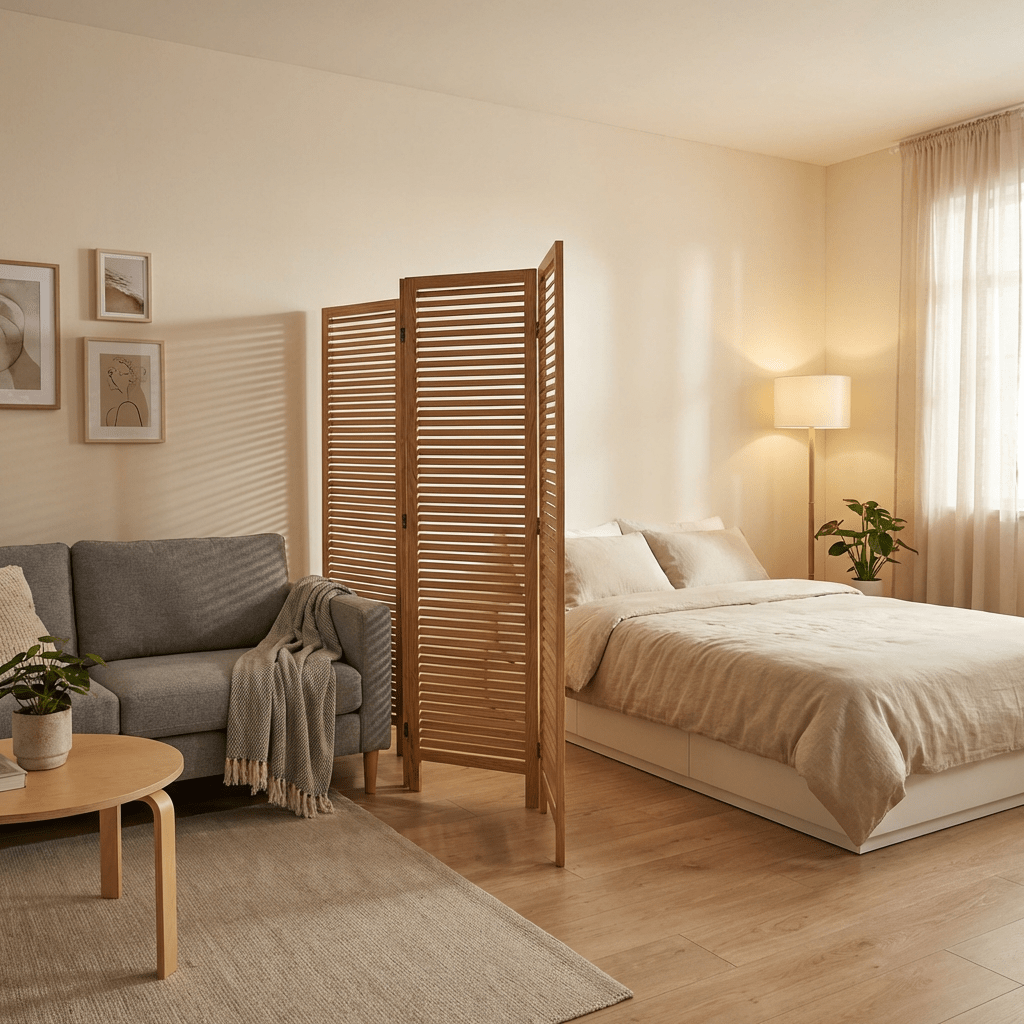
The hardest part of studio living is that there are no doors. The bed is visible from the sofa and the front door, and guests see your unmade bed the moment they walk in. A divider doesn't need to be a wall to fix that; it just needs to break the line of sight and mark where one area ends.
Dividers differ in what they block. Some block sight but let light through; some add storage; a few block light completely for sleeping. The four studios in these photos each use a different type. Before choosing, decide what you need most: privacy, daylight reaching the back of the room, or storage. Then measure the width you need to cover and the ceiling height.
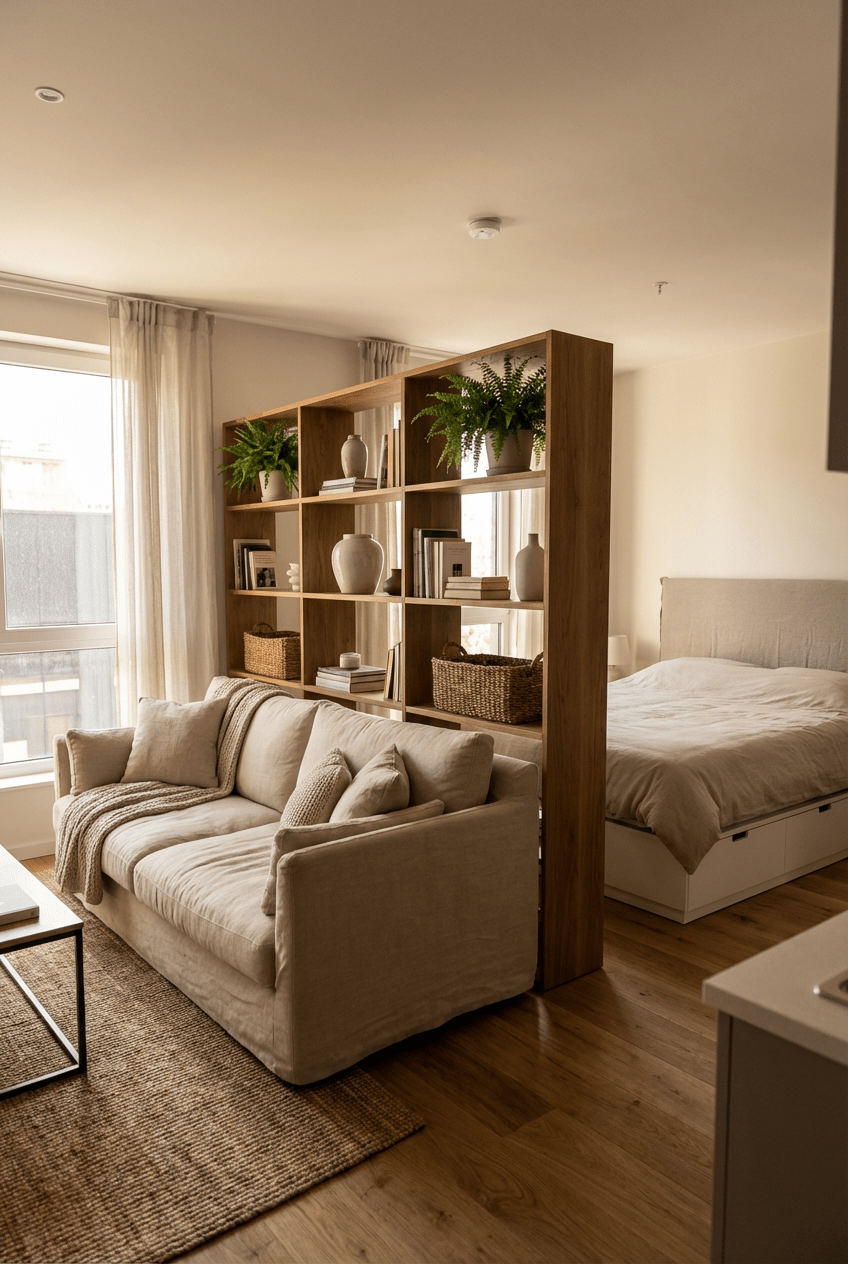
1. An open bookshelf set out from the wall
An open-back cube bookshelf placed at a right angle to the wall, like the wood one behind the sofa in this photo, separates the bed from the living area and adds storage on both sides. Light passes through the open cubes, so the back of the room doesn't go dark.
Cube shelves 4 or 5 cubes high, about 57 to 70 inches tall, block the view of the bed from a seated position. Choose one with no back panel so it looks good from both sides, and style the shelves with books, baskets and plants.
A freestanding bookshelf away from the wall can tip. Fix it to the floor with brackets, or to the ceiling with an anti-tip kit or a tension post, and keep heavy books on the lowest shelves.
Leave at least 30 inches between the end of the shelf and the opposite wall so you can walk through comfortably.
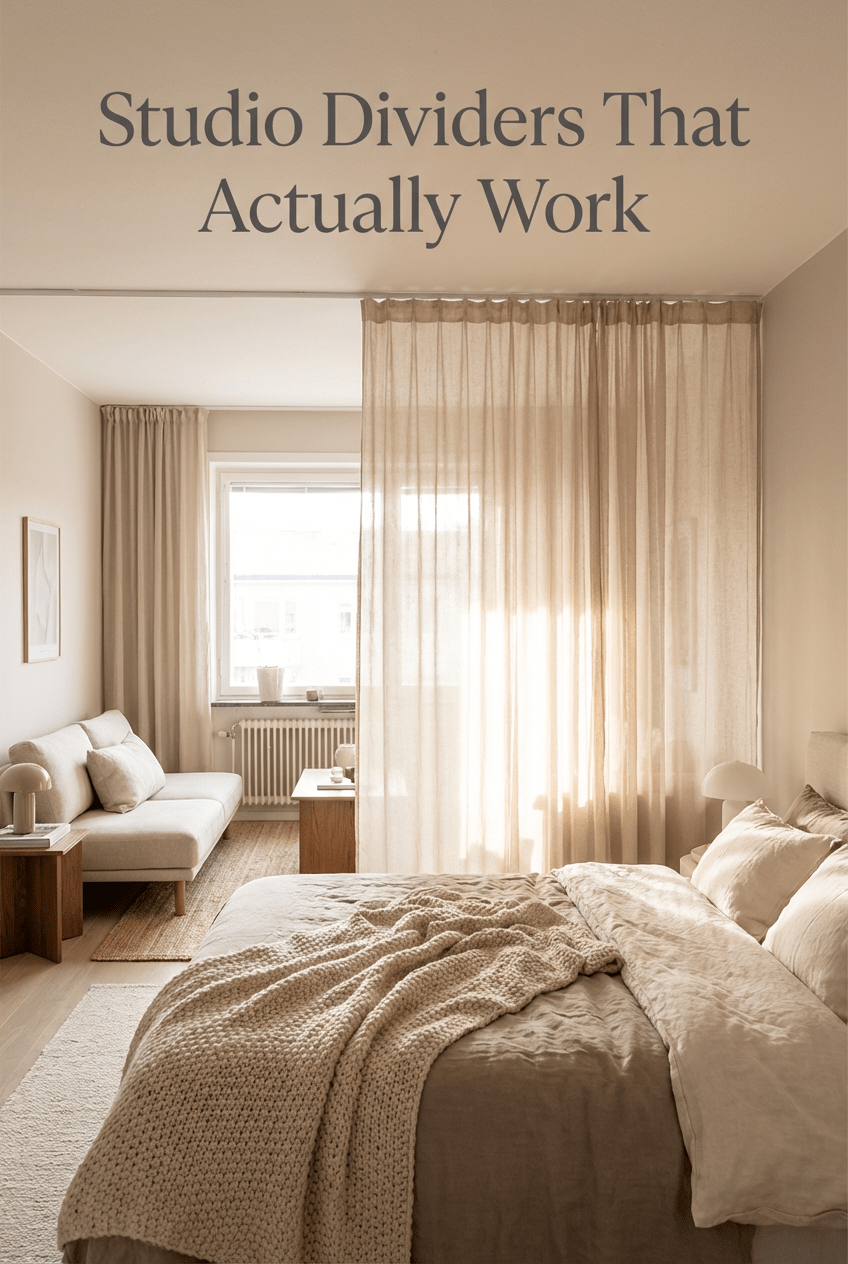
2. A curtain on a ceiling track
A curtain on a ceiling-mounted track, like the sheer linen panel in this photo, closes off the sleeping area when you want privacy and slides back to open up the room. It's the most flexible divider and takes up no floor space.
Ceiling tracks cost about $30 to $80 and screw into the ceiling every few feet. Use panels that reach from the ceiling to just above the floor, and choose sheer fabric to let light through or a heavier, lined one for real privacy and darkness.
In a rental, ask before drilling into the ceiling. A tension rod between two walls holds lighter curtains without any holes, if your layout has walls on both sides.
Allow about one and a half to two times the opening width in fabric, so the curtain looks full when closed.
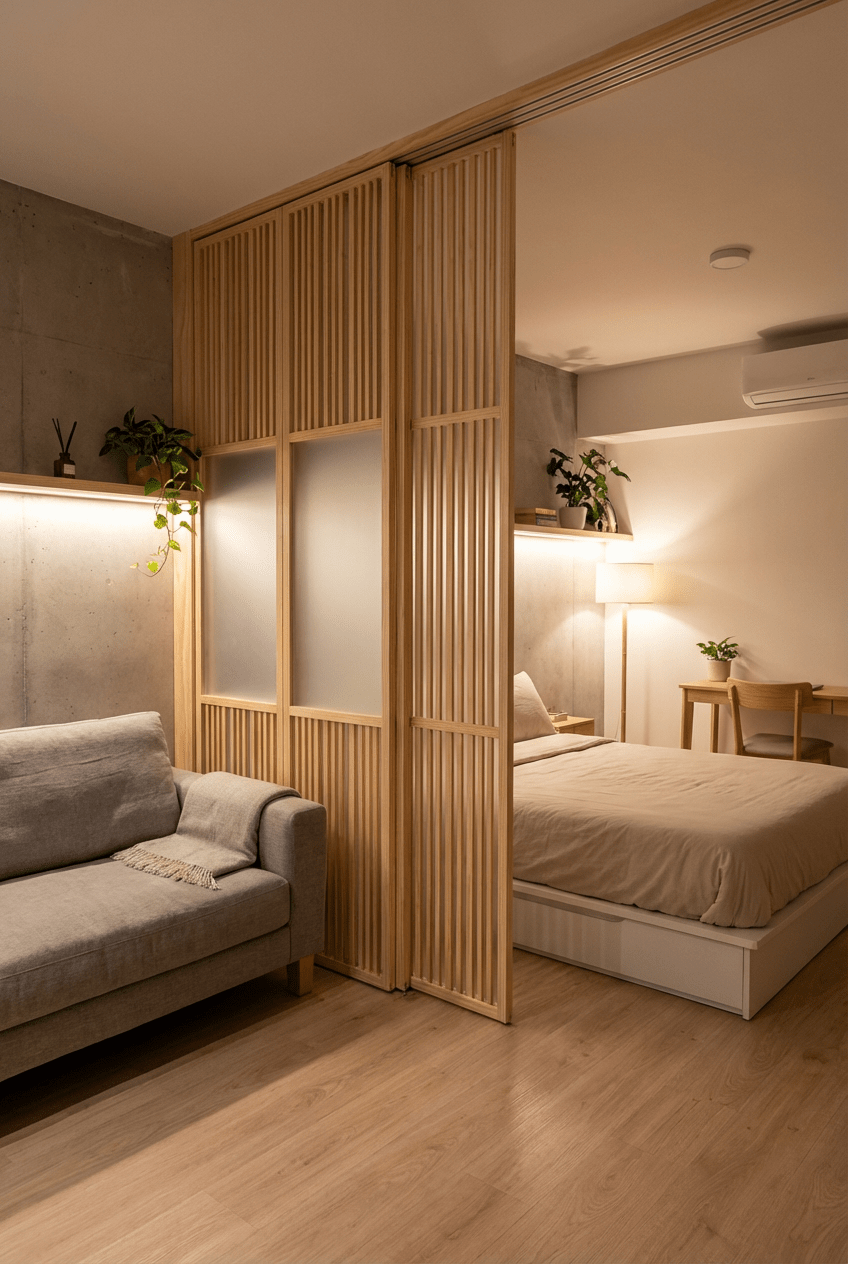
3. A slatted or folding screen
A screen of wood slats, like the light wood panels with frosted inserts in this photo, hides the bed while still letting light and air through. Folding screens need no installation and move wherever you need them.
Freestanding folding screens cost about $60 to $200 and usually stand 5 to 6 feet tall. Wider screens with four or more panels are more stable than narrow ones. On a slippery floor, rubber pads under the feet stop the screen from sliding.
Screens are lighter than shelves, so they can blow over in a draft or if a pet brushes against them. Angle the panels in a zigzag for stability.
Folded flat, a screen stores behind a wardrobe or under the bed, which makes it useful if you only want the bed hidden when guests visit.
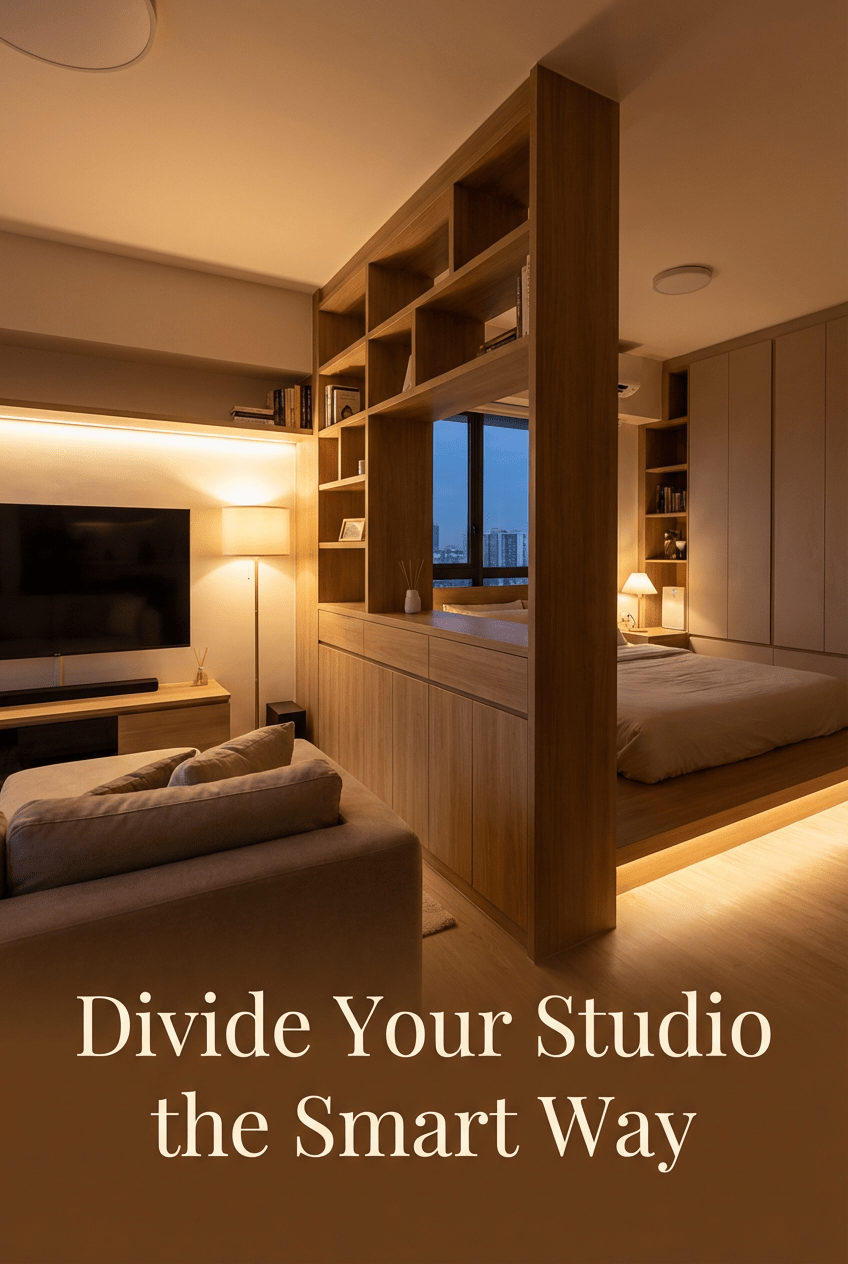
4. A half-height cabinet
A half-height cabinet or console between zones marks a boundary without blocking light at all. In this photo, a low cabinet with tall open shelves above separates the TV area from a raised bed, with lighting under the platform.
You can get a similar effect with a console table or a low sideboard behind the sofa, which marks the end of the living area. Adding a set of open shelves on top, as here, increases privacy while keeping the room open.
A long low cabinet also gives you storage for things you'd otherwise keep under the bed. Anchor any tall shelving on top so it can't tip.
5. A hanging fabric or macrame panel
A macrame panel, a woven hanging or a length of fabric hung from the ceiling makes a soft, textural divider. It suits a boho room and partly screens the bed without blocking light.
Hang it from a dowel suspended on hooks screwed into ceiling joists. Keep the bottom a few inches above the floor so it doesn't drag.
Several narrow panels hung in a row, with gaps between them, screen more than one wide piece and look lighter. Vacuum macrame gently on a low setting every few weeks, since the knots trap dust.
6. Tall plants
A row of tall plants, or a plant shelf filled with trailing ones, makes a living divider. Fiddle-leaf figs, rubber plants and snake plants grow tall and upright.
Plants need light, so this works best when the divider sits near a window. Group pots on a long, low plant stand or tray so you can move them together and protect the floor from water.
For faster privacy, a tall trellis or a slim shelving unit with trailing pothos on every shelf fills in within a season. Faux plants work in a dark studio and need no watering at all.
7. A floor-to-ceiling curtain between two walls
If your studio has an alcove or an L-shape where the bed sits, a curtain across the opening can enclose the bed completely. It's the closest you'll get to a separate bedroom.
Blackout curtains make the sleeping area dark for late mornings. Use a heavy-duty tension rod or ceiling track rated for the curtain's weight, since lined curtains are heavy.
Leave a small gap at the top or use a lighter fabric if the sleeping area has no window, so air can circulate.
8. A loft bed
In a studio with high ceilings, a loft bed lifts the sleeping area off the floor and frees the space underneath for a desk, a sofa or storage. It divides the room vertically rather than across the floor.
You need at least 8 to 9 feet of ceiling for a loft bed, with about 30 to 36 inches between the mattress and the ceiling so you can sit up. Choose a sturdy metal or solid wood frame, and check the weight limit.
A loft needs a guardrail on every open side and a secure ladder or stairs. It isn't a good idea for anyone who gets up often in the night.
Combine a divider with a rug and light
A divider works better when each zone looks different. Put a rug under the living area and another beside the bed, and give each zone its own lamp, so the room reads as two spaces even with the divider open.
Keep colors related across both sides, though. In a studio, everything is still visible together, and two completely different color schemes look disjointed. Our guide to studio apartment layouts covers where to put the bed and sofa in the first place.
Common questions
What's the best room divider for a studio apartment?
An open bookshelf if you need storage and light, a ceiling-track curtain if you want privacy that opens up, and a folding screen if you need something portable that needs no installation.
How do you divide a studio without blocking light?
Use an open-back shelf, a sheer curtain, a slatted screen or a half-height cabinet. All of them break the line of sight while letting light through.
Decide what you need to block, then measure before you buy. For more studio ideas, see our guide to clever storage for a tiny apartment.