
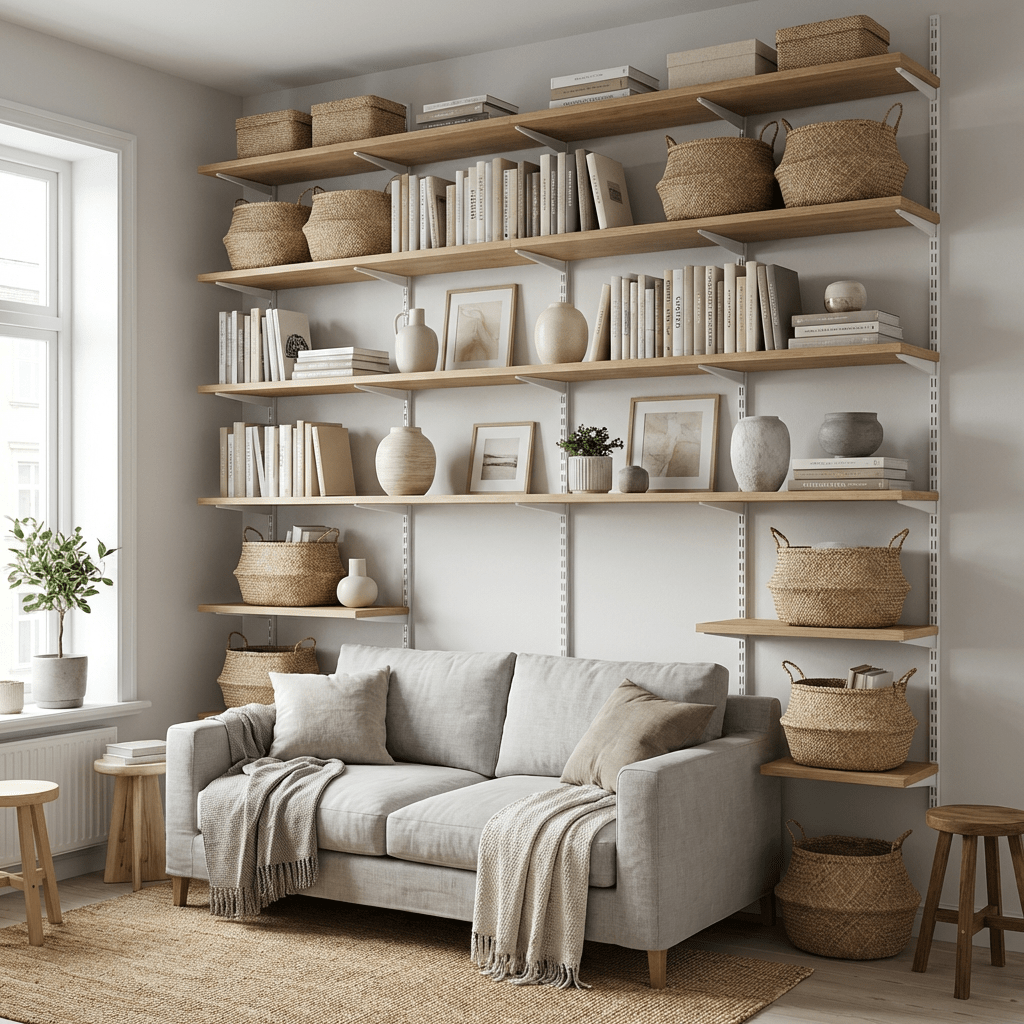
In a small apartment, the floor plan is fixed and the square footage is what it is. You cannot knock down a wall, you cannot add a room, and you cannot magically expand the closet that was clearly designed for someone who owns three shirts and a single pair of shoes. But there is one dimension that most small apartment dwellers consistently underuse, and it is right in front of them every single day: the walls. From the floor all the way up to the ceiling, every wall in your apartment represents untapped storage potential that currently holds nothing except paint and the occasional piece of art. Vertical storage is not just a clever workaround for small spaces. It is genuinely the most efficient approach to maximizing capacity in a compact home because it moves storage upward rather than outward, leaving the floor plan open and the rooms feeling spacious rather than packed. These seven ideas cover the most effective ways to activate your wall space across every room in the apartment, from practical floating shelf systems to stylish pegboard setups and beyond.
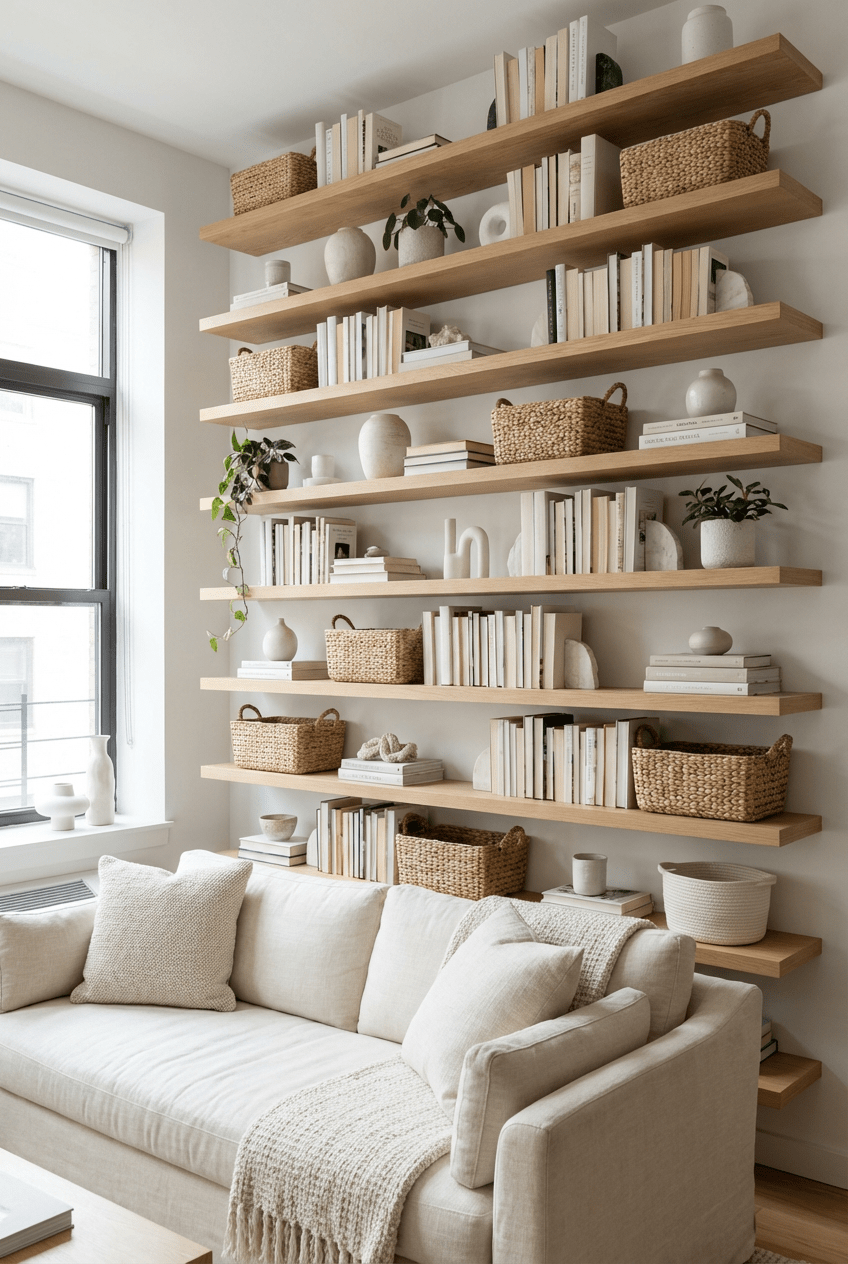
1. Floor-to-Ceiling Floating Shelves That Maximize Every Inch of Wall Height
Floating shelves are the most versatile and widely applicable vertical storage solution available for any room in a small apartment, and the key distinction between shelves that genuinely transform the storage capacity of a space and ones that add only modest benefit is the height at which they are installed. Most people install floating shelves at eye level and stop there, leaving the wall space above completely unused. Running a column of shelves from close to the floor up to within a foot of the ceiling, with consistent spacing between each shelf, multiplies the usable storage surface dramatically and creates a wall feature that draws the eye upward in a way that makes the room feel taller and more spacious rather than crowded and cluttered. The vertical sweep of a full-height shelf column is one of the most architecturally impactful things you can add to a small apartment wall.
The practical approach to styling floor-to-ceiling shelves in a small apartment is to assign each height zone a purpose rather than treating all the shelves equally. The lower shelves, which are the most accessible, hold items you reach for daily: books you are currently reading, frequently used objects, small plants, and practical storage in attractive containers. The middle shelves hold a mix of functional and decorative items, some display, some storage, some beautiful objects that justify their presence visually. The highest shelves, which require a step stool to access, are the natural home for seasonal items, rarely needed extras, and purely decorative pieces that look good from below without needing to be touched regularly. This zoning approach keeps the overall arrangement functional at every level while ensuring the most visible portions of the shelving look genuinely considered and beautiful.
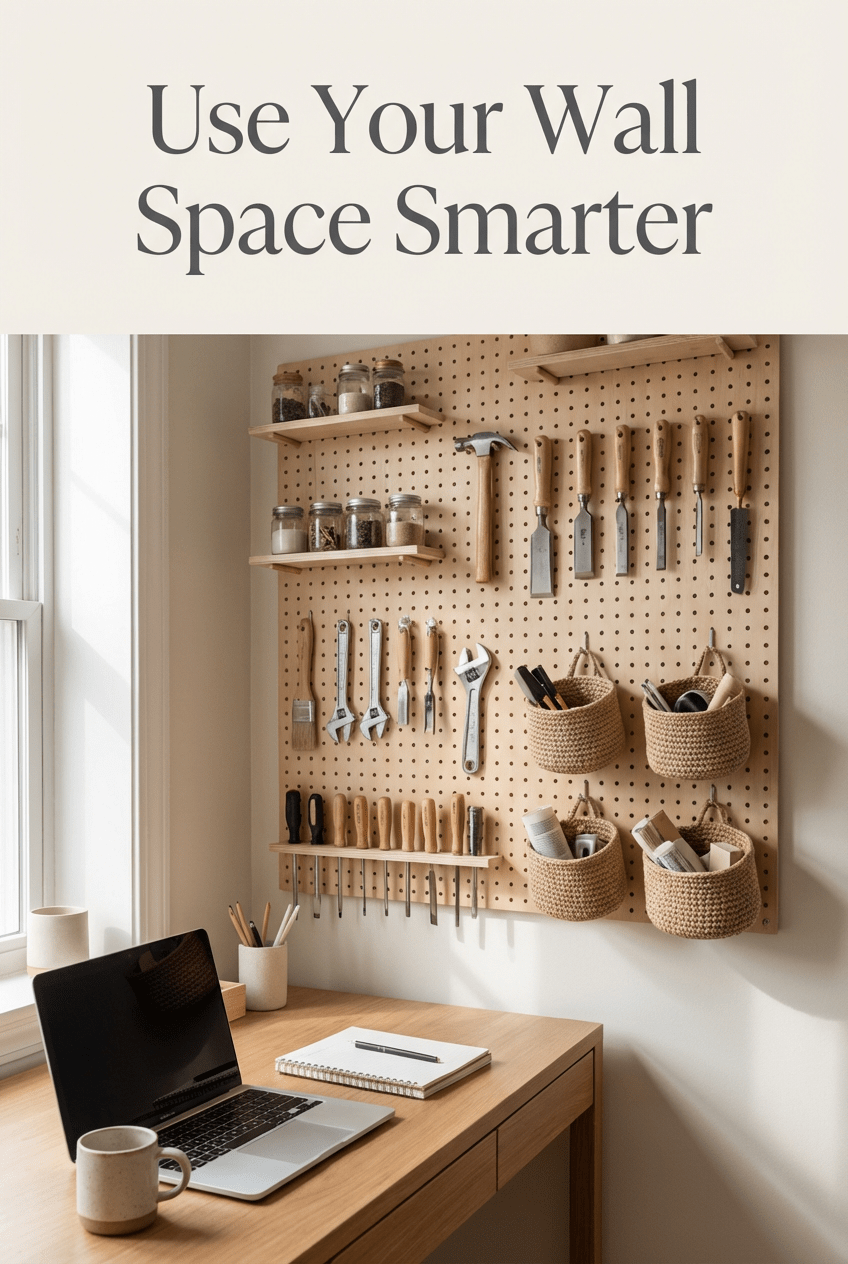
2. A Pegboard Wall System for Fully Customizable Vertical Organization
A pegboard mounted on the wall is one of the most adaptable vertical storage systems available because it is not fixed in its configuration. Every hook, shelf, bin, and ledge attached to it can be repositioned at any time as your storage needs change, which gives it a long-term relevance that fixed shelving does not always maintain. In a home office or workspace corner, a pegboard holds everything from notebooks and cables to small tools, plants, and a calendar in a visible, accessible, and organized arrangement that takes up zero desk or floor space. In a kitchen, a pegboard beside the stove holds utensils, spice jars, small pots, and frequently used tools within arm's reach of where they are needed most. In an entryway, it organizes keys, bags, sunglasses, and daily-use items on the only wall surface available without any cabinet bulk.
The visual success of a pegboard in a small apartment depends on the finish and the organization of what is hung on it. An unpainted raw pegboard looks utilitarian and can make even a well-organized collection of items look improvised. Painting the pegboard in the same color as the surrounding wall for a seamless, built-in effect, or in a contrasting matte color like deep navy, warm sage, or matte black for a deliberate design statement, immediately elevates the system from purely functional to genuinely beautiful. In 2026, pegboard organization has become a well-established aesthetic in its own right, with matching accessories in consistent finishes, brass hooks, natural wood shelves, and ceramic bins, available specifically for this purpose. The result when done intentionally is a wall that looks designed rather than simply used for storage.
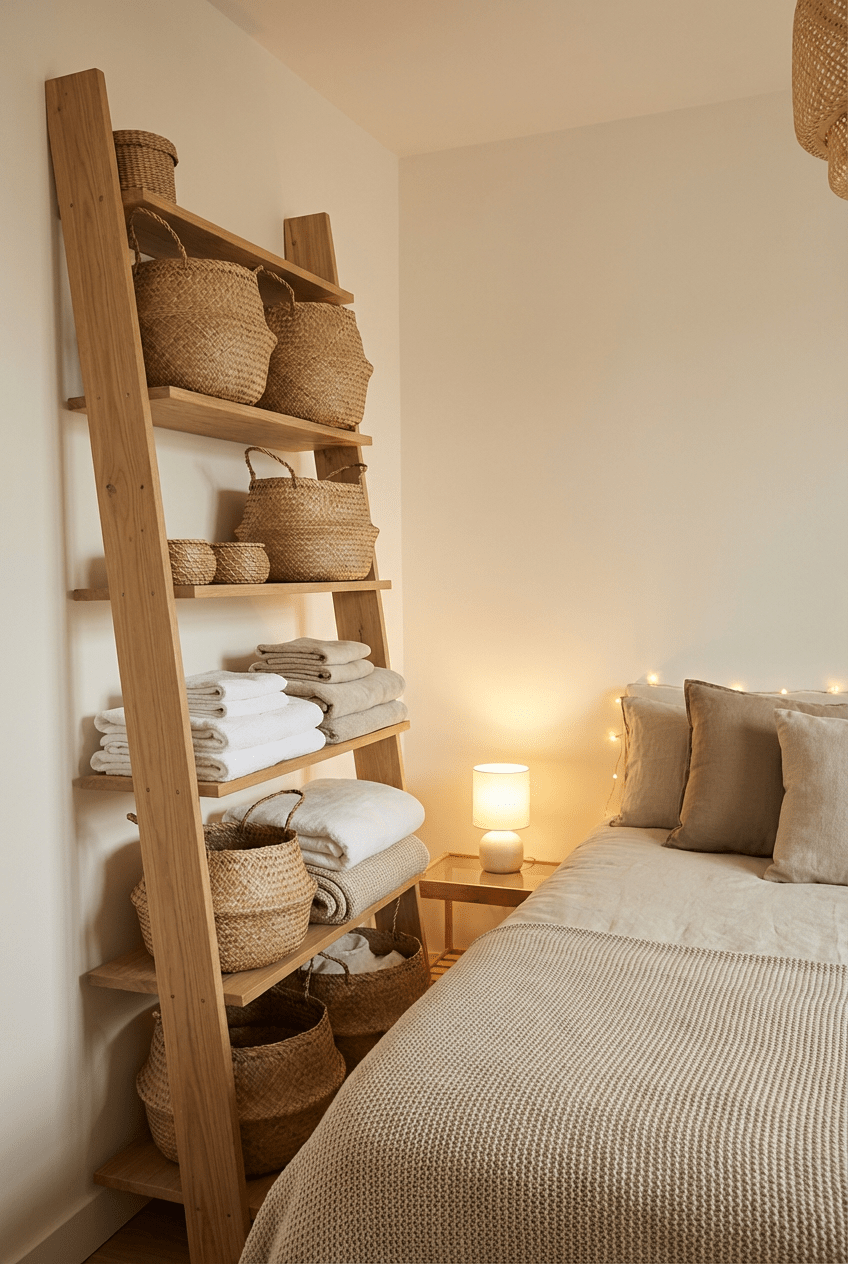
3. A Leaning Ladder Shelf That Uses Height Without Touching the Wall
The ladder shelf is the most renter-friendly vertical storage option on this list because it requires absolutely no wall installation. It leans against the wall under its own weight and the natural angle of the lean holds it securely without brackets, screws, or any permanent attachment. This makes it genuinely risk-free from a lease perspective while still delivering meaningful vertical storage through its progressively spaced rungs that rise from floor level up to a height of typically five to six feet. In a small bedroom, a ladder shelf in the corner beside the wardrobe holds books, baskets, plants, and folded textiles in a compact footprint that a standard dresser or freestanding shelf could not fit into the same space nearly as efficiently.
The combination of open rungs and woven baskets on a ladder shelf creates the best of both storage worlds: the open rungs allow you to display items that benefit from visibility and contribute to the room's aesthetic, while the baskets conceal items that need to be accessible but do not need to be seen. In a bedroom, this typically means folded clothing or accessories in the lower baskets, books and small plants on the middle rungs, and a single decorative object on the highest rung. The graduated width of most ladder shelves, wider at the bottom and narrowing toward the top, creates a natural visual hierarchy that the eye finds satisfying and that makes the arrangement easy to keep organized even without a deliberate system. Choose a material that suits the room, bamboo or natural wood for a warm organic bedroom, matte black metal for a more contemporary living space.
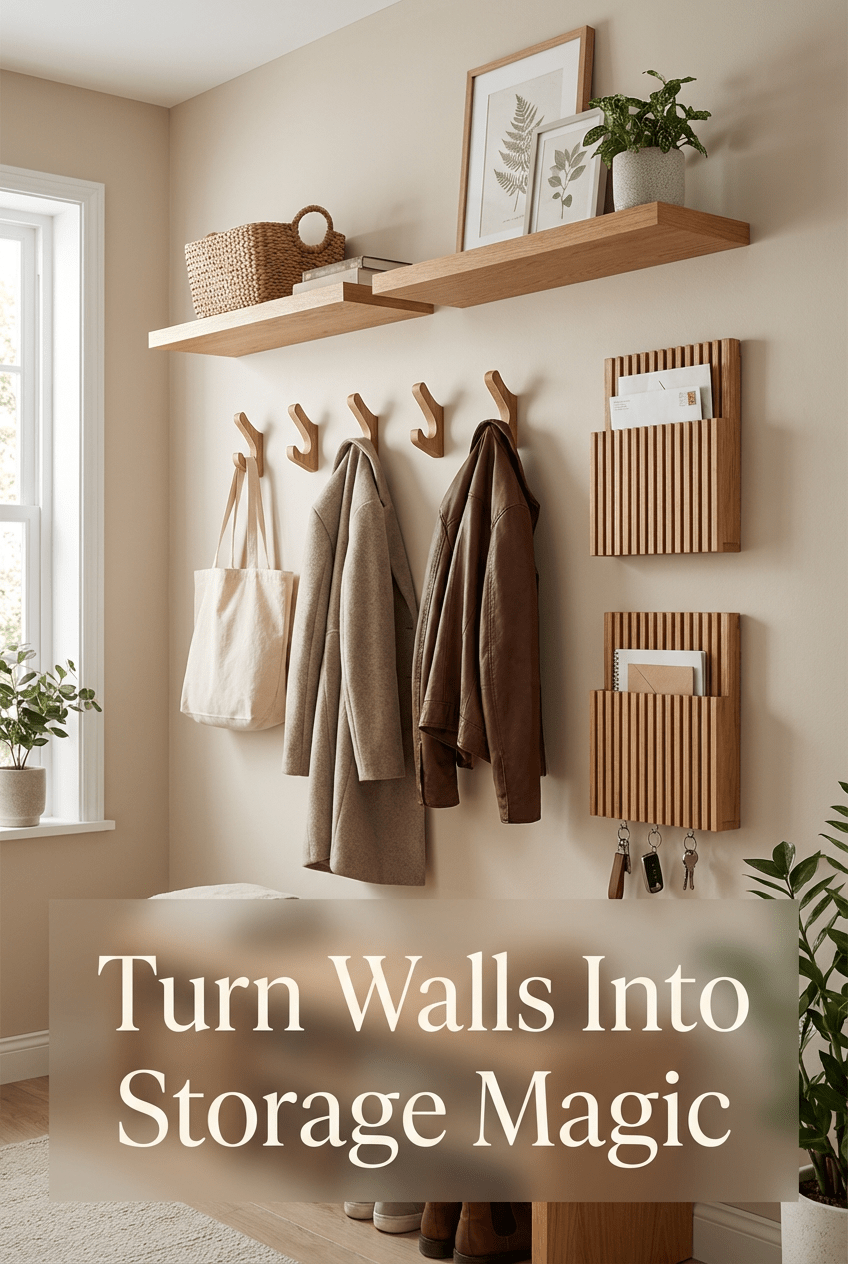
4. A Layered Hook and Shelf System in the Entryway for Daily Essentials
The entryway wall of a small apartment is frequently asked to do an enormous amount of organizational work in a very limited surface area. Keys, bags, coats, scarves, umbrellas, shoes, mail, and all the items that travel in and out of the apartment daily need a logical, accessible home right at the point of entry. A layered vertical system that combines hooks at different heights with a small shelf above and potentially a narrow bench or shoe rack below transforms even the most compact entryway wall into a genuinely functional organization station. The vertical layering means the wall is used efficiently from floor to ceiling height without eating into the floor space that a wide console table or a bulky coat rack would consume.
The arrangement works best when it is designed from top to bottom with specific items in mind. A shelf installed near the top of the wall holds items that are needed occasionally but not daily, a spare umbrella, a rarely used bag, seasonal accessories. Below it, a row of three or four substantial hooks holds everyday coats and bags at a height that allows them to hang freely without touching the floor. A second row of smaller hooks lower on the wall holds keys, lanyards, dog leads, and lighter daily items. If floor space allows, a narrow bench or a slim shoe cabinet at the base completes the system and keeps footwear off the floor. Styled with a small plant on the upper shelf, matching hooks in a consistent metal finish, and a small mirror nearby, this layered entryway system looks designed and deliberate rather than simply functional.
5. Tall Tension Rod Shelving Systems Between Floor and Ceiling
Tension rod shelving systems, where floor-to-ceiling poles brace under compression between the floor and ceiling without any wall attachment or drilling, are one of the most underappreciated vertical storage solutions available for renters in small apartments. Two poles placed at the right width to support horizontal shelving boards between them create a freestanding shelving unit that extends the full height of the room, providing significantly more vertical storage capacity than any wall-mounted shelf could achieve without the commitment of installation. Because the poles press against the ceiling and floor rather than the wall, they cause no damage to any surface and can be repositioned or removed in minutes when needed.
The key to making tension rod shelving look beautiful rather than improvised is in the shelf boards and the pole finish. Warm wood boards in oak, pine, or walnut tone paired with matte black or brushed brass poles produce a combination that looks architectural and intentional rather than like temporary furniture. The shelves can be cut to any width at a hardware store, allowing you to create a shelving unit that fits a specific wall section or corner precisely, which contributes significantly to the built-in quality of the finished installation. Style the shelves as you would any open shelving system, with a thoughtful mix of functional storage and beautiful display objects, and the tension pole shelving unit becomes a genuine design feature of the room rather than just a storage solution that was added because nothing else would fit.
6. Over-Door Vertical Storage That Activates Hidden Space Throughout the Apartment
Every door in a small apartment has two surfaces: the side that faces the room when open and the back side that faces a wall or the inside of a closet. The back of a door is vertical storage space that the vast majority of small apartment dwellers never use, which represents a meaningful missed opportunity in a home where every available surface genuinely counts. Over-door organizers, which hook over the top of a standard door without any installation, turn this wasted surface into usable storage for shoes in the bedroom closet, cleaning supplies behind the bathroom or utility cupboard door, pantry extras behind the kitchen door, accessories behind the bedroom door, or a complete organization station behind the home office door.
The category of over-door organizer you choose should match both the depth available behind the door when it swings open and the specific items you want to store. Slim pocket organizers work for flat items like scarves, socks, and small accessories. Wire rack systems with multiple shelves work for shoes, cleaning products, and bottles. Hook bars work for bags, towels, and heavier items. For the most aesthetically pleasing result in areas where the organizer is visible, choose a style with a consistent finish rather than a purely utilitarian plastic version: a wire rack in matte black or white powder coat, or a fabric pocket organizer in a neutral linen tone, looks considerably more intentional than a transparent plastic version hanging from a door in a prominent position. In 2026, the quality and design of over-door storage options has improved significantly, making it easier to find versions that are both genuinely functional and visually acceptable in a well-decorated apartment.
7. A Vertical Garden Wall That Stores Plants and Creates a Living Feature
Vertical storage does not have to be exclusively about practical items and organizational systems. A vertical plant wall, where plants are displayed in a stacked or gridded arrangement on the wall rather than spread across the floor in individual pots, stores the greenery that gives an apartment life and personality without consuming any of the floor space that each individual plant would otherwise require. A simple grid of wall-mounted planters, a column of hanging pots at graduated heights, or a dedicated planter shelf system that holds multiple plants in a single narrow footprint turns a blank wall into a living, breathing feature that is both storage and decor simultaneously in a way that nothing else in the apartment can quite replicate.
The plant selection for a vertical wall arrangement should prioritize varieties that thrive at the light levels available at the specific wall location in the apartment, since a struggling or declining plant wall undermines both the visual and the functional purpose of the installation. Trailing varieties like pothos and tradescantia cascade beautifully from elevated planters and create a lush, abundant quality that a single plant in a pot cannot achieve. Compact varieties like succulents, air plants, and small ferns suit tighter grid arrangements where individual pots are smaller. A mix of heights, textures, and leaf shapes in a consistent palette of pot tones creates an arrangement that looks genuinely curated rather than collected. In a small apartment where outdoor space may be limited or nonexistent, a vertical plant wall brings the calming, organic quality of nature indoors in the most space-efficient way possible.
The walls of your small apartment are not just structural surfaces or backgrounds for art. They are the most significant untapped storage resource in the entire home, and every one of these seven ideas demonstrates a different way to activate them. Whether you start with a simple floating shelf installation, a renter-friendly ladder shelf in a bedroom corner, or a fully customized pegboard in your workspace, the principle is the same: move storage upward and off the floor, and the apartment immediately feels more spacious, more organized, and more intelligently designed. Pick the idea that addresses your most pressing storage challenge and implement it this weekend. The transformation that even one well-executed vertical storage solution creates in a small apartment is consistently one of the most satisfying home improvement results available for the effort and cost involved.