
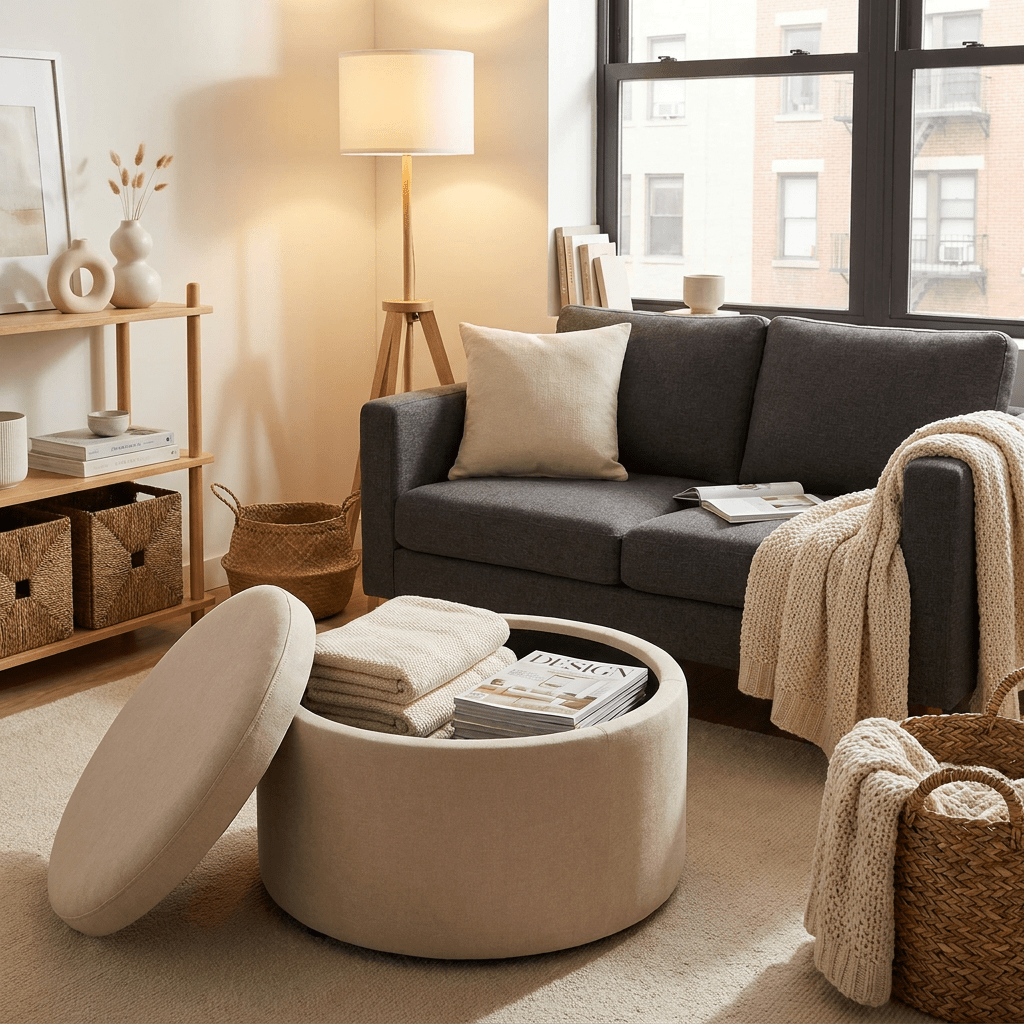
A storage ottoman is about as close to free space as furniture gets. Outside it's a seat or a footrest, and inside it's a cabinet nobody sees. In a small apartment where the living room is also the guest room and the office, one good ottoman can replace a coffee table and a blanket basket at once.
They aren't all equal, though. Interior depth and the lid hardware decide whether an ottoman is useful or just a padded box you stop opening. Here are thirteen ways to use one, grouped by room, with the details to check for each.
1. A round ottoman for the throws that pile up on the sofa
The simplest use is the one in the photo: a round fabric ottoman next to the sofa that swallows the blankets and spare pillows that otherwise live on the cushions. Round shapes are easy to walk around in a tight living room and have no corners to bump into.
Check the inside, not the outside. Many ottomans are 16 to 18 inches tall but only 10 to 12 inches deep inside once you subtract the lid and base, which is enough for two folded throws but not a duvet. Lids that lift off completely, rather than hinging, are easier to use when the ottoman is pushed against the sofa.
2. A velvet ottoman in place of a coffee table
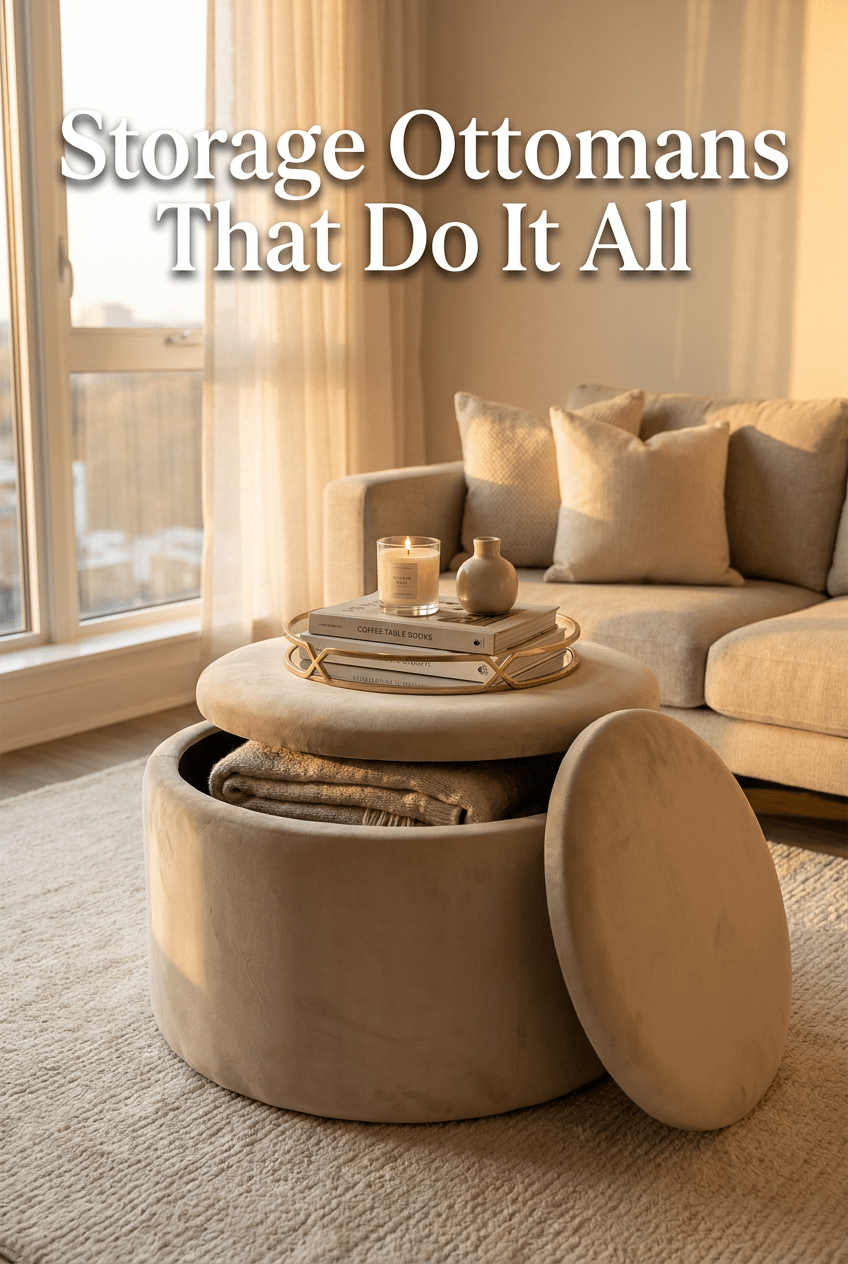
Swapping a coffee table for a large ottoman gives you a softer surface to put your feet on, extra seating when friends visit, and storage inside. A tray on top, like the one in the photo, gives drinks and books a flat surface. Velvet in a warm neutral or a deep color hides wear better than pale linen.
For a coffee table, the top should sit about level with the sofa seat, usually 16 to 18 inches high, and the ottoman should be roughly two-thirds the length of the sofa. A round one 30 to 36 inches across suits a loveseat. Make sure the top is firm. Soft, pillowy lids tip trays over.
3. A storage bench at the foot of the bed
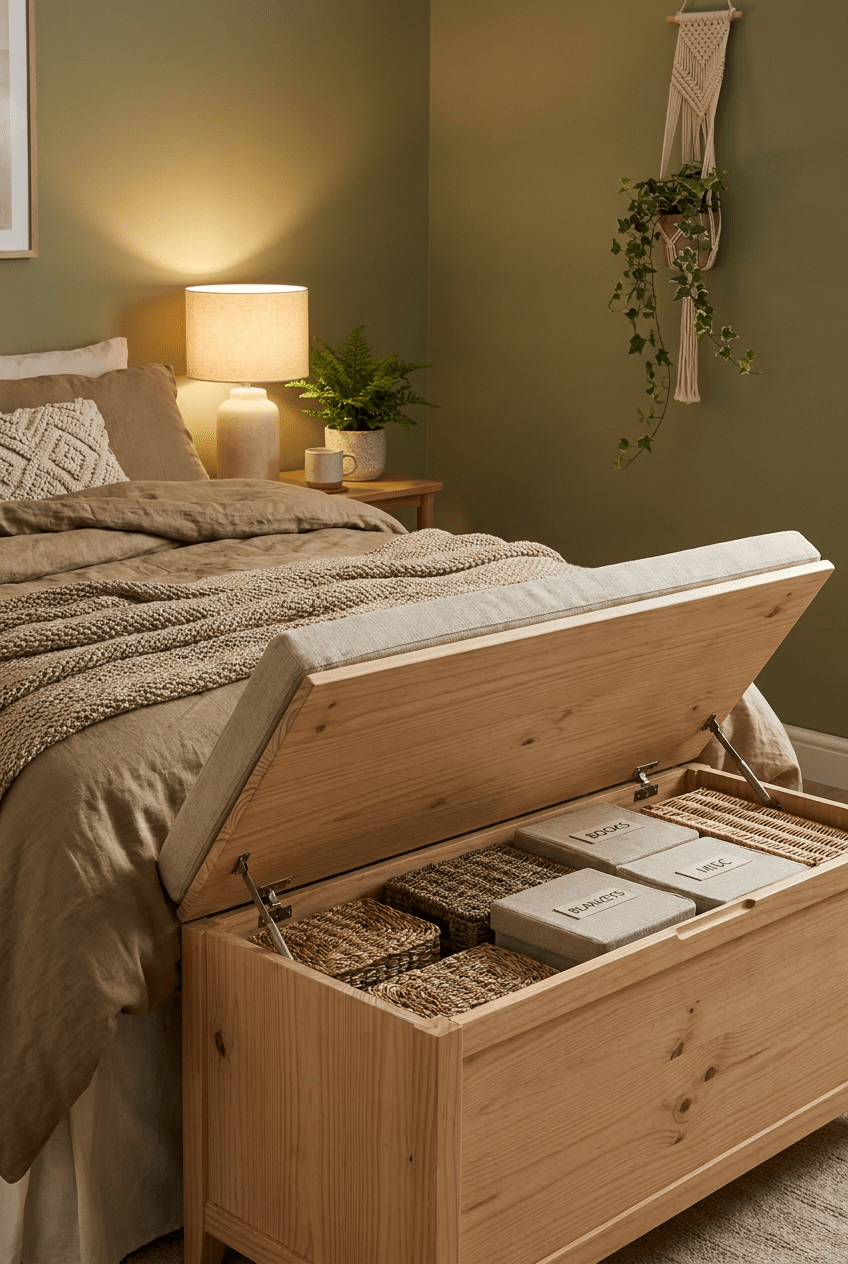
The foot of the bed is a good spot for a long storage bench that holds spare bedding and off-season clothes, and gives you somewhere to sit while you put on shoes. A plain pine chest like the one in the photo is simple to build from plywood and a piano hinge, or easy to find secondhand.
Choose a lid with a soft-close or lid-stay hinge so it can't slam on fingers, and make the bench a few inches narrower than the bed so it doesn't stick out into the walkway. Baskets and boxes inside keep smaller things from sinking to the bottom. A bench 16 to 18 inches deep fits most bedrooms without blocking the path around the bed.
Tip: If you build one, sand and seal the inside too. Raw wood can snag knits and transfer a resin smell to fabric.
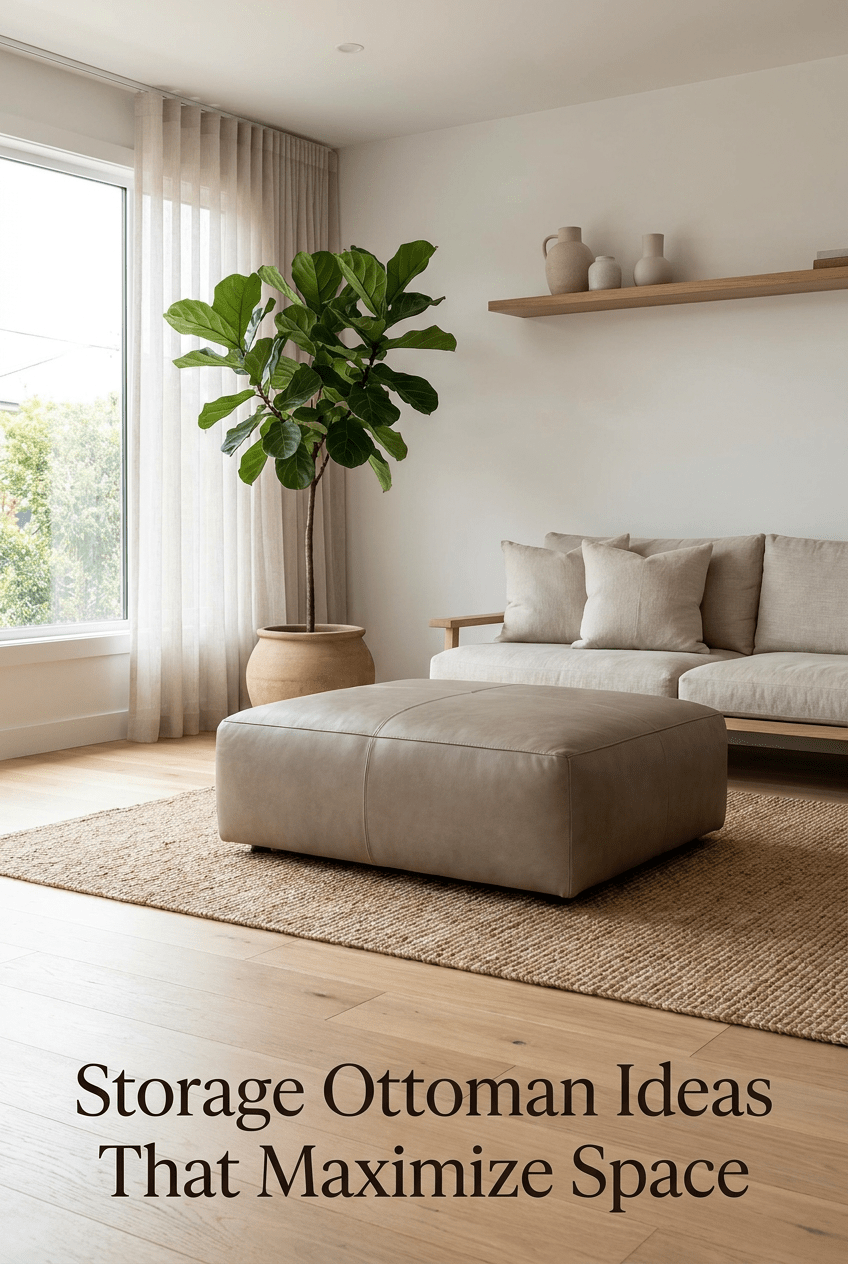
4. A large square ottoman for a studio
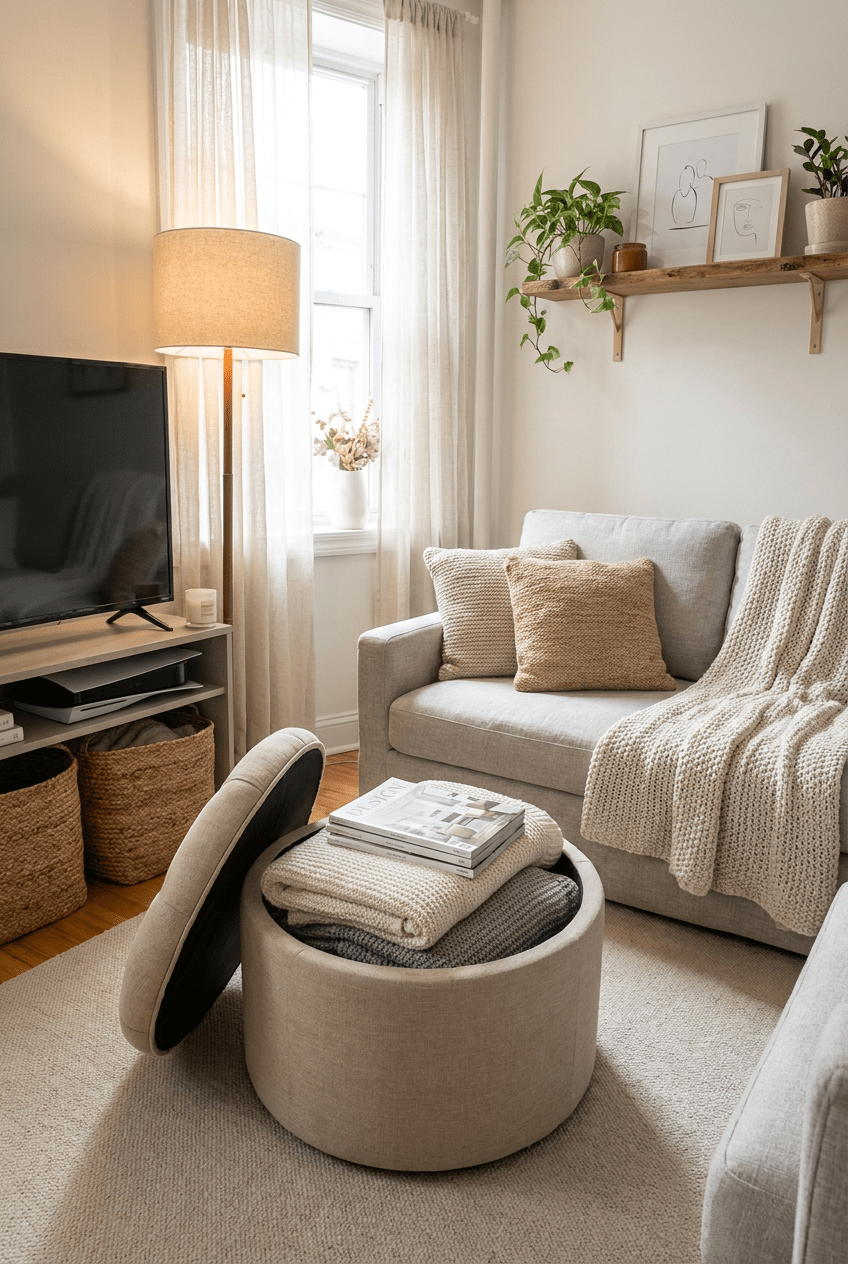
In a studio, a large square ottoman like the one in the photo can be the coffee table by day and extra seating for two or three people in the evening. Leather and faux leather wipe clean and look neat with very little styling. A big ottoman also holds a surprising amount, often a full set of guest bedding.
Measure the room before choosing a large size. You want about 18 inches between the ottoman and the sofa, and a clear walkway of 30 inches or more on the open side. Check that the lid is light enough to lift easily. On very large ottomans, a top that opens in two halves is easier to use than one heavy lid.
5. A set of cubes you can move around
Two to four small cube ottomans are more flexible than one big piece. Pushed together with a tray on top, they're a coffee table. Pulled apart, they're extra seats, footrests or side tables. They're light enough to move in seconds, which suits a studio where the layout changes for guests.
Choose cubes with a firm top and a base that doesn't slide on hard floors, and look for ones that nest or stack when you're not using them. A 15- to 17-inch cube is a comfortable seat height for most adults.
Use each cube for one category, such as remotes and chargers in one, kids' books in another and spare throws in a third. When you need the floor for yoga or guests, they stack in a corner or slide under a console table.
6. A slim entry ottoman for shoes and bags
Just inside the front door, a narrow storage ottoman gives you a seat for putting on shoes and somewhere to put bags and scarves. In a small entry, look for one 12 to 16 inches deep so it doesn't block the door swing.
Shoes are heavy and dirty, so a wooden bench-style ottoman with a wipeable tray inside lasts longer here than a fully upholstered one. A boot tray inside keeps grit and snowmelt off the fabric.
If several people share the apartment, a bench-length ottoman with two lift-up sections gives each person a compartment. Put a small tray on top for keys, and the entry is covered without adding a separate table.
7. An outdoor storage box on the balcony
On a small balcony, a weatherproof storage ottoman or deck box holds cushions and gardening gear and doubles as a seat. Resin, powder-coated metal and treated teak handle the weather best.
Even outdoor boxes let in some damp. Make sure cushions are fully dry before they go in, and bring fabric indoors over the winter. Our guide to winterizing a small balcony covers what to store and what to bring in.
Choose a box with a lid that seals against rain and a lift-up top that stays open on its own, since you'll often have your hands full of cushions. Wipe the inside out at the start and end of each season to stop mildew from building up.
8. An ottoman with a flip-over tray lid
Some ottomans have a lid that flips over: padded on one side, a flat tray on the other. That makes them work as a footrest in the evening and a solid table for a laptop or dinner during the day, which is useful in a studio where the sofa is also the office.
Check how the lid sits in both positions. A good one locks flat without rocking, and the tray side has a lip to stop things sliding off.
These are especially useful if the sofa faces the TV and there's no room for a separate coffee table. Store a laptop stand, a lap desk and chargers inside, so the workday packs away in a minute in the evening.
9. A pouf when there's no room for anything else
Poufs are the lightest option: low, soft and easy to move. Knitted cotton and leather poufs are popular, but most don't open. If you want storage, look for poufs with a zip-off top and an inner lining, or ones sold as storage poufs.
Unstuffed poufs, sold flat and filled at home, can be packed with spare bedding or out-of-season clothes, which turns them into hidden storage too.
Floor seating with poufs works best with a low coffee table or a large tray on the floor. Leather poufs need conditioning once or twice a year to stop the leather from drying out, and knitted ones can be spot cleaned or, if the cover zips off, hand washed.
10. A toy box that doubles as a seat
A large storage ottoman makes evening cleanup quick: toys go in, the lid goes on, and the living room is back to normal. For a toy box, safety comes before looks.
Choose a lid with a soft-close or lid-support hinge, or a lid that lifts off completely, so it can't drop on a child's head or fingers. Performance fabric and faux leather wipe clean. Check that the lid doesn't latch shut, so a child can't get trapped inside.
Use a few fabric bins inside, by type of toy, so small pieces don't end up at the bottom under everything else. Pick a size that's easy to lift the lid on, and keep it well away from windows and blind cords.
11. A small ottoman instead of a nightstand
In a bedroom too narrow for a nightstand, a small square ottoman can stand in. Choose one roughly level with the top of your mattress, usually 20 to 25 inches high, so things are easy to reach.
The top needs to be firm and flat for a lamp, a glass and a phone. Inside, keep things you use at bedtime, like a book and a charger.
An ottoman this tall can feel bulky in a small bedroom, so a narrow one, 14 to 16 inches wide, often works better than a wide cube. Faux leather and wood tops are easier to keep clean than fabric if you put drinks on them.
12. A long ottoman under a window
Under a low window, a long bench-style ottoman becomes a window seat with storage. Measure the width of the window and the height of the sill, and keep the ottoman below the sill so it doesn't block the window or curtains.
Leave space in front of radiators and heating vents, and check for drafts before you settle on the spot. A cushion and a couple of pillows make it comfortable for reading. See our guide to a reading nook in a small living room for more.
Bench cushions can slide on a smooth top, so a non-slip mat under the cushion keeps it in place. If the window gets direct sun, choose fabric that won't fade quickly, or keep a throw over the cushion in summer.
13. A folding ottoman for guests
Folding fabric ottomans pop open into a cube and collapse flat when you don't need them. They often cost under $30, and one or two folded under the bed give you extra seats for a party or a holiday.
They're lighter and less sturdy than solid ottomans, so check the weight rating before using one as a seat, and don't use them for heavy items.
For extra sleeping space, a few people keep a folding ottoman filled with a spare pillow and blanket, ready for a guest on the sofa. The fabric sides wipe clean but can stain, so keep them away from muddy boots and wet umbrellas.
Before you buy, measure the space, check the inside depth and test the lid. For more storage in a small apartment, see our guides to tiny apartment storage, room by room and where to store holiday decorations, which is a good job for an ottoman.