
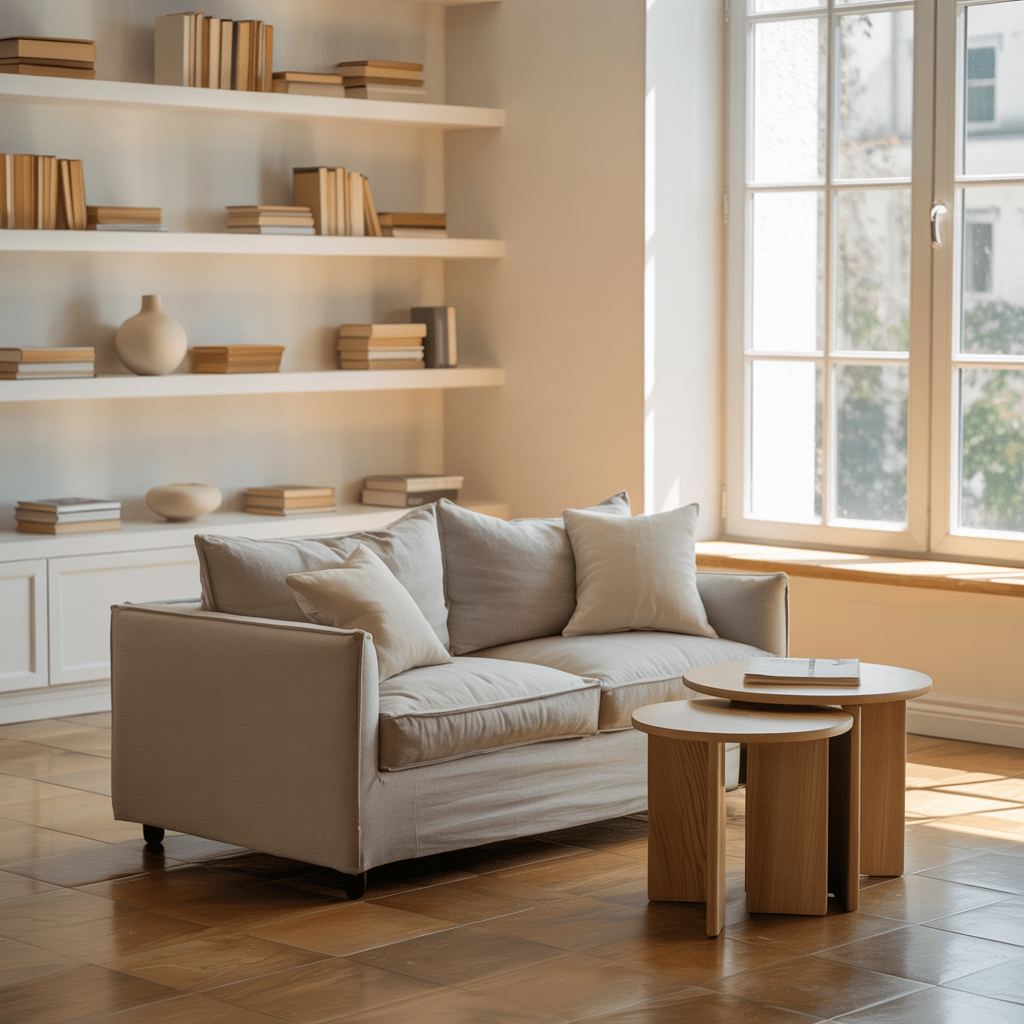
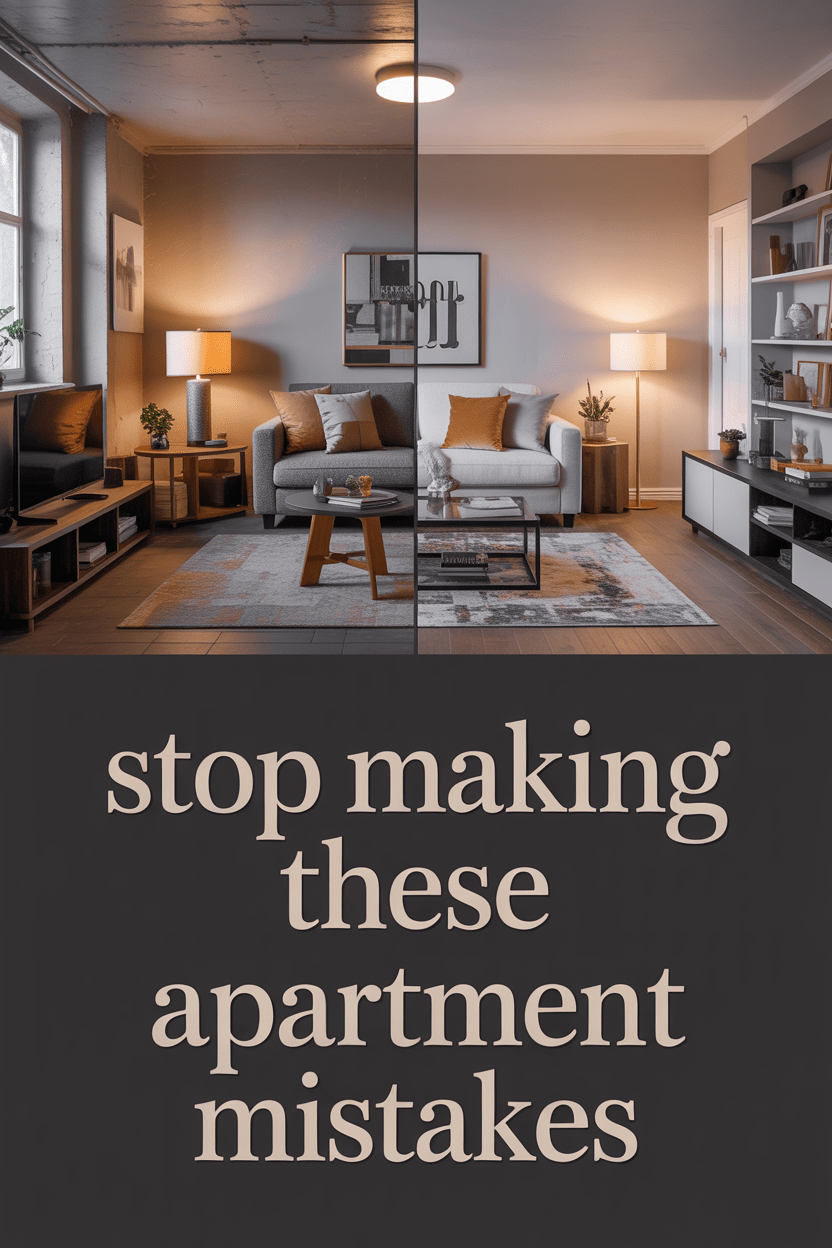
A first apartment rarely looks like the plan. The sofa is too big, the room is lit by one ceiling bulb, the rug floats in the middle of the floor and the walls stay bare for a year. The first photo shows what that looks like, with mismatched seating and cables across the floor.
None of it needs a big budget to fix, and most of it is easier to avoid than to undo. The twelve mistakes below are the ones that come up again and again, with what to do instead. If you've already made a few, the fixes still work.
1. Buying furniture without measuring
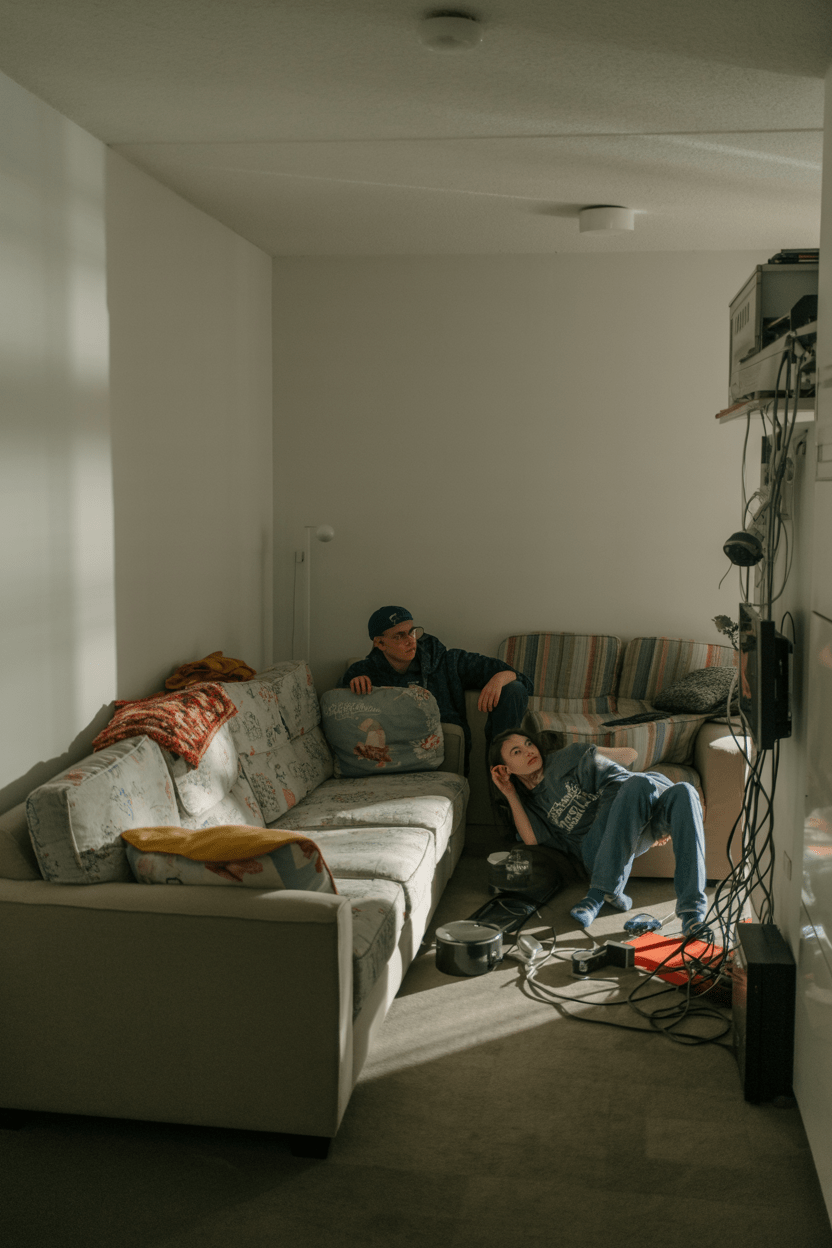
The most expensive mistake is a sofa or bed that doesn't fit the room, or doesn't fit through the door. In the room in this photo, two mismatched sofas crowd the space, with no clear path between them.
Measure the room, then every doorway and stairwell on the way in, before buying anything large. Many sofas need a doorway at least 30 to 32 inches wide; check the product's diagonal depth, which decides whether it can be tilted through.
Mark the furniture's footprint on the floor with painter's tape, and leave walkways of at least 30 inches. Live with the tape outline for a day before ordering.
The tangle of cables on the floor here is the other fixable problem. A power strip with a few cable ties takes an hour and make the whole room look calmer.
2. Lighting the room with only the ceiling fixture
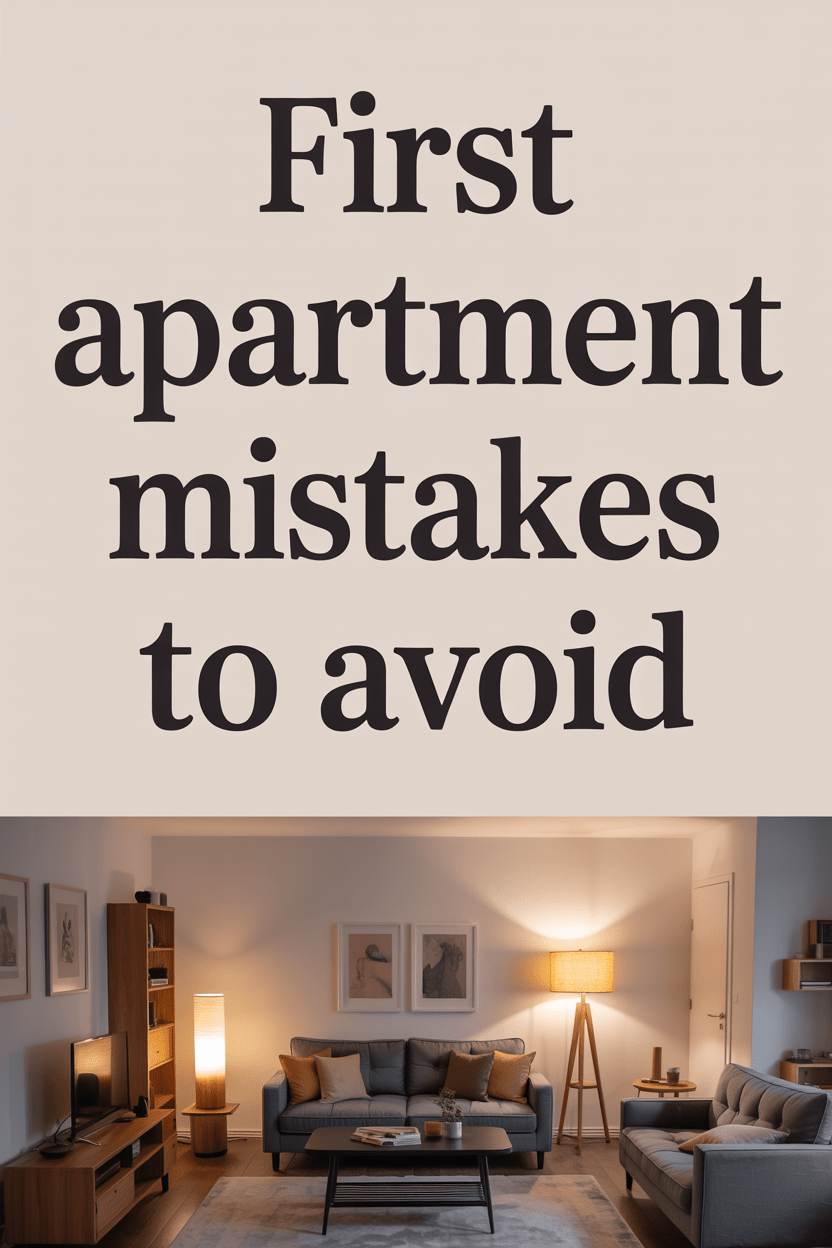
A single overhead light makes a room look flat and cold. The living room in this photo is lit by lamps at different heights, and it looks warm and finished even though the furniture is simple.
Aim for at least three light sources at different heights. Use warm white bulbs around 2700K, and put lamps on smart plugs or a timer so they come on together.
Lamps are one of the best first-apartment buys, since they move with you to every future home.
3. A rug that's too small
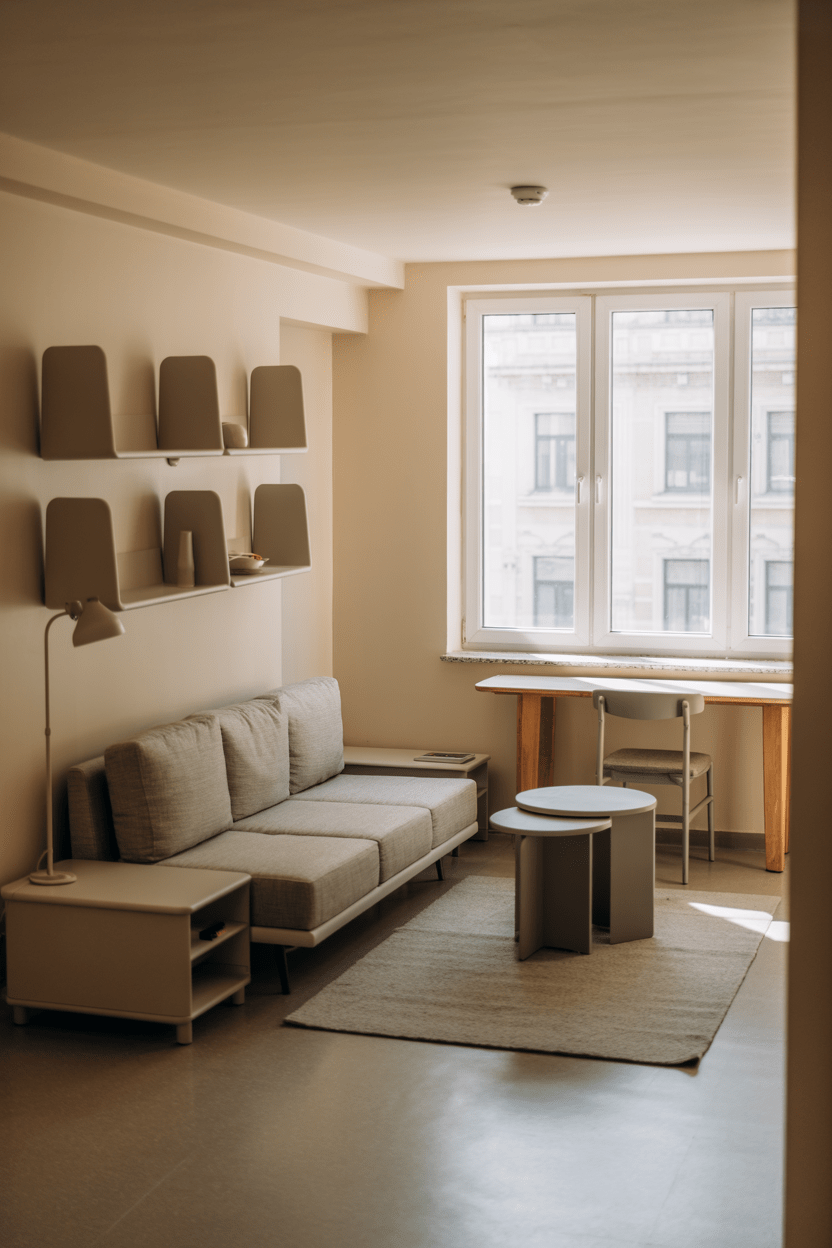
A small rug floating in the middle of the floor makes the room look smaller and the furniture disconnected. In this photo, the rug sits under the side tables but stops short of the sofa, so the seating area doesn't hang together.
Choose a rug large enough for at least the front legs of the sofa and chairs to sit on it. In most small living rooms that means 5 by 8 feet at minimum, and often 8 by 10.
A larger jute or flat-weave rug often costs less than a smaller wool one, and does more for the room.
4. Pushing all the furniture against the walls
Lining every piece up against the walls leaves an empty middle and makes the room feel like a waiting room. The after side of this split photo brings the seating together around a coffee table on a rug, with lamps on either side, so the room has a center.
Even in a small room, pulling the sofa a few inches off the wall and grouping chairs to face it makes conversation easier and the space look planned. Keep 14 to 18 inches between the sofa and the coffee table.
In a studio, a sofa floated in the room can act as a divider between living and sleeping areas.
5. Hanging art too high
Art hung near the ceiling looks lost. The center of a piece or a group should be about 57 to 60 inches from the floor, roughly eye level. Above a sofa, leave 8 to 10 inches between the sofa back and the bottom of the frame.
The two prints above the sofa in the second photo are hung at about the right height and sized to the sofa.
Art that's too small for the wall is the related mistake. A piece above a sofa should be about two-thirds the sofa's width; if yours is smaller, group two or three frames together so they read as one.
6. Buying everything from one store at once
Filling an apartment from one catalog in one weekend makes it look like a showroom. Mix new pieces with secondhand finds and family hand-me-downs.
Thrift stores and local marketplace listings are good sources for solid wood furniture at a fraction of new prices.
Spend on the pieces you touch every day, like the mattress and the sofa, and save on the rest. A secondhand side table or dresser with a coat of paint often outlasts a new budget one.
7. Ignoring the walls
In a small apartment, wall space is storage space. Floating shelves and tall bookcases free up the floor.
Anchor tall furniture to the wall with anti-tip hardware, and check your lease about holes. Our guide to vertical storage ideas has more.
Over-the-door hooks and racks are the easiest wall storage of all, with no holes at all. Put one on the bathroom, bedroom and closet doors and you gain space for towels, bags and coats in an afternoon.
8. No color plan
Buying each piece on its own merits, without a palette, leaves a room that looks random. Choose three or four colors, often two neutrals and one or two accents, and use them throughout.
Repeat each color at least twice in the room, in pillows or a vase, so it looks deliberate.
An easy starting point is to take colors from something you already own and love, such as a rug or a print, and build the rest of the room around it.
9. Not planning storage
Storage is the thing first apartments run out of first. Choose furniture with storage built in, like a bed with drawers or a storage ottoman, before you find yourself buying plastic bins for every corner.
Plan where everyday things live, from keys and mail to coats. Each needs a spot by the time you move in.
10. Trying to finish everything at once
Rushing to furnish a whole apartment in a month leads to impulse buys you regret. Start with what you need to sleep, sit and eat, and add the rest as you learn how you use the space.
Living in a room for a few weeks shows you where you actually need a lamp, a shelf or a hook.
Keep a running list on your phone of what you notice missing each week. After a month, the list shows what the apartment actually needs, which is usually shorter than the one you started with.
11. Forgetting textiles
Curtains and cushions make a bare room feel lived in faster than furniture. A few pillow covers and one throw cost far less than a new chair.
Hang curtains high and wide, close to the ceiling and past the window frame, to make the room look taller.
Wash and iron new curtains before hanging them, or steam them once they're up, since fold lines from the packaging take weeks to drop out on their own.
12. Not reading the lease
Many leases restrict painting and drilling. Read yours before you start, and ask the landlord in writing about anything unclear.
Take dated photos of every room when you move in, keep original fixtures and hardware you swap out, and fill holes before you leave. It makes getting your deposit back far easier.
Common questions
What should you not do in your first apartment?
Don't buy large furniture without measuring the doors, and don't rely on the ceiling light alone. Check the lease before you paint or drill.
What should you buy first for a first apartment?
A bed, somewhere comfortable to sit, a table or desk, a couple of lamps and basic kitchen essentials. Add decor and extras over the following months.
Measure everything, buy slowly and light the room well. For more first-apartment help, see our guides to furniture that does double duty and first apartment kitchen essentials.