
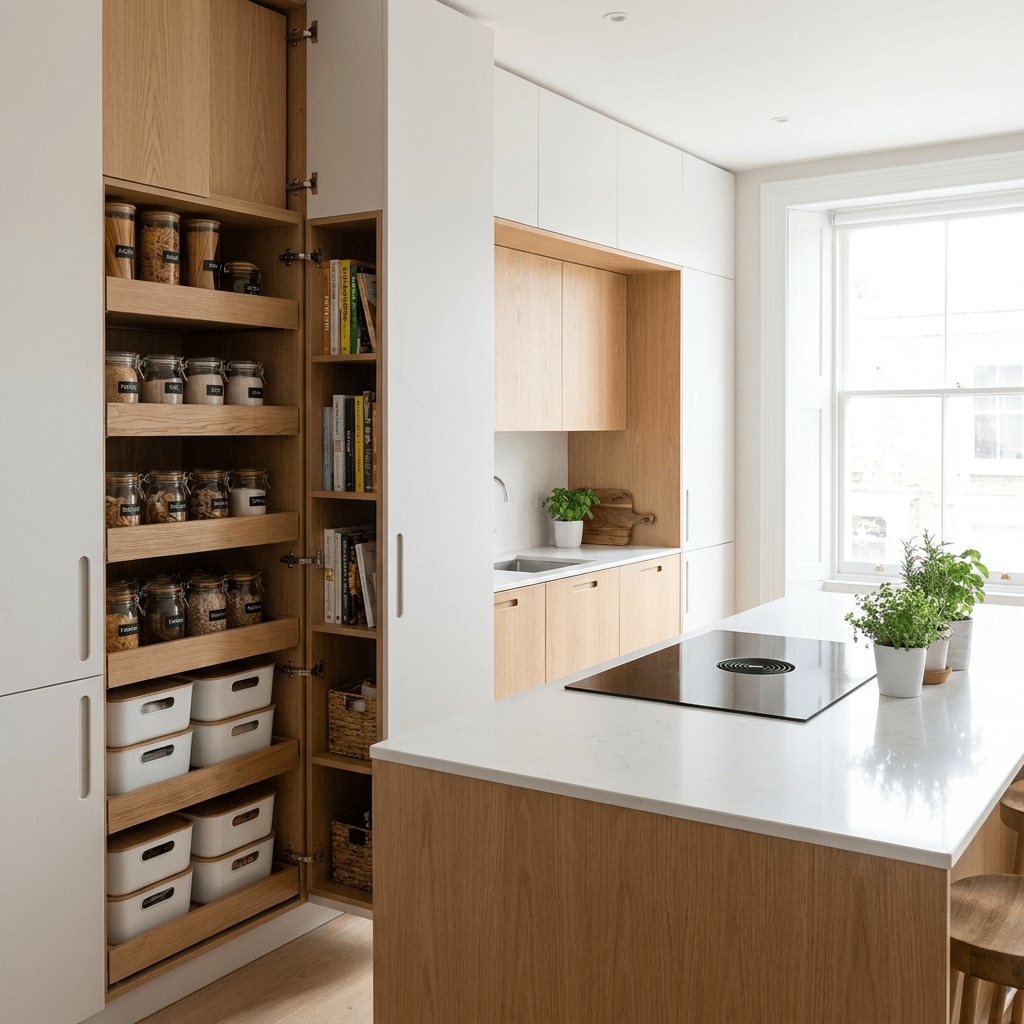
Plenty of apartments come with a kitchen and no pantry at all: a few upper cabinets and a drawer that has to hold everything from forks to foil. Dry food ends up wherever it fits, which usually means buying a second bag of rice because the first one is hidden behind the pots.
A pantry doesn't have to be a room. It's one place where food is stored together where you can see it. The ideas below build that out of whatever space your kitchen has, starting with the cheapest and most renter-friendly ones.
1. A slim rolling cart in the gap by the fridge
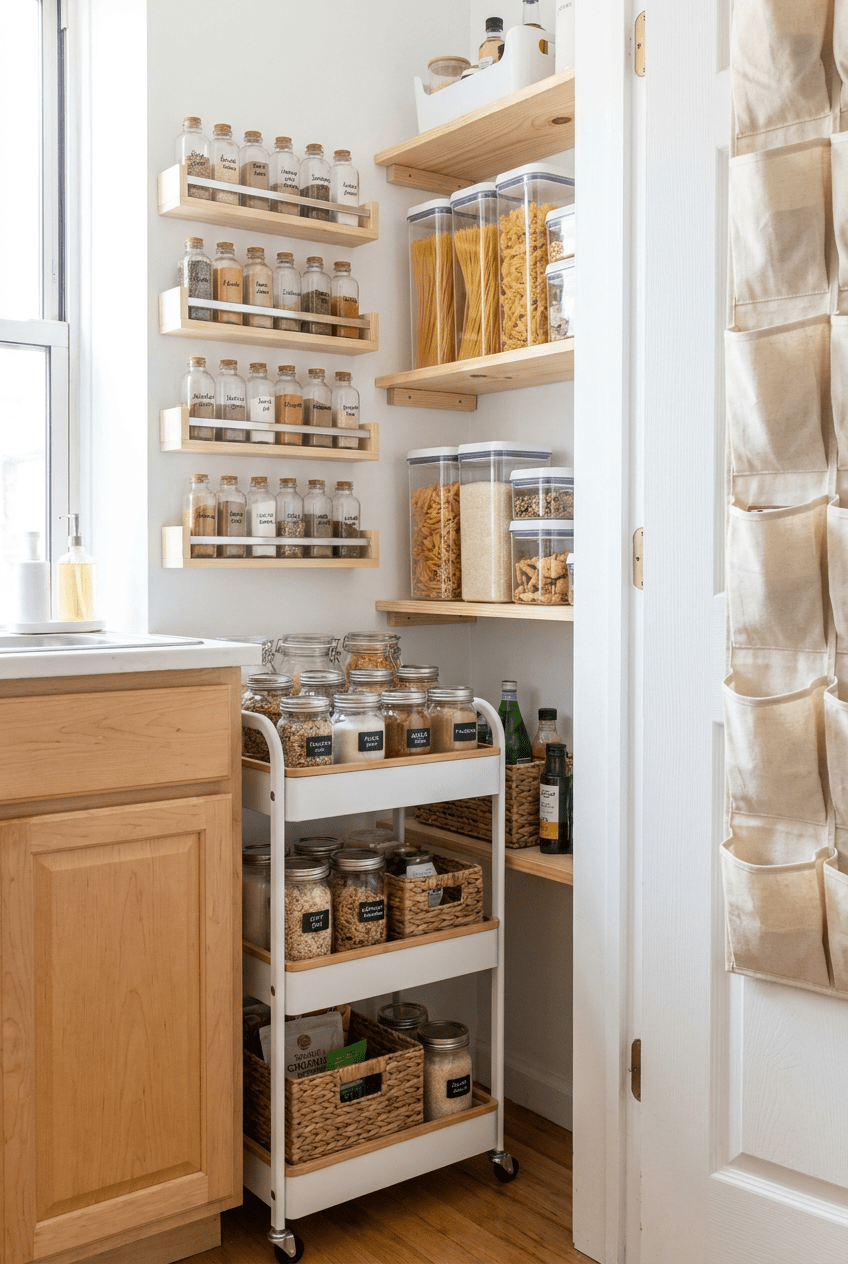
Most kitchens have a gap somewhere, often between the fridge and the wall or beside the stove, that's too narrow for furniture. Slim rolling carts 5 to 8 inches wide are made for exactly that gap and hold cans and spices on three or four shelves. Wider three-tier carts like the one in the photo, about 16 inches wide, suit an empty corner.
Measure the gap and the depth before you buy, and allow half an inch on each side so the cart slides out easily. Keep heavy things like cans and oils on the bottom shelf so the cart doesn't tip when you pull it out.
A cart works well for snacks and breakfast things you reach for every day. If it stands next to the stove, keep it out of the splash zone and away from the burners, since heat shortens the life of oils and spices.
2. A shelf of clear canisters for dry goods
Pasta and rice take less space and stay fresher in airtight containers than in half-open bags, and clear containers show you when you're running low. A shelf of matching canisters on an empty wall, or on top of a counter against the backsplash, makes a small pantry you can see at a glance.
Square and rectangular containers waste less space than round ones because they sit flush against each other. Measure the shelf height and depth first, then buy containers in two or three sizes so they line up. Expect $30 to $60 for a starter set of eight to ten.
Decanting everything isn't necessary. It's most useful for the things you buy in bags, which spill and go stale, and for anything you buy in bulk. Boxed and canned goods can stay in their packaging, sorted into bins.
Tip: Write the best-by date on a piece of tape on the bottom of each container when you refill it.
3. A pegboard with baskets for produce and tools
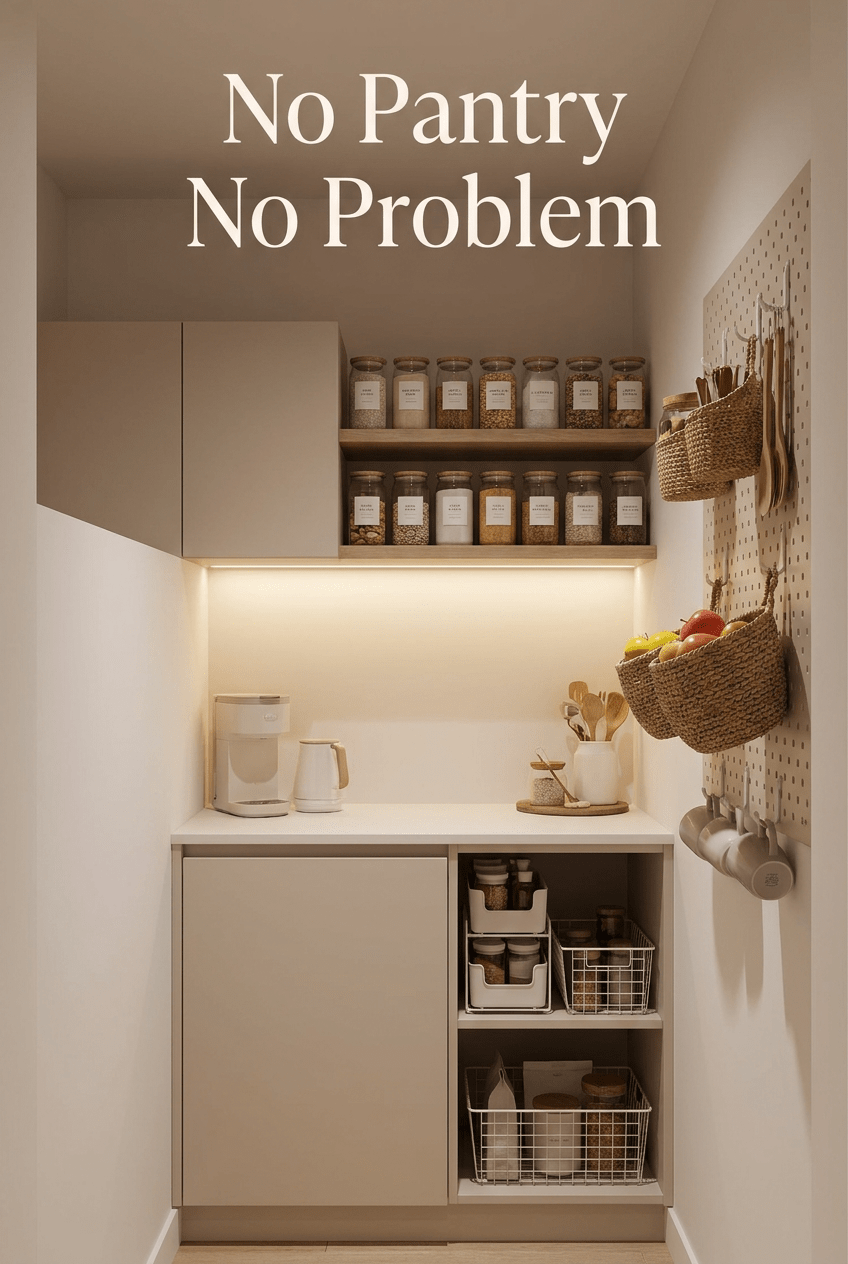
Fruit and vegetables that don't need the fridge, like bananas and onions, take up a lot of counter. Hanging baskets on a pegboard, as in the photo, hold them off the counter where air can circulate. The same board can hold utensils, a small shelf of spices and a roll of paper towels.
Keep onions and potatoes in separate baskets, since onions can make potatoes sprout faster, and keep both away from heat and direct sun. If you can't drill, a freestanding tiered fruit stand or a hanging basket from a hook under an upper cabinet does a similar job.
4. Risers, turntables and door racks inside the cabinets
Base and upper cabinets lose half their space to stacks that topple and things lost at the back. A wire shelf riser turns one shelf into two. A turntable in a corner cabinet brings oils and sauces within reach with a spin. Stepped can risers let you see every label in a row of cans.
The inside of cabinet doors takes slim racks for spice packets and boxes of foil. Measure the gap between the closed door and the front edge of the shelf, which is often only an inch or two, so the rack doesn't stop the door from closing.
Upper cabinets above the fridge or the range hood are often too high to reach comfortably. Use them for spare supplies you only refill from, and keep a step stool in the kitchen so you're not climbing on the counter.
5. Bins sorted by category
Bins make any shelf work like a pantry because you pull out one category at a time, such as baking supplies or breakfast. Choose bins with a handle on the front so you can slide them out of a deep cabinet without reaching.
Clear plastic bins work best inside cabinets, where you want to see what's there. On open shelves, woven or fabric bins look calmer. Measure the shelf and buy one size of bin for each shelf, so they line up and use the full depth.
Labels on the front of each bin help everyone in the household put groceries away in the same place. Keep the system loose enough to live with: five or six categories work better than fifteen.
6. A tall cabinet as a freestanding pantry
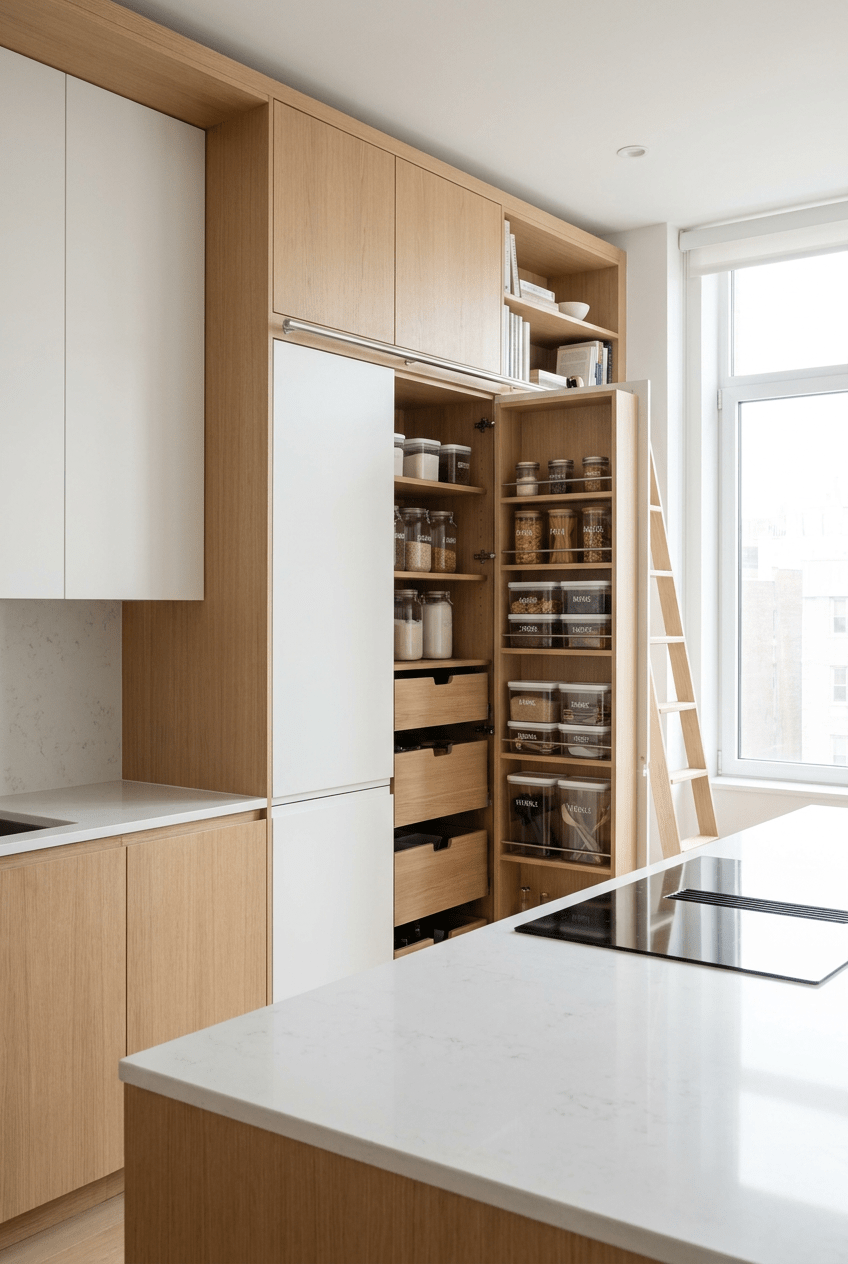
If there's an empty wall in or near the kitchen, a tall cabinet turns it into a proper pantry. The built-in version in the photo has shelves on the door and pull-out drawers. Freestanding pantry cabinets with doors, often 24 to 30 inches wide and 12 to 16 inches deep, cost roughly $120 to $300 and give you the same thing without a renovation.
A tall bookcase works too, especially one 12 inches deep, which suits cans and jars without things getting lost at the back. Anchor any tall cabinet to the wall with an anti-tip strap, since a cabinet full of jars is heavy enough to fall forward if a door is pulled hard.
Doors keep food out of sight and out of dust. If you use an open bookcase, a tension rod and a simple curtain across the front hide it for very little money.
7. An over-the-door rack
The back of a kitchen or closet door can hold a whole pantry's worth of small things. Over-the-door racks with adjustable baskets hold sauces and snacks, and pocket organizers like the one in the photo above hold bags of rice and beans.
Check the door closes properly with the hooks in place, and keep the heaviest items on the lower baskets so the rack doesn't swing. Choose a rack with a lip on each shelf so jars don't slide off when the door moves.
8. Borrow a closet or a nook
If your apartment has a coat closet or linen closet near the kitchen, one or two shelves of it can become the pantry. Adjustable shelving systems that hang from a rail, or freestanding wire shelves, fit inside most closets without permanent fixings.
Keep everyday food on the shelves between your waist and eye height, and bulk items like flats of water or extra paper towels on the floor. A hallway nook a foot deep can take a narrow shelving unit that does the same job.
9. Keep food out from under the sink
Under the sink is tempting space, but it's a poor place for food. Cleaning products usually live there, and a slow leak can soak a cabinet for days before you notice. Pests also tend to find their way in along the pipes.
Use the space for non-food things instead, like paper towels and trash bags, which frees up other cabinets for food. A two-tier pull-out organizer and a waterproof tray on the cabinet floor make it easier to keep tidy.
10. Seal dry goods against pests
Pantry moths and weevils are a common problem in small kitchens, especially in older buildings. They often arrive in a bag of flour or grain from the store and spread through open bags. Airtight containers with a gasket in the lid keep them from spreading.
If you find a few moths or tiny webbing, check every open package of grains and flour, throw out anything affected, then vacuum and wipe the shelves. Freezing new bags of flour or grain for a few days when you bring them home is a common way to stop problems before they start.
11. The top of the fridge, used carefully
The top of the fridge is free space, but it gets warm from the fridge's motor and vents. Keep it for light things that heat doesn't harm, such as paper goods or baking trays standing upright. Oils and spices are better kept somewhere cooler.
Use two or three matching baskets so it looks tidy, and leave a gap at the back if your fridge vents there. Keep heavy items off the top, since you'll be lifting them down over your head.
12. A spice drawer or step shelf
Spices take up a lot of room because the jars are all different sizes. A drawer insert that holds jars on their side lets you read every label at once. A step shelf in a cabinet does the same for jars standing up. Magnetic tins on the side of the fridge or a strip on the wall are another option for small kitchens.
Keep spices away from the stove and out of direct sun, since heat and light fade their flavor. Buy small jars of things you use rarely, and refill your favorites from bulk bags.
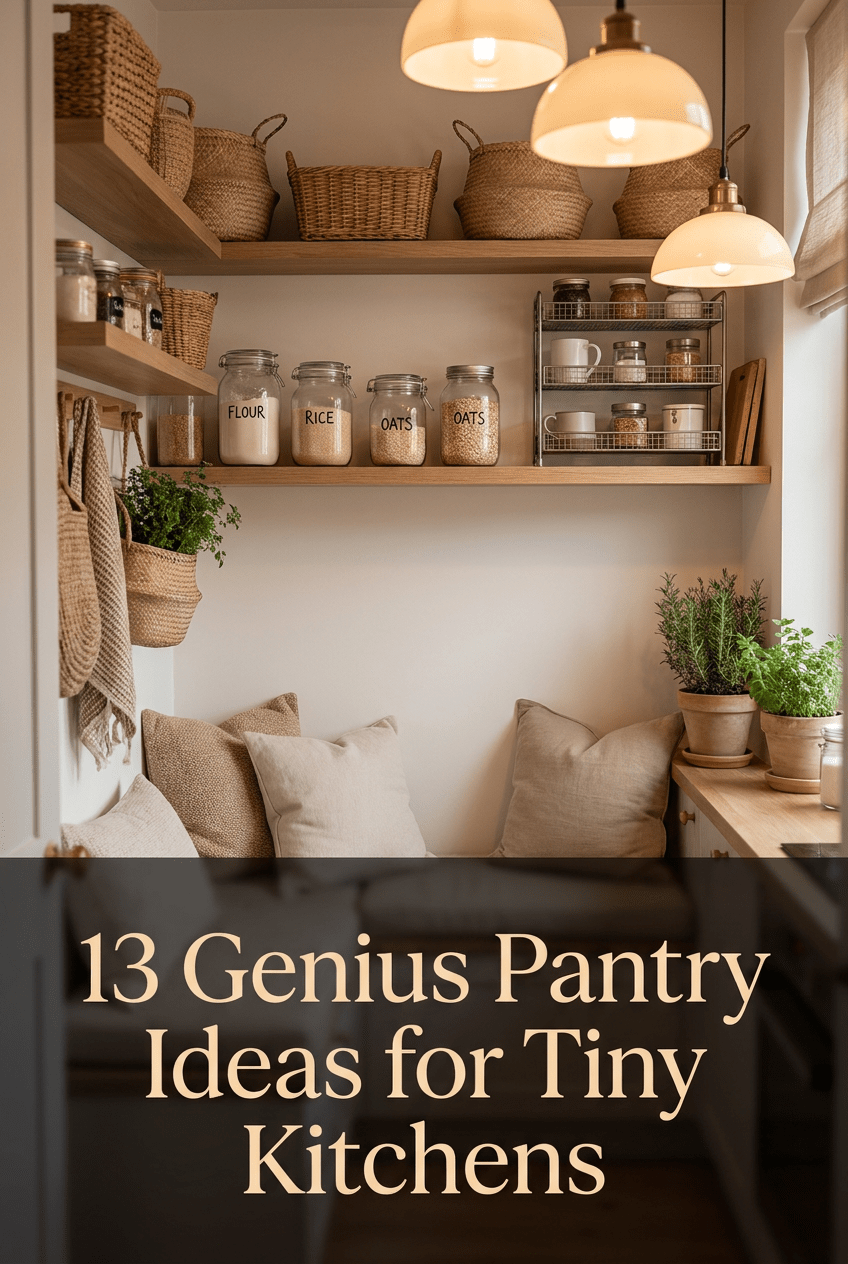
13. Open shelves with baskets and labels
Open shelving can be a pantry that looks good, as long as it's kept to a system. In the photo, the top shelf holds baskets of less-used things, and the lower shelf holds labeled jars of flour, rice and oats where they're easy to reach.
Labels matter more on open shelves than anywhere else. They tell everyone in the household where things go, and they stop the shelves from slowly filling with whatever comes out of the grocery bag. Simple printed or handwritten labels are fine.
Keep open shelves away from the stove, where grease settles on everything, and wipe them down once a month.
Start with the gap by the fridge or the back of a door, since those are the quickest wins. For the rest of a small kitchen, see our guides to kitchen counter organization and pegboard setups for small kitchens, or our room-by-room storage ideas for the rest of the apartment.