
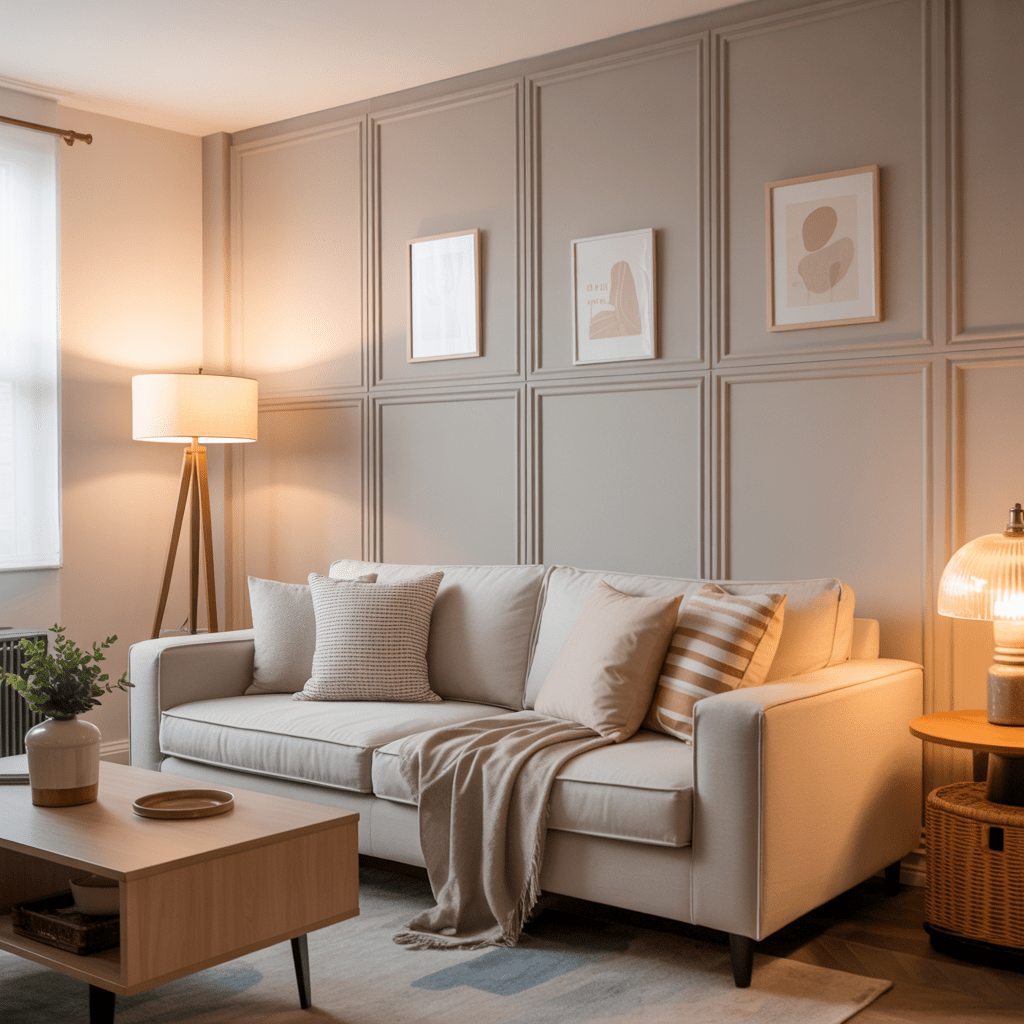
A rental living room usually starts with landlord-white walls, a flush ceiling light and no built-ins. You can't renovate, and you want your deposit back. That doesn't leave you stuck with a bland room.
Most of what makes a room look custom can be added and removed: wallpaper that peels off, trim held up with small nails or strips, lamps instead of the ceiling light, and textiles. The four living rooms in these photos use those tricks. The thirteen ideas below are mostly removable; where an idea needs small holes or paint, it says so. Check your lease, photograph the walls before you start, and ask the landlord about anything you're unsure of.
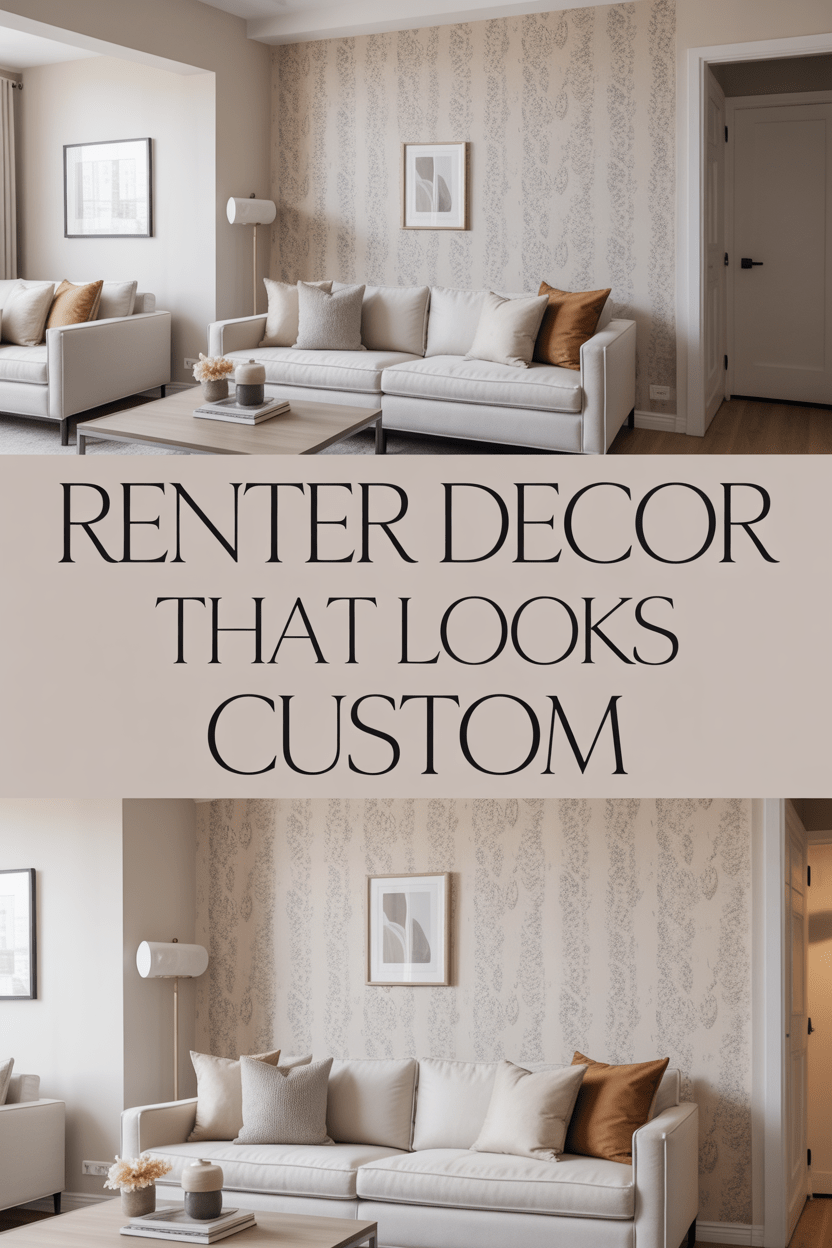
1. A peel-and-stick wallpaper feature wall
Peel-and-stick wallpaper on the wall behind the sofa, like the soft pattern in this photo, makes a plain room look designed. It comes off when you move, usually without marking the paint.
One wall in a small living room typically takes 3 to 5 rolls at $25 to $45 each. Choose a subtle pattern for a small room; bold patterns work, but on one wall only.
Clean the wall and let any fresh paint cure for several weeks first. Test a small piece in a hidden spot and leave it for a few days, since some products lift paint in older apartments.
The plug-in wall sconce in this photo adds light without wiring, and its cord can run down the wall in a paintable cover.
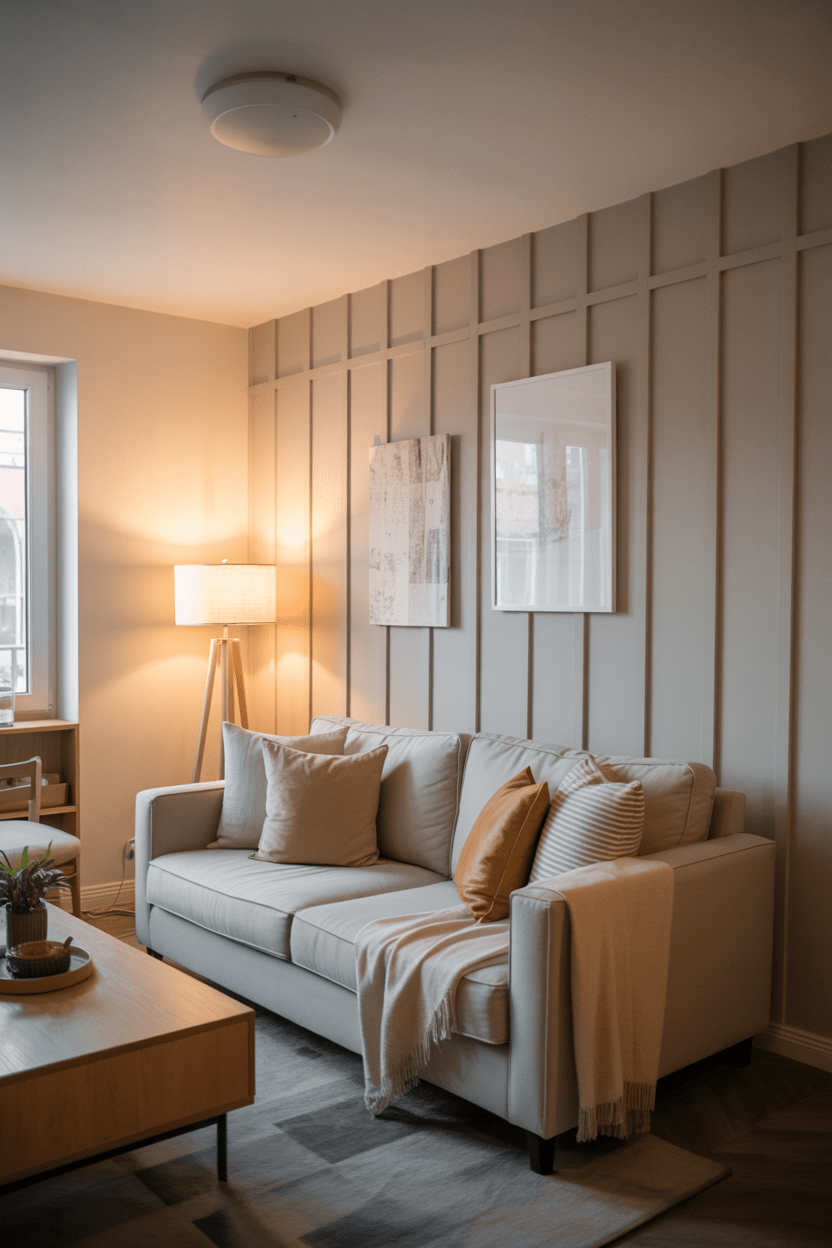
2. Board and batten that comes down
Vertical battens on a painted wall, like the greige wall in this photo, add the look of architectural paneling that most rentals lack. Thin MDF or pine strips, about 1/4 to 1/2 inch thick and 2 to 3 inches wide, are light enough to hang with small brad nails or strong mounting tape.
For a renter-friendly version, paint the battens before hanging them and stick them up with removable mounting strips; you can leave the wall its original color, or ask permission to paint it to match. A wall like this usually costs $60 to $150 in wood and paint.
Space battens 12 to 18 inches apart and use a level on every one. Small nail holes are easy to fill with spackle when you move.
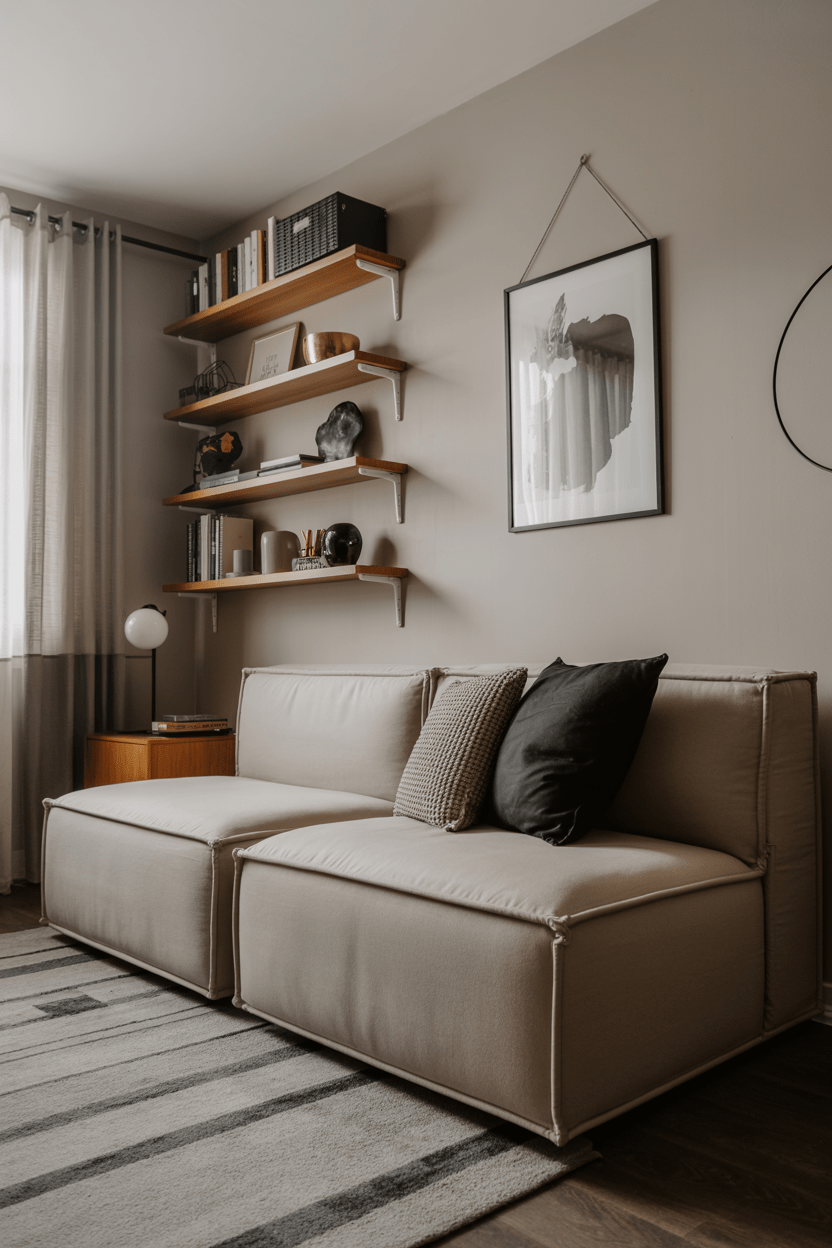
3. Floating shelves
Wood shelves on simple brackets, like the stack beside the window in this photo, add storage and a built-in look on a bare wall. Books, a few objects and a framed print make it feel collected.
Shelves need screws into studs or proper anchors, which leaves small holes. Most leases allow a few, but check. Shelves 8 to 10 inches deep hold most books without sticking out too far.
Keep each shelf about a third empty so it looks styled rather than packed.
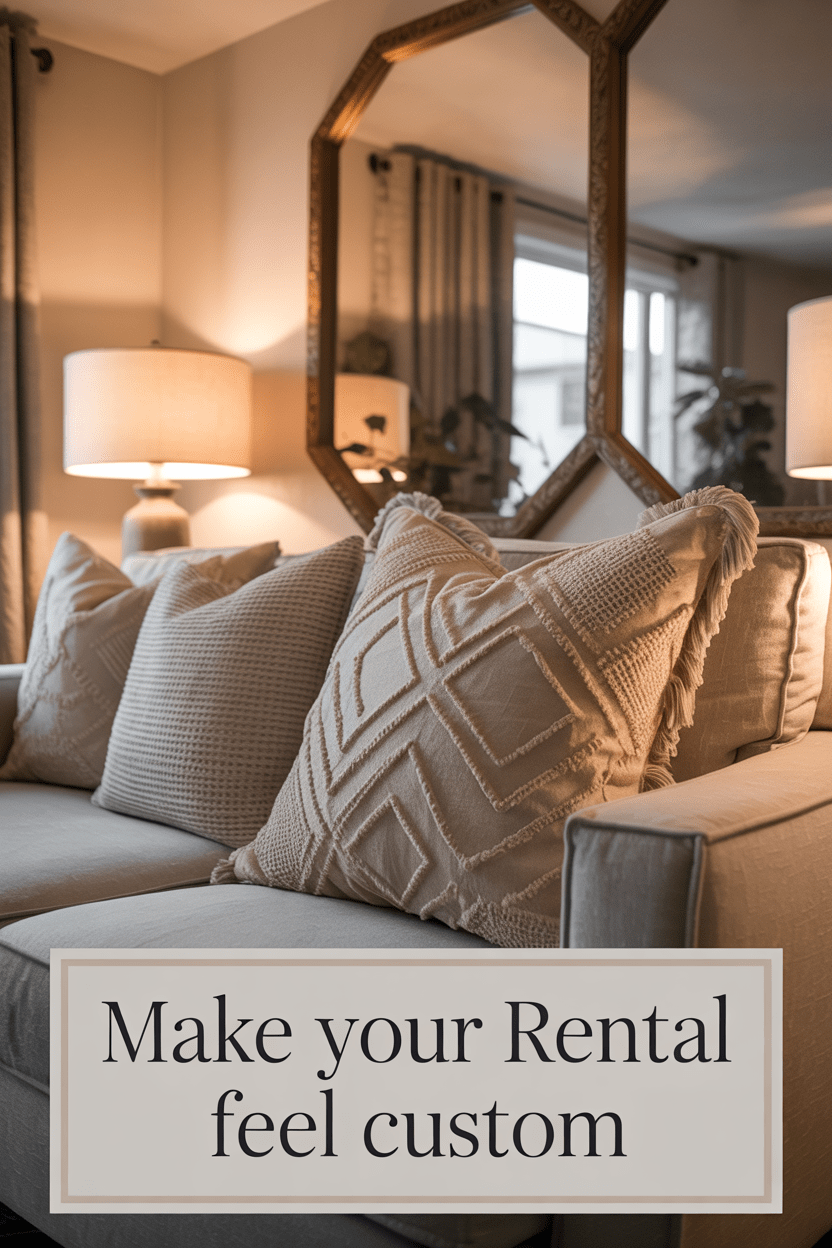
4. Lamps instead of the ceiling light
Rental ceiling lights are rarely flattering. A table lamp beside the sofa, like the one in this photo, a floor lamp in a corner and a small accent light on a shelf make the room look warm and considered.
Use warm white bulbs around 2700K in every lamp, and put them on smart plugs or timers so they switch on together. Linen shades soften the light, and textured pillows like these show it off.
Lamps come with you when you move, so they're one of the best things to spend on in a rental.
5. Curtains hung high and wide
Curtains hung just above the window frame make the ceiling look low. Mounting the rod close to the ceiling, and 6 to 12 inches past the frame on each side, makes the windows look bigger and the room taller.
Buy panels long enough to touch the floor, usually 96 or 108 inches. The rod needs a few screws per bracket, which leave small holes; tension rods work inside a window frame but can't be mounted high.
6. One statement piece
One piece with character, like a vintage armchair, a sculptural coffee table or a big piece of art, gives the room a focus. Everything else can be simple and inexpensive.
Buy it secondhand for less, and choose something you'll take to your next home.
7. A big rug over the landlord's floor
A large rug hides floors you don't love and pulls the seating together. The striped rug in the third photo covers most of the visible floor.
Choose one large enough for at least the front legs of the sofa and chairs, usually 5 by 8 feet or bigger. A rug pad protects the floor underneath, which helps with your deposit too.
8. A no-damage gallery wall
Framed art makes a rental look lived in. Lightweight frames hang well on removable strips; heavier frames need small nails.
Check the weight rating on the strip packaging and use two strips per frame. Press them firmly for 30 seconds and wait an hour before hanging the frame. Lay the arrangement on the floor first, and keep 2 to 3 inches between frames.
9. A plug-in pendant or better bulbs
A plug-in pendant hung from a ceiling hook and swagged across to an outlet adds a light where the rental has none. It works well over a reading chair or a side table.
If you'd rather not add anything, swap the ceiling bulb for a warm, dimmable LED or a smart bulb. It's the cheapest lighting upgrade there is. Keep the original bulbs and fixture parts to put back.
10. Plants at different heights
Plants on the floor, on a shelf and hanging from the ceiling make a room look layered and alive. A tall plant in a corner, like a rubber plant or a snake plant, adds height cheaply.
Use saucers or nursery pots inside decorative pots, so water doesn't stain the landlord's floors or furniture.
11. A styled coffee table
A tray with a stack of books, a candle and a small vase makes a coffee table look finished. Keep the rest of the surface clear so you can use it.
Group objects of different heights on the tray. It also makes it easy to clear the table in one move.
12. A large mirror
A big mirror, like the octagonal wood-framed one in the fourth photo, bounces light around the room and adds a strong shape. Leaning a large mirror against the wall or on a console avoids drilling.
Strap a leaning mirror to the wall at the top with a small anti-tip strap, so it can't fall. Hung mirrors need hardware rated for their weight.
13. A color story across the room
Choose three or four colors and repeat them in pillows, art, the rug and accessories. The rooms in these photos use cream and greige with one warm accent, like the ochre pillows in the first photo.
Repeating colors is what makes inexpensive pieces look chosen together, and it works with white walls you're not allowed to paint.
Getting your deposit back
Photograph every wall and floor when you move in, and keep the photos. When you leave, take everything down slowly: peel wallpaper at a low angle, pull removable strips straight down by their tabs, and fill any nail holes with spackle, sanded smooth and touched up with paint.
Keep a note of any paint color you were allowed to use, and put back any fixtures or bulbs you swapped. Our guide to renter-friendly upgrades that leave no damage covers more options.
Common questions
How do you decorate a rental living room without damaging the walls?
Use peel-and-stick wallpaper, removable strips for lightweight frames, leaning mirrors, lamps instead of new fixtures, and rugs and textiles. Test any adhesive in a hidden spot first.
Can renters add board and batten?
Often, with permission. Lightweight battens held up with mounting strips or small brad nails come down easily, and the holes are quick to fill.
Start with lamps and one wall, then add the rest over time. For more renter ideas, see our guide to textured wall treatments for rentals.