
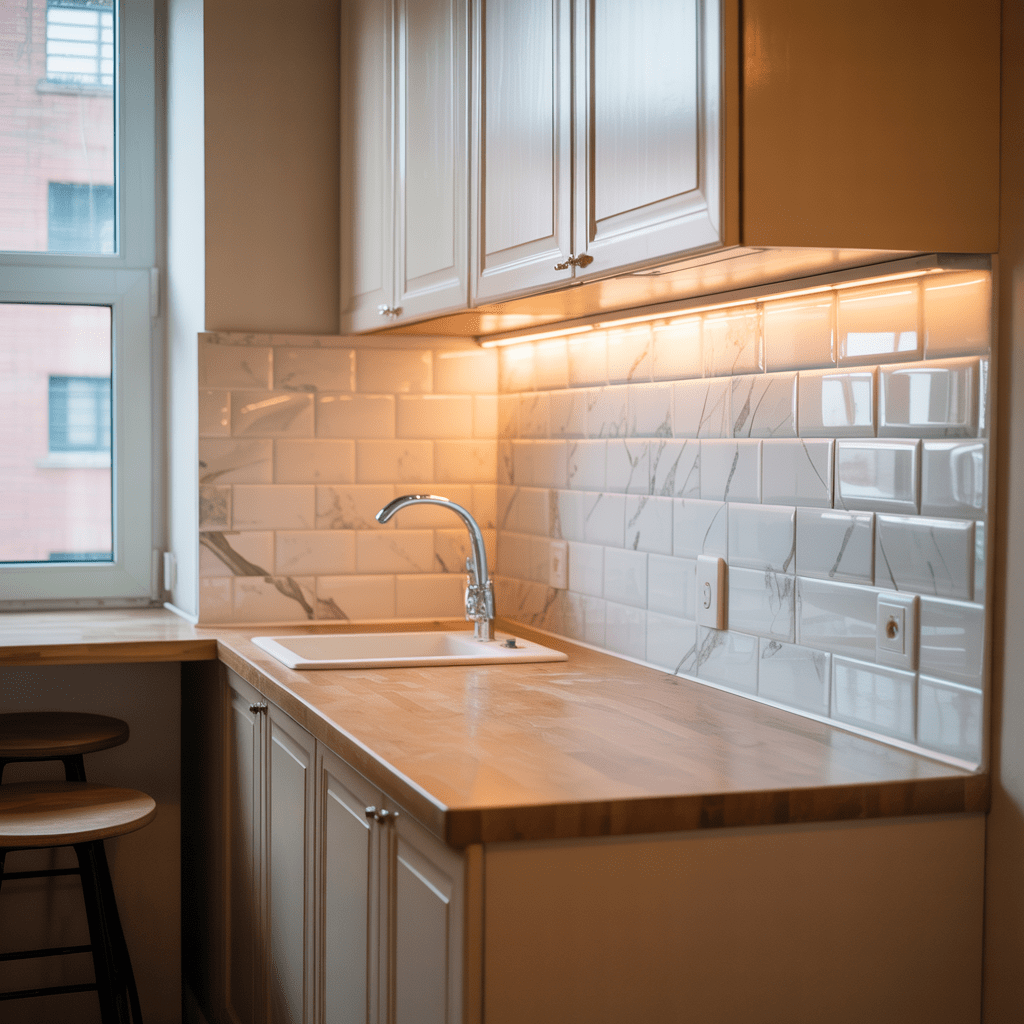
Rental leases usually rule out painting and drilling, and many apartments come with dated tile and flimsy hardware. The upgrades below change how the place looks while leaving it as you found it when you move out.
Before you start, photograph every room so you have a record of its condition. Test any adhesive product in a hidden spot for a few days, keep every original part you remove in a labeled bag, and check your lease. Some upgrades here still need small holes or the landlord's agreement; each one says so. The four photos show some of the biggest changes, from the kitchen backsplash to the bathroom floor.
1. A peel-and-stick backsplash
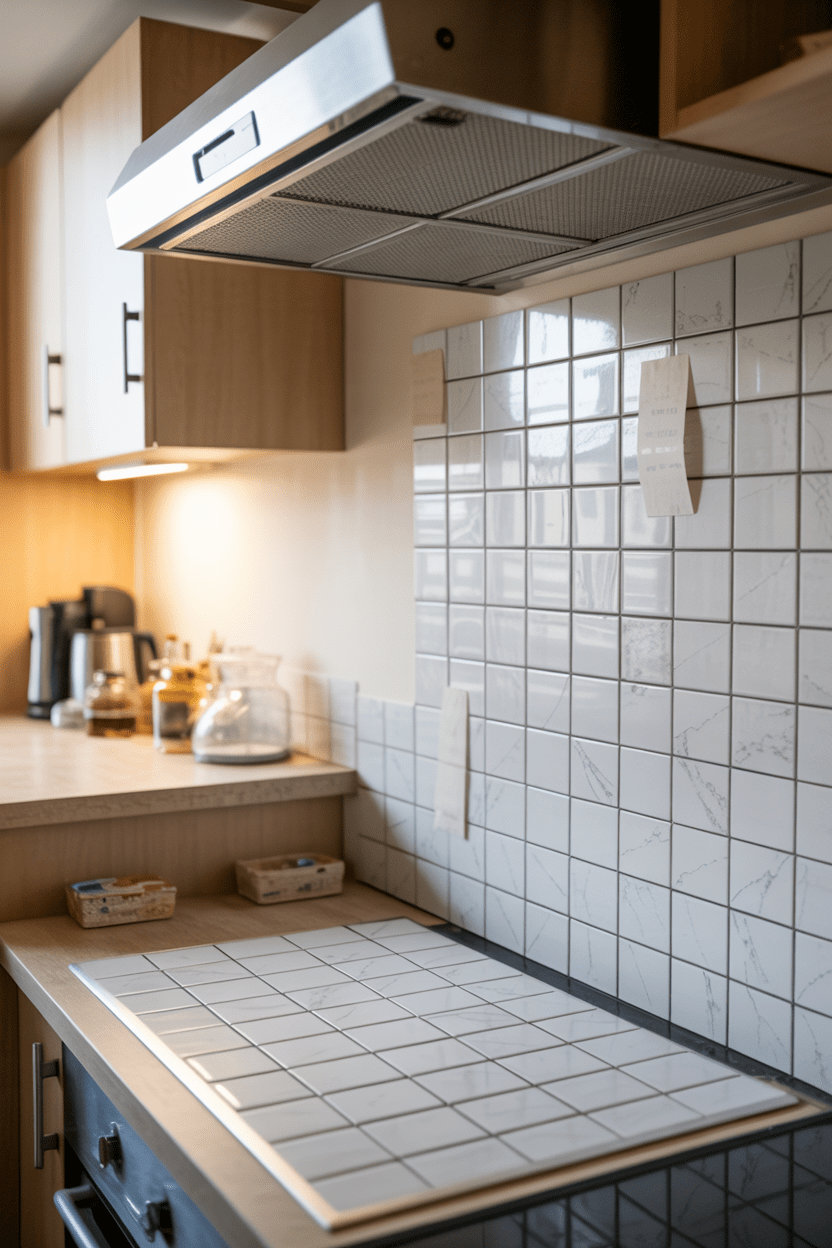
Peel-and-stick tiles, like the white squares behind the cooktop in this photo, cover a dated backsplash and look like real tile from a step away. A small backsplash usually takes $40 to $120 of tiles.
Clean and degrease the wall thoroughly first. Check the product's heat rating and the gap it needs from a gas or electric cooktop; many shouldn't sit directly behind burners. Seal the edge along the counter with removable caulk to keep water out.
2. Wall molding you can take down
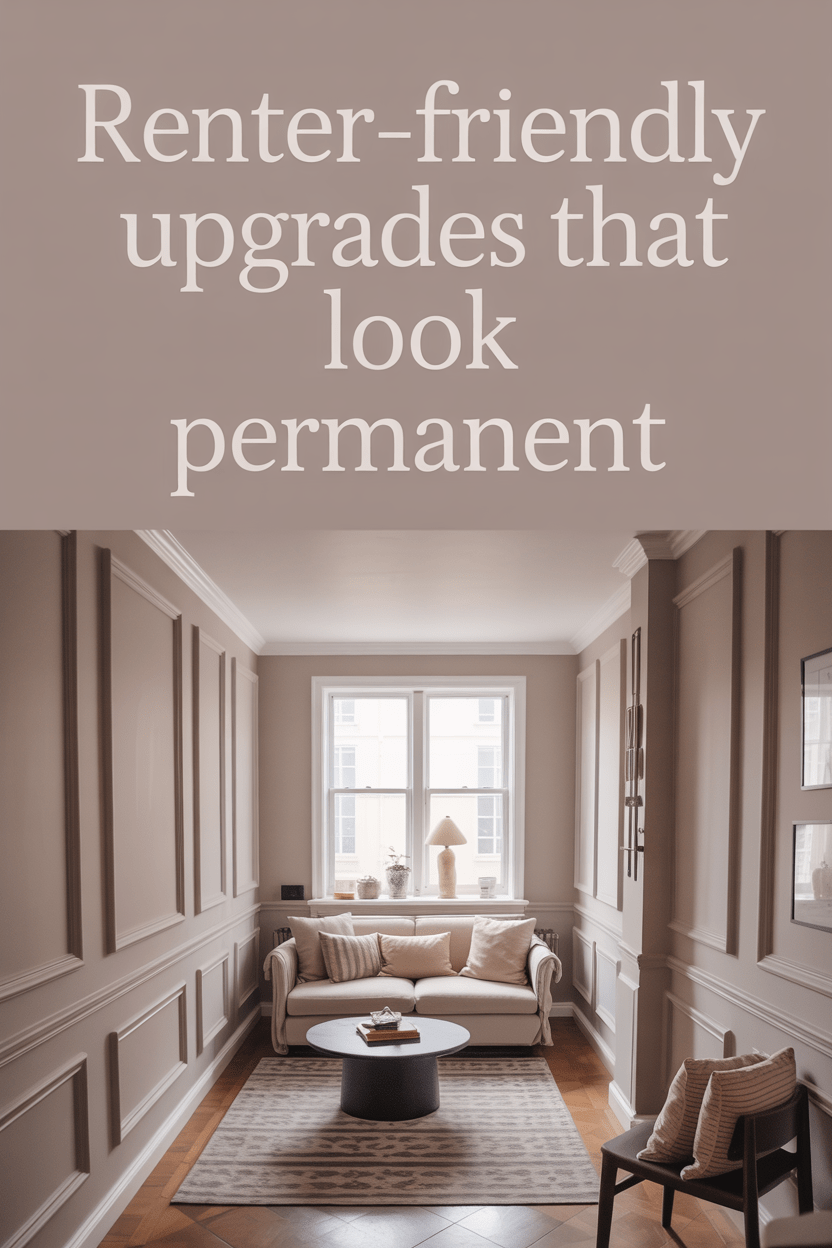
Picture-frame molding, like the taupe panels in this living room, adds the look of an older building with real architecture. Lightweight polystyrene or thin MDF molding can be held up with removable mounting strips or a few brad nails.
Paint the molding before hanging it, and if you want the walls painted to match, ask the landlord first. Small nail holes fill with spackle when you move. Expect about $60 to $150 for a wall.
3. A freestanding closet system
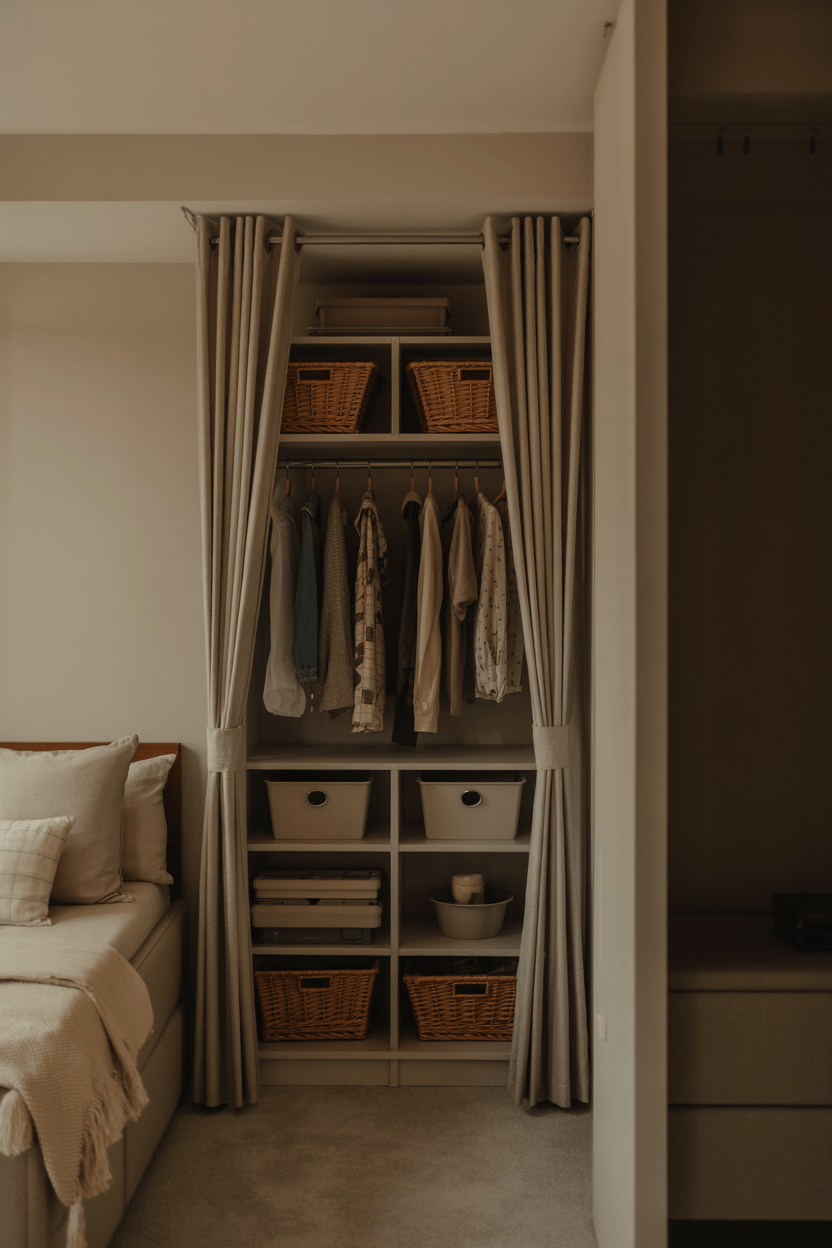
A freestanding closet system, like the shelves and hanging rail in this photo, organizes a closet without screwing into the walls. Baskets and lidded boxes keep the shelves tidy.
This closet also has curtains in place of doors, on a tension rod or a ceiling track. They hide the contents and are lighter than bifold doors that keep coming off their tracks. Remove the original doors carefully and store them, labeled, if the landlord agrees.
Anchor tall freestanding units to the wall with a single anti-tip strap; the small screw hole is a fair trade for safety.
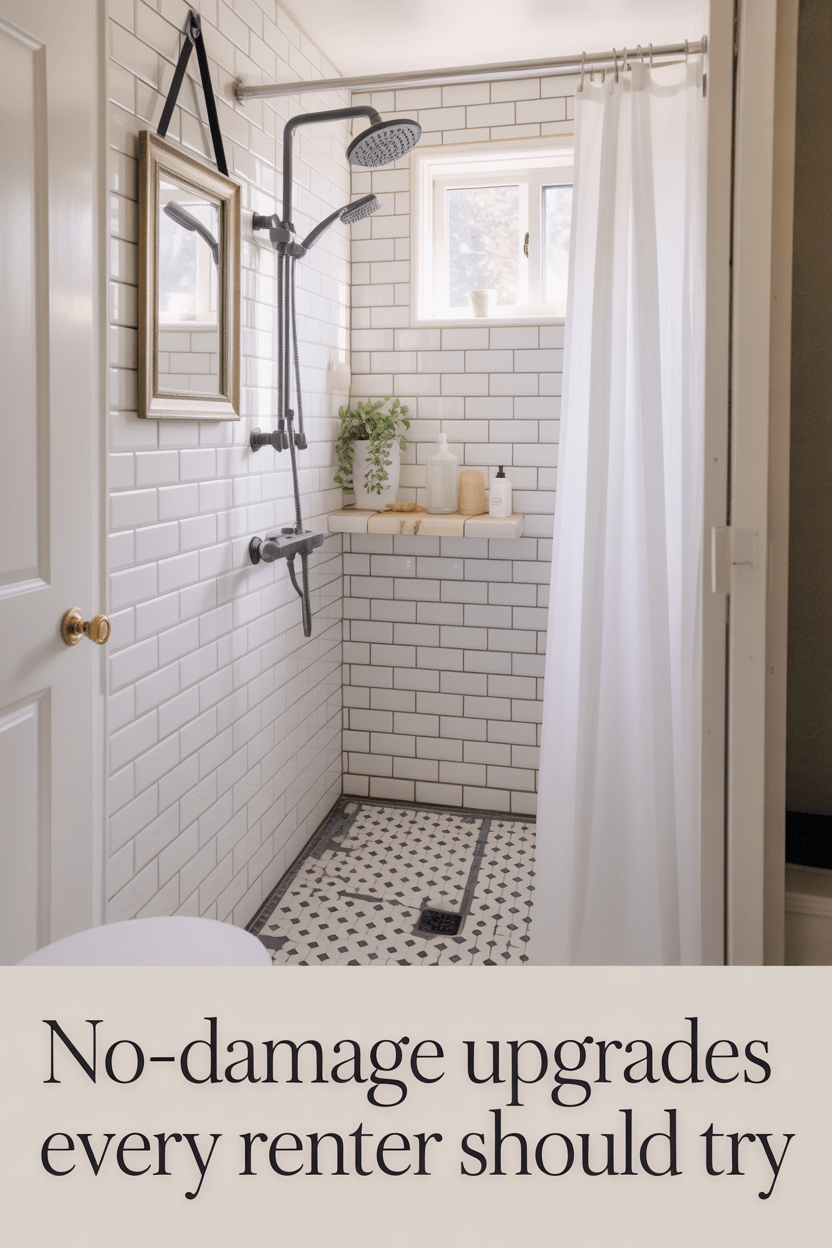
4. Peel-and-stick floor tiles
A patterned floor, like the black and white tiles in this bathroom, changes the whole room. Peel-and-stick vinyl floor tiles can go over smooth existing tile or vinyl in dry areas of the floor.
Don't use them inside a shower or on floors that stay wet. Clean the floor thoroughly, fill deep grout lines first, and roll the tiles firmly. Some leave adhesive behind, so test one in a corner.
The ceiling-height shower curtain and the mirror hung from a strap in this photo are renter-friendly too.
5. Removable wallpaper
Peel-and-stick wallpaper on a single wall adds pattern without paint. Test a piece for a few days first, since some products can pull off paint in older buildings.
Let freshly painted walls cure for several weeks before applying it.
Smaller areas are a good place to start: the back of a bookcase, the inside of a closet or a short hallway wall takes one roll and shows quickly whether you like the pattern.
6. New cabinet hardware
Swapping cabinet knobs and pulls is one of the cheapest big changes. Buy new pulls with the same hole spacing, so nothing needs drilling, and keep the originals to put back.
Measure the spacing center to center before you buy. Common sizes are 3 inches, 96 millimeters and 128 millimeters.
7. Tension rod storage
Tension rods hold curtains and hanging storage without holes. Use them in alcoves or under the sink.
Heavy-duty rods with rubber ends hold the most; check the weight rating and retighten them every few weeks.
Corner shelf units held up by a floor-to-ceiling tension pole fit beside a toilet or in a shower corner, and hold toiletries without any screws.
8. Better lighting without rewiring
Plug-in pendants and sconces add light where you want it, and drum shades that fit over an existing ceiling fixture change its look without touching wires.
Replacing a hardwired fixture means wiring and the landlord's permission, so keep that for when you have both. Swapping bulbs for warm white LEDs costs little and makes a big difference.
9. Window film
Frosted or decorative window film gives privacy in a bathroom or a street-facing window and still lets light in. Static-cling film comes off cleanly, without adhesive.
Apply it with a spray of soapy water and a squeegee for a bubble-free finish.
Film with a reeded or frosted stripe pattern looks like expensive textured glass and works well on a front door's glass panel or a bathroom window at street level.
10. Wood slat panels
Wood slat panels on a felt backing make a warm accent wall or headboard. Lightweight panels can lean, or hang on a few screws or heavy-duty mounting strips.
Panels cost about $50 to $100 each. Check the weight before relying on strips alone.
Felt-backed slat panels also absorb some sound, which helps in an echoey rental with hard floors.
11. Cabinet fronts with removable film
Removable vinyl film can cover dated cabinet doors in a new color or a wood look. Take the doors off, clean them well and apply the film slowly with a smoother.
Painting cabinets looks better but needs the landlord's permission. Either way, keep a note of the original finish.
12. A gallery wall on strips
Light frames hang well on removable picture-hanging strips. Use two per frame, press them firmly for 30 seconds and wait an hour before hanging.
Use frames with acrylic instead of glass, which are lighter and safer if one falls.
Plan the layout on the floor or with paper templates first, so you only stick each strip once. Strips are hard to reuse once pressed.
13. A bookshelf as a room divider
In a studio, an open-back bookshelf set out from the wall creates separate zones without building anything. Our guide to studio room dividers covers the options.
Anchor it to the floor or the ceiling, since a freestanding shelf away from the wall can tip.
14. A new shower head
A new shower head is a quick upgrade. Unscrew the old one, wrap the thread with plumber's tape and screw on the new one by hand. Most cost $20 to $60.
Keep the original and put it back when you move out. Check the flow rating if your building or city has water limits.
A handheld shower head on a slide bar that clamps to the existing pipe makes cleaning the tub easier too, with no drilling needed.
15. A grout pen
Dingy grout makes tile look old. A grout pen in white or gray brightens the lines in an afternoon for about $10 to $15, with no regrouting.
Clean the grout with a brush and a mild cleaner first, let it dry, and wipe any marks off the tiles straight away.
Taking it all down
Remove adhesive products slowly when you move out. Peel wallpaper and tiles at a low angle, warming stubborn ones with a hair dryer, and pull mounting strips straight down by their tabs. Fill any small holes with spackle and touch up the paint.
Put back the original hardware, shower head and fixtures, and compare the apartment to your move-in photos. Our guide to living room decor for renters has more ideas.
Common questions
What upgrades can renters do?
Most adhesive upgrades, like a peel-and-stick backsplash or removable wallpaper, plus anything you can swap back, such as cabinet pulls with the same hole spacing or a shower head. Keep all the originals.
Does peel-and-stick damage walls?
Usually not, but some products can lift paint in older buildings. Test a small piece in a hidden spot for a few days before covering a whole wall.
Photograph everything, test first and keep the original parts. For bathroom ideas, see our guide to bathroom vanity upgrades.