
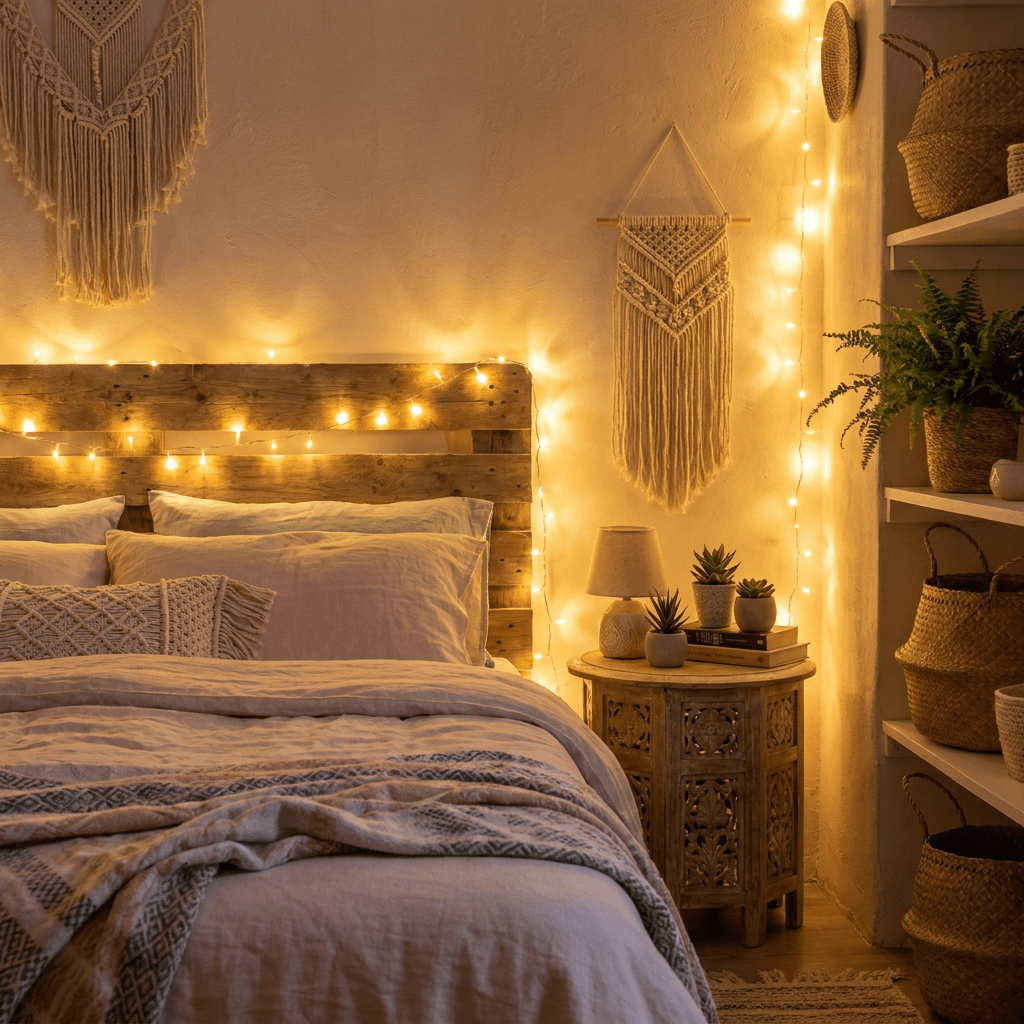
Most apartment bedrooms come with one light: a ceiling fixture that's either on, flooding the room with flat white light, or off. Neither is much use at 10pm when you want to read or wind down.
The four bedrooms in these photos are lit in different ways, from wall sconces to fairy lights, but none of them relies on the ceiling. The seven ideas below are almost all plug-in, so they work in a rental and move with you. Two settings apply to every one of them: warm white bulbs, around 2200K to 2700K, and a way to dim or switch them from bed.
1. Layer three light sources at different heights
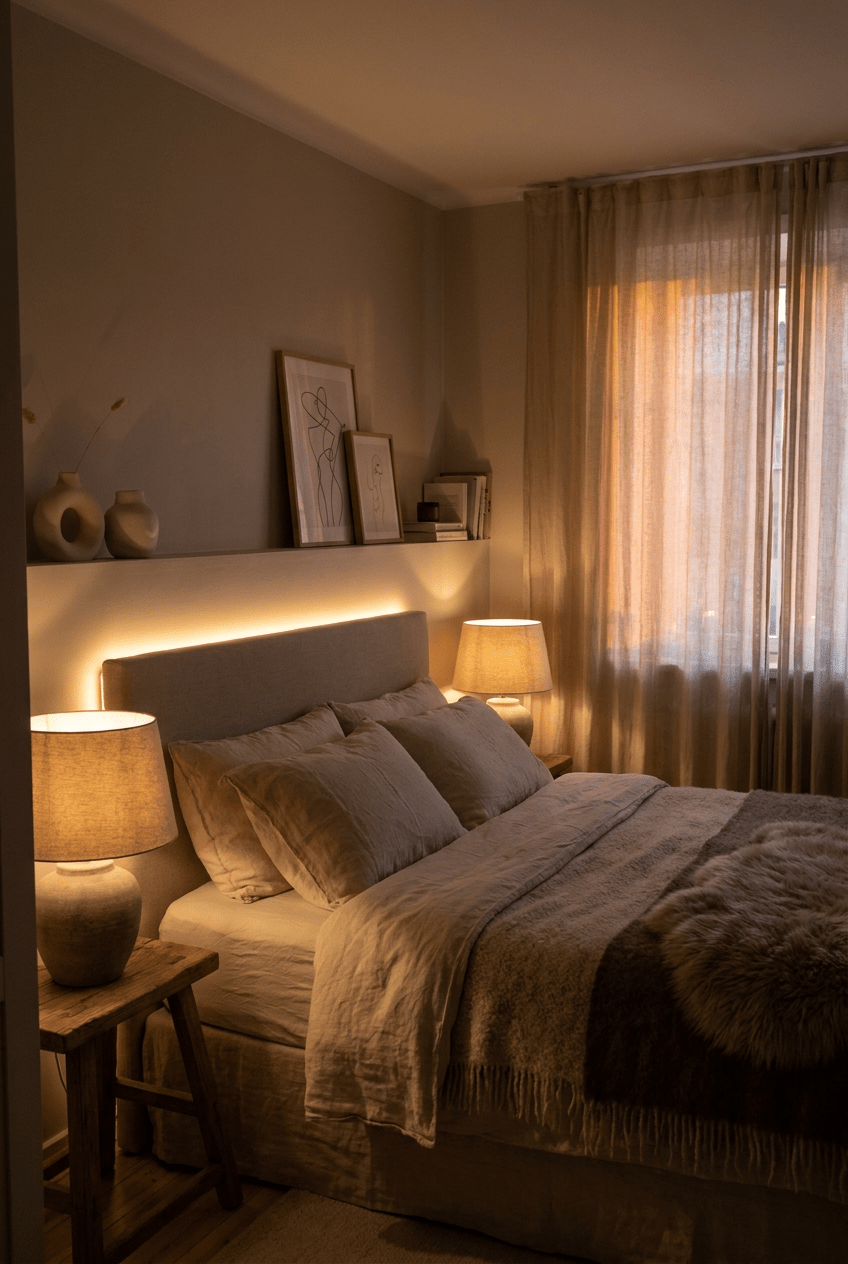
A room lit from a single point looks flat and casts hard shadows. The bedroom in this photo uses three sources at different heights: table lamps on each nightstand, an LED strip glowing behind the headboard and soft light from the window side. Together they make the room look warm and deep.
In a small bedroom, a good layering is a low glow (an LED strip or fairy lights), a reading light at shoulder height (a lamp or sconce) and one higher light for getting dressed (the ceiling light on a dimmer, or a floor lamp).
Linen or fabric lampshades, like the ones here, soften the light and spread it evenly. Avoid bare bulbs at eye level, which cause glare.
Put the low glow and the lamps on smart plugs or a single switched power strip, so you can turn them all on together when you walk in.
2. Plug-in wall sconces beside the bed
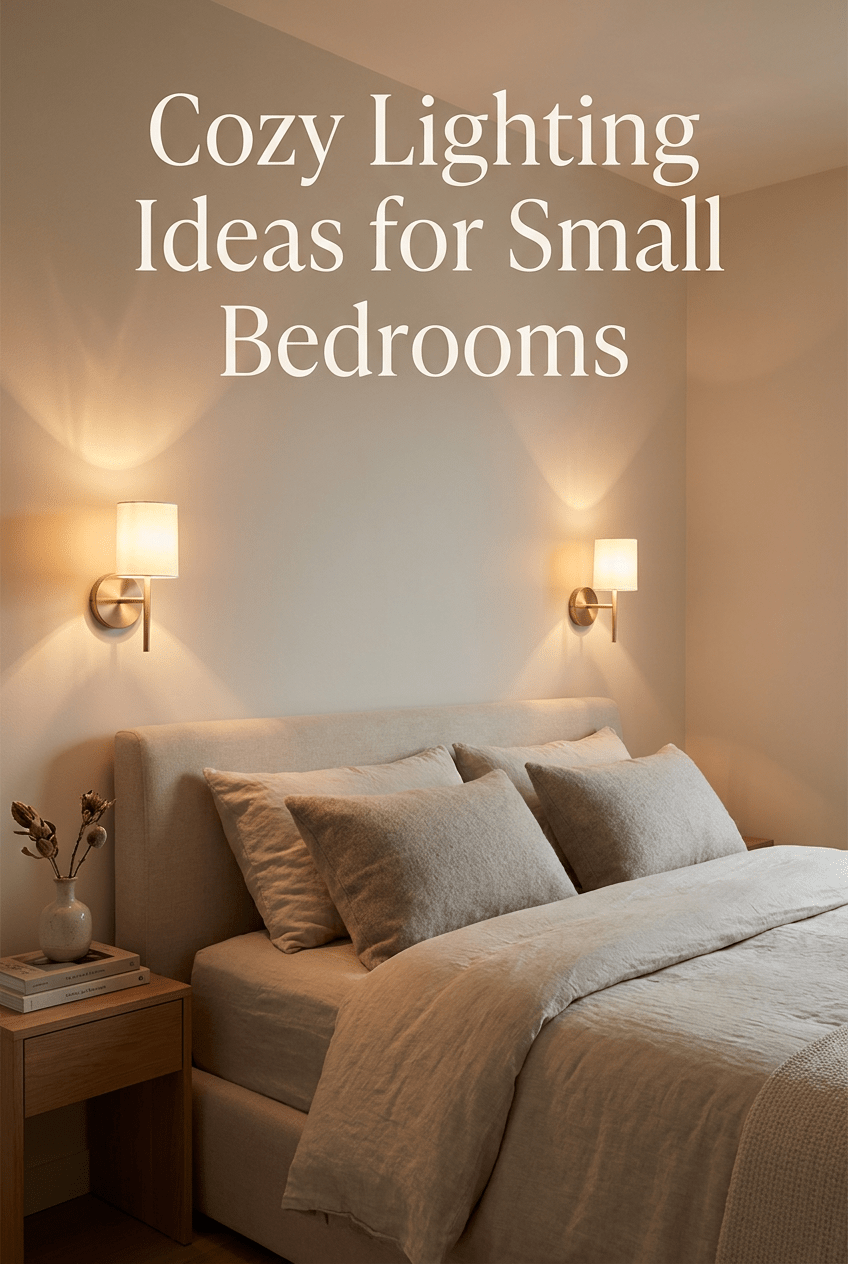
Wall sconces, like the pair with white shades in this photo, free up the whole nightstand, which is valuable when the nightstand is tiny. They also look more tailored than lamps.
Plug-in sconces cost about $30 to $80 each and hang on a single screw or a small bracket. Mount them so the shade sits about 24 to 30 inches above the mattress, and 6 to 12 inches outside the edge of the headboard. That puts the light over your shoulder for reading without shining in your eyes.
Hide the cord with a paintable cord cover running straight down the wall, or choose a sconce with a fabric cord that looks deliberate. Battery-powered rechargeable sconces skip the cord, but need charging every week or two.
Choose a sconce with a switch on the fixture or its cord, so you can turn it off without getting up.
If you share the bed, sconces with their own switches let one person read while the other sleeps. A narrow, directional shade keeps the light on the book rather than across the pillow next to you.
3. Fairy lights around the headboard
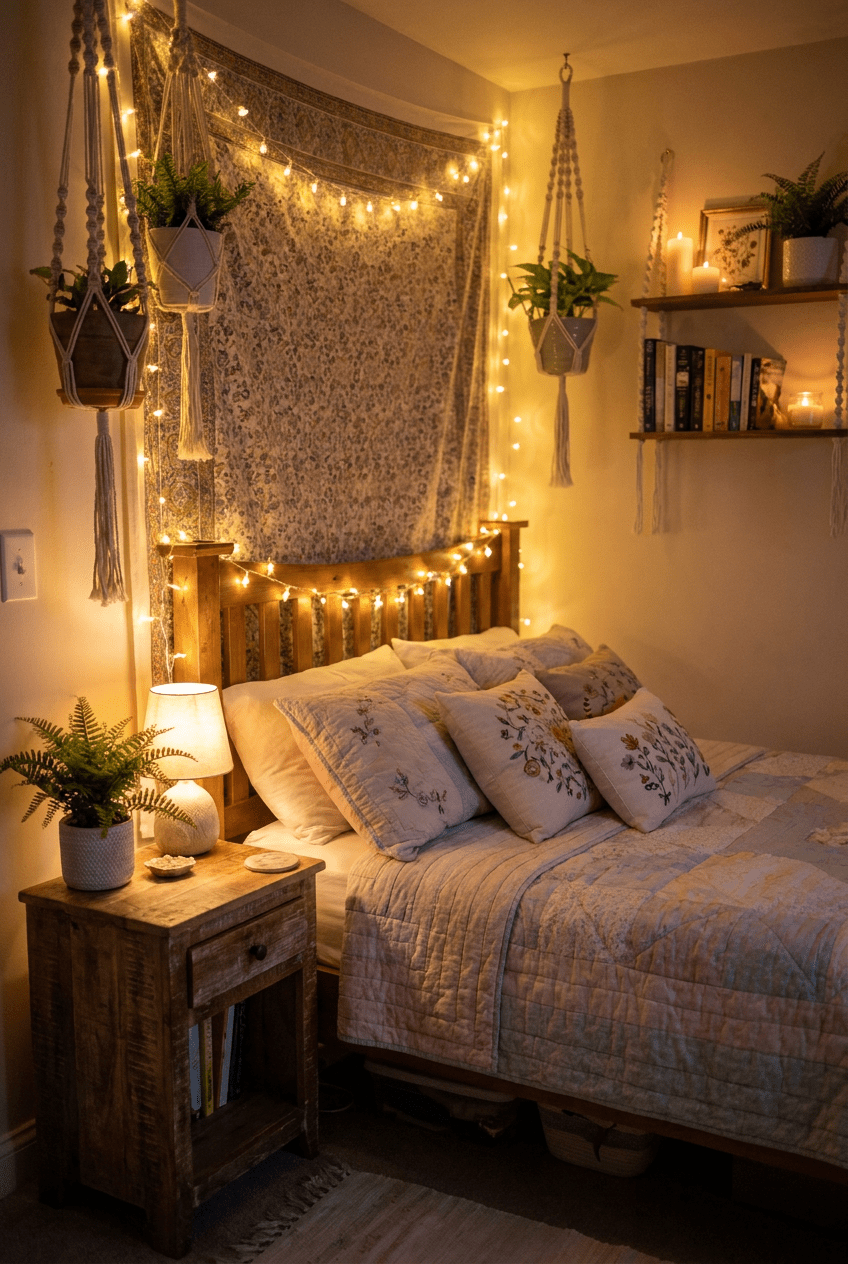
Fairy lights give a soft, scattered glow that's cozy but too dim to read by. In this photo, a strand frames a printed fabric wall hanging and runs along the top of a wooden headboard, while a small table lamp handles the practical light.
Copper-wire LED strands are thin and easy to shape. Battery packs with a timer, about $8 to $15, avoid an extra cord by the bed and switch off automatically.
Only use LED strands near fabric like wall hangings and bedding, and attach them with clear adhesive hooks rather than tacks, which can damage the wire. Switch them off before you sleep.
The shelf of books and candles in this room adds a little more light. Use LED candles on shelves above a bed.
4. A plug-in pendant beside the bed
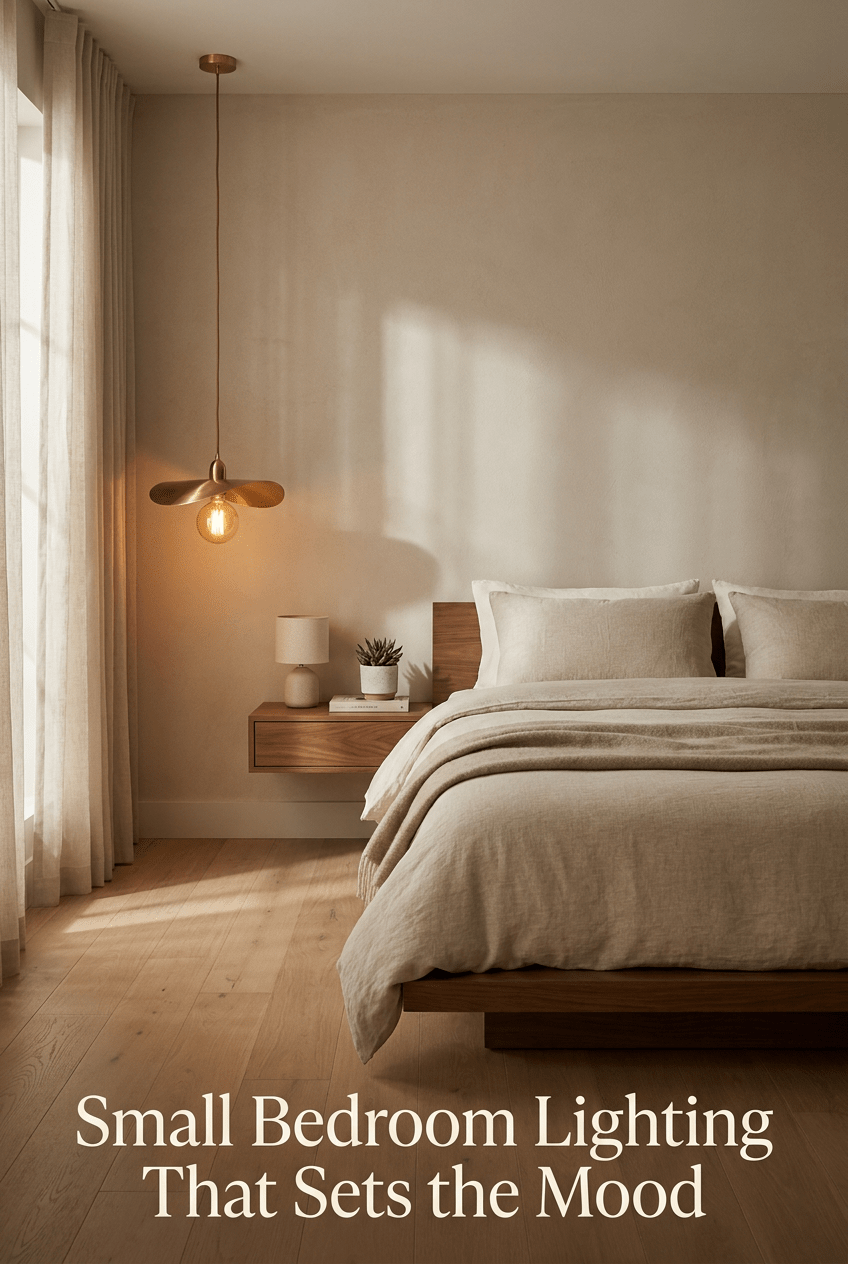
A pendant hanging low beside the bed, like the brass one over the floating nightstand in this photo, replaces a lamp and looks like a hotel room. It also works when there's no room for a nightstand at all.
Plug-in pendants hang from a ceiling hook and swag the cord across to the wall and down to an outlet. Screw the hook into a ceiling joist or use a toggle anchor rated for the light's weight. Hang the bottom of the shade about 18 to 24 inches above the nightstand, or high enough not to bump your head when you sit up.
In a rental, a ceiling hook leaves a small hole that's easy to fill, but ask first if your lease is strict.
5. An LED strip behind the headboard
An LED strip stuck to the back of the headboard, like the glow in the first photo, lights the wall behind the bed. It gives the room depth and works as a gentle night light.
Strips with a dimmer and a warm white setting cost about $15 to $30. Clean the surface first so the adhesive holds, and stick the strip a few inches in from the edge so you see the glow but not the LEDs.
Avoid color-changing strips set to bright blue or white at night. A warm amber setting is much easier on the eyes before sleep.
An LED strip under the bed frame works the same way and doubles as a night light for trips to the bathroom. Choose one with a motion sensor so it only comes on when your feet hit the floor.
6. A smart bulb in the ceiling light
If you keep the ceiling light, a smart bulb makes it far more useful. You can dim it, warm it up in the evening and turn it off from your phone or a voice assistant.
Smart bulbs cost about $10 to $25 each. Some fixtures with a wall dimmer switch don't work well with smart bulbs, so check the bulb's compatibility first. Set a routine that warms and dims the light automatically after 9pm.
A smart bulb in each bedside lamp gives you the same control throughout the room.
7. A small lamp on the dresser or a shelf
A small lamp on the dresser or a high shelf, away from the bed, fills the far side of the room with soft light. It stops the room from feeling like it ends at the bed.
Mushroom lamps, small ceramic lamps and rechargeable cordless lamps all work. Cordless lamps can go anywhere, including shelves far from an outlet, and usually last several evenings per charge.
Keep this lamp the dimmest in the room, with a low-watt warm bulb.
In a studio, where the bed shares the room with the living area, a lamp on the far side also lights the path to the door without switching on the ceiling light and waking anyone.
Light and sleep
Bright, cool-white light in the evening can make it harder to fall asleep. Warm, dim light in the hour before bed is the general advice, and every idea above makes that easier.
Check the bulbs' color temperature, shown in kelvin on the box: 2200K to 2700K is warm white for evenings, 3000K is neutral, and 4000K and above is cool white, better suited to a desk than a bedroom. Look for bulbs labeled dimmable if you plan to use a dimmer.
Blackout curtains or a blackout liner behind your existing curtains keep streetlights out once you've turned your own lights off.
Common questions
What color light is best for a bedroom?
Warm white, about 2200K to 2700K, for evening lamps and sconces. Use 3000K for a ceiling light if you want a slightly brighter, neutral light for getting dressed.
How do you light a bedroom without a ceiling light?
Use plug-in wall sconces or table lamps beside the bed, a floor lamp or a small lamp on the dresser, and a soft glow from fairy lights or an LED strip.
Start with the bulbs, then add one reading light on each side of the bed. For more ideas, see our guides to bedroom canopies and making a small bedroom warmer in winter.