
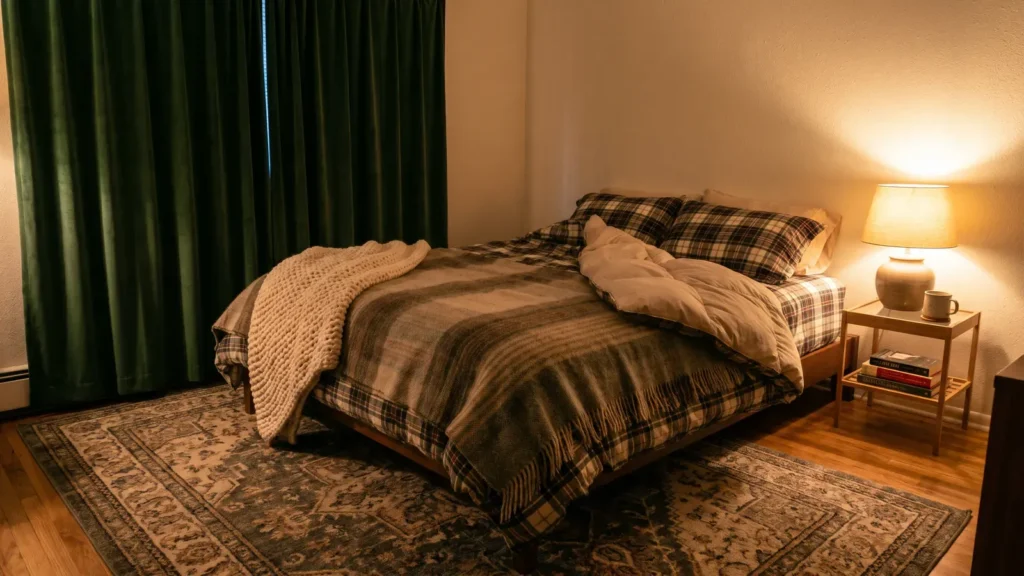
A small bedroom should be the easiest room to keep warm, but many are the coldest in the apartment. They often sit on an outside corner of the building, have one big drafty window and a bare floor, and the radiator or vent is hidden behind the dresser. If you rent, you may not control the thermostat at all, and turning up a space heater all night isn’t cheap or particularly safe.
A small bedroom responds quickly to small changes. Warming the bed itself, keeping the cold off the window and the floor, and stopping a few drafts can make a bigger difference than a couple of extra degrees on the thermostat. Below are ways to make a small bedroom warmer this winter, with renter-friendly fixes, rough costs and the safety rules for anything that plugs in.
1. Find where the cold comes from
Before you buy anything, spend a few minutes finding out why the room is cold. On a windy day, hold the back of your hand or a lit incense stick near the window frame, the bottom of the door, electrical outlets on outside walls and the edges of any air conditioner unit. Moving air or a wavering line of smoke points to a draft.
Also notice where the cold is. A cold floor suggests the room sits above an unheated space or that the floor is bare. A bed that feels cold on one side is often pushed against an outside wall. A window that’s icy to the touch is losing heat through the glass even if it isn’t drafty.
If you find a serious problem, such as a window that doesn’t close properly, a broken radiator valve or gaps you can see daylight through, report it to your landlord in writing. Many leases and local codes require landlords to keep heating and windows in working order, and early fall is the best time to ask.
- Check window frames, door bottoms, outlets on outside walls and AC units
- Note cold floors, cold walls and icy glass
- Report broken windows or heating to your landlord in writing
2. Layer the bed for warmth, not just looks
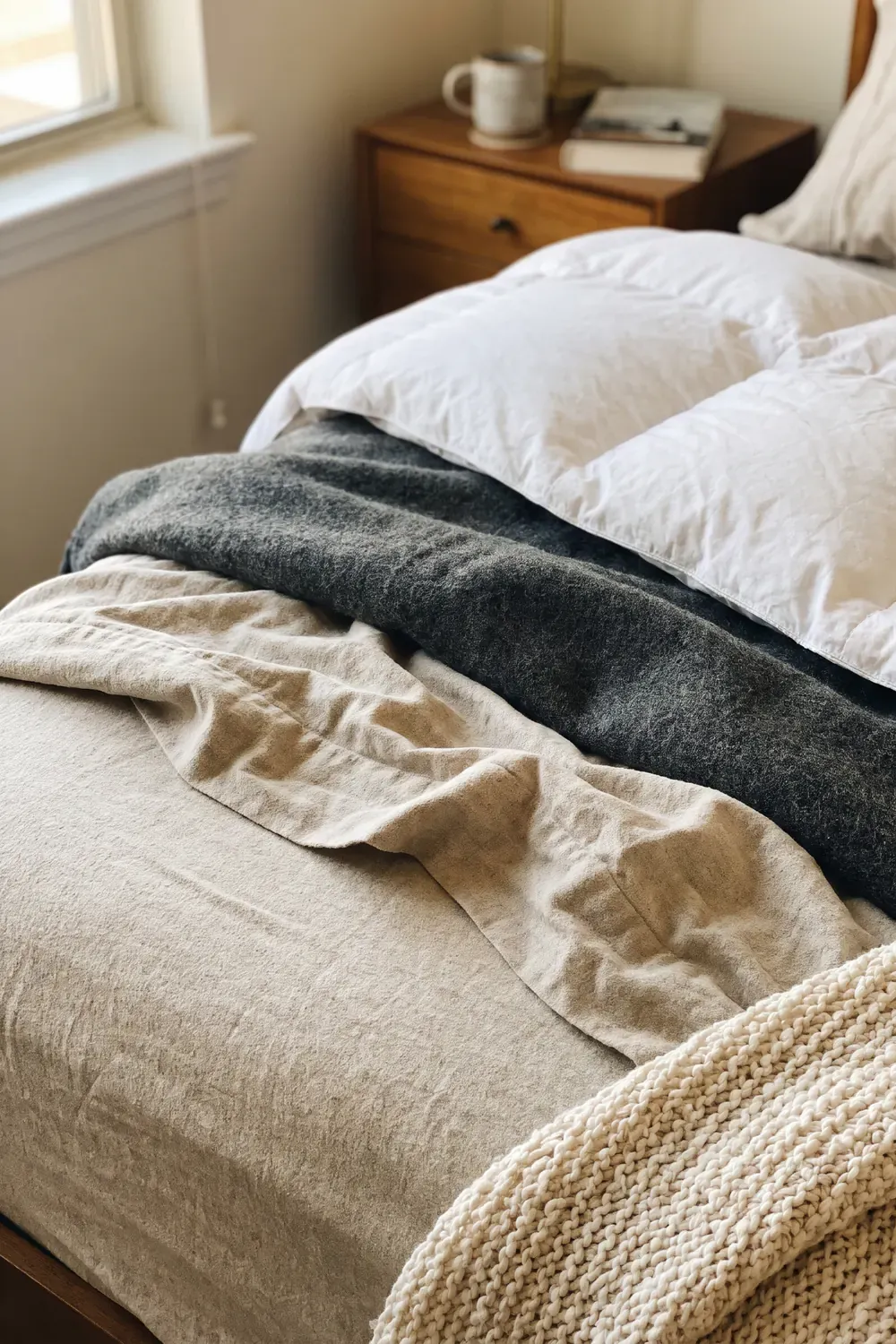
The bed is where you spend the coldest hours, so start there. Flannel or brushed cotton sheets feel warm the moment you get in, unlike crisp percale, which feels cool. A set of flannel sheets often costs $30 to $70 and makes an immediate difference.
Add a wool or fleece blanket between the top sheet and the duvet. Wool traps warm air and handles moisture well, so you stay warm without getting clammy, and one layer of wool often does more than a second duvet. On top, use a duvet suited to winter: many brands sell all-season duvets or winter weights, and a heavier fill makes a real difference in a cold room.
Finish with a throw at the foot of the bed for extra warmth on the coldest nights, and consider a wool or fiber mattress topper if cold seems to come up through the mattress. Our guide to storing winter clothes covers where to keep summer bedding in a small apartment.
Tip: Wear warm socks to bed. Warm feet help you fall asleep faster, and they’re the cheapest heating there is.
3. Move the bed away from cold walls and windows
Where the bed sits makes a difference. An outside wall or a window is colder than the rest of the room, and a bed pressed against one will feel cold all night. If you can, put the headboard against an inside wall, one shared with another room or a hallway, and keep the bed a few inches away from any outside wall.
In a small bedroom you may not have much choice, so add a barrier instead. An upholstered headboard, a quilt or rug hung behind the bed with removable hooks, or a padded bed canopy can all block some of the chill from a cold wall. Our post on cozy bedroom canopy ideas shows a few ways to do it.
Don’t block the heat source while you’re rearranging. A dresser or bed pushed against a radiator or covering a heating vent keeps the warm air from circulating, and the room stays cold. Leave space in front of radiators and vents so the heat can reach the room.
- Headboard against an inside wall when possible
- A few inches of space between the bed and outside walls
- Upholstered headboard or wall hanging as a barrier
- Keep radiators and vents clear of furniture
4. Hang thermal or lined curtains
Windows are a major source of heat loss in winter, and in a small bedroom one large window can chill the whole room. According to the U.S. Department of Energy, conventional draperies can reduce heat loss through a window by up to about 10%, and tightly fitted cellular shades can reduce it by 40% or more.
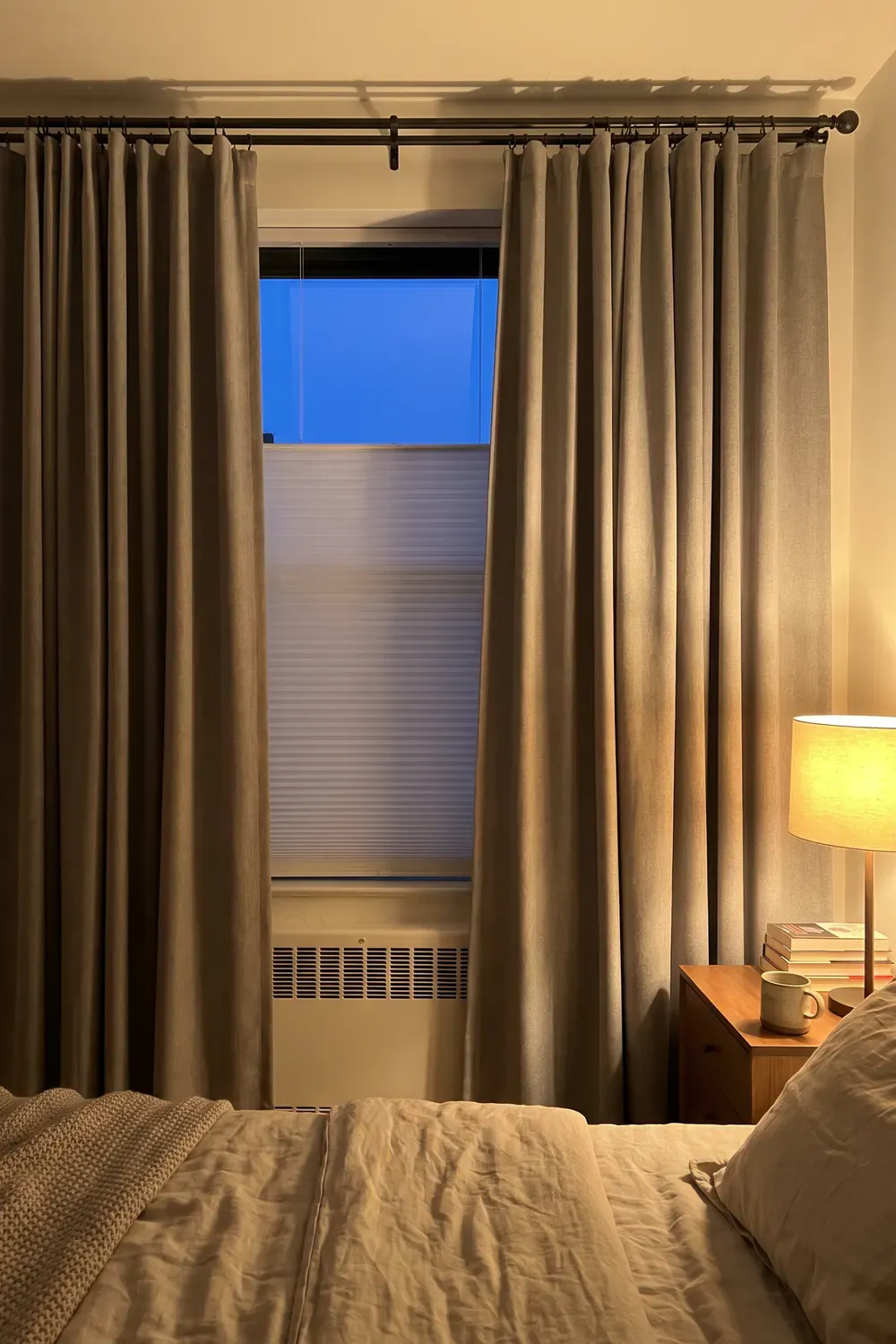
For the best effect, choose lined or thermal curtains and hang them high and wide, with the rod a few inches above the window frame and extending past it on both sides, so the curtain covers the whole window and reaches the floor or the sill. Close them as soon as it gets dark, and open them on sunny days so the sun can warm the room.
Thermal curtain panels typically cost $25 to $60 each. A tension rod or a rod mounted with existing holes avoids new drilling if your lease is strict. Adding a cellular shade behind the curtains gives you a second layer for the coldest weeks.
Tip: Open the curtains on sunny winter days, even when it’s cold outside. Direct sun through the glass is free heat.
5. Cover cold floors with a rug
Bare floors, especially hardwood, laminate or tile over an unheated space, make a room feel colder than it is. A large rug under the bed solves most of the problem. In a small bedroom, choose one big enough to extend about 18 to 24 inches past the sides of the bed so your feet land on it when you get up.
Wool rugs are warmer underfoot and more durable than most synthetics, but they cost more. A thick rug pad under any rug adds both warmth and grip, and protects rental floors. If a big rug isn’t in the budget, a pair of runners on either side of the bed gives you a warm landing spot for much less.
Keep slippers by the bed too. They’re the simplest way to stop cold floors from waking you up properly at 6 a.m. For sizing help, see our guide to rugs that anchor a small space.
6. Seal small drafts the Renter-Friendly way
Small drafts add up, and most can be fixed in an afternoon without damaging your rental. Removable rope caulk or weatherstripping tape seals gaps around window frames and peels off in spring. A window insulation film kit, which you shrink tight with a hair dryer, adds an extra layer of insulation over a drafty window for about $15 to $30.
For the door, a draft stopper along the bottom blocks cold air from the hallway, and a self-adhesive door sweep is another option. Foam gaskets behind outlet and switch covers on outside walls stop drafts there, but turn off the power before removing any cover, or ask your landlord to do it.
Read the instructions on any product that sticks to window frames or painted surfaces, and test it on a small spot first. Our full guide to winterizing your apartment as a renter covers more no-damage fixes.
- Removable rope caulk or weatherstripping on window gaps
- Window insulation film for drafty windows
- A draft stopper or door sweep at the bottom of the door
- Foam gaskets behind outlet covers on outside walls
7. Warm the bed safely before you get in
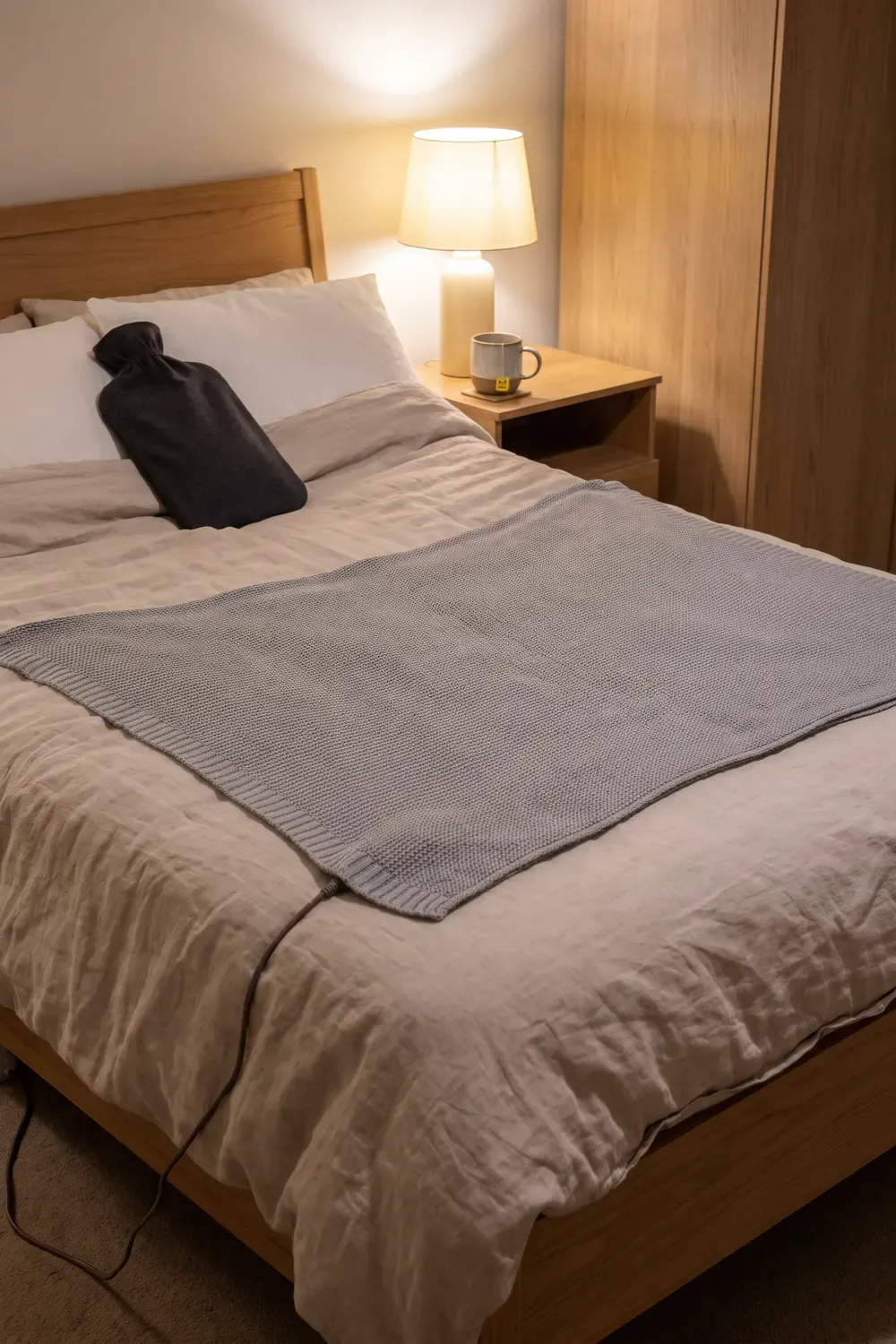
A warm bed makes a cold room much easier to face. A hot water bottle with a fabric cover, filled with hot but not boiling water and tucked in 15 minutes before bed, is cheap and simple. Replace it if the rubber shows cracks or it’s several years old.
Electric blankets and heated mattress pads work well too, but use them carefully. Safety organizations such as the Electrical Safety Foundation International advise choosing one certified by a recognized testing laboratory, using it flat, never folded or tucked in, and never covering it with other blankets, pillows or pets, because a folded or covered blanket can overheat.
The safest routine is to switch it on to warm the bed before you get in, then turn it off when you go to sleep. Replace any electric blanket that has damaged cords, scorch marks or worn spots, and check the U.S. Consumer Product Safety Commission’s recall list for the model.
Tip: A heated throw or blanket on a timer setting warms the bed and shuts off on its own, so you don’t have to remember.
8. Use a space heater only with the safety basics
If the room is still cold, a small electric space heater can take the edge off while you get ready for bed. Fire safety guidance from the U.S. Fire Administration is clear: keep it at least 3 feet away from anything that can burn, including bedding, curtains, clothes and furniture. In a small bedroom, that often rules out the space between the bed and the wall.
Plug the heater directly into a wall outlet, never into an extension cord or power strip, and choose one with tip-over and overheat protection and a certification label. Turn it off when you leave the room or go to sleep. Oil-filled radiator-style heaters stay warm without exposed hot elements, which makes them a popular choice for bedrooms.
Never use a gas or fuel-burning heater indoors in a bedroom, and make sure your apartment’s smoke alarm and carbon monoxide alarm work.
- At least 3 feet from bedding, curtains and furniture
- Plugged straight into the wall, no extension cords
- Tip-over and overheat protection
- Off when you sleep or leave the room
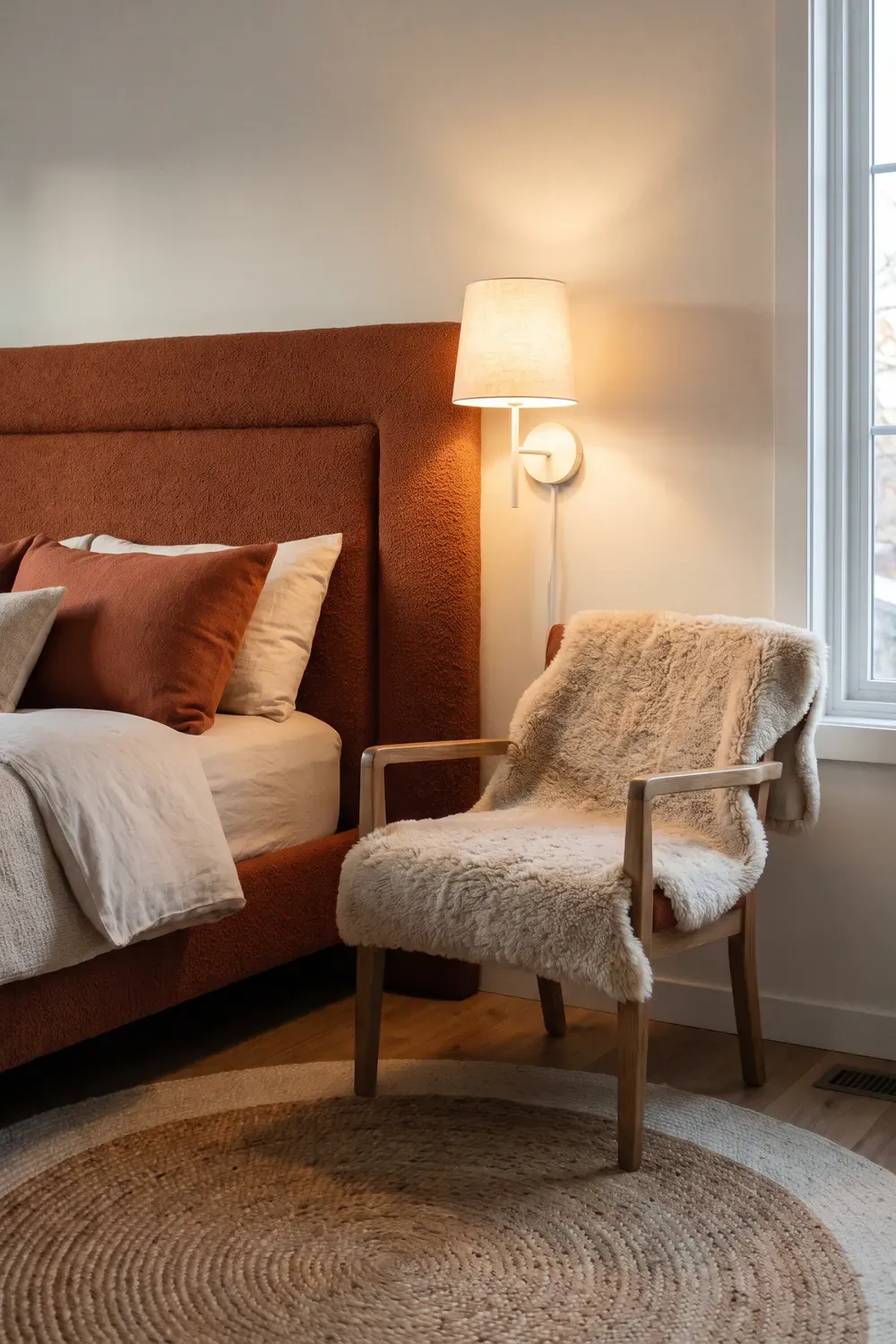
9. Warm the room with color, texture and light
A room can feel warmer even before it is. Warm white bulbs around 2700K make a bedroom feel cozier than cool white light, and a couple of low lamps or plug-in sconces feel better on a winter evening than one bright ceiling light. See our small bedroom lighting ideas for options that don’t need wiring.
Swap thin summer textiles for heavier ones. Wool, boucle, velvet and chunky knits look warmer and feel warmer to the touch than linen and cotton voile. Pillow covers, a throw and a bedspread are the cheapest way to change the feel of the room for the season.
Warm colors help too. Rust, terracotta, mustard, deep green and warm cream make a small bedroom feel enclosed and snug, especially on bedding and curtains, which are easy to change back in spring.
Common questions
Why is the bedroom colder than the rest of the apartment?
Usually because it has more outside walls or a large window, sits over an unheated space, or the radiator or vent is blocked by furniture.
How can I warm up a bedroom without heating?
Layer the bed with flannel and wool, close thermal curtains at dusk, cover the floor with a rug, seal drafts and warm the bed with a hot water bottle before you get in.
Do thermal curtains really work?
Yes, to a degree. The Department of Energy says conventional draperies can cut a window’s heat loss by up to about 10%, and tight cellular shades by 40% or more.
Is it safe to sleep with an electric blanket on?
Safety groups advise using it to warm the bed and then switching it off when you sleep, and never folding it or covering it with other bedding.
Making a small bedroom warmer doesn’t require a bigger heating bill. Find the drafts, layer the bed with flannel and wool, move it off the cold wall, close lined curtains at dusk, cover the floor and seal the small gaps. Use anything that plugs in carefully, and let warm light and textiles do the rest.
For more cold-weather fixes, read our guide to keeping a small home office bright and warm in winter, or try these small bedroom tricks for a room you’ll want to stay in.