
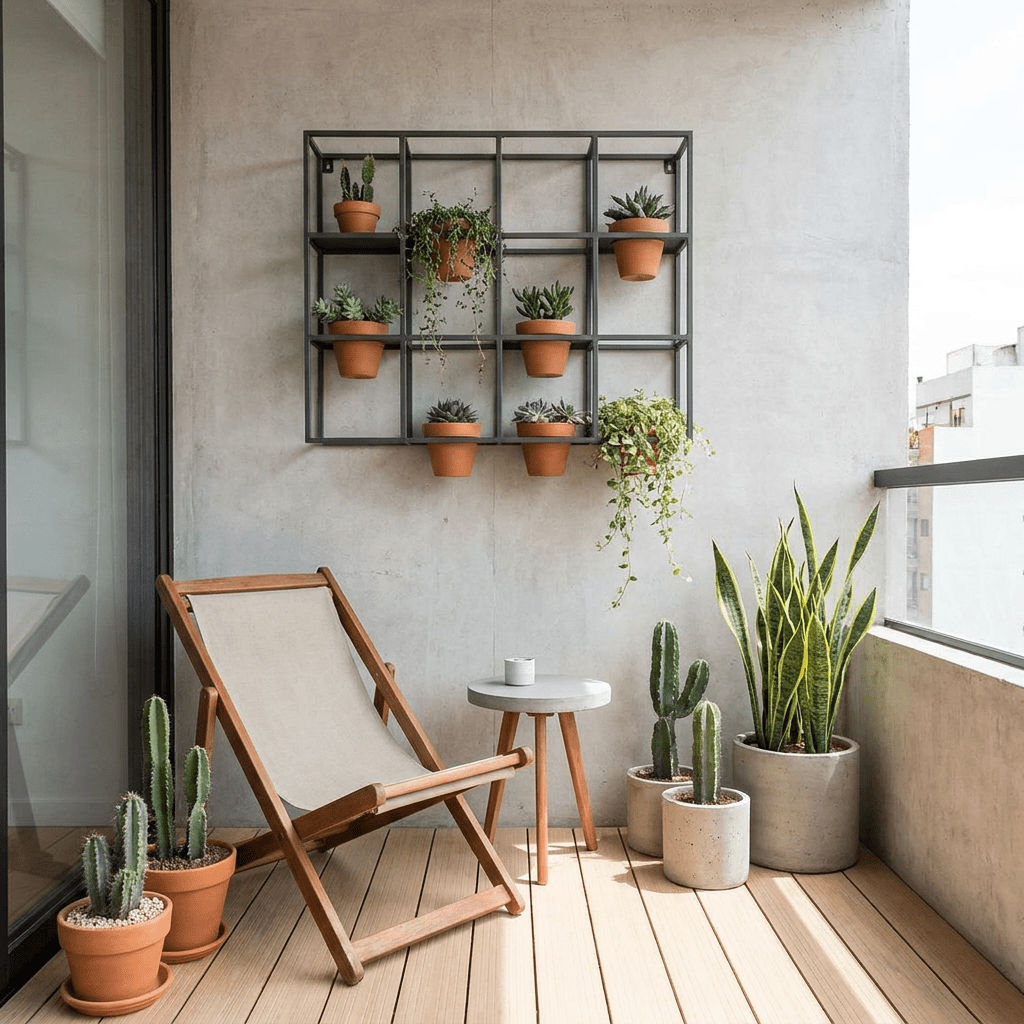
Renting rules out most of what garden guides suggest: no drilling into the building and no built-in raised beds, on a balcony that is often about the size of a dining table. If you travel or forget to water, the usual advice to grow tomatoes and petunias sets you up for a balcony of dead pots by August.
A lush balcony is still possible with the right plants and containers. The four in these photos get there mostly with hardy foliage plants in pots that hang from the ceiling or clip onto walls and railings. Before buying anything, check two things: which way the balcony faces, since that decides what will grow, and your lease or building rules, which often limit what can hang over a railing.
1. Hang pots from the ceiling or a tension rod
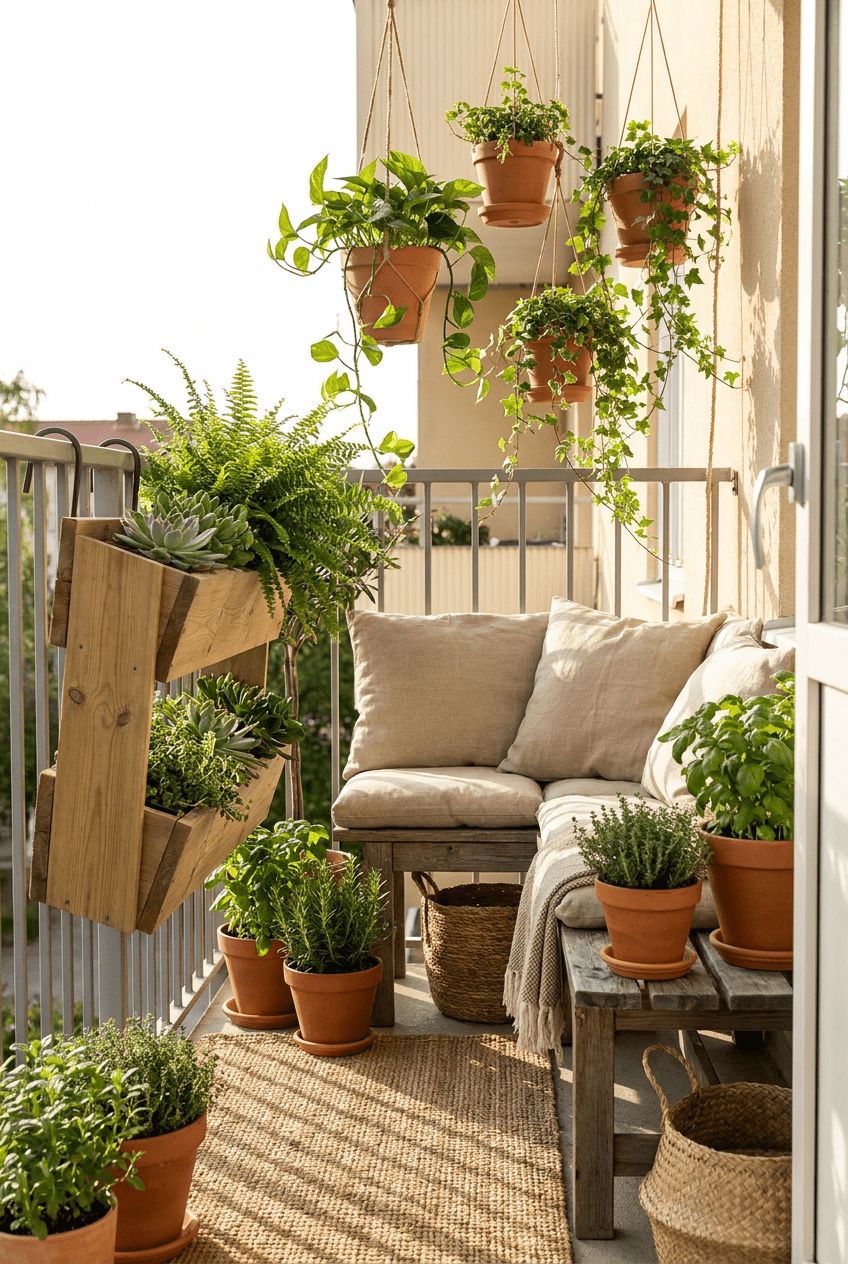
Hanging plants, like the terracotta pots on ropes in this photo, add green at eye level without taking any floor space. On a covered balcony, the ceiling is often the best growing space you have.
If the balcony ceiling already has hooks, use them. Otherwise, a heavy-duty tension rod wedged between two side walls can hold a few lightweight hanging pots, and some balconies have a beam you can loop a strap around. Check the rod's weight rating, and remember that wet soil is much heavier than dry.
Use plastic or fiberglass pots that look like terracotta for hanging, since real terracotta is heavy and dries out fast in wind. Pothos and trailing ivy hang well in most light, while ferns need shade and soil that never dries out completely.
The wooden tiered planter strapped to the railing on the left of this photo holds succulents, which need little water. Strap anything on a railing firmly so wind can't lift it.
2. Build a container garden you can take with you
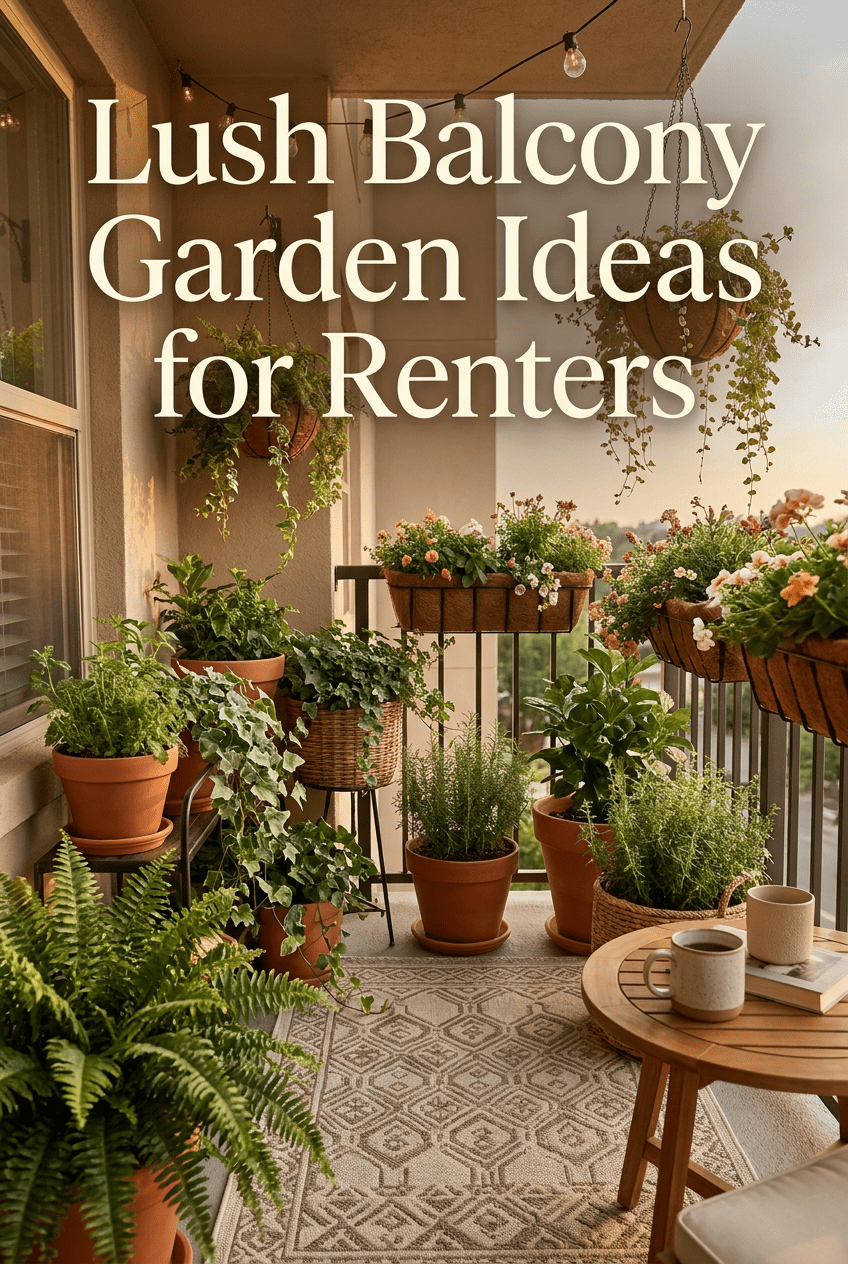
Containers are the renter's garden because everything moves with you. The balcony in this photo is mostly pots on the floor at different heights, with herbs, ferns and a few flowering plants grouped around a small bistro table.
Group pots in odd numbers and mix heights: a tall plant at the back, medium pots in front, trailing plants spilling over the edges. Plant stands and upturned crates lift smaller pots so the arrangement looks layered rather than flat.
Use pots with drainage holes and a saucer under each, so water doesn't run onto the neighbor's balcony below. Lightweight potting mix, not garden soil, keeps the weight down.
Herbs like rosemary, thyme and oregano cope with sun and occasional dry spells, which makes them easier than basil or mint for people who forget to water.
3. Wall planters on a freestanding grid
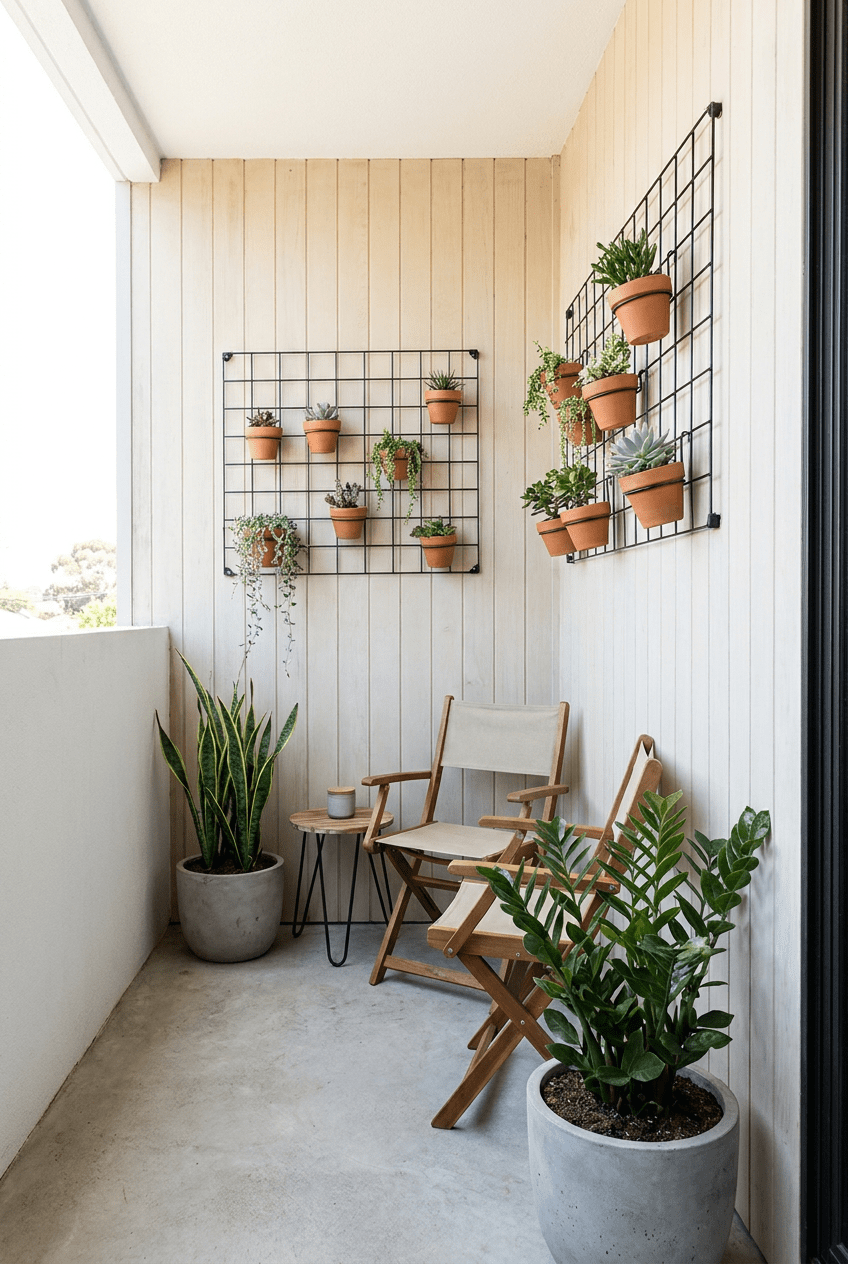
Metal wire grid panels, like the black ones on the wall in this photo, hold small pots with clip-on hooks. They give a narrow balcony a wall of green while leaving the floor clear for chairs.
Renters can lean a grid against the wall and anchor it with a weighted planter at the base, or hang it from an existing hook or railing. Outdoor adhesive hooks can hold a light grid on smooth walls, but heavy grids need proper fixings, which means asking the landlord.
Small pots dry out quickly, so fill grid planters with succulents and other drought-tolerant plants. The snake plant and ZZ plant in concrete pots on the floor here are among the toughest plants there are, and they'll survive weeks of neglect in a shaded spot.
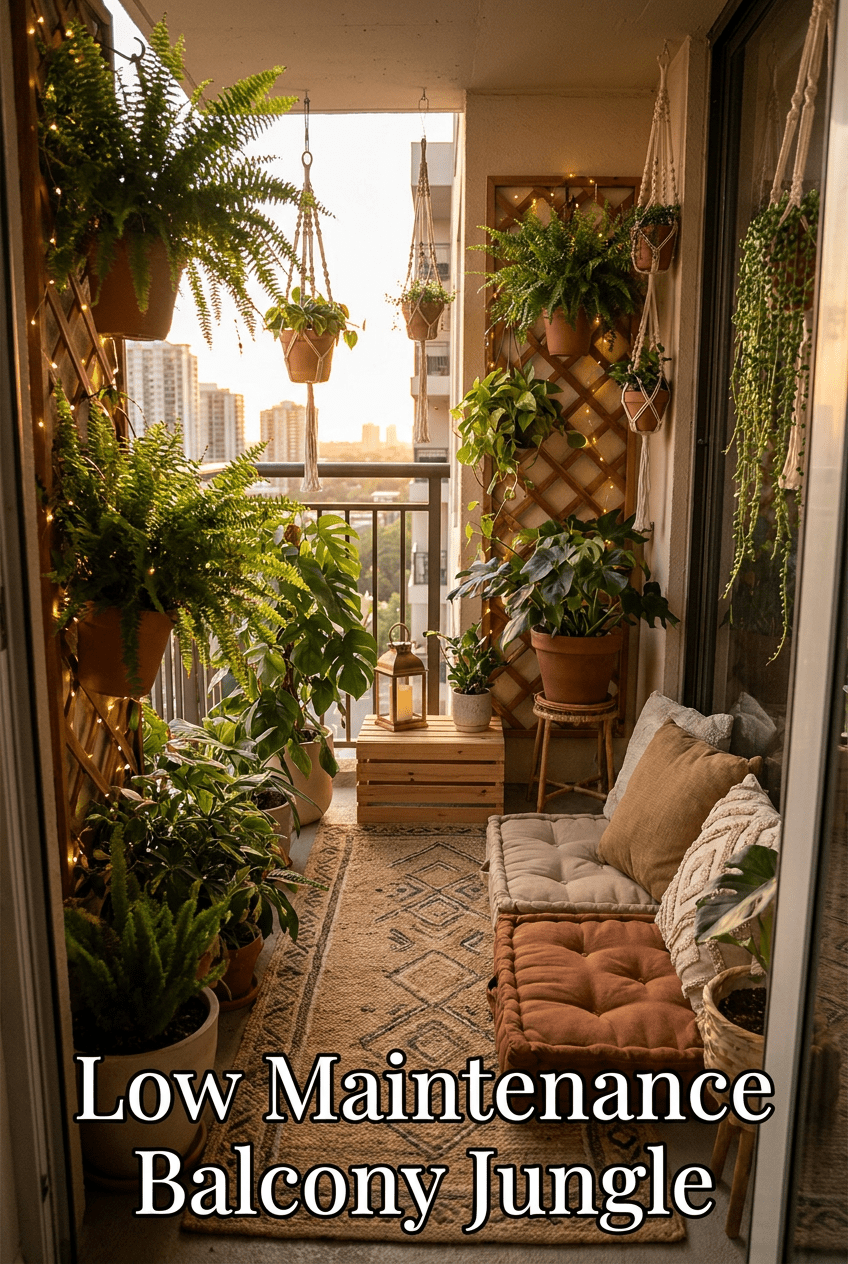
4. Go for a jungle of hardy foliage
A balcony jungle, like the narrow one in this photo, looks lush because almost every surface has something green: ferns hanging from macrame hangers, a vine on a wood trellis, pots on the floor and plants on a crate.
Keep it low maintenance by choosing foliage plants rather than flowers. Ferns, pothos, philodendrons and hostas suit shaded balconies; grasses, lavender and succulents suit sunny ones. Foliage looks good all season and doesn't need deadheading.
A freestanding trellis in a heavy planter gives climbing plants something to grow up without attaching anything to the wall. In cold climates, bring tropical plants such as pothos and philodendrons inside once nights drop below about 50°F, well before the first frost.
5. A self-watering herb station
Self-watering planters have a water reservoir in the base that wicks up into the soil, so plants can go several days, sometimes a week or more, between waterings. A long self-watering trough is a good home for a herb garden.
Fill the reservoir through the side tube, and don't let it sit full during long rainy spells, which can drown the roots. Most cost about $25 to $60.
For longer trips, terracotta watering spikes or a small drip kit with a timer and a water reservoir can keep pots going without a faucet on the balcony.
6. Railing planters for the edge
Railing planters hook or bracket over the balcony rail and turn the edge into a flower box. In the second photo, they hold flowering plants in coir-lined baskets that spill over the railing.
Choose planters sized to your railing width, and secure them with the brackets provided, so they can't be knocked or blown off. Many buildings require planters to sit on the inside of the railing so nothing can fall onto people below. Check your building rules before hanging anything outward.
Railing planters get full sun and wind, so they dry out fast. Coir-lined baskets dry fastest; plastic or self-watering railing boxes hold moisture longer. Geraniums, lavender and trailing verbena handle sunny rails well.
7. A plant corner with a bench
A small bench or a stack of floor cushions surrounded by plants turns the balcony into a place to sit, not just a place to grow. In the first and fourth photos, cushions sit among the plants so you're inside the green rather than looking at it.
Folding benches and outdoor floor cushions store away in winter. Choose cushions with removable, outdoor-rated covers, since regular fabric fades and grows mildew outside.
A crate or plant stand beside the bench works as a side table for a coffee cup and holds a few more pots underneath.
8. String lights for the evening
Warm string lights, like the ones across the second and fourth photos, make a plant-filled balcony usable after dark. Wrap them along the railing or the trellis, or drape them from hooks under the ceiling.
Use lights rated for outdoor use and an outdoor extension cord plugged into a GFCI outlet. Solar string lights skip the cord entirely, though they're dimmer on cloudy days. Our guide to outdoor string lights for a small balcony covers placement and power.
Weight, water and wind
Balconies have weight limits, and wet soil is heavy: a 16-inch pot of damp potting mix can weigh 40 pounds or more. Spread heavy pots around the edges rather than clustering them in the middle, and use lightweight mix and plastic or fiberglass pots where you can. If you plan a lot of large containers, ask the building about the balcony's load limit.
Water carefully so it doesn't drip onto balconies below. Saucers under every pot and watering early in the day help. On higher floors, wind dries out plants faster and can tip tall pots, so use wide, heavy bases for tall plants and skip anything top-heavy.
Common questions
What are the easiest plants for a balcony garden?
For shade: pothos, ferns, snake plants and ZZ plants. For sun: rosemary, thyme, lavender, succulents and geraniums. All tolerate a missed watering or two.
Can renters hang planters on a balcony railing?
Usually yes, if they're secured and sit on the inside of the railing, but some buildings restrict them. Check your lease or building rules first.
Check the light and the rules, then start with five or six hardy plants and add more as you learn what thrives. For more balcony ideas, see our guides to tiny balcony furniture and winterizing a small balcony.