
Lighting affects a home office more than people expect. A desk lit only by a ceiling fixture casts your shadow over the work, a screen in a dark room strains your eyes, and a bright window behind you turns your face into a silhouette on every video call.
Good office lighting needs three things: daylight from the side, a task light aimed at the desk, and soft background light so the screen isn't the brightest thing in the room. The four workspaces in these photos show different ways to get there, and the nine ideas below are nearly all plug-in, so they work in a rental.
1. Put the desk beside the window
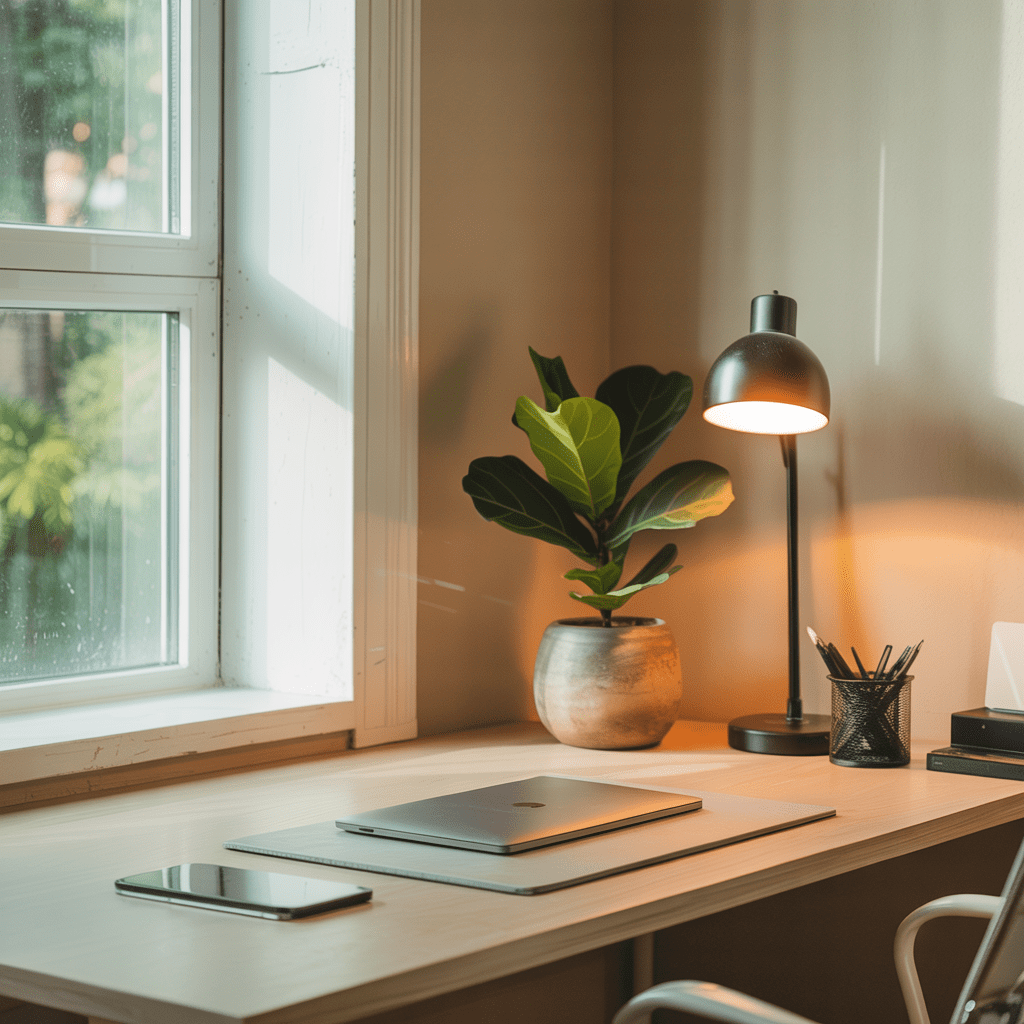
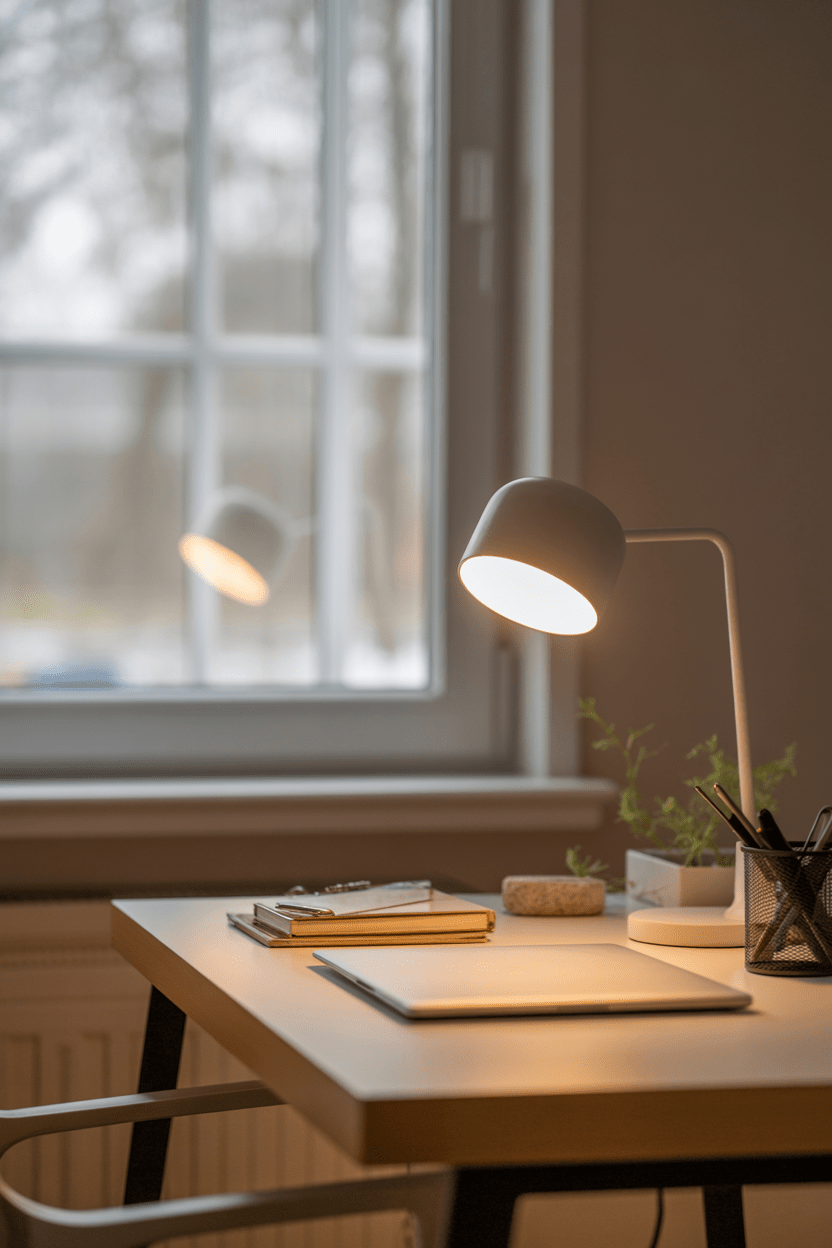
Daylight is the best light to work in, but where the window sits relative to your screen makes a big difference. The desk in this photo sits beside the window, so light falls across the work surface without shining into the screen or your eyes.
With the window behind you, it reflects in the screen; directly in front, it makes you squint and darkens the screen by comparison. To the side is usually best. Sheer curtains or a light-filtering blind soften harsh midday sun.
On video calls, facing a window lights your face nicely, so turn the chair toward it for calls if the desk is to the side.
Even with good daylight, keep a desk lamp for gray days and late afternoons. The adjustable lamp here can be aimed at the notebook or turned away when you don't need it.
2. Layer three light sources
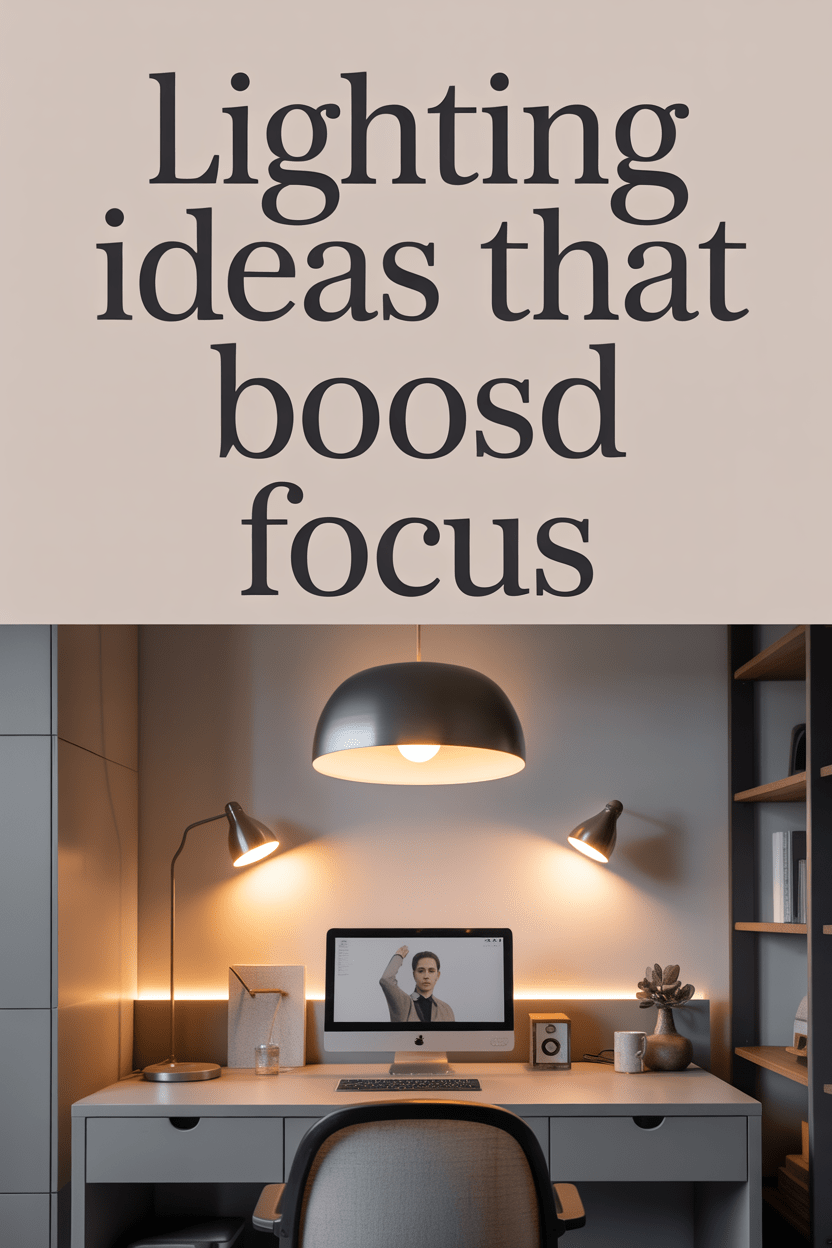
One light, however bright, leaves shadows and contrast that tire your eyes. The desk nook in this photo uses a pendant for general light, two wall lamps for task light and an LED strip along the wall behind the monitor.
That last one is bias lighting: a soft light behind the screen that reduces the contrast between a bright monitor and a dark wall. LED strips with a warm or neutral setting cost about $15 to $30.
Aim for general light (ceiling or pendant), task light (a lamp or sconce at the desk) and background light (an LED strip or a lamp elsewhere in the room). Each should be on its own switch or smart plug so you can adjust them through the day.
3. LED strips under shelves
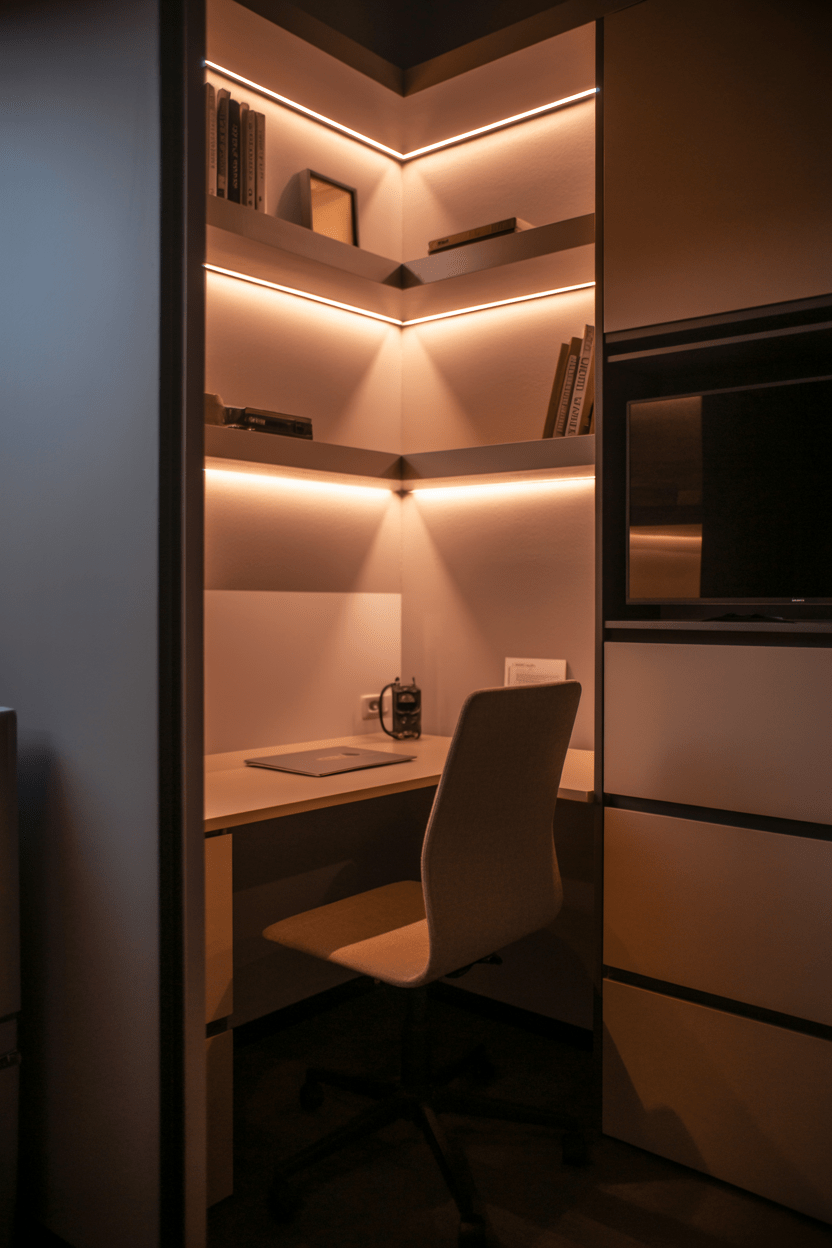
In a small or closet office, shelves above the desk can cast it into shadow. LED strips stuck to the underside of each shelf, like the ones in this corner office, light the desk below and the shelf beneath it.
Use strips with a diffuser cover or an aluminum channel, which hides the individual dots and gives an even line of light. Plug-in kits with a dimmer cost about $20 to $40 and stick on with adhesive backing.
Choose neutral white, about 3500K to 4000K, for work surfaces, or a tunable strip you can warm up in the evening. Run the cord down the back corner of the shelves so it doesn't show.
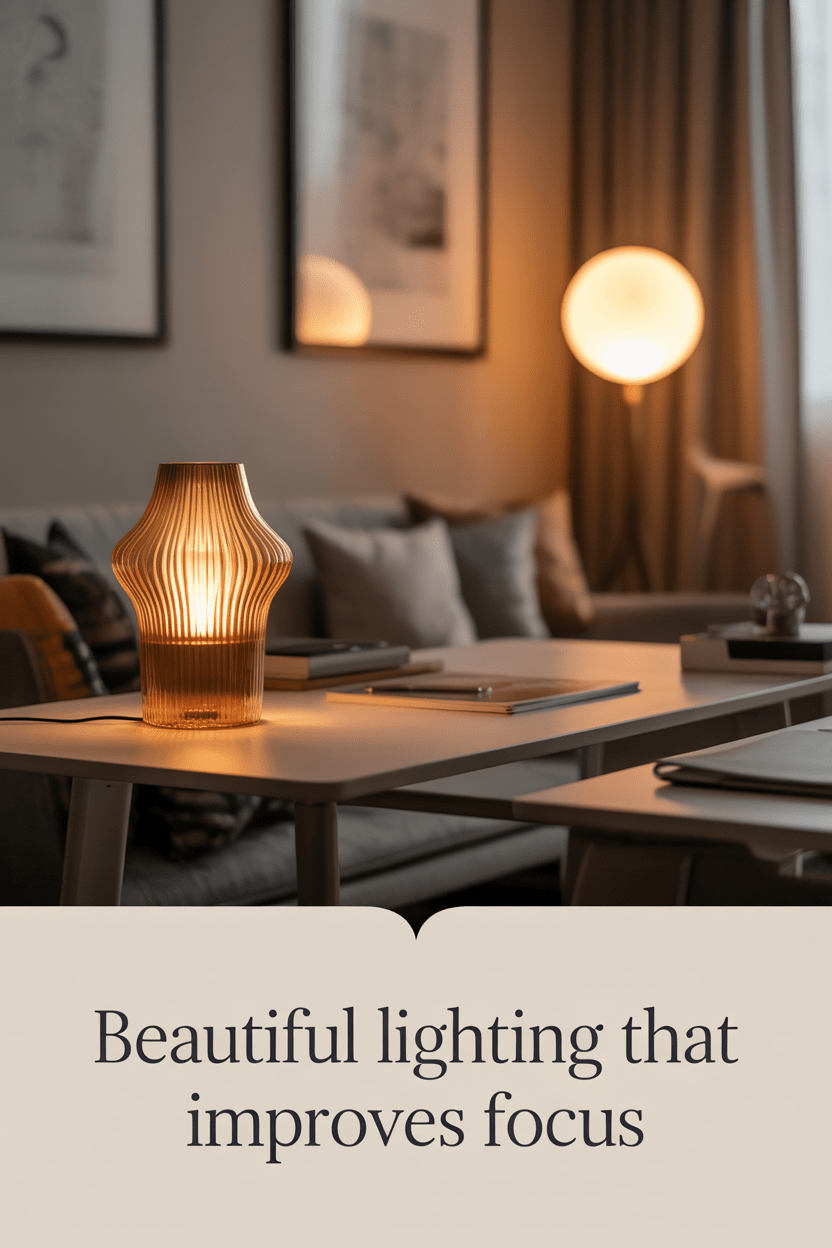
4. A desk lamp that's useful and good-looking
A desk lamp can be the piece that makes a workspace look good, like the pleated amber glass lamp in this photo. But a decorative lamp often gives soft light rather than useful task light, so check what it actually does.
For working, an adjustable arm lamp with a shade that directs light down onto the desk is best. For warmth and looks, add a decorative lamp like this one as a second light. The globe floor lamp behind the desk here lights the room so the screen isn't the only bright spot.
Put the task lamp on the opposite side of your writing hand, so your hand doesn't cast a shadow over the page: on the left if you're right-handed.
5. A floor lamp behind the chair
A floor lamp behind or beside your chair lights the room without glare on the screen. It's especially useful in the evening, when a lit screen in a dark room is hard on the eyes.
Choose one with a shade that directs light up or sideways, not straight at the screen. Uplighters bounce light off the ceiling and give soft general light.
An arc floor lamp that reaches over the desk can double as task light if there's no room for a desk lamp. Weight its base properly, since arc lamps tip more easily than straight ones.
6. A plug-in wall sconce
On a small desk, a plug-in sconce beside the desk saves the surface space a lamp would take. Swing-arm sconces can be angled over the work area and pushed back when you don't need them.
Mount it at about 15 to 20 inches above the desk, to the side, and cover the cord with a paintable cord cover. Plug-in sconces cost about $30 to $80.
Sconces with their own switch on the arm or cord are handier than ones you control at the outlet. If you rent, a single screw hole per sconce is usually all it takes, and it fills easily when you move.
7. Smart bulbs that change through the day
Tunable smart bulbs can shift from cool, bright light in the morning to warmer, dimmer light in the evening. Many people find a cooler light easier for focused work and a warmer one better for winding down.
Set a routine in the app: neutral white around 4000K in the working day, and warm white around 2700K after work. Smart bulbs cost about $10 to $25 each.
If your ceiling fixture is on a wall dimmer, check that the smart bulb is compatible, or set the dimmer to full and control the bulb from the app instead.
8. A small lamp on a shelf
A small lamp on a nearby shelf adds a warm glow away from the desk and makes the workspace feel less like an office. It's good for the end of the day or a corner office in a living room.
Rechargeable cordless lamps work on shelves far from an outlet and usually last several evenings per charge.
In a bedroom or living room office, this lamp can stay on after you shut the laptop, so the room shifts from workspace back to home without switching on the main light.
9. Light for video calls
On video calls, light from in front of you looks best. A small LED panel or a ring light behind the monitor, angled at your face, lights you evenly without harsh shadows. Clip-on ones cost $20 to $50.
Avoid having a bright window or lamp directly behind you, which leaves your face in shadow. Light the wall behind you softly, with a lamp or LED strip, so the background doesn't look like a dark hole.
The monitor in the second photo shows a call lit this way: an evenly lit face against a softly lit background.
Bulbs and brightness
For desk work, task lights around 450 to 800 lumens are usually plenty. Color temperature is shown in kelvin on the box: 2700K is warm, 3000K to 3500K is neutral-warm, and 4000K to 5000K is cool and crisp.
Look for bulbs with a high color rendering index (CRI 90 or above), which shows colors accurately and looks more natural. Avoid very cool 6500K daylight bulbs in a small room, which can feel harsh.
Flicker-free LEDs are easier on the eyes over long days. Check the box, since cheap bulbs and some dimmers can cause a flicker you barely notice but still find tiring.
Common questions
What's the best lighting for a home office?
Daylight from the side of the desk, an adjustable task lamp and some soft background light. Use neutral white bulbs around 3500K to 4000K for task lights.
Where should a desk lamp go?
On the side opposite your writing hand, angled down at the work surface, so your hand and arm don't cast shadows.
Start with the desk's position and a good task lamp, then add background light. For more office ideas, see our guides to keeping a small home office bright in winter and home office wall decor.