
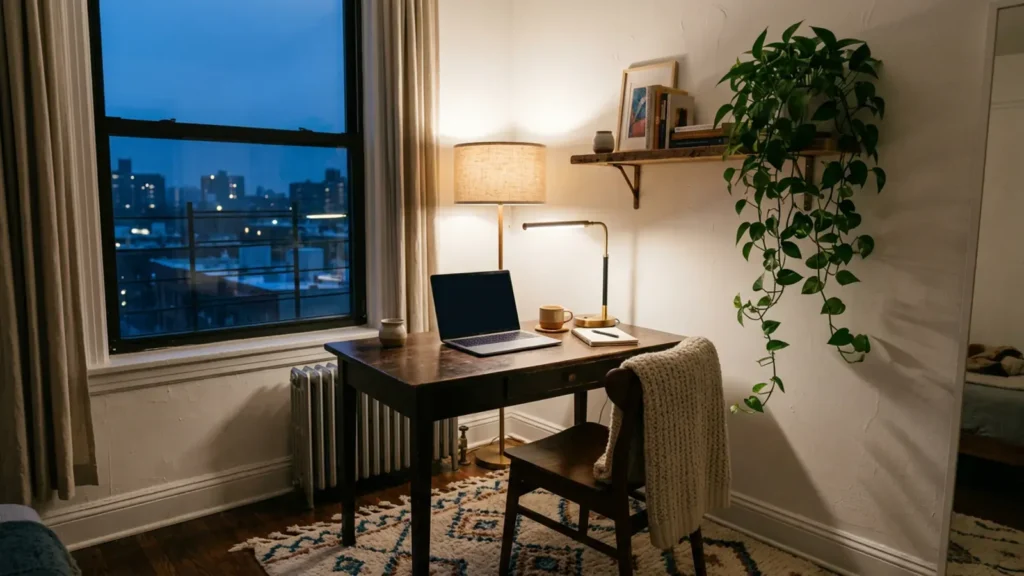
When daylight saving time ends on Sunday, November 1, 2026, a lot of small home offices go dark by four in the afternoon. If you work from a desk squeezed into a corner, a bedroom or a closet, the first week after the clocks go back can feel like working in a cave: you’re cold, the screen seems too bright, and your energy drops off a cliff before dinner.
A small home office can still feel bright and warm in winter, and easy to work in. These fixes are mostly free or cheap, renter-friendly and quick to set up, so you can do them this weekend before the clocks change.
1. Move your desk toward the daylight
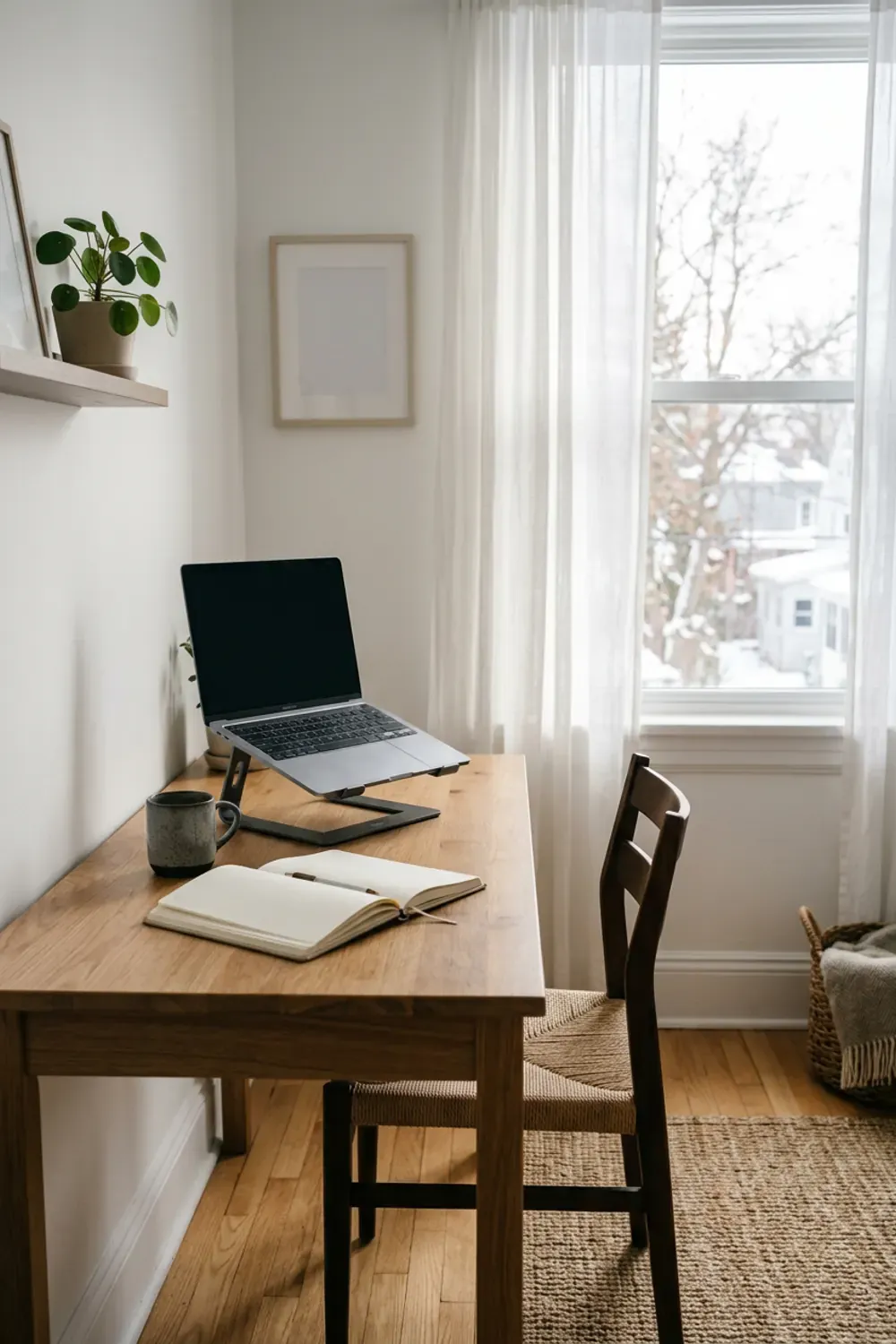
Daylight is in short supply in winter, so put your desk where it gets the most. The best spot is usually side-on to a window, with the window to your left or right. You get natural light across your work without the glare you’d get facing it, or the screen reflections and shadow you’d get with your back to it.
In a small apartment that might mean swapping the desk and a bookcase, or pulling the desk away from a dark wall. It’s worth trying a temporary arrangement for a day or two to see how the light moves. Keep sheer curtains on the window so you can soften harsh low sun without blocking the light entirely.
2. Layer your lighting instead of relying on the ceiling
A single overhead light makes a small office feel gloomy and casts shadows right where you’re working. Use three layers instead: a desk or task lamp aimed at your work, a floor or table lamp for general light in the room, and something soft in the background, such as a lamp on a shelf or warm string lights.
Put the task lamp on the side opposite your writing hand so your hand doesn’t throw a shadow on the page, and angle it so the light doesn’t bounce off your screen. These home office lighting ideas show more ways to light a small workspace well.
3. Pick the right bulbs for daytime and evening
Bulb color makes a bigger difference than most people expect. For focused daytime work, a neutral to cool white bulb, roughly 4000K to 5000K on the packaging, keeps the room feeling awake. In the evening, switch to warmer 2700K to 3000K light in the rest of the room so your apartment feels like home again rather than an office.
Look at the lumens too: a desk lamp with a dim bulb strains your eyes on a dark afternoon. A dimmable LED desk lamp with adjustable color temperature covers both needs in one fixture, and smart bulbs let you shift the whole room from work mode to evening mode with a tap.
- Daytime task light: about 4000K–5000K, bright enough to read paper comfortably
- Evening room light: about 2700K–3000K, on dimmers or lamps
- Avoid bare bulbs in your line of sight; use shades or bounce the light off a wall
Tip: Changing bulbs is one of the easiest renter upgrades there is; just keep the originals in a drawer for move-out day.
4. Consider a light therapy lamp if winter drags you down
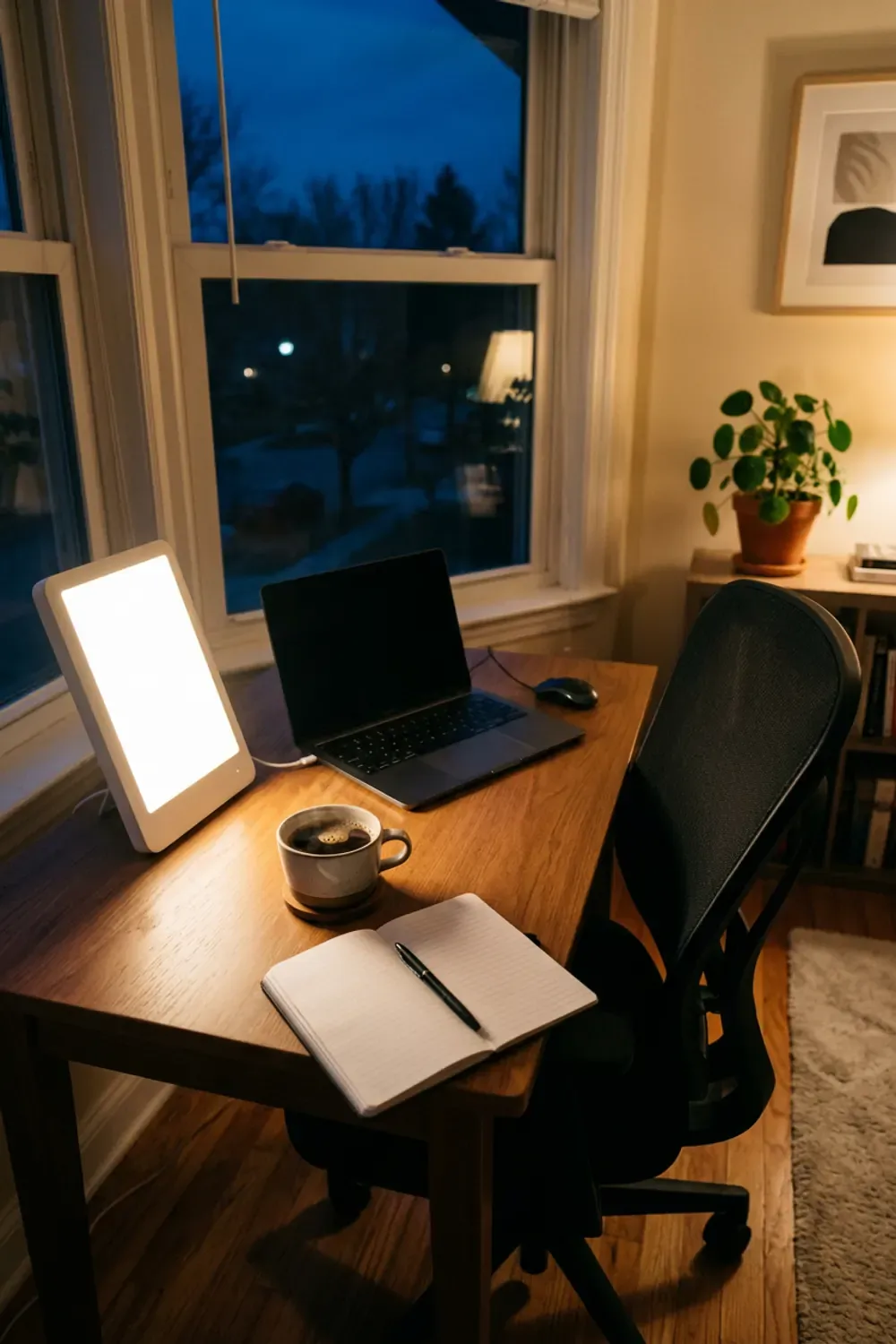
If short days leave you consistently low or sluggish, a light therapy lamp is something many people use during the winter months. According to Mayo Clinic, a typical approach is a light box that gives off 10,000 lux, used for about 20 to 30 minutes within the first hour after waking, set off to one side at roughly arm’s length rather than stared into directly.
A small desk makes this easy: put the lamp to the side of your laptop and use it while you check email and drink your coffee. It’s important to talk to a doctor before you start, especially if you have an eye condition, bipolar disorder or take medication that makes you sensitive to light, and to get help if your mood is seriously affected. A lamp is a tool, not a replacement for care.
5. Keep your feet and hands warm
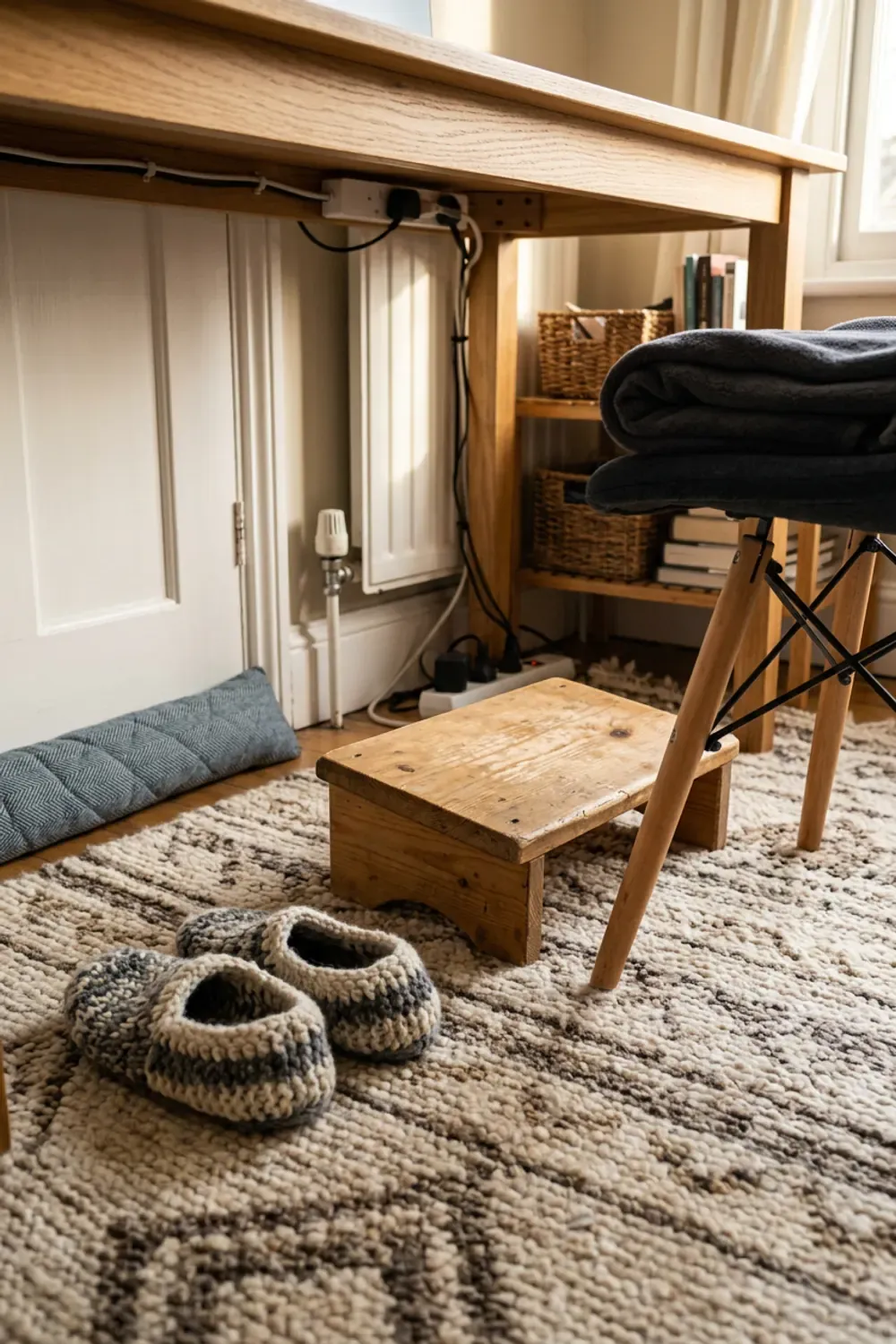
Cold creeps up from the floor, and a small office in a corner of the apartment is often the chilliest spot. A thick rug under the desk insulates your feet, a footrest lifts them off a cold floor, and warm slippers and a blanket on your lap go a long way. Fingerless gloves are surprisingly good for typing in a cold room.
Keep the desk a little away from cold outside walls and windows, block door drafts with a draft stopper, and close the door to the room if you can, so the space you’re heating is smaller. If you do use a space heater, follow the safety basics in our guide on how to winterize your apartment as a renter, including keeping it well clear of papers and the desk.
6. Plan around the 4 P.M. slump
Once it’s dark mid-afternoon, energy drops for a lot of people. Move your most demanding work into the morning when you have daylight, and save routine tasks like email and admin for late afternoon. If your schedule allows, take a short walk outside around lunchtime to get some daylight while it lasts.
Turn on your lamps before the room gets dark rather than after, so the change isn’t so noticeable. A small ritual helps too: open the curtains fully first thing, and when you finish work, switch from your bright work lights to warm lamps so your brain gets a clear signal that the workday is done.
Tip: Put your main lamp on a smart plug or a simple timer set for around 3:30 p.m., so the office never slides into darkness while you’re concentrating.
7. Make the office cozy without making it cluttered
A cozy desk is easier to sit at on a dark afternoon, but in a small space it’s easy to tip from cozy into cluttered. Add warmth with a few chosen things: a wool or knit throw on the chair, a plant that tolerates low light such as a pothos, ZZ plant or snake plant, and one or two personal objects. Keep the work surface itself as clear as you can.
Store papers and supplies in a closed box or drawer so the desk resets quickly at the end of each day. These minimalist home office ideas and desk setup ideas for tiny apartments are full of ways to keep a small workspace calm.
8. Reduce glare and eye strain on dark days
Working on a bright screen in a dim room is tiring for your eyes. Keep the room light roughly as bright as your screen, lower the screen’s brightness in the evening, and turn on dark mode if you like it. Position the monitor about an arm’s length away with the top of the screen at or just below eye level.
Take regular breaks from close-up screen work. A widely recommended habit is the 20-20-20 rule: every 20 minutes, look at something about 20 feet away for 20 seconds. In a small apartment, a window or the far wall of the living room works perfectly.
- Room light roughly as bright as the screen
- Monitor about an arm’s length away, top at eye level
- Every 20 minutes, look about 20 feet away for 20 seconds
9. Close the office at the end of the day
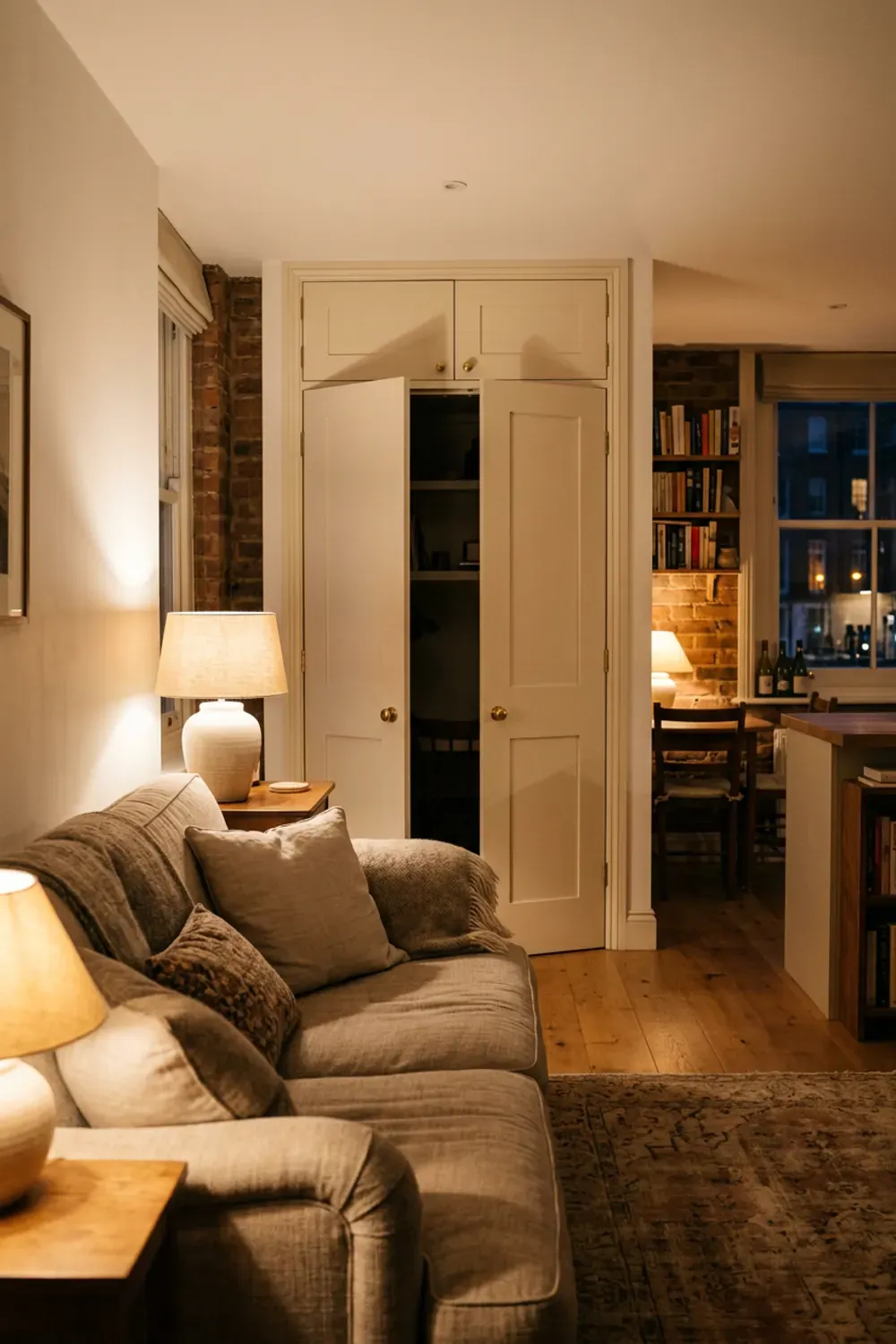
In a small apartment, especially a studio, the office never really goes away, and in winter it can feel like you’re at work all evening. Give the workday a clear ending. If your desk is in a closet, close the doors. If it’s in a corner, draw a curtain or put a fabric cover over the laptop and monitor, and turn off the task lamp.
A shut-down routine takes two minutes and makes the evening feel like your own. Write tomorrow’s first task on a sticky note, close every tab you won’t need in the morning, put the laptop away or cover it, and switch off the cooler work lights. Doing the same few steps every day is what makes the boundary stick, especially in winter when it’s already dark by the time you finish.
Then switch the rest of the room to warm lighting and put your work bag out of sight. These closet office ideas show how to build a workspace you can shut away completely when the day is done.
A small home office in winter doesn’t have to be dark and cold. Turn the desk toward the daylight, layer your lighting with the right bulbs, keep your feet warm, plan your day around the light, and give the workday a clear ending. Each change is small, but together they make a real difference to how the shortest days feel.
Set it up before the clocks go back on November 1, and the first dark afternoon will be a lot less of a shock. If one change makes the biggest difference for you, it’s usually the lighting, so start there.