
Most small bathrooms have one ceiling fixture or a bar light above the mirror, and both light your face badly. Light from above throws shadows under your eyes and chin, which is why bathroom mirrors seem so unkind. Changing where the light comes from, and the bulbs in it, makes more difference than any fixture's style.
The ideas below include fixtures that typically cost under $80 each, plug-in options for renters, and a few that need an electrician. Bathrooms also have rules other rooms don't, because of water, so each section notes what kind of fixture is safe where.
1. Sconces on both sides of the mirror
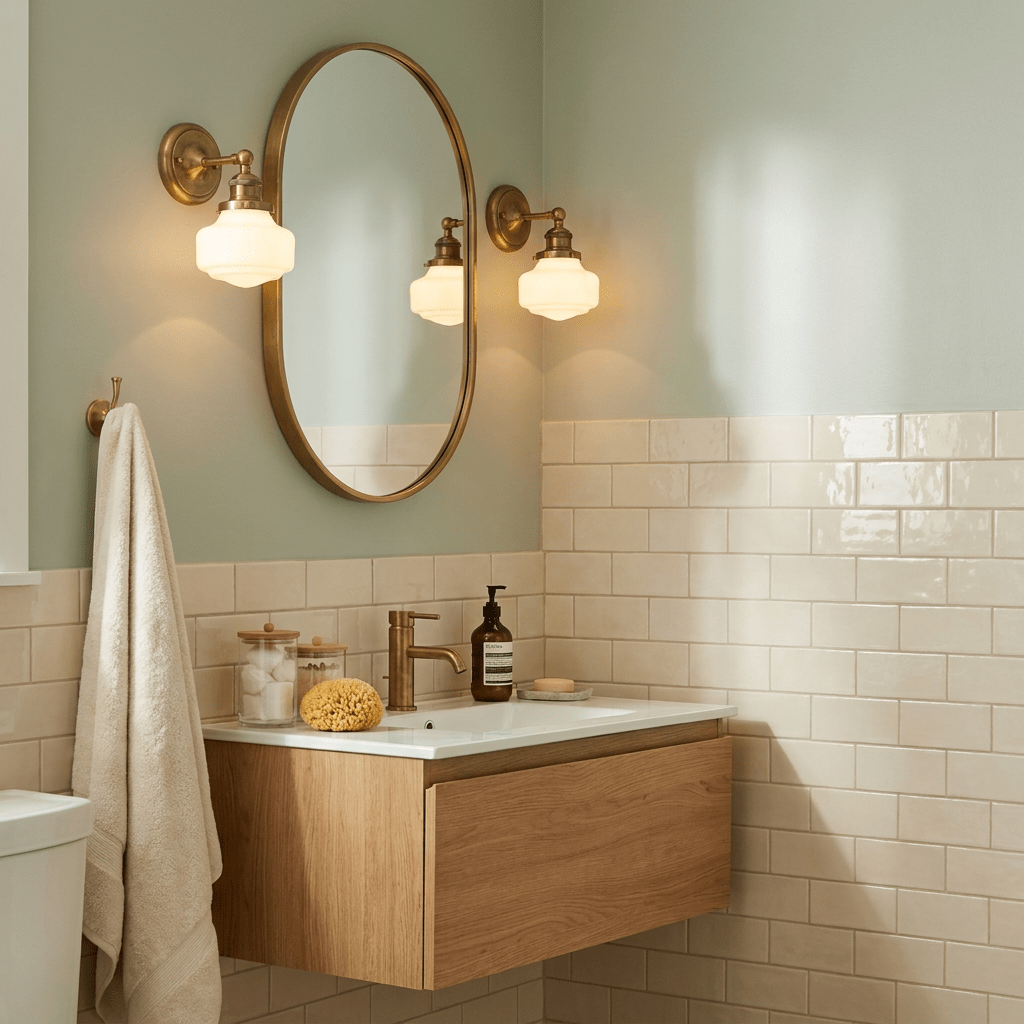
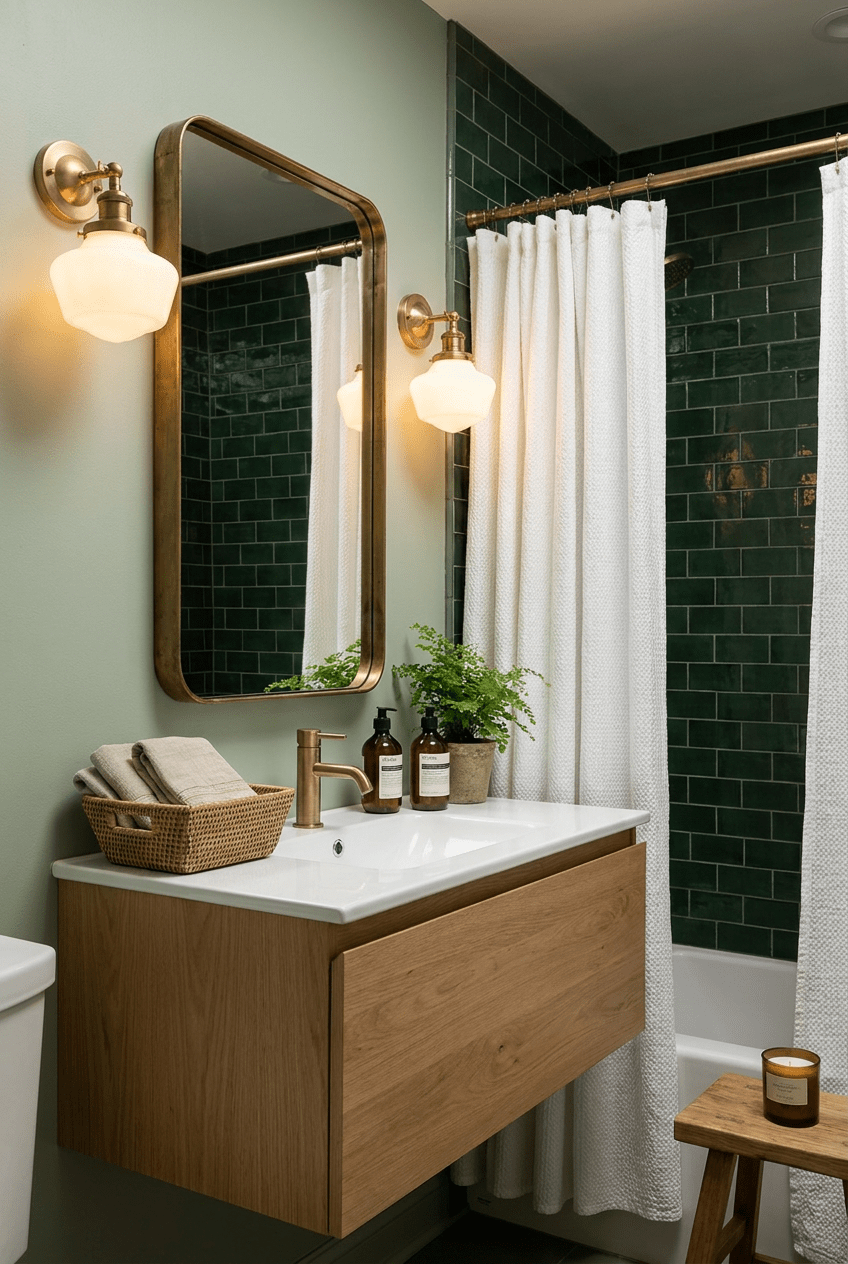
A pair of sconces at face height, one on each side of the mirror as in the photo, gives the most even light for shaving or makeup. Light from the sides fills in the shadows that an overhead light creates. Schoolhouse-style glass shades like these suit vintage and traditional bathrooms, and many cost $30 to $70 each at home improvement stores.
Mount them about 60 to 66 inches from the floor, roughly level with your eyes, and 30 to 40 inches apart, so the light reaches your whole face. In a small bathroom with a narrow mirror, they can sit just outside its edges.
Hardwired sconces are an electrician's job if there's no wiring on that wall, and in a rental that needs your landlord's permission. If the bathroom already has a junction box above the mirror, one sconce above the mirror plus a plug-in lamp on the side is a simpler compromise.
2. A single globe pendant beside the mirror
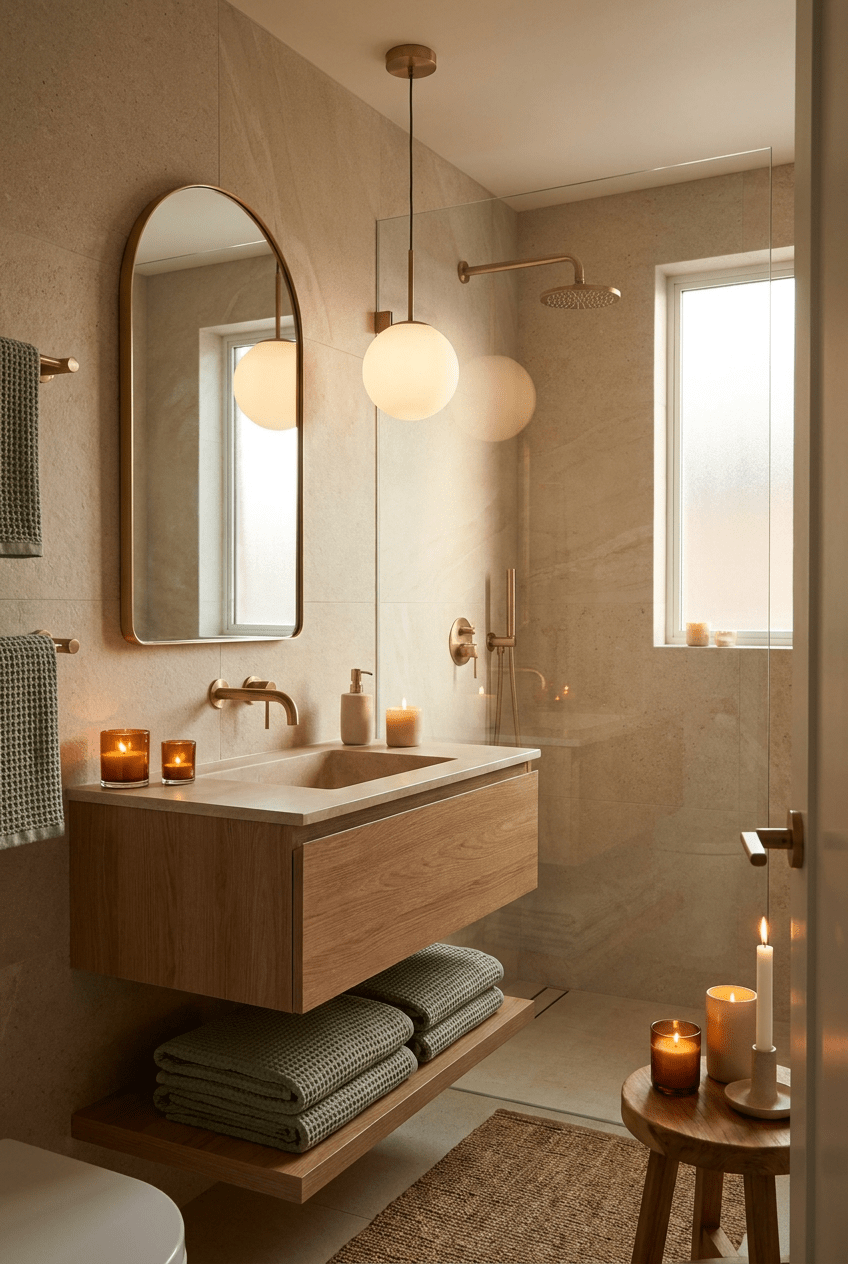
A single glass globe hung beside the mirror, like the one in the photo, gives soft, all-round light and looks far less like a standard bathroom fixture. In a tiny bathroom, one pendant to the side of the vanity often replaces a bar light above it.
There's a safety rule here. The US National Electrical Code doesn't allow hanging fixtures within 3 feet horizontally and 8 feet vertically of the rim of a tub or the threshold of a shower. Keep pendants over the vanity side of the room, and choose fixtures rated for damp locations, which says so on the box.
Hang the bottom of the globe at least a few inches above head height for the tallest person using the bathroom, often around 6.5 to 7 feet from the floor beside a vanity. A frosted or opal glass globe hides the bulb and spreads the light more evenly than clear glass.
3. A plug-in wall light for renters
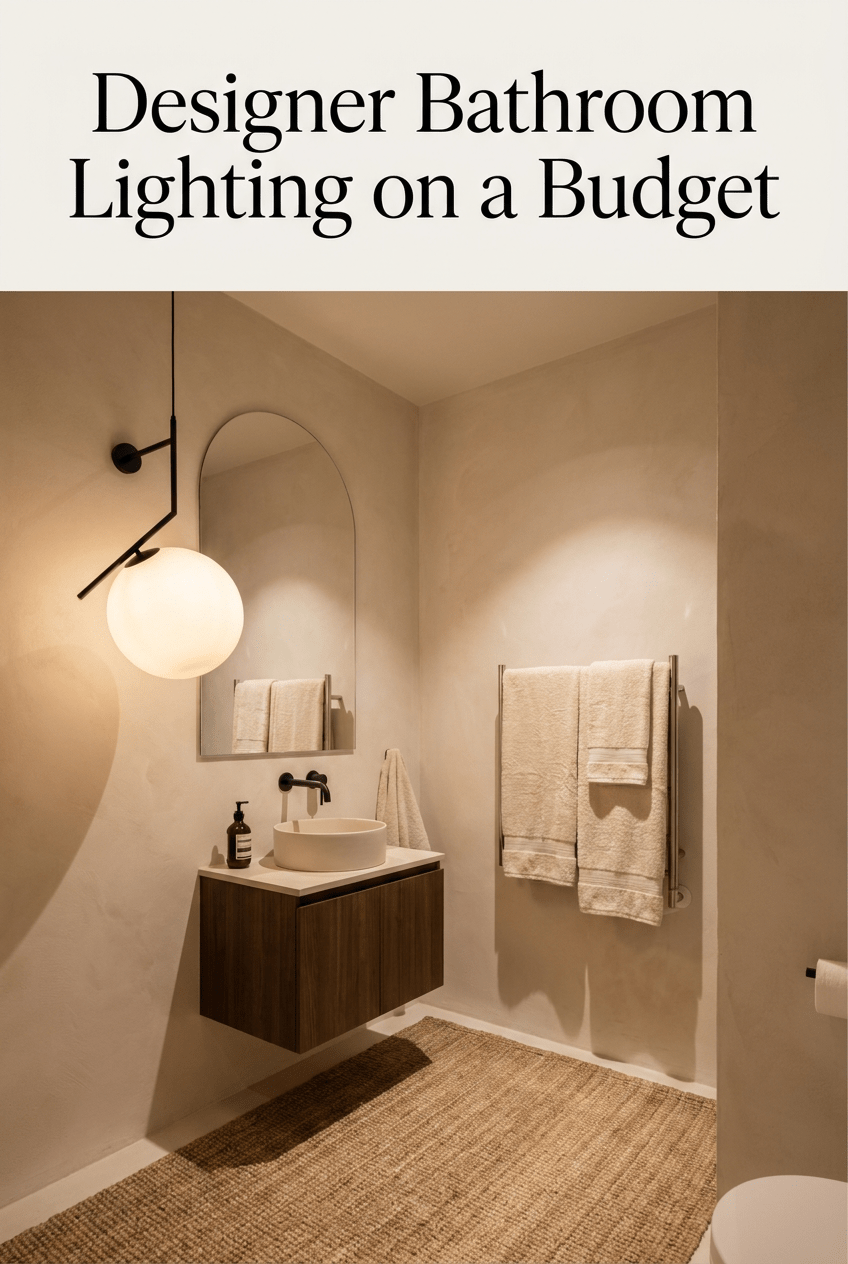
If you can't add wiring, a plug-in wall light, like the black arm and glass globe in the photo, gives a similar look. It mounts with two screws or a strong bracket and plugs into the outlet by the sink, and many cost $40 to $80.
Bathroom outlets near water should be GFCI-protected, which you can recognize by the test and reset buttons. Run the cord where it won't drape over the sink or near the tub, and use a cord cover painted the wall color to hide it. Check the product is rated for damp locations.
Battery-powered rechargeable sconces are another option. They're less bright than plug-in lights but need no outlet and no cord at all, which suits a powder room that's used for a few minutes at a time.
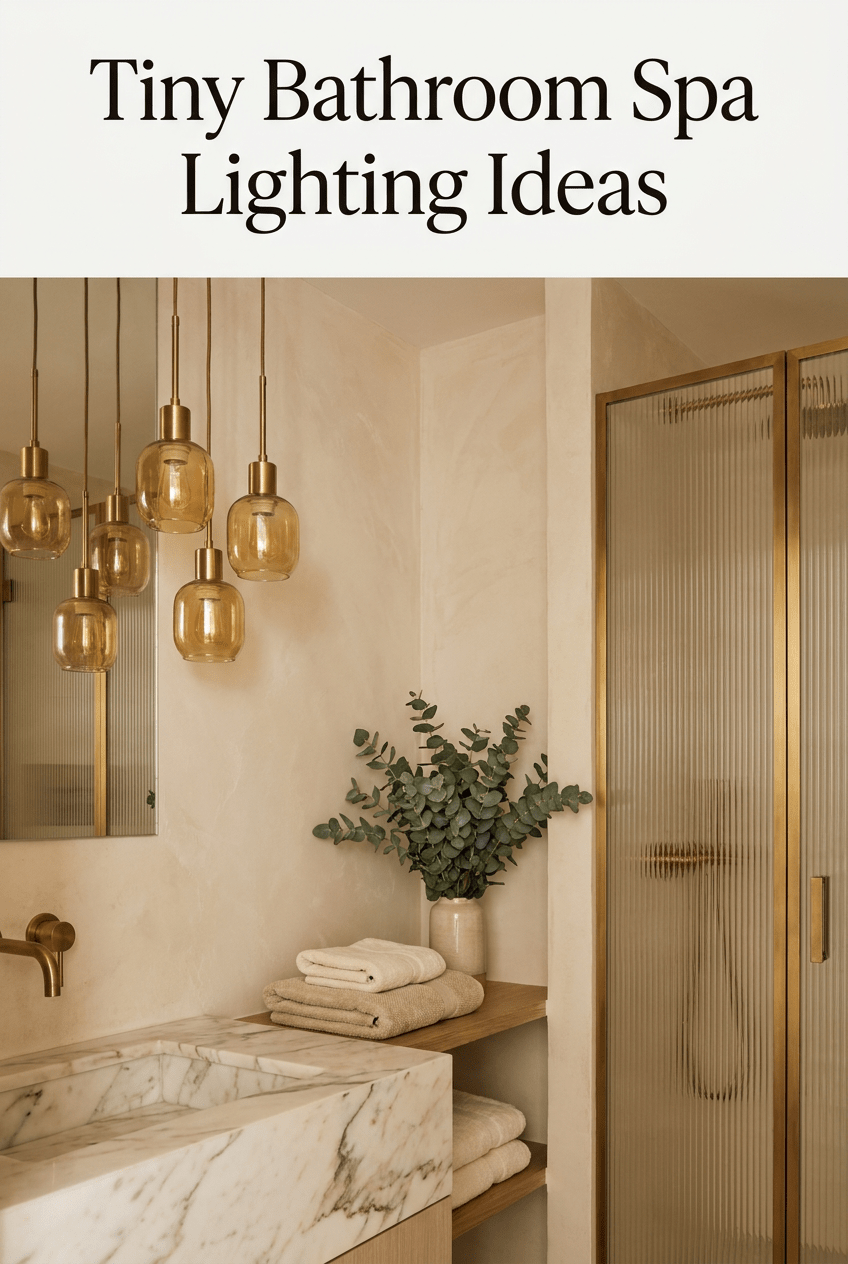
4. Mini pendants, in a pair or a cluster
Small pendants hung at different heights, like the cluster of amber glass shades in the photo, turn the light itself into the main decoration. A pair of mini pendants on either side of the mirror is a simpler version that also lights your face from both sides.
Clusters need a fixture made for them, with several cords from one canopy, unless you have more than one electrical box. Amber glass gives a very warm, dim glow that's lovely in the evening but too dark on its own for putting in contact lenses, so pair it with a brighter light somewhere else in the room.
Brass caps and clear or amber glass suit a warm palette of wood and marble, while white glass reads more modern. Keep cluster pendants out of the zone near the tub or shower mentioned above.
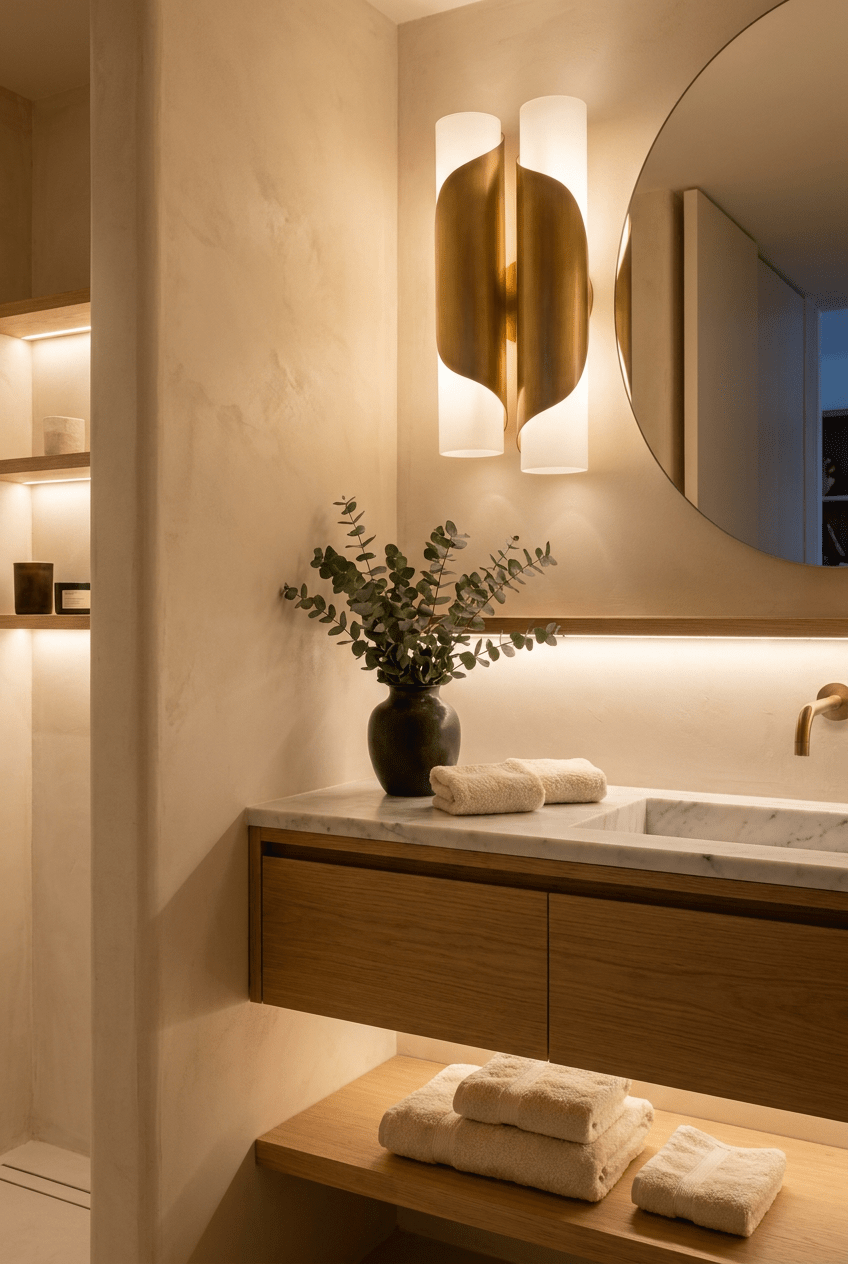
5. Wall lights with frosted glass for a soft glow
A wall light with a frosted or opal diffuser, like the brass and glass fixture in the photo, spreads light evenly with no hot spot from the bulb. It pairs well with a round mirror and gives a modern, slightly hotel-like look.
The photo also uses LED strip lighting under a shelf and behind the mirror, which adds a low glow for night-time trips to the bathroom. Stick-on LED strips with a plug or battery cost about $15 to $30. Use ones rated for damp areas, and keep them away from direct splashes.
Frosted glass also hides water spots and dust better than clear glass, which you notice quickly in a bathroom. Wipe shades every few weeks with a damp cloth, since a film of hairspray and steam dulls the light.
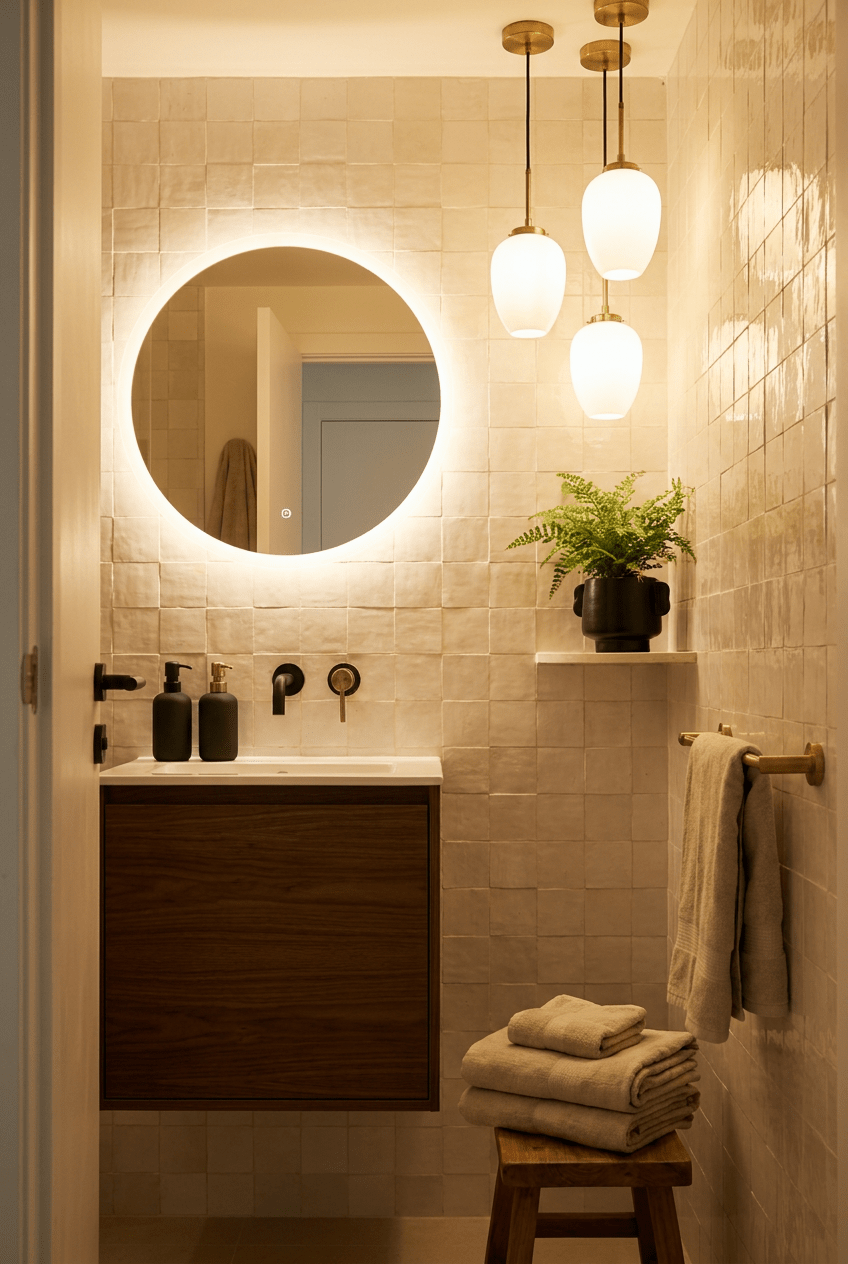
6. A backlit LED mirror
A mirror with LED lighting around or behind it, like the round one in the photo, lights your face evenly and replaces both the mirror and the vanity light in one piece. Many have a dimmer, an adjustable color temperature and an anti-fog pad behind the glass.
Small LED mirrors usually start around $80 and go up quickly with size and features. Most are hardwired, though some plug in. Check the wattage, the color temperature range and the IP rating, which tells you how well it's sealed against moisture. IP44 or higher is a common recommendation for bathrooms.
If a full LED mirror is over budget, LED strips stuck to the back edge of an existing frameless mirror give a similar halo effect. Choose a damp-rated strip with a plug-in driver, and leave a gap behind the mirror so the strip doesn't overheat.
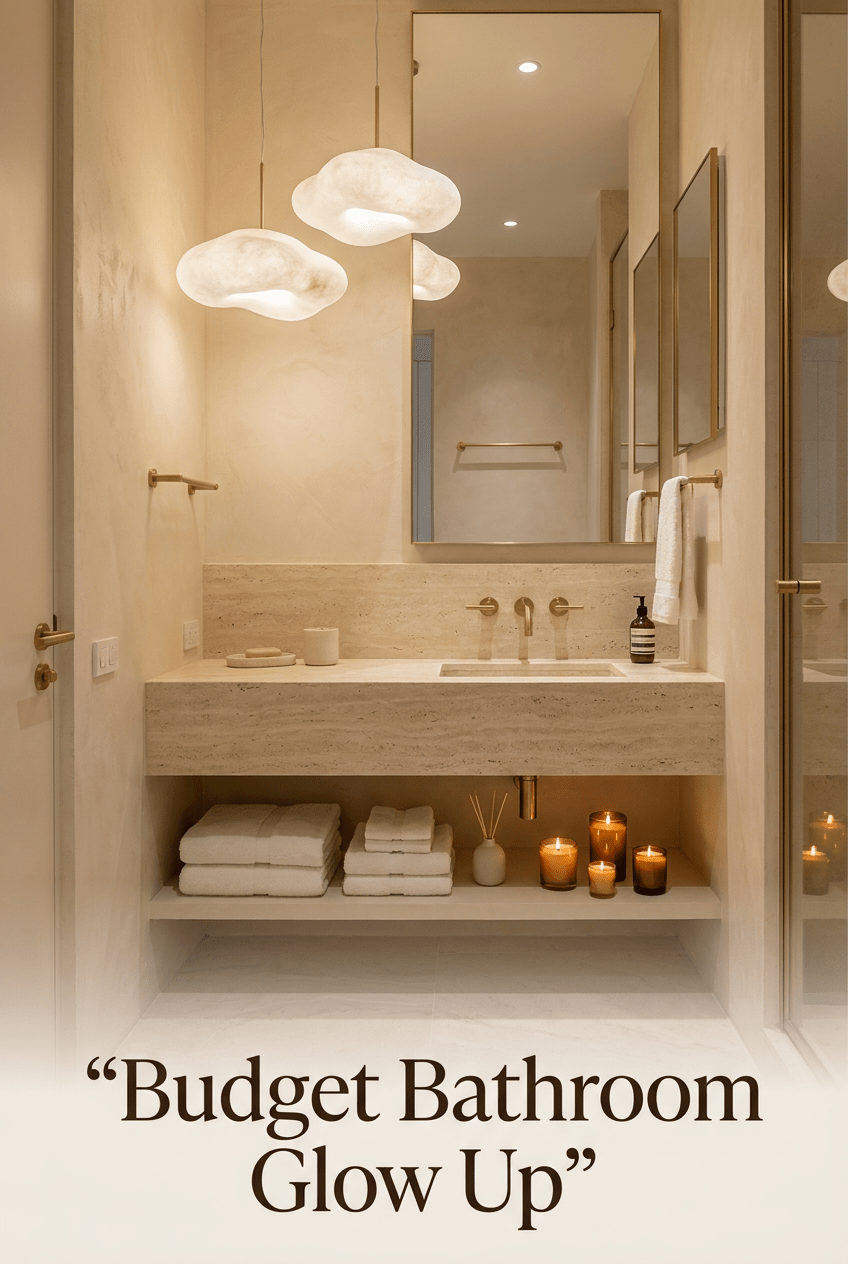
7. A sculptural or soft-shaped fixture
A fixture with an unusual shape, like the cloud pendants in the photo, can become the one thing guests notice in a plain bathroom. Paper-look, woven and organic-shaped fixtures are widely available at lower prices than they used to be.
Natural materials like rattan and paper don't do well in steam. Choose fixtures labeled for damp locations, which usually means glass, metal or a sealed plastic shade, or keep woven ones to a powder room without a shower. Candles on an open shelf, as in the photo, add warmth for a bath, but keep them away from towels and never leave them lit.
Sculptural lights work best when everything around them is simple. In the photo, plain stone and white towels let the cloud shapes stand out, while a busy tile pattern would compete with them.
8. Better bulbs in the fixtures you have
The cheapest improvement is often the bulb. Choose warm white, about 2700K to 3000K, for a relaxed feel, or up to 3500K if you want a little more clarity for makeup. Look for a high color rendering index, CRI 90 or above, which shows skin tones and colors more accurately than the CRI 80 bulbs common in cheap packs.
Brightness counts most at the mirror. As a rough guide, a small vanity needs around 1,500 to 2,000 lumens in total from the lights around it, which might be two sconces with 800-lumen bulbs. Swapping a bar light's small bulbs for brighter LED versions, within the fixture's rated wattage, can make a dim bathroom usable without changing anything else.
A dimmer switch, or smart bulbs you can dim from your phone, lets you have bright light in the morning and soft light for a bath at night. Make sure the bulbs you buy are marked as dimmable.
Common questions
Can you hang a pendant light over a bathtub?
Not within the zone the National Electrical Code protects: 3 feet out from the tub rim and 8 feet up from it. Outside that zone, use a fixture rated for damp locations, and have it installed by an electrician.
What color temperature is best for a small bathroom?
Warm white around 2700K to 3000K feels relaxing and flatters skin. Up to 3500K gives a little more clarity for makeup. Look for CRI 90 or higher so colors look accurate.
Begin with the bulbs and a pair of sconces or a plug-in light at the mirror, and keep pendants on the vanity side of the room. For more on small bathrooms, see our guides to bathroom mirror upgrades and budget bathroom decor.