
The standard advice is that small rooms should be light. But a bedroom is mostly used in the evening and at night, when dark walls look soft and enveloping rather than gloomy. In a small room, a deep color blurs the corners, so the walls seem to recede rather than close in.
The four bedrooms in these photos use charcoal and forest green, then navy and plum. Below are seven moody schemes with the accent colors and materials that suit each, then the practical part: which finish to use, how to light a dark room and what renters can do instead of painting.
1. Charcoal with warm amber light
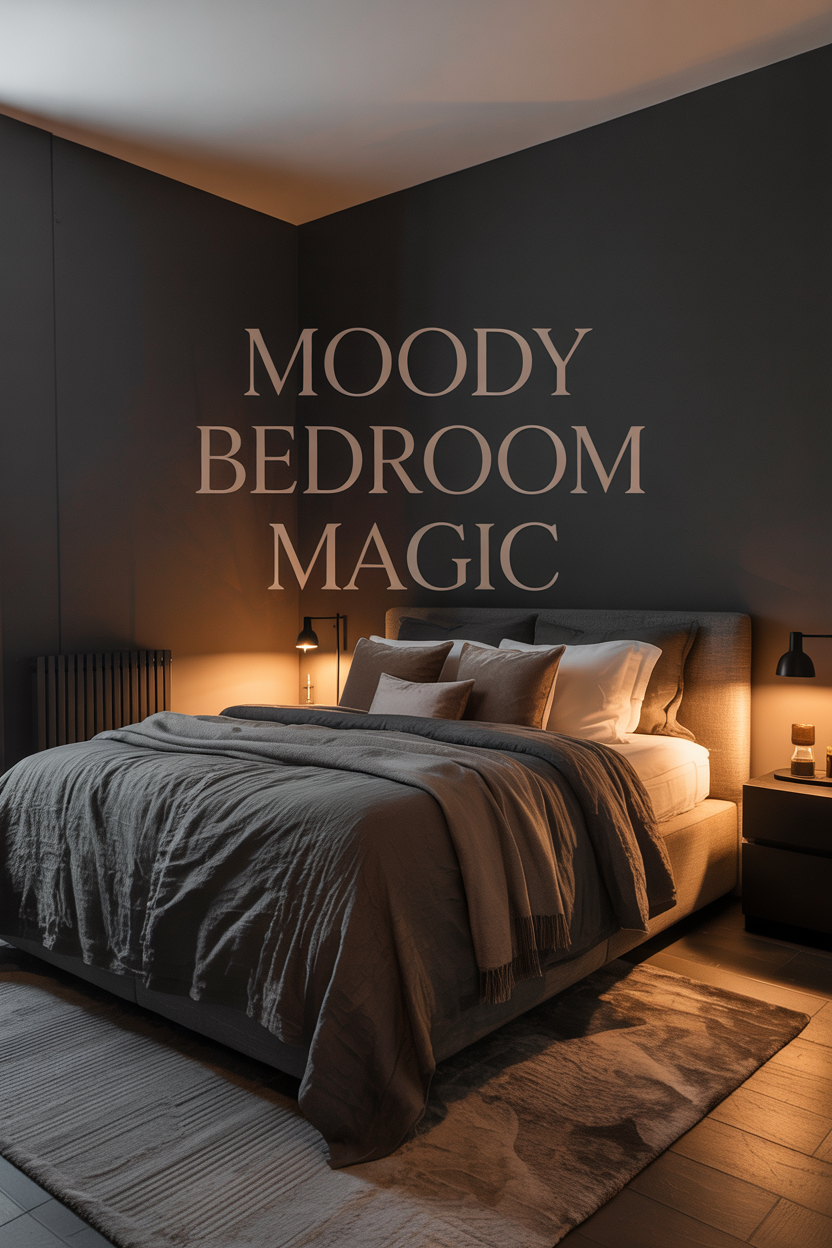
Charcoal gray, like the walls in this photo, is the easiest moody color to live with. It goes with almost any bedding and furniture, and warm lamps make it glow rather than look cold.
Pair it with gray or oatmeal linen bedding and warm white bulbs around 2700K. Brass or warm wood accents stop it from feeling industrial.
Choose a charcoal with a slightly warm or green undertone rather than a blue one, which can feel chilly on gray days.
A charcoal room shows dust and pet hair less than white walls do, and it hides scuffs from a bed frame. Wipe the walls with a barely damp cloth rather than scrubbing, which can leave shiny patches on matte paint.
2. Forest green with wood and cream
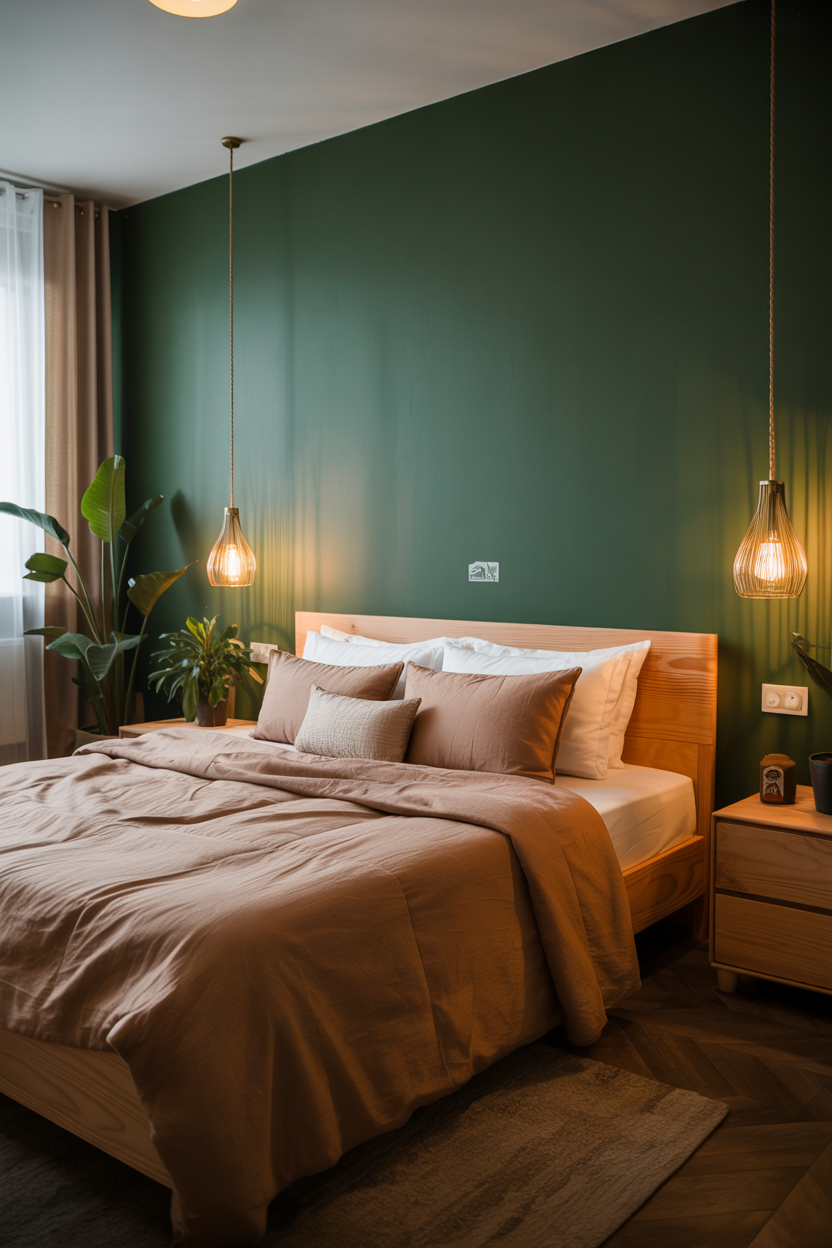
Forest green feels calm and natural, especially with light wood, like the bed and cream bedding in this photo. Glass pendants with warm bulbs hang beside the bed instead of lamps, which frees the nightstands.
Green goes well with plants, which look even greener against it. Linen and rattan suit this scheme.
If a full green room feels like too much, paint only the wall behind the bed and keep the others a warm white.
Darker greens with a little black in them, often sold as hunter or bottle green, look richer in lamplight than bright emerald, which can feel loud in a small room.
3. Navy with white and brass
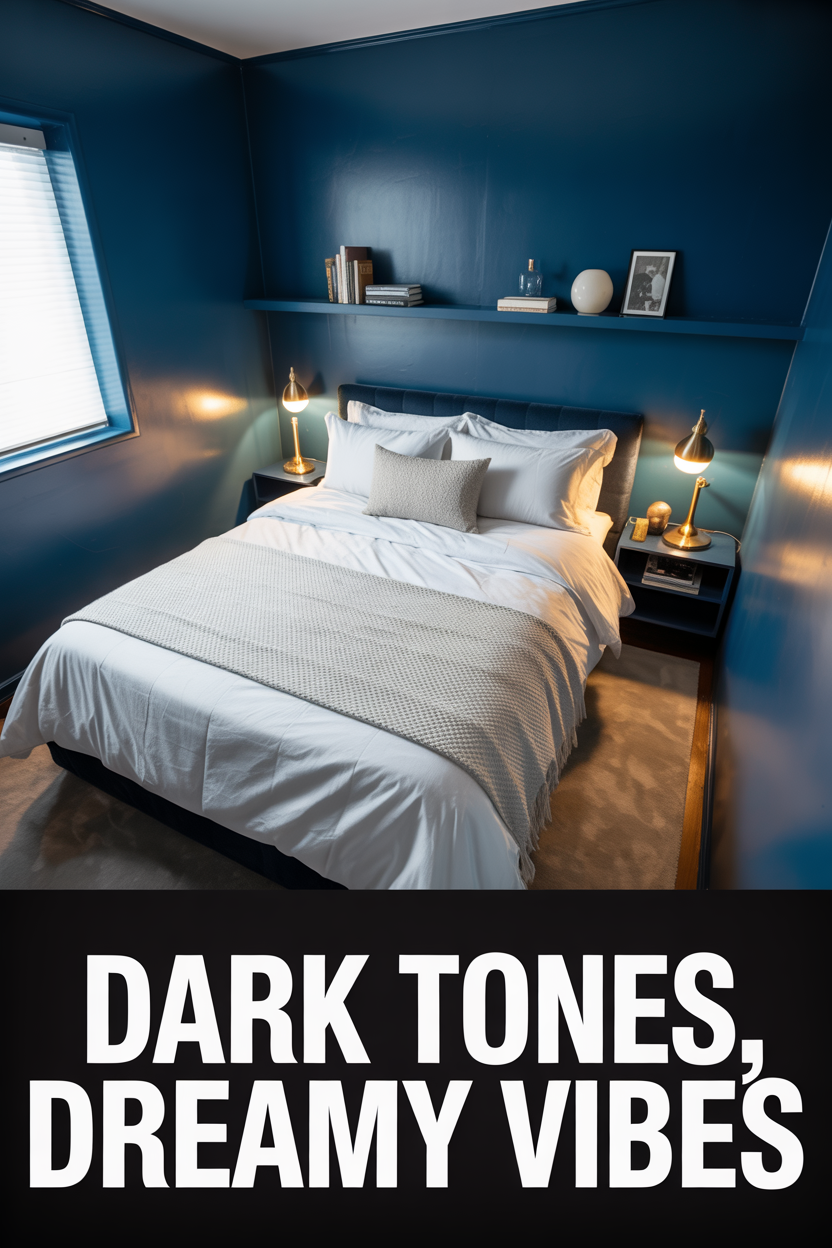
Navy is a classic moody color that looks crisp with white bedding and warm with brass, like the lamps in this small bedroom. A shelf painted the same navy as the walls almost disappears and adds storage without visual clutter.
Painting the shelves and trim the same color as the walls, and even the ceiling, called color drenching, makes a small room feel like one enveloping space rather than a box with edges.
Navy can look almost black at night, so use several warm lamps rather than a single overhead light.
If the room gets little daylight, choose a navy with a touch of gray in it, which looks softer by day. A true deep navy looks best in a room you mostly use after dark.
4. Plum and burgundy
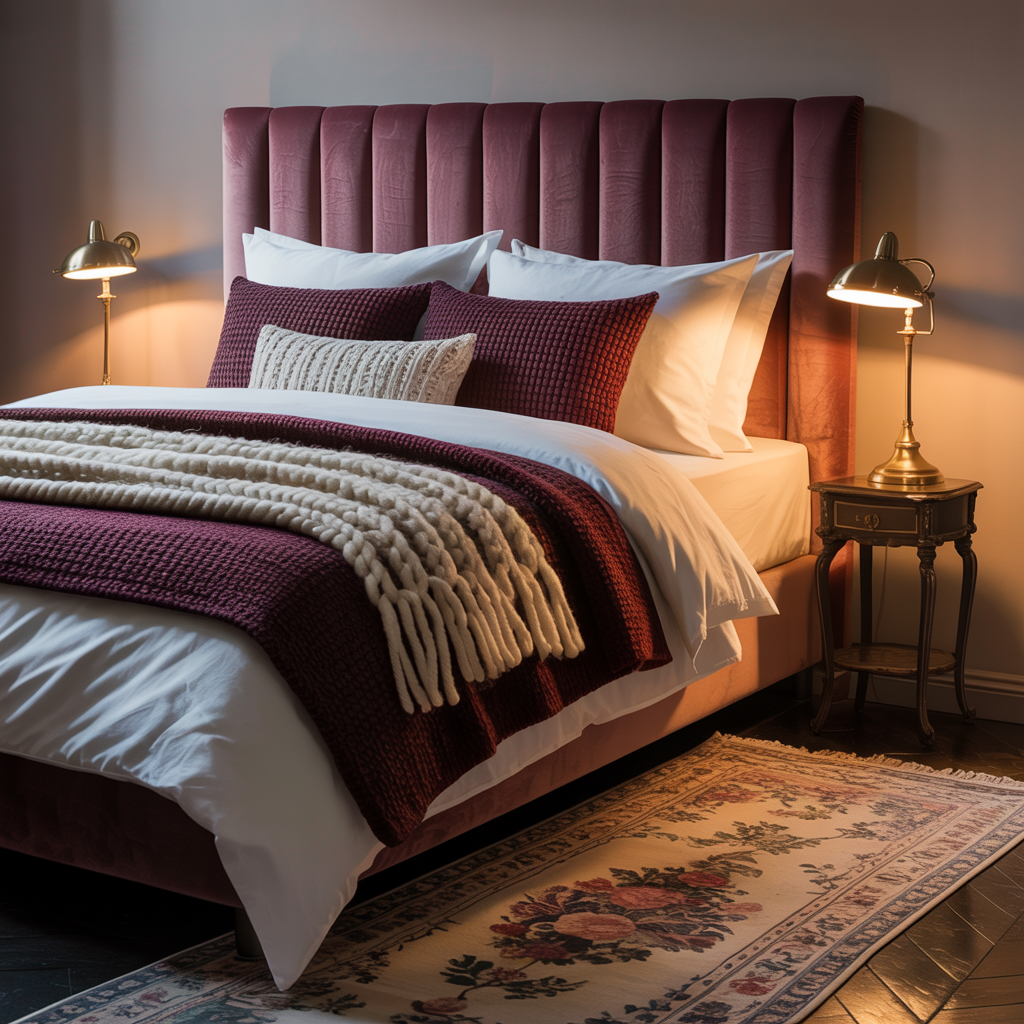
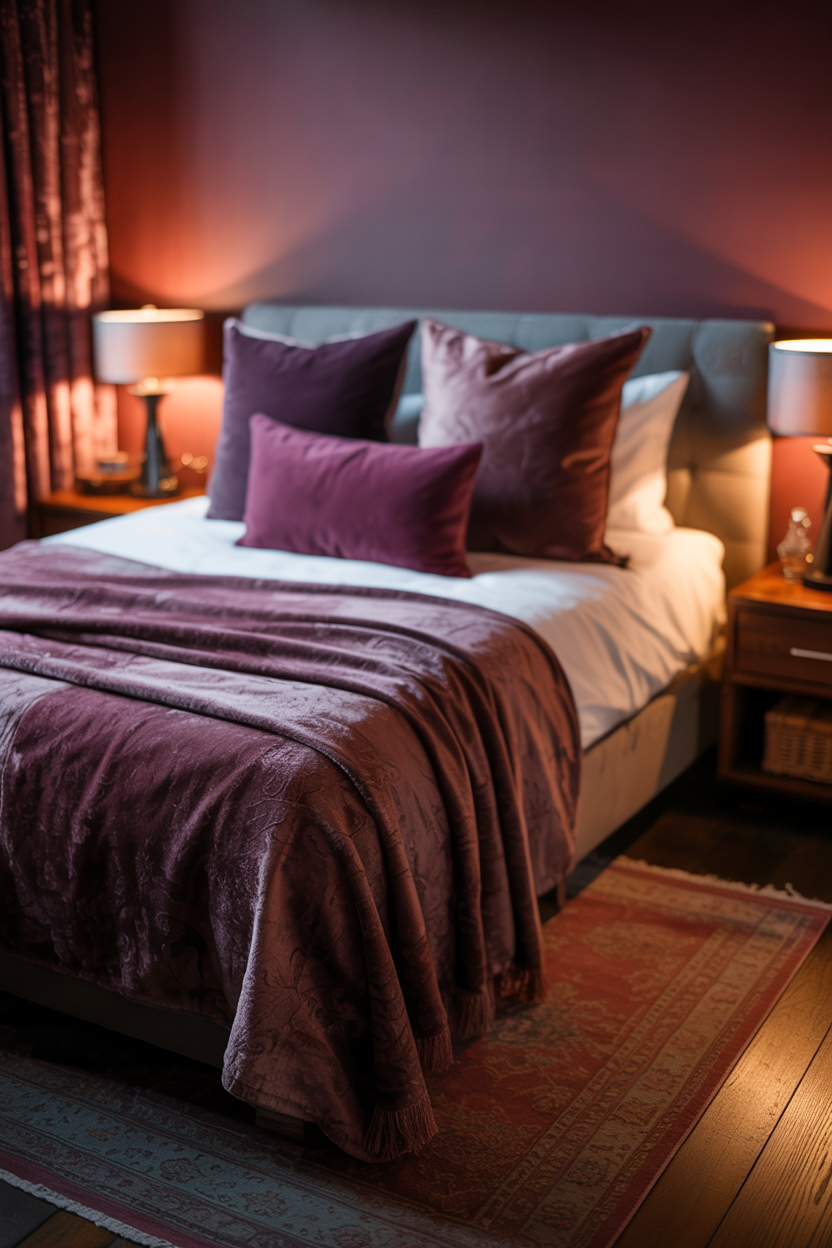
Deep plum walls with a burgundy velvet throw and plum pillows, like the bedroom in this photo, feel rich and romantic. White sheets keep the bed looking fresh.
A vintage-style red rug and warm table lamps add to the warmth. Velvet works particularly well in this scheme, since its sheen catches the lamplight.
Keep accents to two or three shades of the same color family, and add brass or wood rather than another bold color.
Plum also pairs well with muted pink and soft gold for a lighter version. Avoid bright red accents, which can make the room look like a theater set.
5. Slate blue with dusty lavender
Slate blue is softer than navy, and paired with dusty lavender or gray-pink bedding it feels calm rather than dramatic. It suits a bedroom that gets some daylight.
Add white or pale gray furniture and silver or nickel accents, which suit the cooler tones.
This scheme works well for people who want a darker room but not a dramatic one. Slate blue on the walls with white trim and ceiling keeps the room bright in the morning.
Wood floors and furniture in a mid or light tone stop slate blue from looking cold, and a wool or knit throw adds warmth.
6. Espresso and terracotta
Deep chocolate or espresso brown walls with terracotta accents feel warm and earthy, especially in fall and winter. Natural fibers like jute and linen suit it.
Brown can look muddy in poor light, so test a large swatch and use warm white bulbs.
Pair espresso walls with cream bedding to stop the room from looking too heavy, and add one or two rust or terracotta pieces, such as a throw or a pair of pillow covers.
7. Near-black with metallic and warm white
Near-black walls are the most dramatic option. With warm white bedding and brass or gold accents, the room feels like a hotel suite at night.
Choose an off-black with a warm or green undertone, which looks softer than a pure black. It works best in a bedroom you use mainly at night.
Black walls need the most light of any scheme. Plan at least three warm light sources and a mirror to bounce the light, and keep the ceiling white if the room feels too enclosed.
Matte black shows fingerprints near light switches and the door. Keep a small tin of the paint for touch-ups.
Paint finish and coverage
Dark colors show roller marks and touch-ups more than light ones. Use a good-quality paint, a tinted primer if you're covering a light color, and two full coats.
A matte or eggshell finish looks richest and hides wall imperfections. Use satin or semi-gloss on trim. A gallon covers about 350 to 400 square feet, enough for most small bedrooms with a single coat, so buy two for full coverage.
Lighting a dark room
Dark walls absorb light, so a moody bedroom needs more light sources than a pale one. Use two bedside lamps or pendants, plus a third light somewhere else in the room, like a floor lamp or an LED strip behind the headboard.
Warm white bulbs around 2700K make dark colors glow. Cool white bulbs make them look flat and gray. Our guide to small bedroom lighting has more ideas.
Testing colors and renting
Paint large swatches, at least 2 feet square, on two walls, and look at them in daylight and lamplight over a couple of days. Dark colors look darker on a whole wall than on a sample card.
In a rental, ask before painting dark, since landlords may charge to cover it. If painting isn't an option, a dark peel-and-stick wallpaper behind the bed, a dark headboard or deep-colored bedding and curtains give a moody feel without paint.
What to do with the ceiling
A white ceiling above dark walls makes the room feel taller and brighter, which suits a bedroom with a low ceiling or little daylight. Painting the ceiling the wall color, or a shade lighter, makes the room feel more enclosed and cozy, which suits a room used mostly at night.
A middle option is a ceiling in a very pale version of the wall color, such as a soft gray-green above forest green. It looks softer than stark white without darkening the room.
Common questions
Do dark colors make a small bedroom look smaller?
Not necessarily. In a small room, dark walls blur the corners and can make the space feel cozier and even larger at night. Good lighting makes more difference than the exact color.
What's the best dark color for a bedroom?
Charcoal and forest green are the easiest to live with, with navy close behind. Choose one with a warm undertone and use warm white bulbs.
Test a large swatch, light the room well and keep accents to one family. For more bedroom ideas, see our guide to accent walls for a tiny bedroom.