
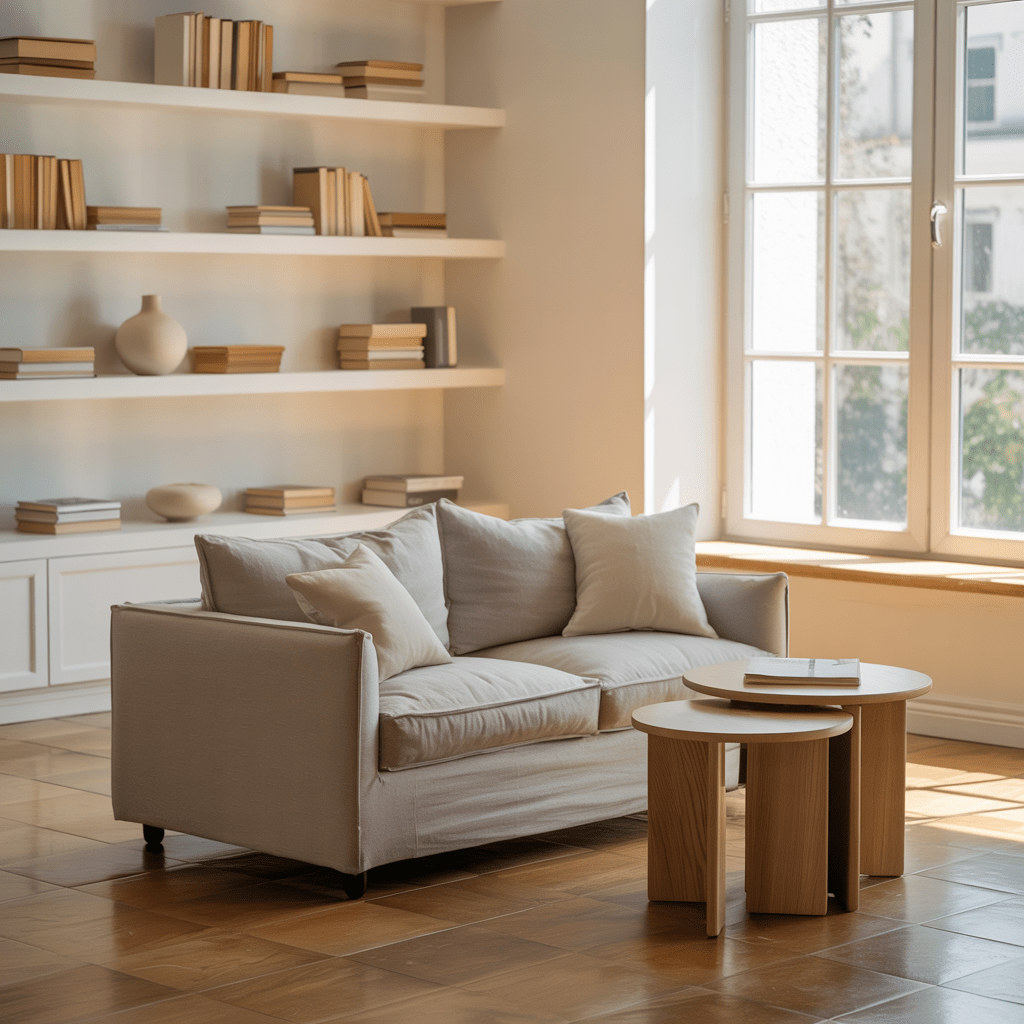
Moving into your first apartment is one of those genuinely exciting life moments. You have your own space, your own rules, and a completely blank canvas to make look exactly the way you have been imagining it on your Pinterest boards for the past two years. And then reality sets in. The furniture you ordered looks completely wrong in the actual room. The rug is too small. The walls feel bare but you are not sure what to put on them. The overhead light is doing nobody any favors. Sound familiar? Nearly everyone makes the same set of mistakes in their first apartment, not because they have bad taste but because decorating a real space is genuinely different from scrolling through inspiration photos. The proportions are different, the budget is different, and the practical realities of daily life do not always match the aesthetic vision. These twelve mistakes are the most common ones, and more importantly, each one is completely avoidable once you know what to look for.
1. Buying Furniture Without Measuring First
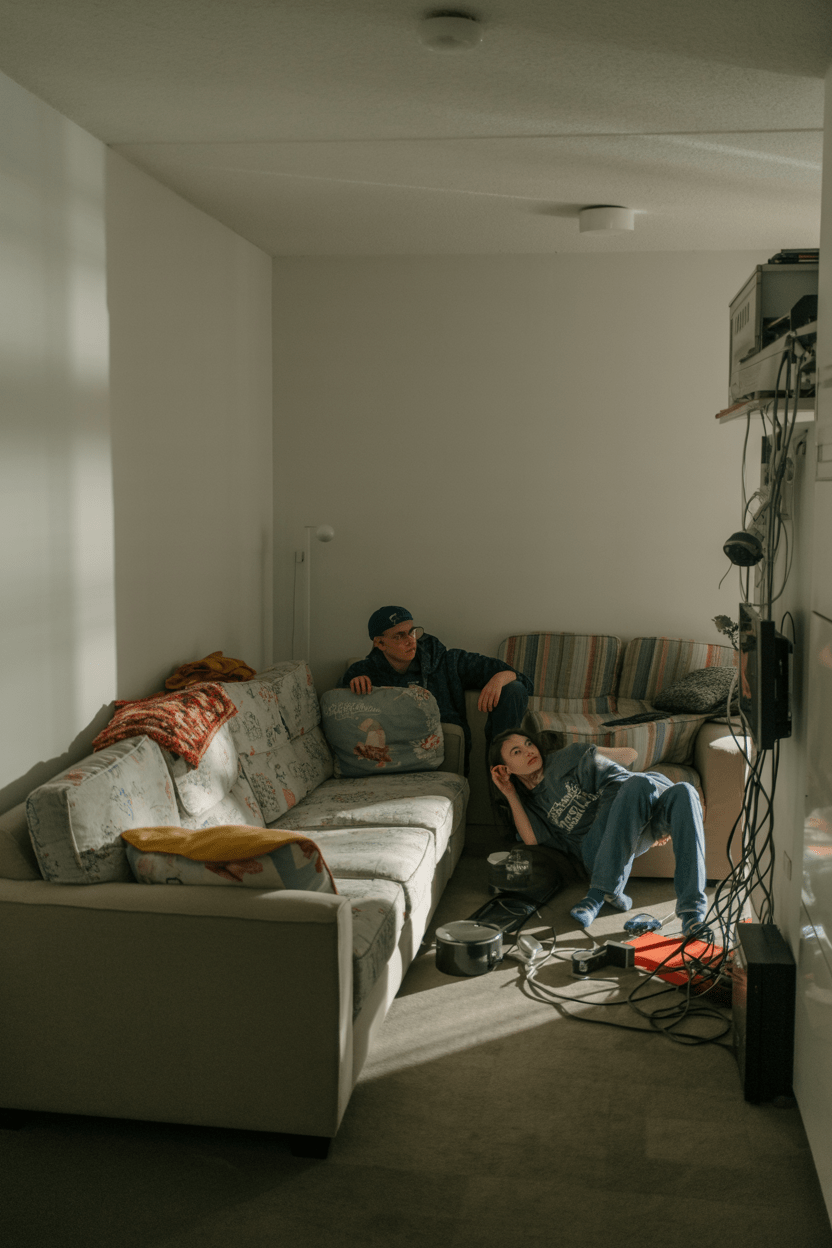
This is the mistake that causes the most immediate regret, and it happens to almost everyone in their first apartment. You see a sofa online or in a showroom and it looks perfect. The proportions seem reasonable, the color is right, and the price is within budget. You order it, it arrives, and it takes up two thirds of your living room in a way that makes the entire space feel like an obstacle course. Or the opposite happens: you buy something that seemed substantial in the store and it looks completely lost and undersized in your actual room. Either way, the problem is the same. You did not measure before you bought, and now you are living with the consequences.
The fix is simple but requires a step that feels slightly tedious before you have done it: measure your room, measure the doorways and hallways the furniture needs to travel through to get inside, and then measure again. Use painter's tape on the floor to mark out the exact footprint of a potential piece of furniture before you commit to buying it. Live with that tape outline for a day or two. Walk around it. Sit in front of where the sofa would be. See if the remaining floor space still feels functional. It sounds like overkill, but this single habit will save you from the enormous frustration and expense of returning or replacing furniture that simply does not work in your space.
2. Relying Solely on the Overhead Light
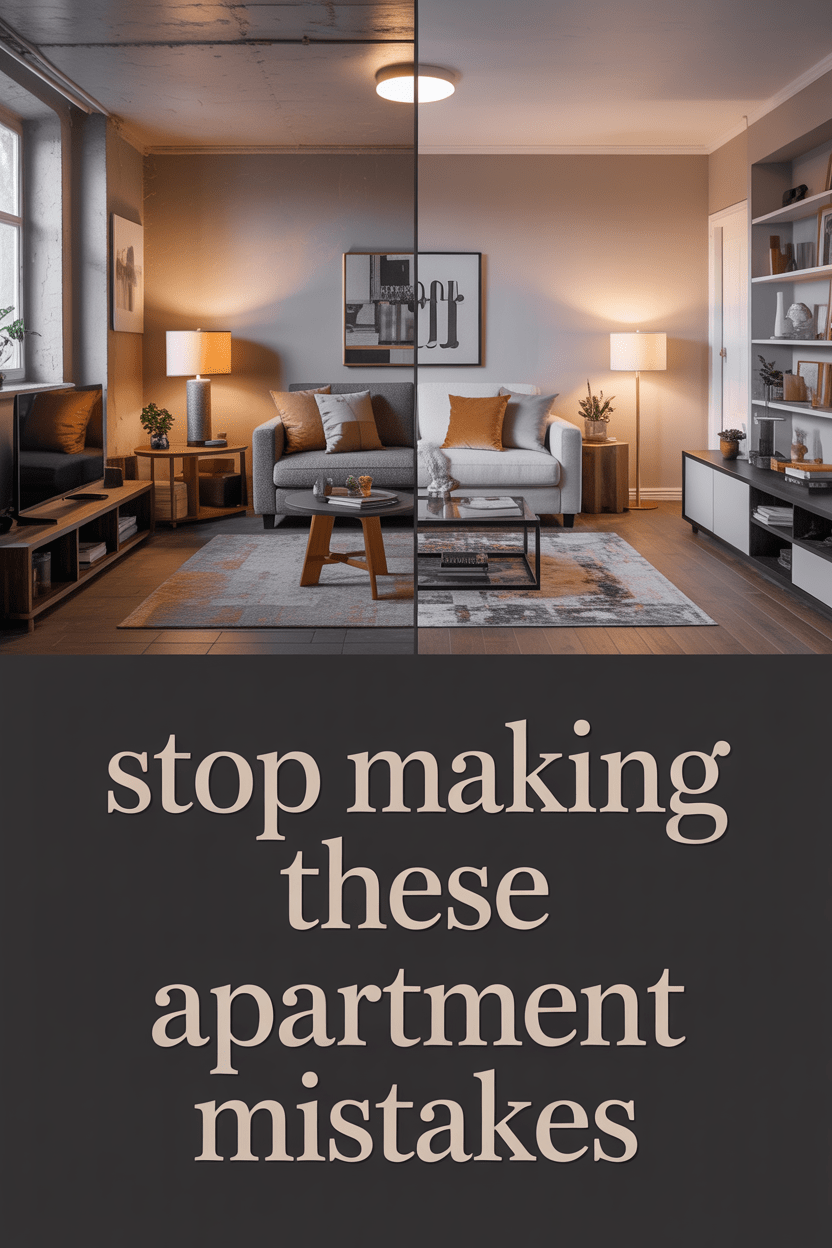
The overhead light that came with your apartment was almost certainly not chosen for ambiance. It was chosen for coverage and cost, which means it floods the room with flat, harsh light that makes everything look equally bright and equally uninspiring. Most first apartment dwellers plug in their overhead fixture, realize it does not feel quite right, and then spend months unable to figure out why the room never feels cozy no matter how nicely they style it. The answer is almost always the lighting. A single overhead light source creates no depth, no warmth, and no visual interest. It is the lighting equivalent of a blank wall.
The solution is to layer multiple light sources at different heights throughout the room, just as you would in any well-designed interior. A floor lamp in the corner of the living room, a table lamp on a console or side table, and perhaps some warm LED strip lights behind a shelf or television immediately transform the atmosphere. Warm bulbs in the 2700K range make a significant difference compared to cooler white light. If your overhead fixture is particularly unflattering, consider swapping the bulb for a warm-toned smart bulb that you can dim, or simply leave the overhead off in the evenings and rely on your layered lamps instead. The shift in how the room feels once you try this will be immediate and honestly a little revelatory.
3. Choosing a Rug That Is Way Too Small
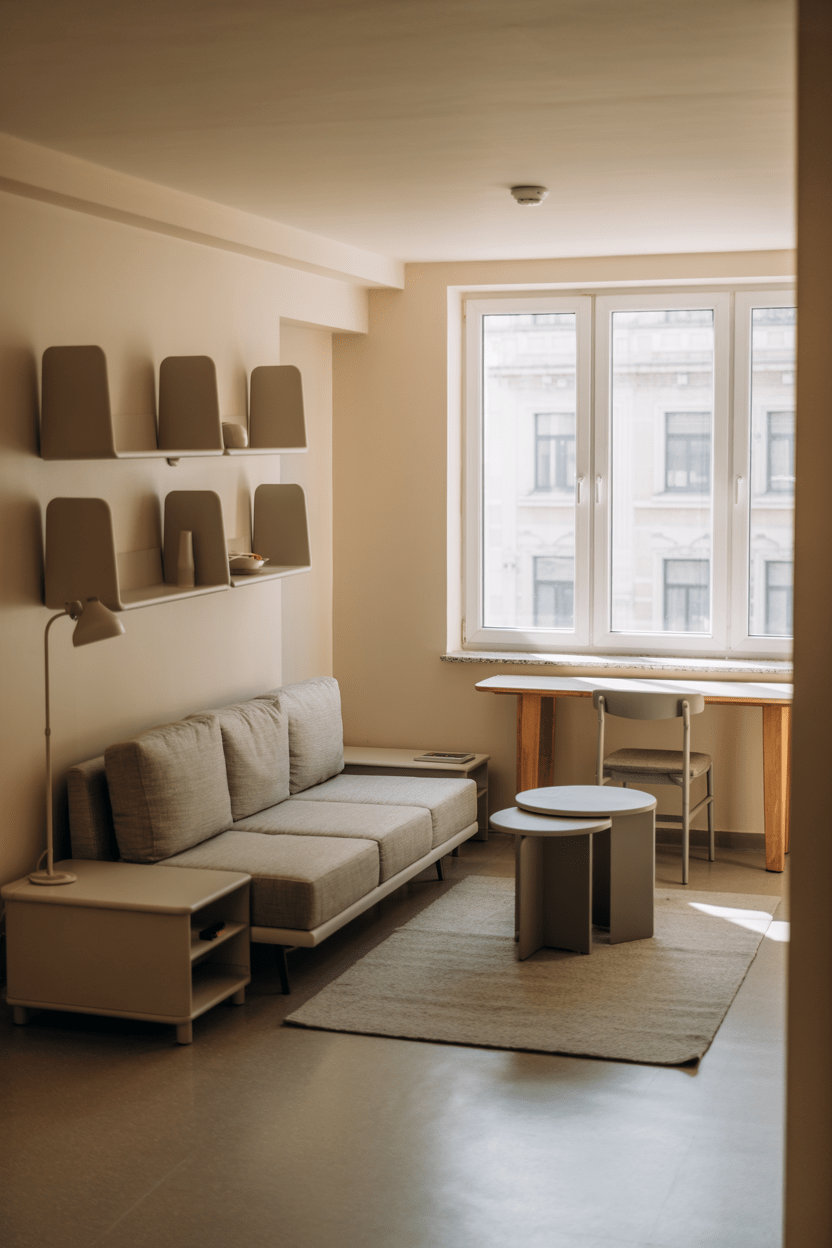
Walk into almost any first apartment living room and there is a good chance you will find a small rug floating in the center of the room with the sofa legs nowhere near it. This is one of the most common decorating mistakes across the board, but it is especially prevalent in first apartments where budget constraints lead people toward the smaller, cheaper size. The problem is that a rug that is too small does not anchor the furniture, does not define the space, and actually makes the room feel more fragmented and smaller than it would with no rug at all. It looks like the rug was placed there by accident rather than with intention.
The general rule for living room rugs is that at least the front two legs of every major seating piece should sit on the rug. Ideally, all four legs of every piece do, but the front-legs-on rule is the minimum for the rug to do its visual job of tying the seating group together. In a small apartment living room, this typically means you need a rug that is at least five by eight feet, and often larger. If the size you need is outside your current budget, look at flatweave options which tend to be more affordable than plush pile rugs, or check out online rug marketplaces where you can often find significantly larger sizes at competitive prices. The difference a properly sized rug makes to the feel of an entire room is one of those things you have to experience to fully believe.
4. Pushing All the Furniture Against the Walls
It makes intuitive sense to push furniture against the walls in a small space. More floor in the middle means more room, right? In practice, this layout choice consistently produces the opposite effect of what people are hoping for. When every piece of furniture is pinned to the perimeter, the center of the room becomes an empty, awkward void and the seating feels disconnected, as though the chairs and sofa are strangers standing at the edges of a room rather than people gathered together comfortably. The space reads as larger on paper but feels colder and less functional in daily use.
Floating your furniture even slightly away from the walls, twelve to eighteen inches is often enough, creates a more intimate, layered arrangement that actually makes the room feel bigger in the way that matters most: how it feels to be in it. Position your sofa facing a focal point like a television, a window, or a piece of art, with a coffee table in front and perhaps an accent chair angled toward it. The resulting conversation grouping has a warmth and a sense of purpose that wall-hugging furniture simply cannot achieve. Use a properly sized rug underneath the grouping to anchor it and the whole arrangement will feel grounded and intentional rather than cautious and crowded.
5. Hanging Art Too High on the Walls
There is a near-universal tendency among first-time apartment decorators to hang art, mirrors, and shelves significantly higher than they should be. It comes from a reasonable instinct: hang things high and the room will feel taller. But in practice, art that is hung too high looks disconnected from the furniture below it and creates an awkward visual gap that draws attention to itself rather than to the art. The standard recommendation used to be hanging art at eye level, which works reasonably well, but the more useful guide is to hang art so that the center of the piece sits roughly fifty-seven to sixty inches from the floor, which is approximately the average human eye level when standing.
When hanging art above furniture, the relationship between the piece and what is below it matters just as much as the absolute height. Art hung above a sofa should sit about six to eight inches above the back of the sofa, close enough to feel connected to it but with a small gap so the two do not feel like they are competing. A gallery wall arrangement should be planned and taped out on the floor before a single nail goes into the wall, so you can adjust the spacing and overall shape before committing. First apartments often have relatively bare walls for a long time simply because the owner is afraid of making the wrong choice with nails. Starting with removable adhesive picture strips eliminates that fear entirely and lets you experiment freely.
6. Buying Everything From the Same Store at the Same Time
Walking into a furniture store with a blank apartment and walking out with a completely matched living room set feels efficient and reassuring in the moment. Everything will go together because it literally came from the same collection. But the result almost always looks like a showroom floor rather than a home. Perfectly matched sets lack the layered, personal quality that makes a space feel like it belongs to a real person with real taste and a real history. The room ends up feeling simultaneously too coordinated and strangely impersonal, as though nobody actually lives there.
A far more interesting and often more budget-friendly approach is to mix sources intentionally. A sofa from one place, a coffee table from a vintage market, a bookshelf from a flat-pack retailer, and a floor lamp from a thrift store that you spray-painted to match your aesthetic. When pieces come from different places and different eras but share a cohesive color palette or material language, the result feels curated and layered in a way that a single-source room simply cannot replicate. Give yourself permission to build the room gradually over time in 2026 and beyond rather than trying to complete it all at once. The best rooms evolve, and yours will too.
7. Ignoring Vertical Space Completely
In a small first apartment, every square foot of floor space feels precious, which makes it all the more puzzling that most people stop thinking about their space at eye level and ignore everything above it. The vertical space in a small apartment, the wall area between the tops of your furniture and the ceiling, is some of the most underutilized real estate in the entire home. Floating shelves installed high on the wall, tall bookshelves that draw the eye upward, floor-to-ceiling curtains, and plants placed on top of cabinets or hanging from ceiling hooks all use this vertical zone in ways that both add storage and make the room feel taller and more expansive.
Curtains deserve a specific mention here because the height at which you hang them has a dramatic effect on how tall a room feels. Hanging curtains just above the window frame, which is the literal location of the curtain hardware in most apartments, limits the curtains to the window zone and draws attention to how low the ceiling is. Hanging them two to four inches below the ceiling and letting them fall all the way to the floor visually extends the wall height significantly, making the ceiling feel much higher than it actually is. This is a completely free upgrade if you already own curtains, requiring only a new rod position and five minutes of time.
8. Skipping a Cohesive Color Palette
One of the most common visual problems in first apartments is a room that contains too many colors without any clear relationship between them. A bright red accent chair, a blue-grey sofa, a green rug, and a mustard yellow throw all in the same room creates a visual chaos that makes the space feel restless rather than welcoming, no matter how individually appealing each piece might be. Without a color palette acting as a unifying thread, a room never quite settles into something that feels designed. It just feels like a collection of furniture that happened to land in the same place.
You do not need to hire a designer or take a color theory course to solve this. Start with one piece you love and use it as the palette anchor, typically the sofa since it takes up the most visual space. Identify two or three colors within or complementary to that piece and repeat those tones across the rest of the room in varying proportions. A neutral base, one or two accent colors, and a consistent material palette, think warm wood tones rather than mixing warm wood with cool grey metal, will tie everything together with a sense of intentionality that makes the room feel calm and considered. The result is a space that photographs beautifully and feels genuinely good to spend time in every day.
9. Forgetting to Account for Storage From the Start
Storage is almost never the exciting part of decorating a first apartment, which is exactly why it gets underestimated so consistently. People focus on the sofa, the coffee table, the art on the walls, and the plants on the windowsill, and then realize six weeks in that they have nowhere to put their extra linens, cleaning supplies, off-season clothing, or any of the dozens of practical items that daily life requires. When storage has not been planned for from the beginning, it ends up scattered across visible surfaces in an ad hoc way that makes the whole apartment feel perpetually messy regardless of how nicely everything else is arranged.
The fix is to think about storage as part of the furniture plan rather than a problem to solve after the fact. Choose a coffee table with a shelf or interior storage rather than a purely decorative one. Pick an ottoman that opens up to hold blankets or remote controls. Install floating shelves in the hallway or above the toilet. Use the space under your bed deliberately with proper storage containers rather than letting it accumulate randomly. Every piece of furniture in a small first apartment should earn its place either by being beautiful, functional, or ideally both. When storage is built into the design from the start, the apartment stays tidier and more livable with significantly less effort on a daily basis.
10. Trying to Finish Everything All at Once
There is a particular pressure that comes with a new apartment: the feeling that it needs to be fully decorated and finished before you can properly enjoy it. This leads to rushed purchasing decisions, impulse buys that do not quite fit the space, and spending more than the budget realistically allows simply because empty walls and bare floors feel uncomfortable. The irony is that apartments decorated in a hurry almost always look more chaotic than those that are built up gradually and thoughtfully, because rushed choices rarely align with each other in the way that considered ones do.
Give yourself permission to live in the space for a few weeks before making major purchases. Notice how the light moves through the rooms at different times of day. Pay attention to which areas you actually use and which ones sit untouched. Notice where you naturally put things down when you come home, which tells you a lot about where storage is actually needed. The answers your apartment gives you during that first month of occupancy are far more useful than any floor plan you could sketch in advance. Spaces that are allowed to evolve over time in 2026 and into the following year almost always end up more personal, more functional, and more genuinely beautiful than those assembled in a single weekend shopping trip.
11. Underestimating How Much Textiles Change a Room
Textiles are one of the most budget-friendly and high-impact tools in apartment decorating, and they are almost always underused in first apartments. A room with bare floors, unadorned windows, and a sofa without cushions or a throw feels hard and unfinished regardless of how good the furniture itself is. Adding textiles, specifically rugs, curtains, throw pillows, and blankets, introduces softness, color, texture, and warmth that furniture alone cannot provide. They also absorb sound, which makes a big difference in the acoustic quality of a small apartment where hard surfaces tend to make everything feel echo-y and cold.
The satisfying thing about textiles is that they are relatively easy to change when your taste evolves or the seasons shift. Swapping out throw pillow covers for a different color costs very little and can completely refresh the look of a living room without moving a single piece of furniture. Replacing curtains takes an afternoon and changes the entire atmosphere of a room. Adding a new throw blanket to the sofa in September costs less than a dinner out and makes the room feel instantly cozier and more intentional. Textiles are the most forgiving category of home decor because they are easy to adjust, return, or replace, which makes them the perfect place to experiment with color and pattern in a first apartment.
12. Not Reading the Lease Before Making Changes
This final mistake is less about aesthetics and more about avoiding a very stressful and expensive situation at the end of your tenancy. Most first-time renters are so excited to personalize their new space that they paint walls, drill mounting holes, install shelving, and make other changes without first checking what their lease actually permits. Lease agreements vary enormously on what is and is not allowed, and some landlords are far stricter than others about things like painting, hanging anything on the walls, or making any modifications to fixtures. Discovering at move-out that you owe significant repair costs for changes you made enthusiastically in the first week is a genuinely deflating experience.
Read your lease carefully before doing anything to the apartment and contact your landlord directly if anything is unclear. Many landlords are open to certain changes if you ask first and agree to restore things to the original condition before moving out. In the meantime, there are excellent renter-friendly alternatives for almost every decorating wish: removable wallpaper instead of paint, adhesive picture-hanging strips instead of nails, tension rod shelving instead of drilled brackets, and freestanding furniture instead of built-ins. These solutions have improved dramatically in quality and variety in recent years, and many are virtually indistinguishable from their permanent counterparts once they are installed properly.
Every single one of these mistakes is completely understandable, especially when you are decorating a real space for the first time with a real budget and a steep learning curve. The encouraging thing is that none of them are permanent. Furniture can be rearranged, rugs can be exchanged, art can be rehung, and lighting can be layered in over time without starting from scratch. The goal is not a perfect apartment finished in a weekend. It is a space that gradually becomes more you, more functional, and more genuinely enjoyable to come home to with each small improvement you make. Start with the one or two mistakes on this list that resonate most with your current situation and work forward from there. Your first apartment has a lot more potential than it might be showing right now.