
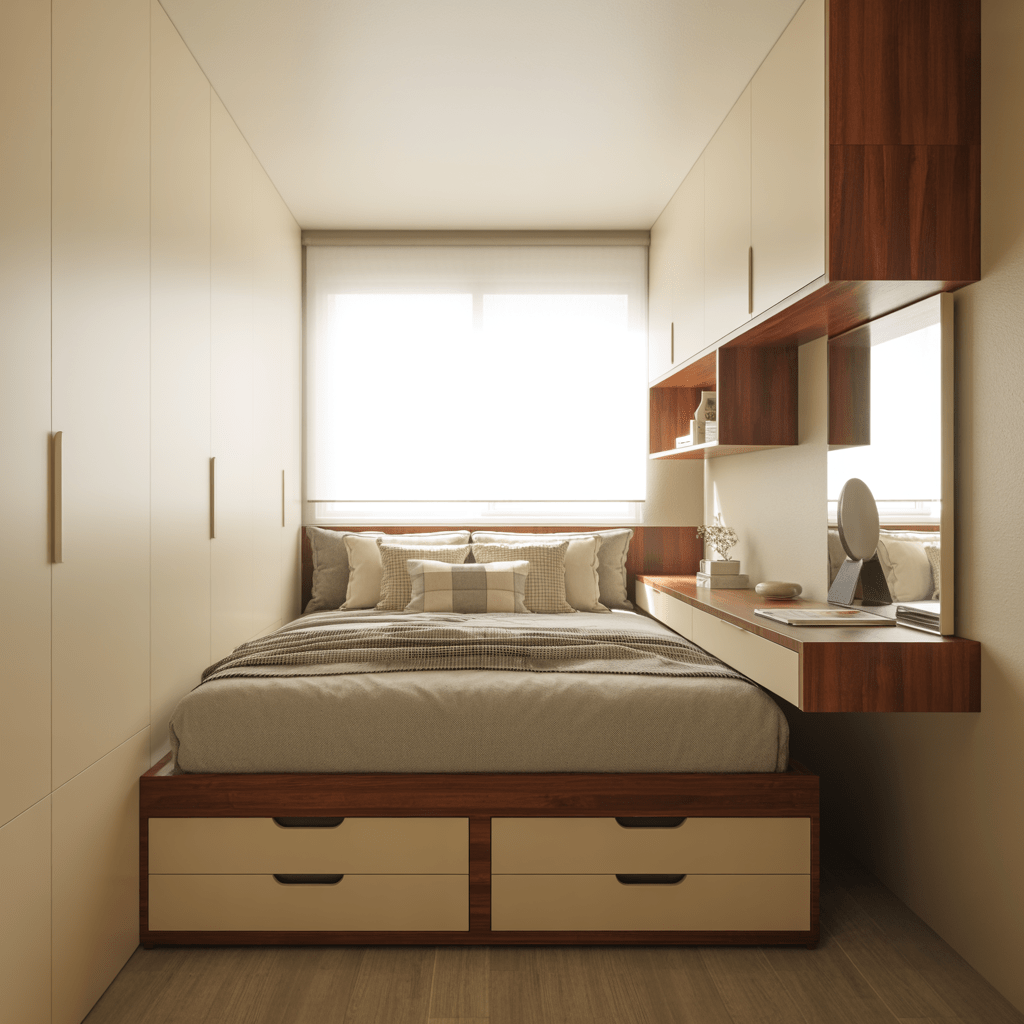
A first apartment usually comes with a small budget and not much floor. Buying a separate piece for every job, from a desk to a guest bed, fills the room quickly and empties the bank account just as fast.
The seven pieces below each do at least two jobs, which means fewer things to buy and fewer to carry up the stairs. The four rooms in these photos show several of them in use. Before buying any of them, measure the room and the doorways, since a sofa bed or storage bed that doesn't fit up the stairs is an expensive mistake.
1. A storage ottoman or chaise
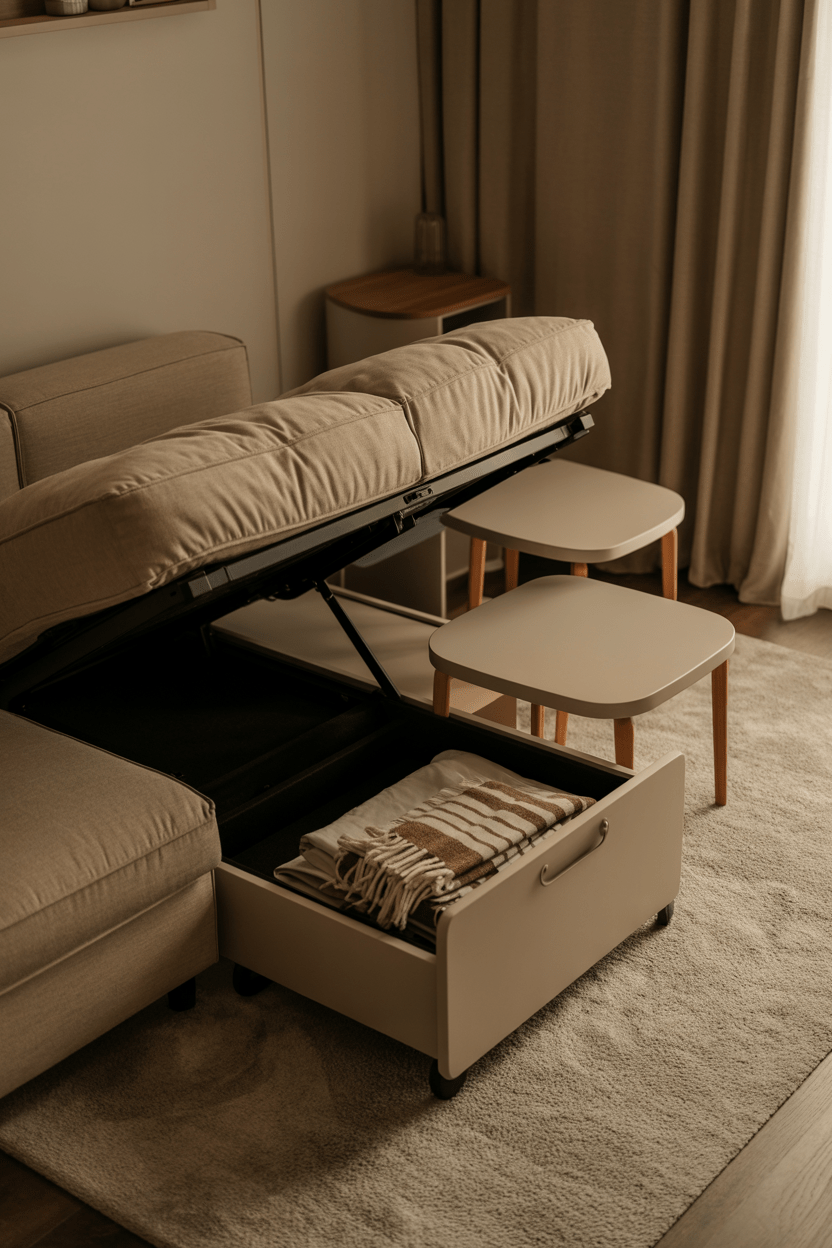
A storage ottoman works as a coffee table and extra seating, with a blanket chest inside. The sofa in this photo takes it further, with a chaise whose seat lifts up to reveal storage for throws and spare bedding.
Look for an ottoman with a hinged lid on soft-close or gas-lift hinges, so it doesn't slam on fingers. A size around 30 to 36 inches across works as a coffee table in front of most small sofas; put a tray on top for drinks.
Storage sofas and chaises cost more than standard ones, but they can replace a dresser or linen closet. Check that the storage is easy to reach when the cushions are on.
The small stools beside this sofa are another double-duty piece, working as side tables or extra seats. Our guide to storage ottoman ideas covers more options.
2. A folding or drop-leaf table
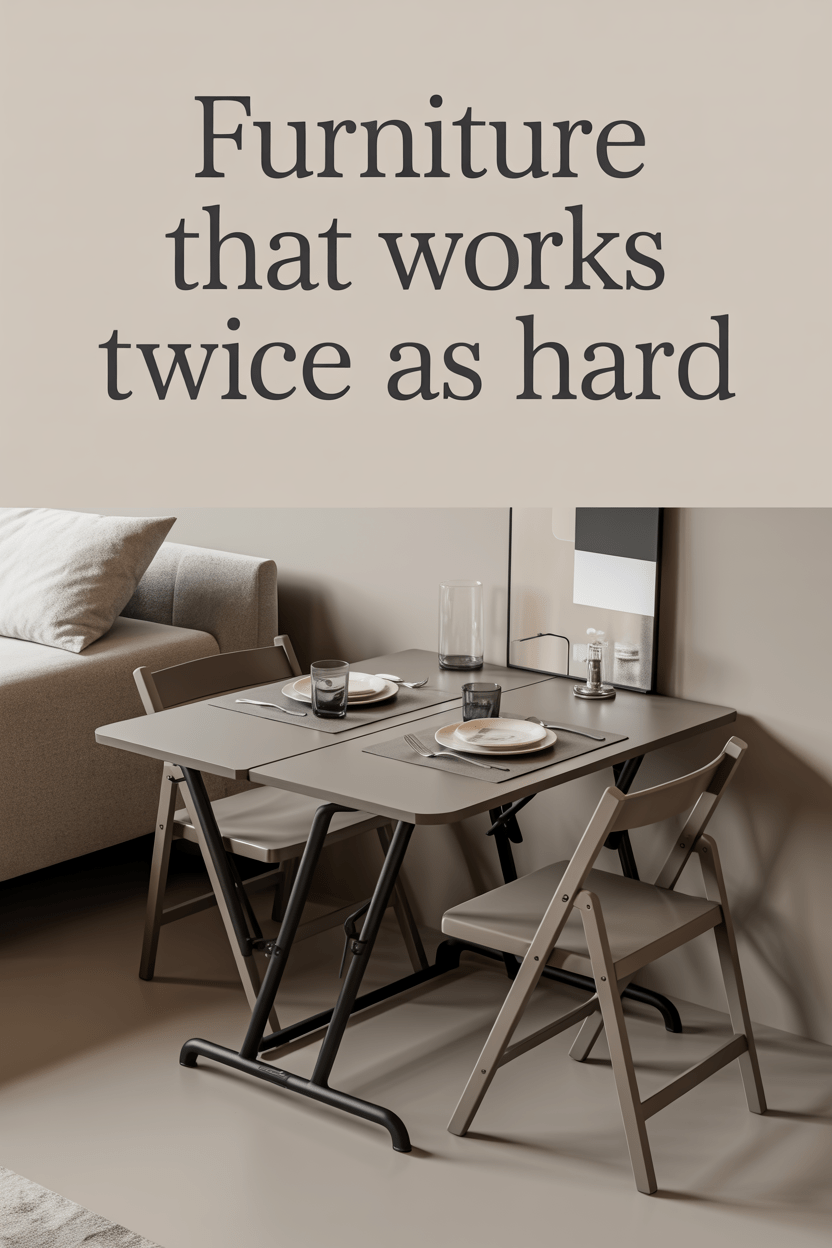
A folding table, like the one set for two beside the sofa in this photo, works as a dining table at dinner and a desk during the day. When you don't need it, it folds flat and stores against a wall or in a closet.
Drop-leaf tables do the same with hinged sides: one leaf up for a small desk, both up for dinner. A table about 30 inches wide with leaves that extend to 48 to 60 inches seats two to four.
Folding chairs, like the ones here, store flat on a wall hook. Choose sturdy ones with a locking mechanism, since cheap folding chairs can wobble.
Wall-mounted drop-leaf tables go one step further: they fold flat against the wall and take no floor space at all. Mount them into studs and check the weight rating, since people lean on a dining table.
If the table doubles as a desk, clear it fully each evening before dinner. A small basket or tray for your laptop and notebook makes that a 30-second job.
3. A bed with drawers
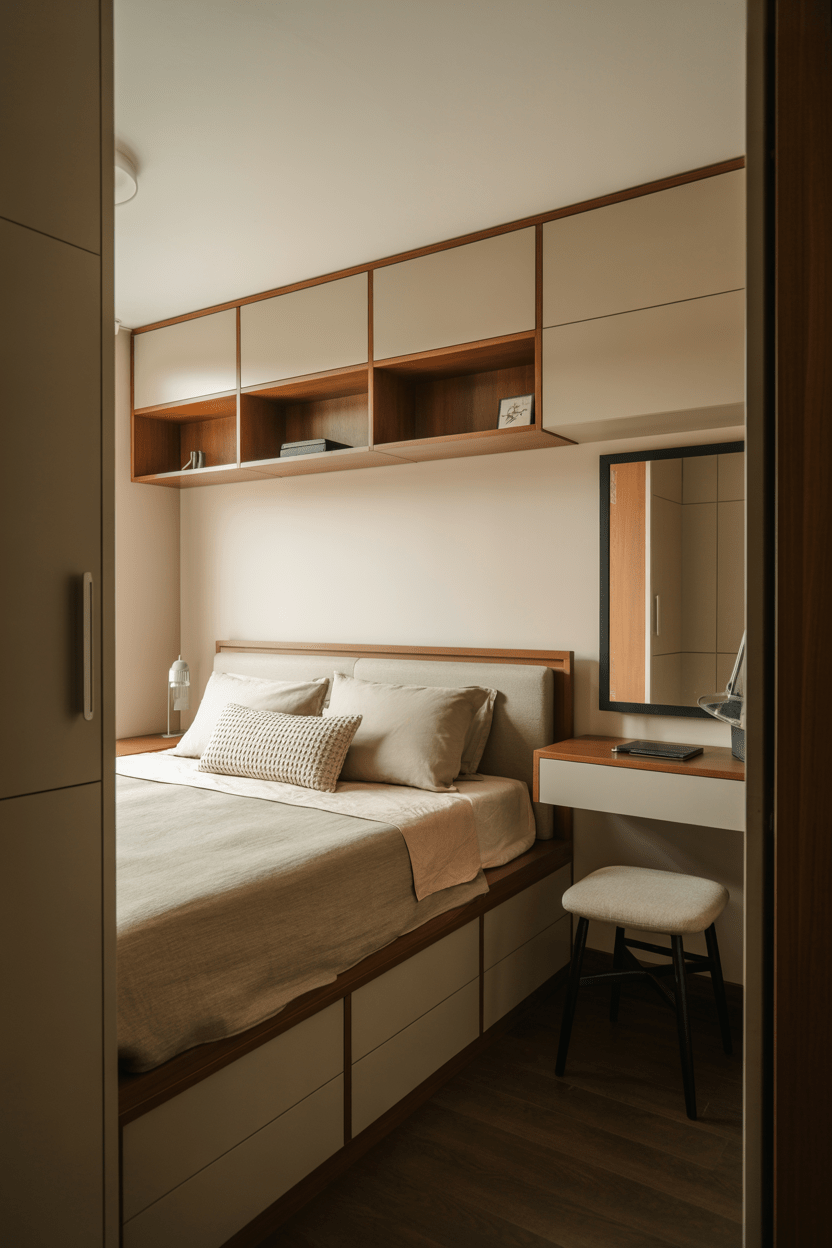
A bed with drawers built into the base, like the one in this photo, replaces a dresser in a small bedroom. Clothes and spare bedding go underneath, and the floor space a dresser would take stays free.
Check how far the drawers pull out and that you'll have room in front of them; you typically need 20 to 24 inches of clearance. Lift-up storage beds, where the whole mattress rises on gas struts, hold even more but are harder to reach daily.
This bedroom also uses wall cabinets above the bed and a narrow wall-mounted desk with a stool, which doubles as a vanity. Every wall here does a job.
Wall cabinets over a bed must be screwed into studs, since anything falling at night is dangerous.
4. A bookshelf that divides the room
In a studio, an open-back bookshelf set out from the wall separates the bed from the living area and holds books and baskets. It does the job of a wall and a storage unit at once.
Choose a shelf with no back panel so light passes through, and anchor it to the floor or ceiling, since a freestanding shelf can tip. Our guide to studio room dividers covers more options.
Cube shelves 4 or 5 cubes high block the view of the bed from the sofa without making the room feel walled in. Fill the lowest cubes with fabric bins for the things you want hidden, and keep the top row lighter for books and a plant.
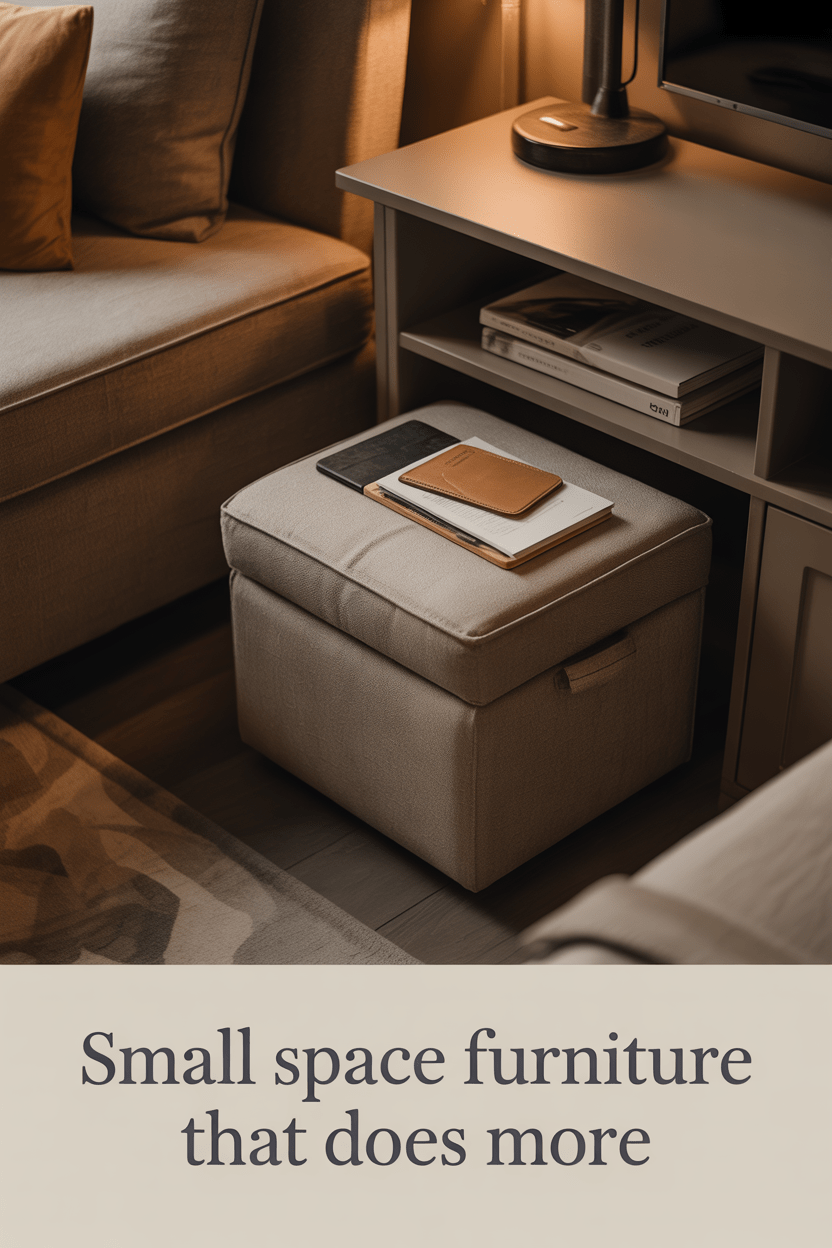
5. A console that works as a desk
A console table can be a TV stand or an entry table, and it makes a good narrow desk. In this photo, a console with a shelf holds books and a lamp, and an upholstered storage ottoman tucked underneath doubles as a seat or footrest.
For desk use, look for a console 28 to 30 inches tall and at least 14 inches deep. Behind a sofa, it gives you a work surface without a separate desk; by the door, it holds keys and mail.
An ottoman or stool that slides fully under the console keeps the floor clear when you're not using it.
If you use the console as a desk, add a slim lamp and run the cables down a table leg with a few clips, so the living room doesn't fill with cords.
6. A sofa bed or Murphy bed for guests
Without a spare room, a sofa bed or a futon gives guests somewhere to sleep and gives you a sofa the rest of the time. Modern sofa beds are much more comfortable than older ones; look for a memory foam or innerspring mattress at least 4 to 5 inches thick.
Measure the room with the bed open, not just closed, since an opened queen sofa bed can extend 80 to 90 inches from the wall. A Murphy bed folds into a wall cabinet but needs secure mounting to studs and usually professional installation.
For occasional guests, a good air mattress or a folding foam mattress stored under the bed costs far less. Our guide to guest bed ideas for small apartments compares the options.
7. Nesting tables and stackable stools
Nesting tables tuck under each other when not in use and pull apart for guests. Stackable stools work as side tables or extra seats, and a sturdy one is a step for reaching high shelves.
A set of two or three nesting tables takes the footprint of one side table. Choose stools rated to hold a person if you'll sit or stand on them.
Nesting tables in different materials, such as one wood and one metal, look less like a set and more like pieces collected over time. Wood or metal tops handle cups and plant pots better than glass, which marks easily.
What to check before buying
Double-duty furniture has moving parts, so check them in the store or read reviews carefully. Hinges and gas struts wear out first, followed by drawer runners. Solid wood or metal frames usually last longer than particleboard.
Measure the doorways and the stairwell before ordering large pieces. Many sofa beds and storage beds come in boxes that need a 30-inch doorway or more. Check the return policy, since big items are expensive to send back.
Buy the pieces you'll use daily first, usually the sofa and the bed, and add the rest once you've lived in the space for a month or two.
Common questions
What furniture do you need in a first apartment?
A bed, somewhere to sit, a surface to eat and work at, and storage for clothes. Choosing pieces that do two of those jobs, like a storage bed or a folding table, saves both money and space.
Is a sofa bed worth it in a small apartment?
If you have guests more than a few times a year, yes. For occasional guests, a folding foam mattress is cheaper and easier to store.
Measure first, then buy the daily pieces before the extras. For more first-apartment help, see our guide to first apartment mistakes to avoid.