
Moving into a first apartment comes with a long shopping list, and the kitchen part of it is where people overspend. Stores sell 15-piece cookware sets, gadget drawers full of single-use tools and appliances you'll use once. In a small kitchen, most of it ends up in the way.
The ten essentials below cover nearly everything most people cook, and together they fit in two cabinets and a drawer. Bought new at budget to mid-range stores, the whole list typically comes to $250 to $450, and much of it turns up secondhand for far less. Buy these first, cook for a month, then add what you actually missed.
1. Three pans that cover most meals
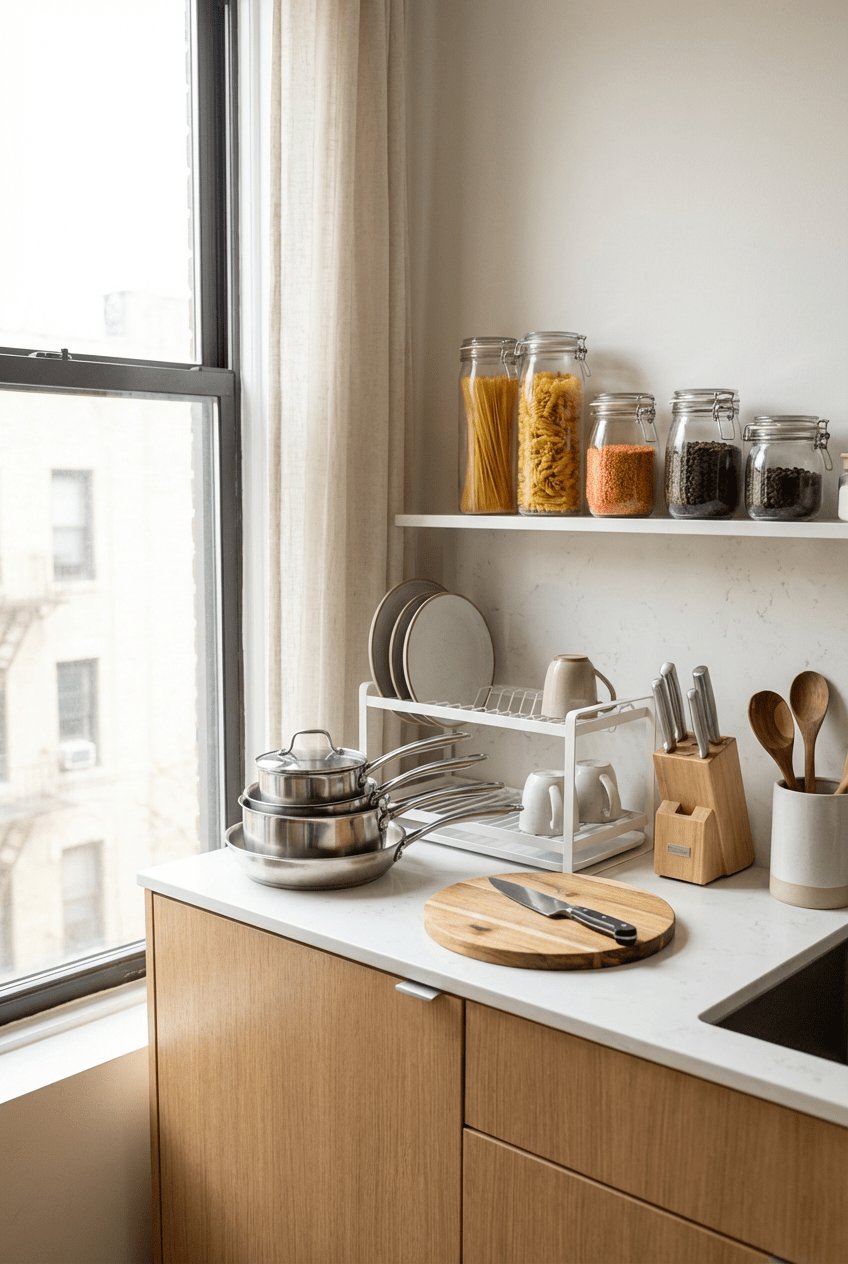
Most cooking needs only the three pans listed at the end of this section, and the stack of stainless pans in this photo is about that.
Stainless steel lasts for decades and handles high heat. A nonstick skillet is easier for eggs and fish; replace it when the coating scratches. Cast iron is cheap and nearly indestructible but heavy. Dry it on the stove after washing and rub in a drop of oil so it doesn't rust.
A three-piece set often costs less than buying pans separately. Check that the bases work on your stove, especially if it's induction, which needs magnetic pans.
Add a sheet pan, about $10 to $20, for roasting vegetables and baking. It's the fourth thing people wish they'd bought.
- A 10- or 12-inch skillet for eggs and searing
- A 2- or 3-quart saucepan with a lid for rice and sauces
- A 6- to 8-quart pot for pasta and soup
2. One good knife and a solid cutting board
One sharp 8-inch chef's knife does almost every job. A good one costs $30 to $60 and makes cooking faster and safer than a block of cheap, dull knives. Add a serrated bread knife and a small paring knife later if you need them.
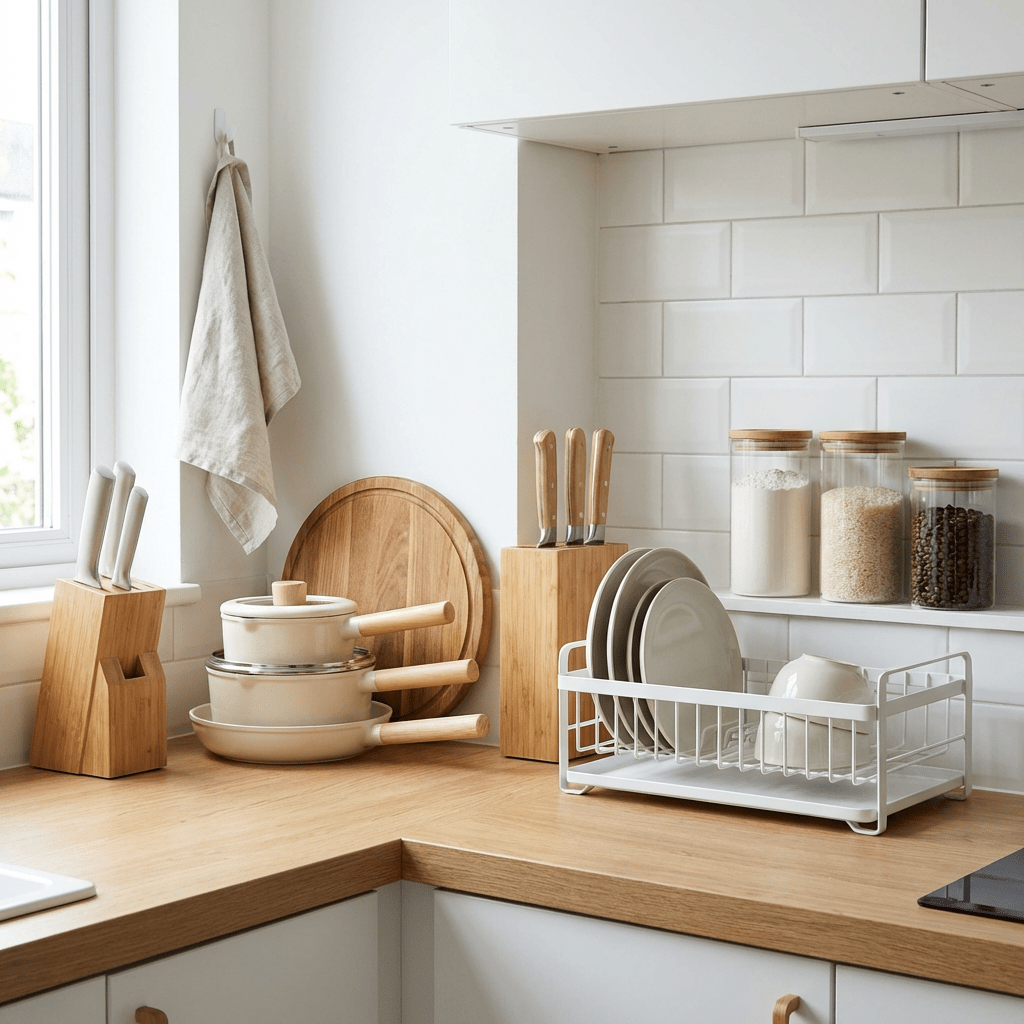
Pair it with a large wooden or composite cutting board, at least 12 by 18 inches, like the round board in the first photo. Wood is gentle on knife edges; plastic boards go in the dishwasher and are good for raw meat.
Put a damp towel under the board so it doesn't slide, and keep the knife sharp with a simple honing rod or pull-through sharpener. Dull knives slip and cause more cuts.
3. A small set of dishes
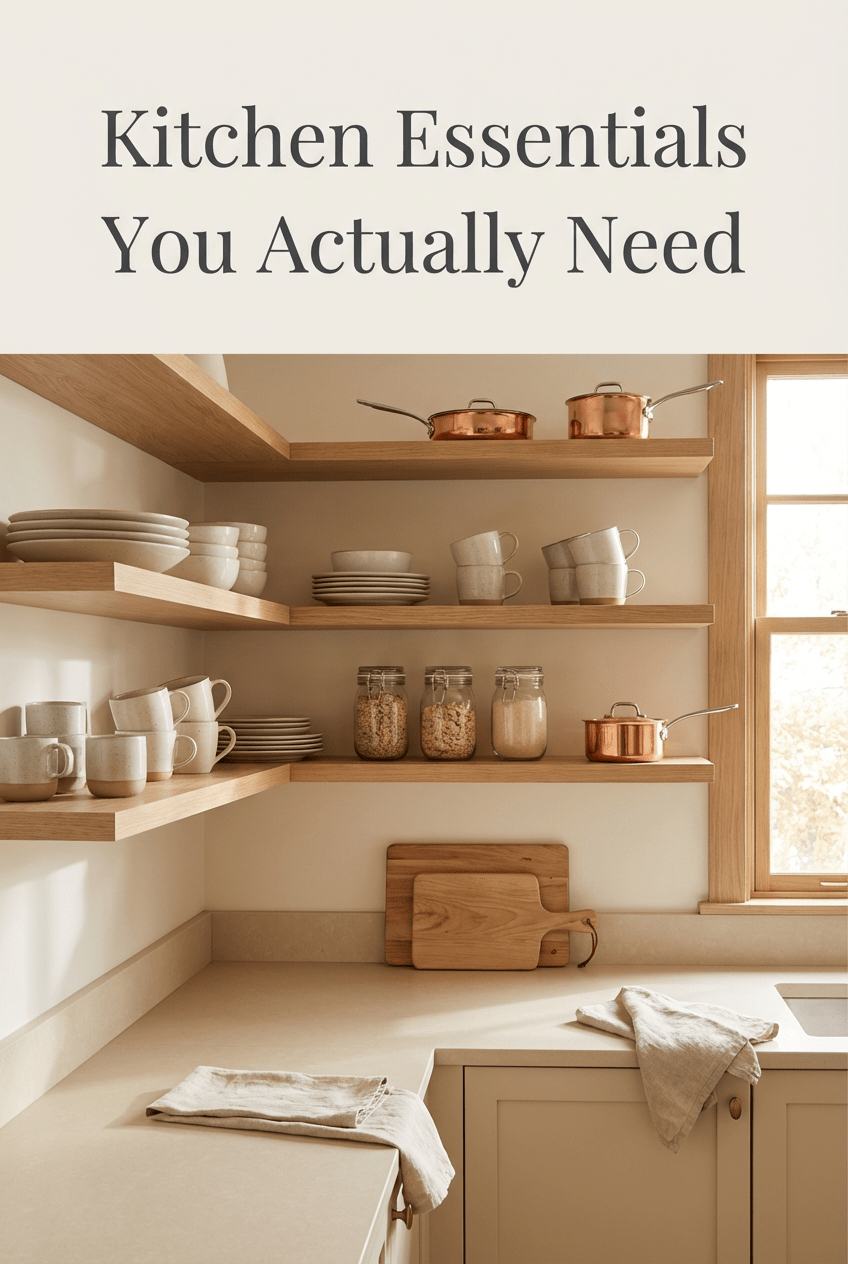
Four of everything is enough for most first apartments: four dinner plates, four bowls, four mugs and four glasses. On the open shelves in this photo, a simple white set looks calm and leaves space.
Plain white dishes are easy to replace piece by piece and go with everything. A 16-piece set costs about $30 to $60, and restaurant supply stores sell sturdy plates individually for a few dollars each.
Measure your cabinets before buying. Some apartment cabinets are shallow, and wide plates over 11 inches may not fit.
Add cutlery, a set of four forks, knives and spoons, and a few serving pieces as you need them.
4. Core utensils, in one drawer
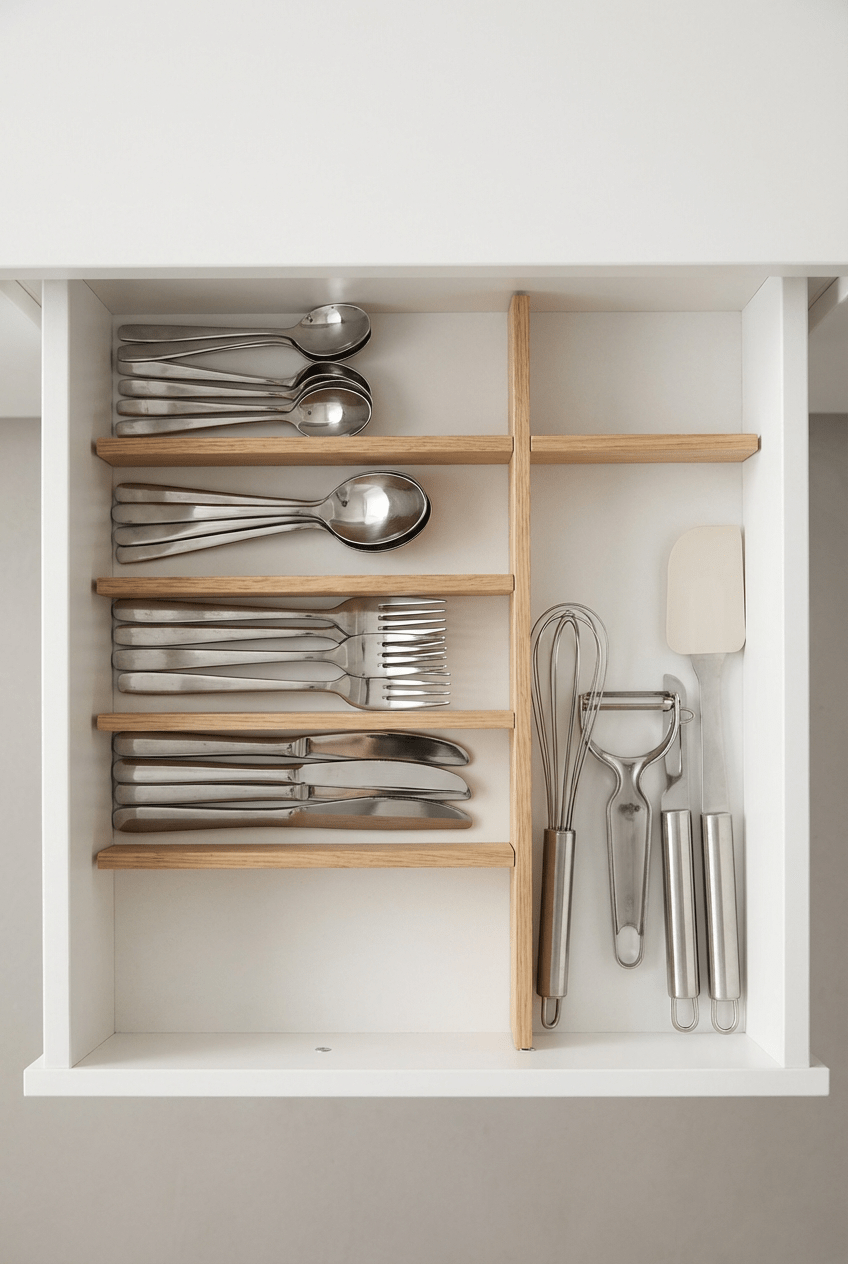
A short list of utensils covers almost everything you'll cook. The drawer in this photo holds cutlery on one side and the cooking tools on the other, each in its own slot.
A wooden or bamboo drawer divider, about $15 to $25, keeps everything sorted, so you can see at a glance when something is missing. Silicone-tipped utensils are safe on nonstick pans.
Skip the gadget aisle for now. A garlic press or an avocado slicer is nice but not needed; a knife does the same job.
- A flexible spatula and a wooden spoon
- A slotted spoon and a ladle
- Tongs
- A whisk
- A vegetable peeler
- A can opener
5. A compact dish rack
If the kitchen has no dishwasher, a dish rack is a daily essential. A compact rack, like the white one in the first photo, holds a day of dishes and drains into the sink.
Over-the-sink racks and roll-up racks that sit across the sink save counter space in tiny kitchens. A microfiber drying mat is the smallest option and folds away.
Empty the rack every day so it doesn't become permanent storage.
6. Storage containers that stack
A set of containers for leftovers and lunches saves money and food. Glass containers with snap lids go in the microwave and oven and don't stain; plastic ones are lighter and cheaper.
Choose one brand in two or three sizes so the lids fit and the containers nest. Ten pieces is plenty to start.
Glass jars for pasta and lentils, like the ones on the shelf in the first photo, keep dry goods fresh and make it easy to see what you have.
7. Measuring cups, spoons and a mixing bowl
Even if you cook by eye, baking and many recipes need accurate measures. A set of measuring cups, measuring spoons and a glass liquid measuring cup costs about $15 to $25.
Add one or two mixing bowls. Stainless steel bowls are light and unbreakable, and a set of nesting bowls takes up the space of one.
8. One or two small appliances
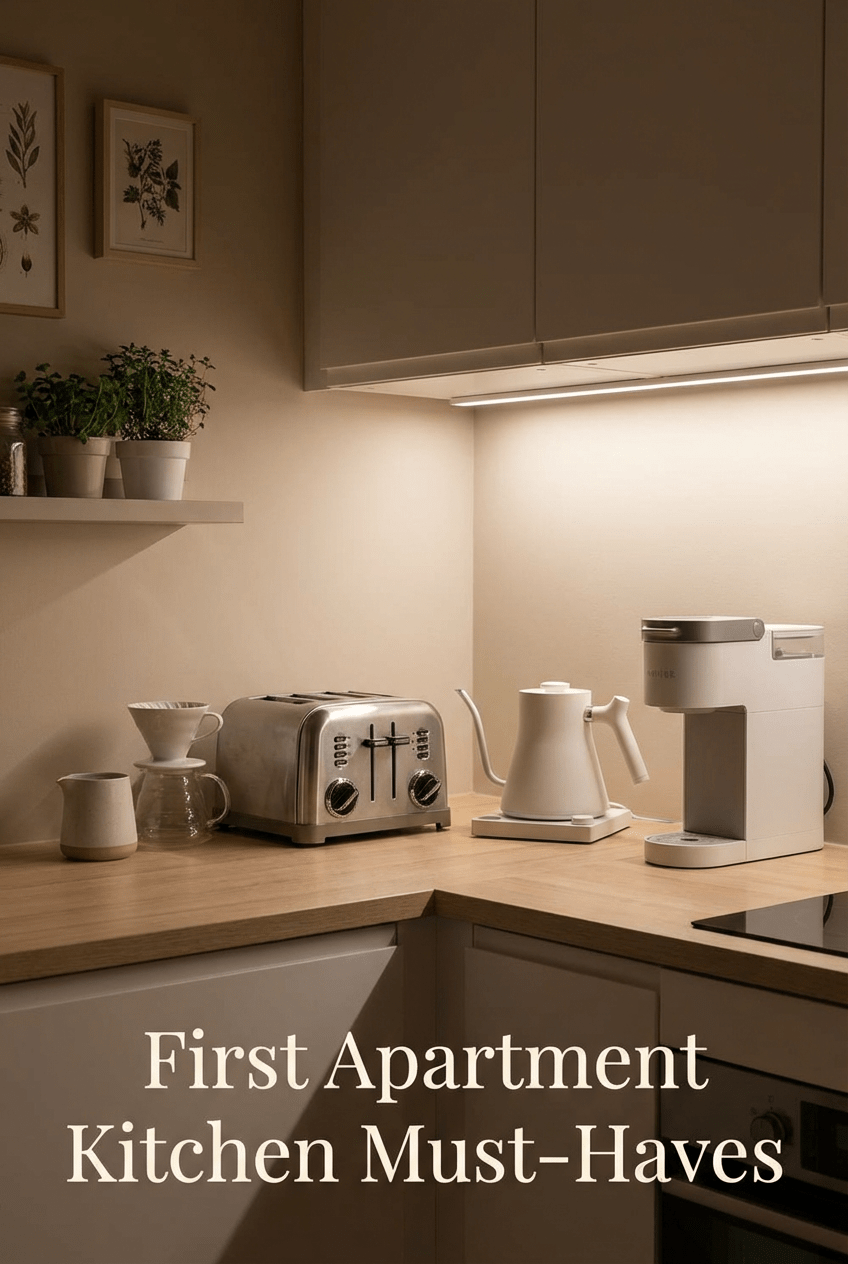
Small appliances fill counters quickly. Start with the one or two you'll use daily, usually a kettle and a coffee maker or a toaster. The counter in this photo has a toaster, a gooseneck kettle and a compact single-serve coffee maker, all lit by under-cabinet LED lights.
Multi-use appliances save space: a toaster oven that air-fries replaces a toaster and an air fryer, and an electric kettle doubles as a quick way to boil water for pasta.
Plug only one high-wattage appliance into an outlet at a time, and don't run kettles or toasters on extension cords. Unplug toasters when not in use.
Hold off on a blender or stand mixer until you know you'll use it every week.
9. A trash and recycling setup
Small kitchens rarely have a spot for a bin. A slim 10- to 13-gallon can fits beside a cabinet or at the end of a counter. A dual bin with two compartments handles trash and recycling in one footprint.
Under-sink pull-out bins keep trash out of sight if the cabinet is deep enough. Check your building's recycling rules, since sorting varies by city.
10. A simple cleaning kit
Keep a small kit under the sink. The items listed below cover almost all kitchen cleaning, and a small caddy keeps them together so you can carry them to the stove or the counter.
Replace sponges every couple of weeks, or microwave a damp sponge for one minute to kill bacteria between replacements. Never mix bleach with ammonia or vinegar, which produces toxic fumes.
Wipe the stovetop and counters after each meal while spills are fresh. Five minutes then saves scrubbing burnt-on food at the weekend.
- Dish soap and a sponge or dish brush
- An all-purpose spray cleaner
- Four to six microfiber cloths
- Two or three cotton dish towels
What to skip at first
Full cookware sets and single-use gadgets can wait. You'll find out in the first month what you're missing, and you'll have less to store.
Ask family for spare pans and dishes, and check thrift stores and local buy-nothing groups. Older stainless pans and cast iron from secondhand shops are often better quality than new budget sets.
Common questions
What kitchen items do you need for a first apartment?
Three pans, a chef's knife and cutting board, four of each dish, core utensils, a dish rack, storage containers, measuring tools, a kettle or coffee maker, a trash can and basic cleaning supplies.
How much does it cost to stock a first apartment kitchen?
Usually about $250 to $450 for the essentials bought new at budget to mid-range stores, and much less with secondhand or hand-me-down items.
Buy the essentials, cook for a few weeks, then add only what you missed. For more first-apartment help, see our guides to small kitchen organization and first apartment mistakes to avoid.