
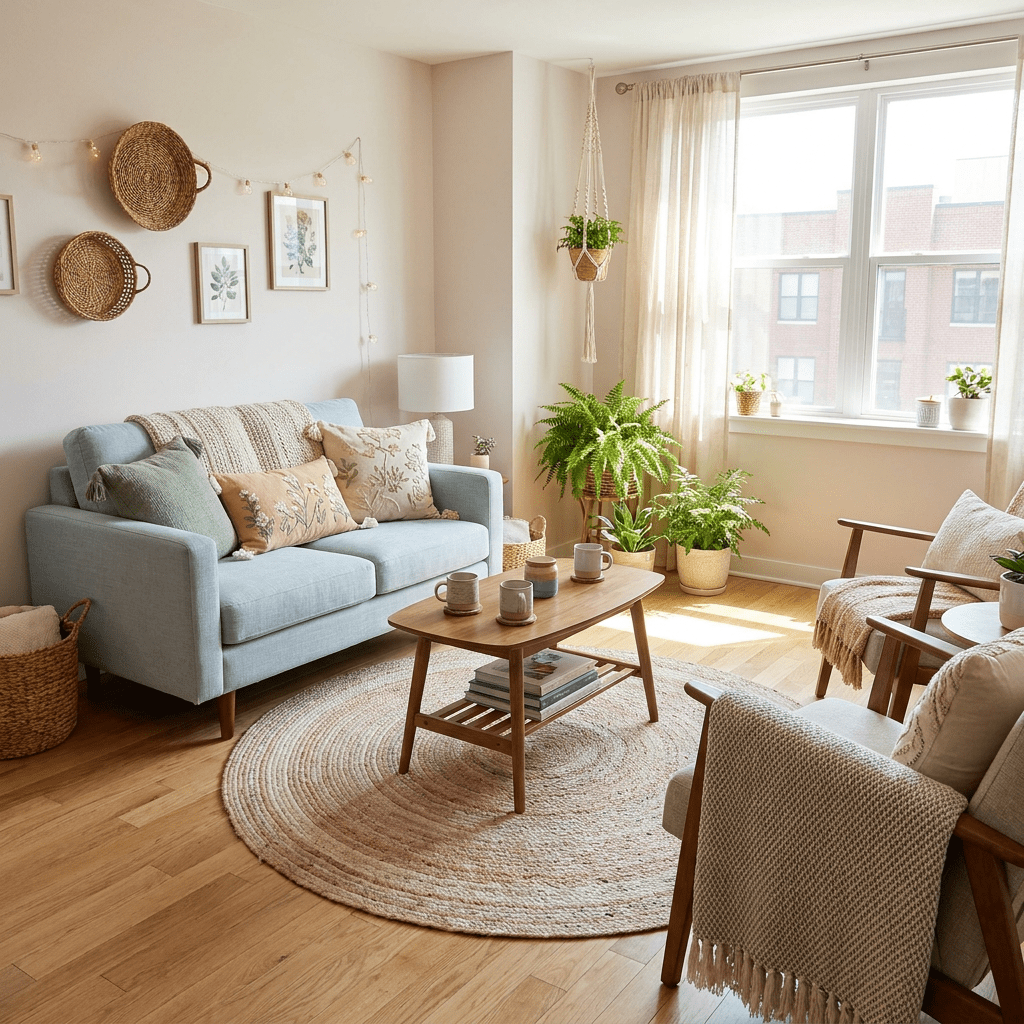
In a small living room, the rug decides whether the furniture looks like a group or a scatter of separate pieces. A rug that's too small is the most common mistake: it floats in the middle of the floor and makes the room look smaller, because your eye reads its edges as the edges of the space.
The four rooms in these photos each use a different approach, from layering two rugs to choosing one big enough for every chair. Before you shop, measure the seating area with a tape measure and mark the rug's outline on the floor with painter's tape. It's the quickest way to see whether a 5-by-8 or an 8-by-10 suits the room.
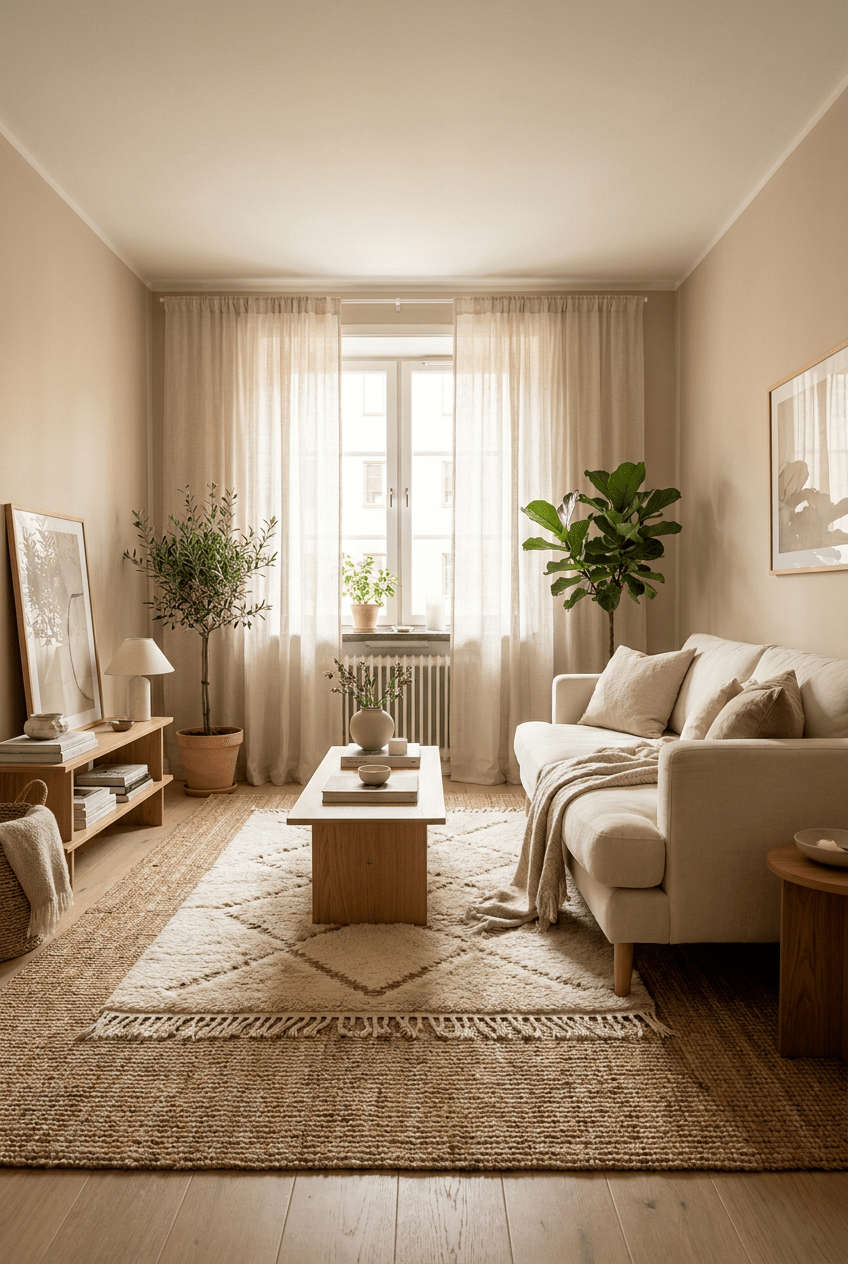
1. Layer a smaller rug over a larger jute one
Layering a smaller, softer rug over a larger flat one, like the cream fringed rug on jute in this photo, gives you size and comfort for less money. Big jute rugs are inexpensive, and the smaller top rug can be wool or a plush weave that would cost much more at full size.
Make the base rug large enough for the furniture, typically 8 by 10 feet, and the top rug about two sizes smaller, such as 5 by 7. Set the top rug slightly off-center or at a small angle for a relaxed look, or square it with the coffee table for a tidier one.
Jute is rough on bare feet and sheds a little at first, which is another reason to put a softer rug on top where you walk most. Use a thin rug pad under the base rug and rug tape under the top one so neither slides.
Keep both rugs in the same color family, like the cream and natural tones here, so the two read as one rug rather than a pile.
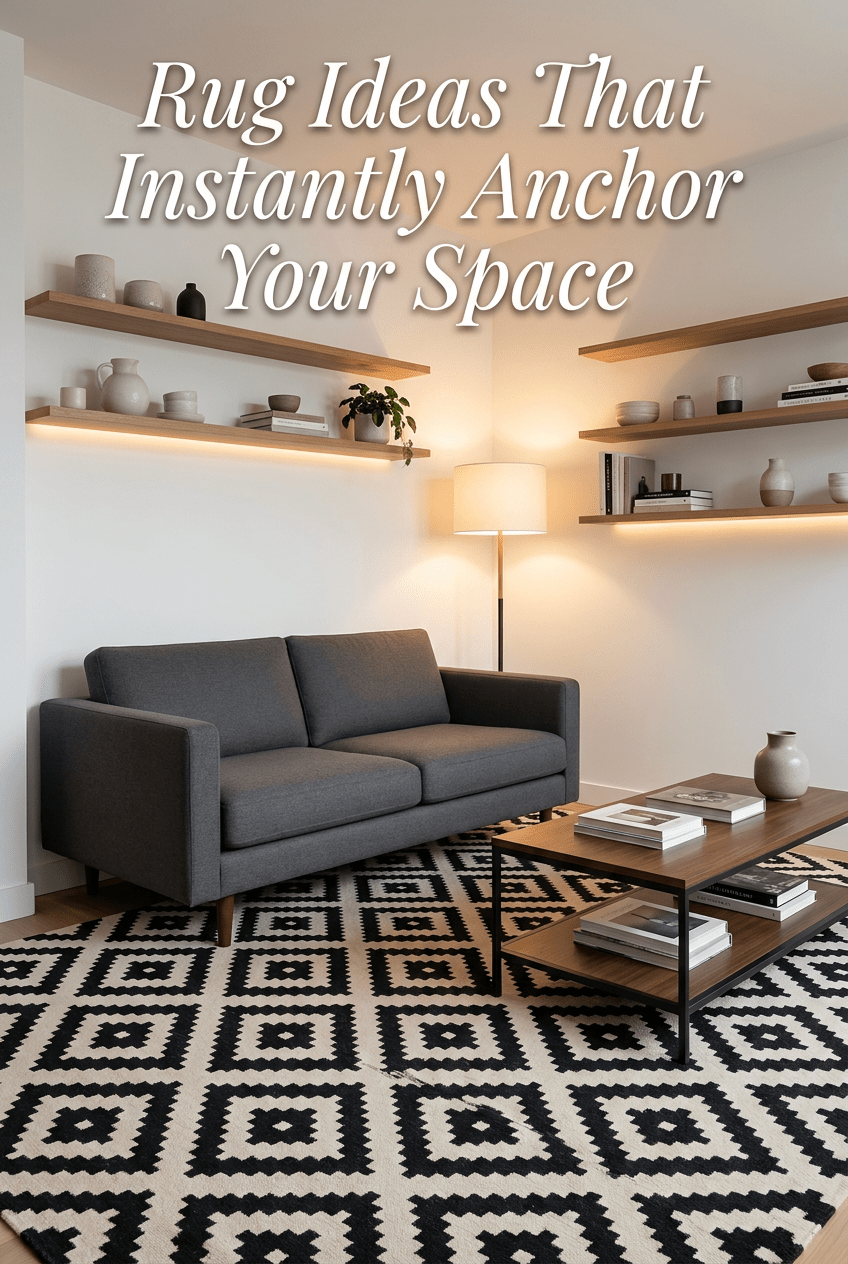
2. A bold geometric pattern
A strong pattern, like the black and white diamond rug in this photo, can carry a small room on its own. With plain furniture and white walls, the rug becomes the focus and the room still looks uncluttered.
Bold patterns work best when everything else is simple. Keep the sofa a solid color, like the charcoal one here, and limit other patterns to a pillow or two.
High-contrast rugs hide dirt better than plain light ones, which suits a busy living room. Flat-weave cotton or polypropylene versions are easy to clean and often washable.
If you rent and the floors are a color you dislike, a large patterned rug covers most of them and changes the room more than any other single purchase. Check how the pattern looks from the doorway, since that's how you'll see it most.
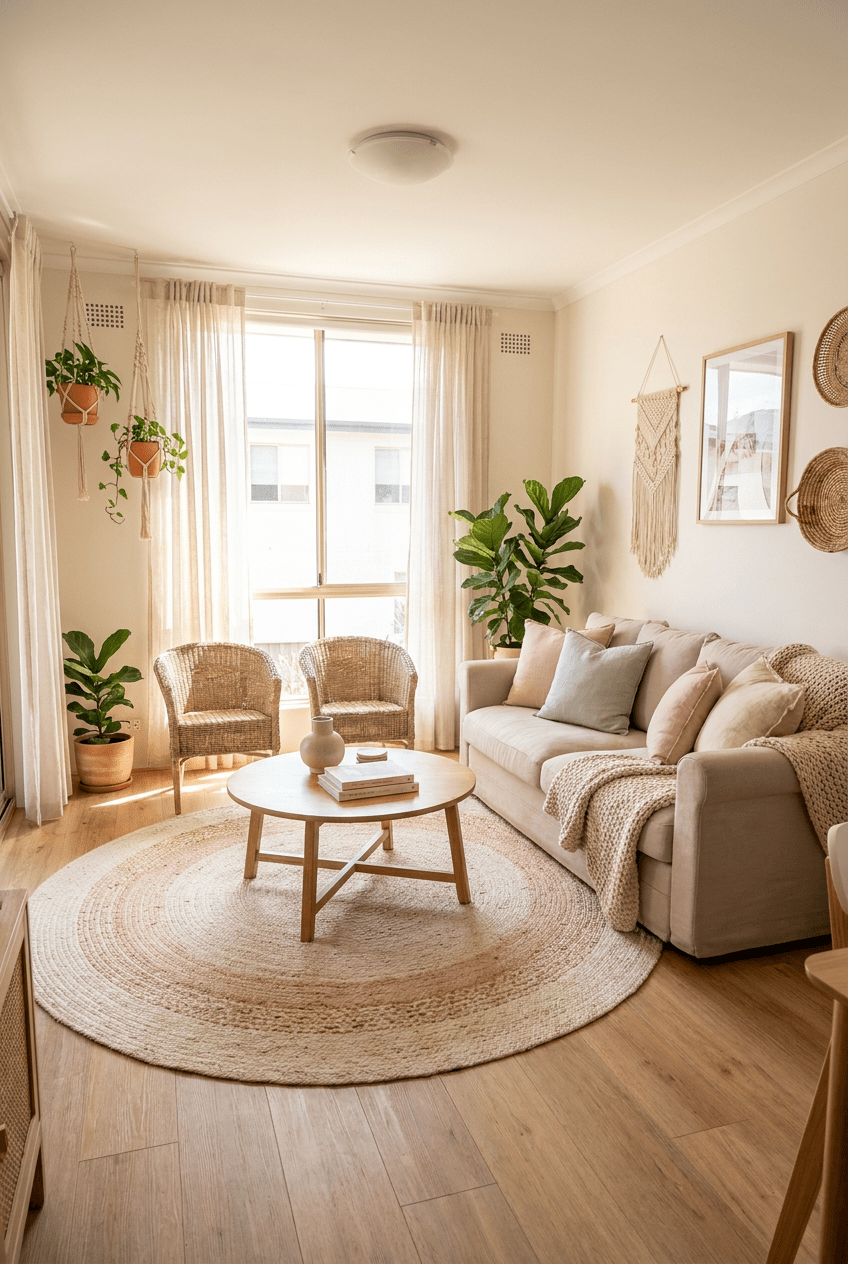
3. A round rug for a tight layout
A round rug under a round coffee table, like the jute pair in this photo, softens a boxy room and makes it easier to walk around the seating. It's especially useful in a square room or a corner layout where a rectangle leaves awkward gaps.
Round rugs between 5 and 8 feet across fit most small living rooms. Size it so the front legs of the chairs and sofa sit on the edge, or so it extends at least 12 inches beyond the coffee table on every side.
Round rugs also work well in reading corners and entries, where a rectangular rug would block a door or a walkway.
Jute and other natural-fiber round rugs can curl at the edges at first. Lay them flat with heavy books on the edges for a day or two, or reverse-roll them overnight.
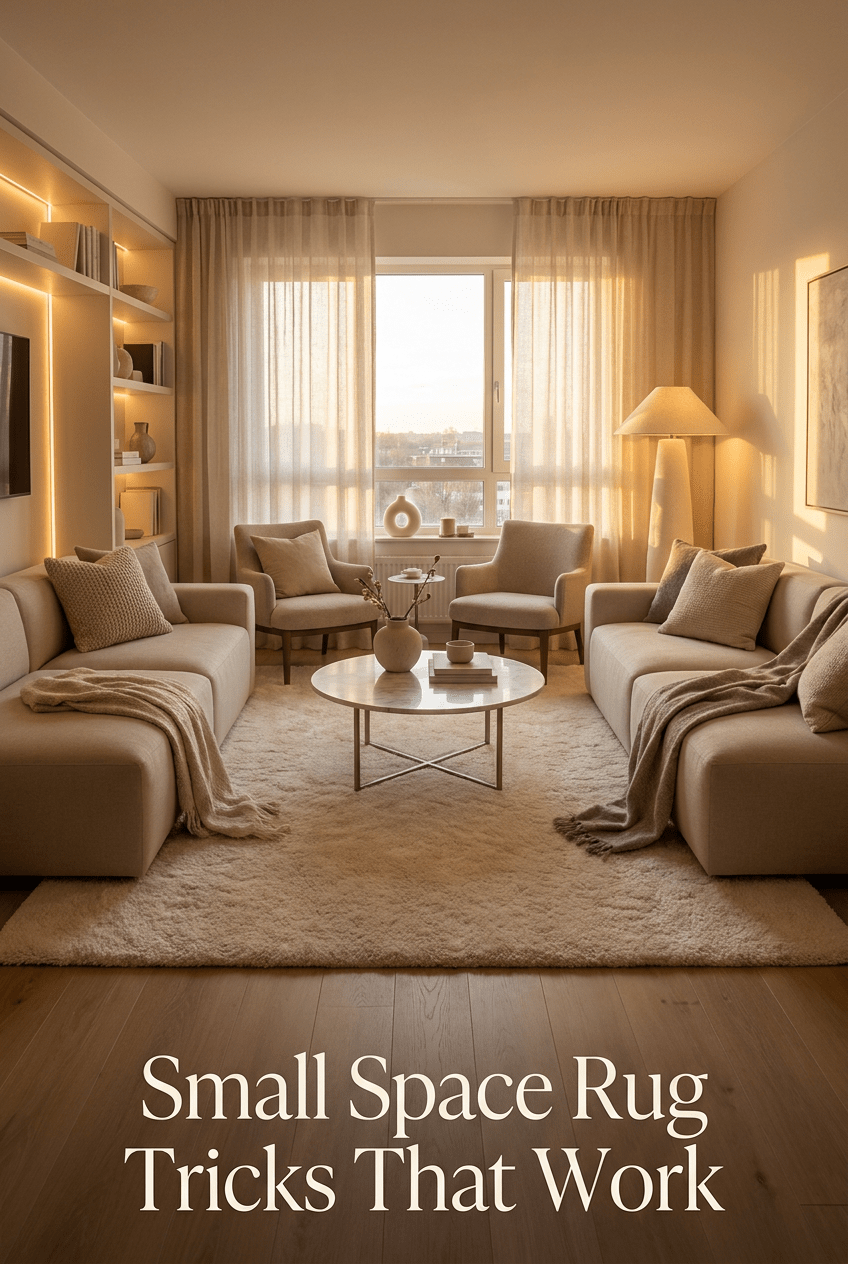
4. Go bigger than you think
It sounds backward, but a larger rug makes a small room look bigger. In this photo, every piece of seating, two sofas and two armchairs, sits on one large cream rug, and the room looks calm and spacious.
Aim for a rug that leaves 8 to 18 inches of bare floor between its edges and the walls. In a 12-by-14-foot room, that's usually an 8-by-10. In a narrower room, a 6-by-9 often fits better than a 5-by-8.
If a big rug in wool is out of budget, choose a large jute, sisal or polyester rug instead. The size makes more difference than the material.
5. A low pile or flat weave
Thick, high-pile and shag rugs feel soft, but in a small room they can look heavy and make doors drag. A low pile, under about half an inch, or a flat weave keeps the floor looking light and lets doors swing over it.
Low-pile rugs are also easier to vacuum and don't trap as many crumbs. If you want softness, add a plush rug pad underneath; it makes a thin rug feel much thicker.
Flat weaves also suit homes with robot vacuums, which can get stuck on thick or fringed rugs.
6. A vintage or vintage-style rug
A faded vintage or Persian-style rug adds color, pattern and a sense of history, so the room needs fewer accessories. Worn, muted patterns blend with most furniture styles.
True vintage rugs cost more but last for decades. Machine-washable vintage-look rugs cost much less and suit homes with pets or children. Check the fiber: wool wears well, while thin polyester versions can look flat after a year.
Look at secondhand rugs in person or ask for close-up photos of the back. Even wear and tight knots are good signs; holes, moth damage and strong smells are not.
7. A light rug for a dark room
In a dark or north-facing living room, a cream, ivory or light gray rug reflects light and makes the floor look brighter. The light rugs in the first and fourth photos brighten rooms with dark wood floors.
Light rugs show dirt, so choose a washable rug or a durable synthetic, and take shoes off at the door. A pattern with some texture or tone variation hides marks better than a solid color.
8. A small rug to mark a second zone
In a studio or an open living room, a small rug can mark a reading corner, a desk area or the entry, separate from the main seating rug. The round rug in the third photo could do the same for a corner with two chairs.
Use a different shape or a smaller size than the main rug, and keep the colors related so the room still looks like one space. Rug tape keeps small rugs from sliding.
9. Get all the legs on, or at least the front legs
The basic rule for placement: ideally every leg of every seat sits on the rug, as in the fourth photo. If that's not possible, put at least the front legs of the sofa and chairs on it. A rug with furniture floating around its edges looks too small.
Center the rug on the seating area, not on the room. If the sofa is against a wall, the rug can start a few inches in front of it, with the front legs on.
Don't put just the coffee table on a rug and leave the seating off. That's the layout that makes a room look smallest.
Rug pads and care
A rug pad stops slipping, protects the floor and makes a rug last longer. Use a thin felt and rubber pad for hard floors, cut 1 to 2 inches smaller than the rug on every side so it doesn't show.
Vacuum once or twice a week, rotate the rug every few months so it wears evenly, and blot spills right away rather than rubbing. Avoid all-rubber pads on vinyl or some wood finishes, which can discolor the floor.
Common questions
What size rug should go in a small living room?
Usually 5 by 8 feet at minimum and 8 by 10 if the room allows, leaving 8 to 18 inches of bare floor around the edges. At least the front legs of the sofa and chairs should sit on it.
Should a rug go under the sofa?
Yes, at least the front legs. A rug that stops short of the sofa makes the seating look disconnected and the room look smaller.
Tape the outline on the floor before you buy, and size up if you're unsure. For more ideas, see our guides to cozy living room textures and living room layouts for studio apartments.