
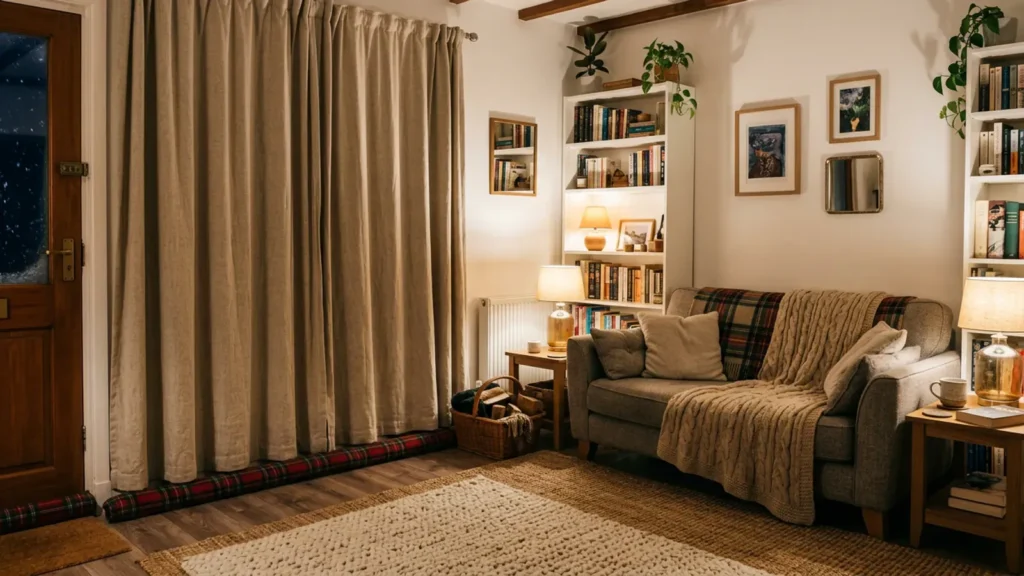
Learning how to winterize your apartment is different when you rent. You can’t rip out old windows, blow insulation into the walls or caulk everything shut, and anything you do has to come off cleanly when you move out. Most of the cold in a small apartment comes from a handful of leaks you can fix with removable, inexpensive materials.
Work through the ideas below roughly in order: find where the cold is coming in, seal the biggest gaps, then add the soft layers that hold warmth in. Most of it takes a weekend afternoon, and most of the fixes cost under $25 each.
1. Find the drafts before you buy anything
Drafts aren’t always where you expect. On a cold, windy day, move slowly around the apartment with the back of your hand held close to likely leaks: window frames and sashes, the bottom of the front door, electrical outlets and switch plates on outside walls, baseboards, and around any pipes or a window air conditioner. A strip of tissue paper held near a gap will flutter if air is moving.
Make a quick list as you go and note which leaks are biggest. In most apartments the windows and the front door account for the worst of it, so that’s where your money should go first. Skip the old trick of using a lit candle to find drafts, since it’s an easy way to get a flame too close to curtains.
Tip: Do your draft check at night with the lights off and a flashlight shining from outside the gap; light leaking through usually means air is too.
2. Seal drafty windows with removable insulation film
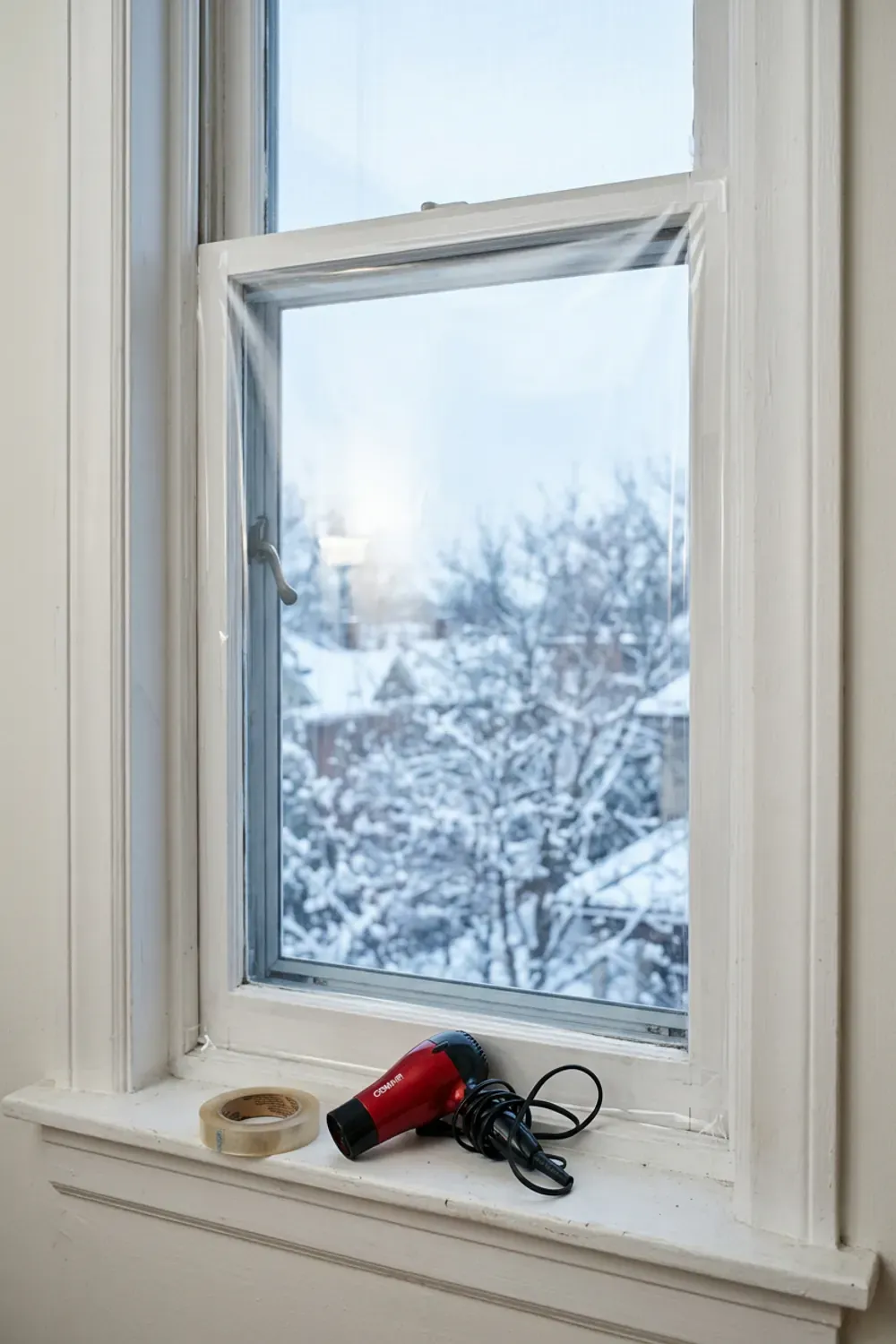
Window insulation film is the single most effective renter fix for old, leaky windows. A kit includes clear plastic sheeting and double-sided tape: you stick the tape around the inside of the window frame, press the film onto it, then warm it with a hair dryer until it shrinks tight and nearly invisible. The trapped layer of still air cuts drafts and the cold feeling you get sitting near the glass.
A multi-window kit usually costs somewhere around $10 to $25. Before you commit, test the tape on a hidden corner of the frame, because on some older paint it can pull flecks off when it’s removed. In spring, peel the tape back slowly at a low angle, and warm stubborn spots with the hair dryer first so the adhesive lets go cleanly.
3. Add weatherstripping you can peel off
For gaps around window sashes and door frames, removable weatherstripping does the job without permanent caulk. Rope caulk is a soft, putty-like strip you press into cracks with your fingers, and it pulls out in one piece in spring. Self-adhesive foam tape works on the edges of sashes and the inside of door frames where they close.
One important rule: keep at least one window in each bedroom able to open, and don’t seal any window that’s a fire escape route. Removable products make this easy, because you can seal the windows you never use tightly and leave the escape window with lighter weatherstripping only. If your lease has rules about modifications, rope caulk and foam tape are usually fine, but it’s worth a quick check.
4. Hang thermal curtains and use them daily
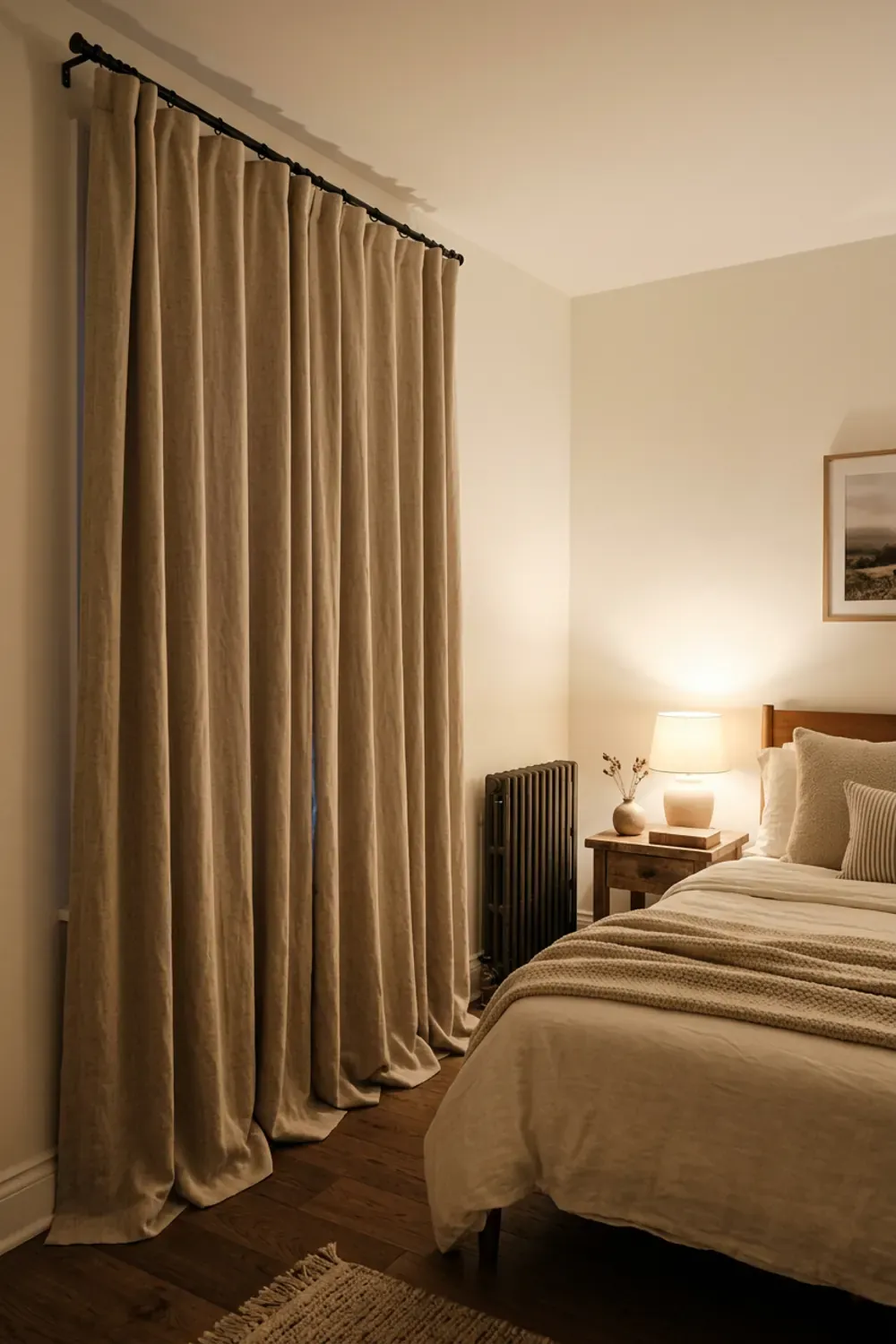
Thermal-lined curtains add a thick layer of fabric between you and cold glass. Hang them high and wide, a few inches above the frame and past each side, and let them reach the floor so cold air can’t spill out underneath. If you can’t drill, a tension rod inside the window recess or a no-drill rod that hooks onto the frame works for lighter panels.
How you use them counts as much as what you buy. The U.S. Department of Energy suggests opening curtains on south-facing windows during the day to let the sun warm the room, then closing them at night to keep that heat in. Keep curtains from draping over radiators or heating vents, though, or you’ll trap the heat behind the fabric.
5. Block the gap under your doors
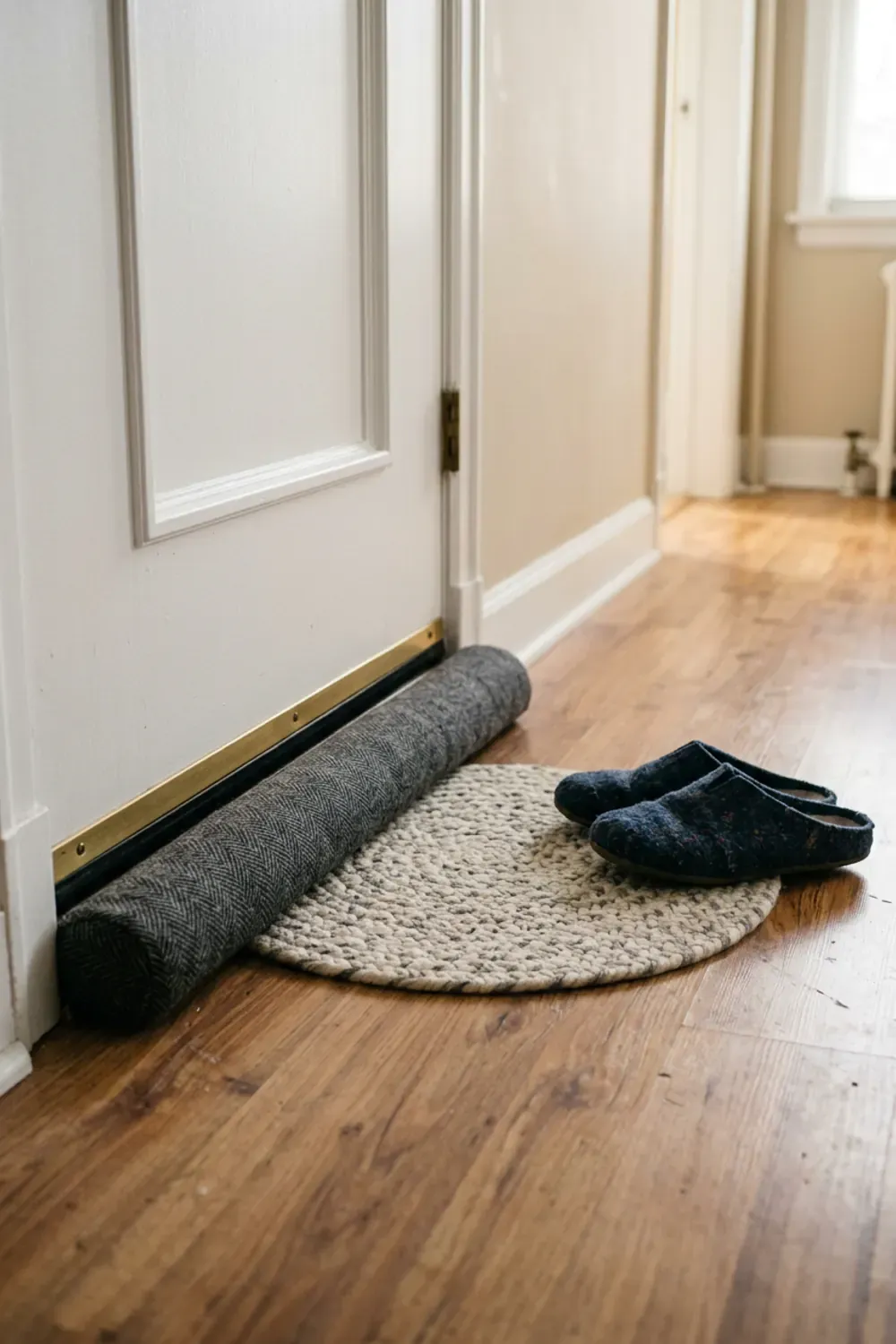
The gap under an entry door can let in a surprising amount of cold air. A fabric draft stopper that lies against the bottom of the door is the easiest fix, and double-sided versions that slide onto the door move with it as it opens and closes. You can make one for free from an old pair of jeans or a sleeve sewn shut and filled with dry rice or beans.
Interior doors matter too. Closing off a room you’re not using, like a spare bedroom or a bathroom with an old window, and putting a draft stopper under its door keeps heat in the rooms you actually live in. For the front door, an adhesive door sweep is another option, but check your building’s rules first, since some landlords want fire doors left unmodified.
6. Layer rugs over cold floors
Bare floors, especially tile, laminate and floors over an unheated garage or basement, make a room feel colder than the thermostat says. A thick area rug with a felt or rubber pad underneath adds a layer of insulation right where your feet are. Wool and dense, high-pile rugs hold warmth best, and layering a smaller plush rug over a flat jute one adds texture and warmth at the same time.
Put rugs where you stand or sit longest: beside the bed, under the coffee table and in front of the sofa. A runner along a cold hallway helps too. If you’re picking new rugs, these living room rug ideas help you choose a size that suits a small room.
7. Seal outlets and switch plates on outside walls
Electrical boxes on exterior walls are often uninsulated holes behind a thin plastic plate. Pre-cut foam gaskets fit behind the cover plate and stop the draft, and a pack usually costs just a few dollars. Turn off the power to that outlet at the breaker first, remove the single screw holding the plate, set the gasket in place and screw the plate back on without touching anything inside the box.
For outlets you never use, plastic safety plugs block the remaining openings. This is one of those fixes that sounds too small to matter until you hold your hand near an exterior outlet on a windy day and feel the air moving. It’s completely invisible and leaves no trace when you move.
8. Arrange furniture to hold heat, not block it
Where your furniture sits changes how warm a room feels. Pull the bed and sofa a little away from cold outside walls and windows, and put tall, solid pieces like bookcases and wardrobes against outside walls instead, where they act as an extra buffer. Above all, keep radiators, baseboard heaters and vents clear so warm air can circulate.
If you have a ceiling fan, use it in winter too. According to the Department of Energy, reversing the motor so the blades turn clockwise at low speed pushes warm air that collects near the ceiling back down into the room. Most fans have a small direction switch on the motor housing.
9. Use space heaters the safe way
A small space heater can warm the room you’re in so you don’t have to heat the whole apartment, but heating equipment is one of the leading causes of home fires in winter. The U.S. Fire Administration recommends keeping anything that can burn at least 3 feet away from a heater and plugging it directly into a wall outlet rather than into an extension cord or power strip.
Choose a model with automatic tip-over and overheat shut-off, turn it off when you leave the room or go to sleep, and keep it away from curtains, bedding and the path where people walk. Check your lease too, since some buildings restrict certain types of heaters. And make sure your smoke and carbon monoxide alarms work before the heating season starts.
- 3 feet of clear space on every side
- Plugged straight into the wall, never a power strip
- Tip-over and overheat shut-off built in
- Off when you leave the room or go to bed
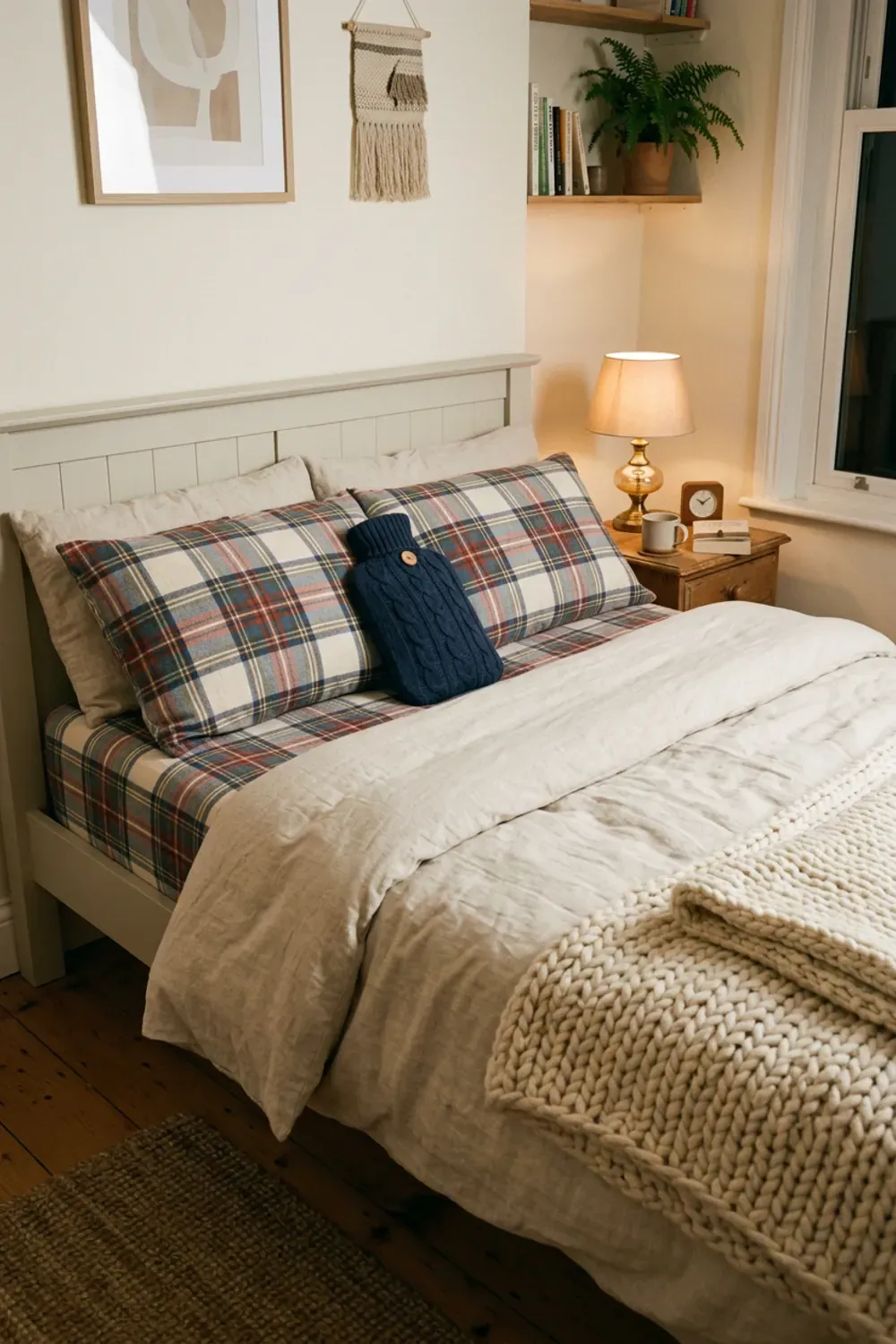
10. Winterize your bed, and report what you can’t fix
The cheapest way to stay warm at night is to warm the bed, not the room. Brushed cotton flannel sheets feel warm the moment you get in, a wool blanket over the duvet traps heat, and a hot water bottle at your feet costs a few dollars. If the bed sits under a window, move it to an inside wall for the season. For more ways to make a bedroom feel snug, try these cozy bedroom canopy ideas, which add a warm layer around the bed itself.
Finally, remember that some problems are your landlord’s to fix. Broken window seals, a door that doesn’t close properly, or heating that can’t keep the apartment comfortable should be reported in writing, ideally with photos and dates. Many cities and states set minimum indoor temperatures that landlords have to meet during the heating season, so check your local rules if the heat isn’t keeping up.
Winterizing an apartment as a renter isn’t about big projects. It’s a stack of small, removable fixes: film on the worst windows, weatherstripping where air sneaks in, thermal curtains you actually open and close, draft stoppers, rugs and a well-dressed bed. Together they can make a cold apartment feel completely different.
Start with the biggest leak on your list this weekend, then add one or two fixes each week as the weather turns. When you’re ready to make the space feel cozy as well as warm, these winter apartment decor ideas and renter-friendly upgrades pick up where this list leaves off.