
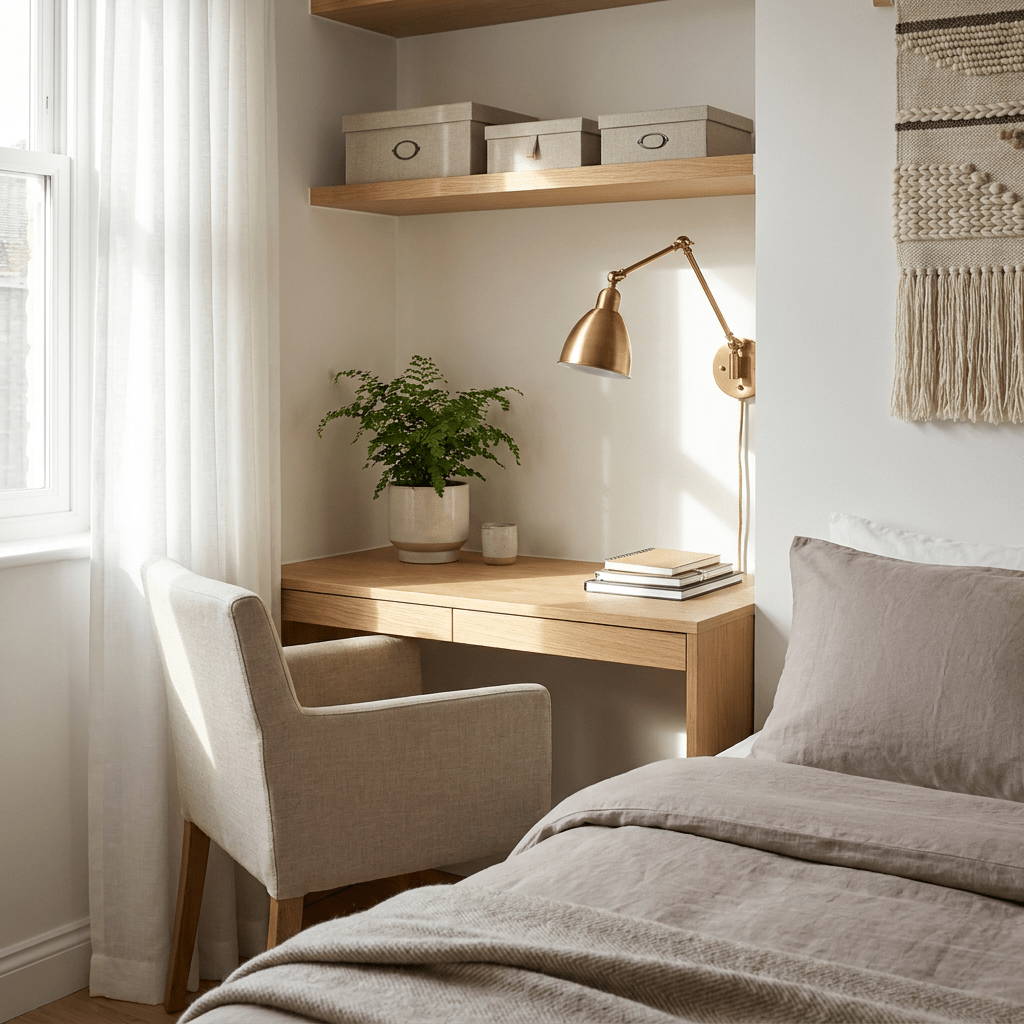
Some people can work with papers stacked around them. If you're not one of them, a cluttered desk is a constant low-level distraction, and in a small apartment, where the office may be a corner of the bedroom, the mess follows you after work too.
Minimalism here isn't about owning as little as possible. It's about a setup where things have a place out of sight, so the desk stays clear without daily effort. The four workspaces in these photos each have very little on show. The ten ideas below cover how they get there, starting with the furniture and ending with the habit that keeps it that way.
1. A floating or wall-mounted desk
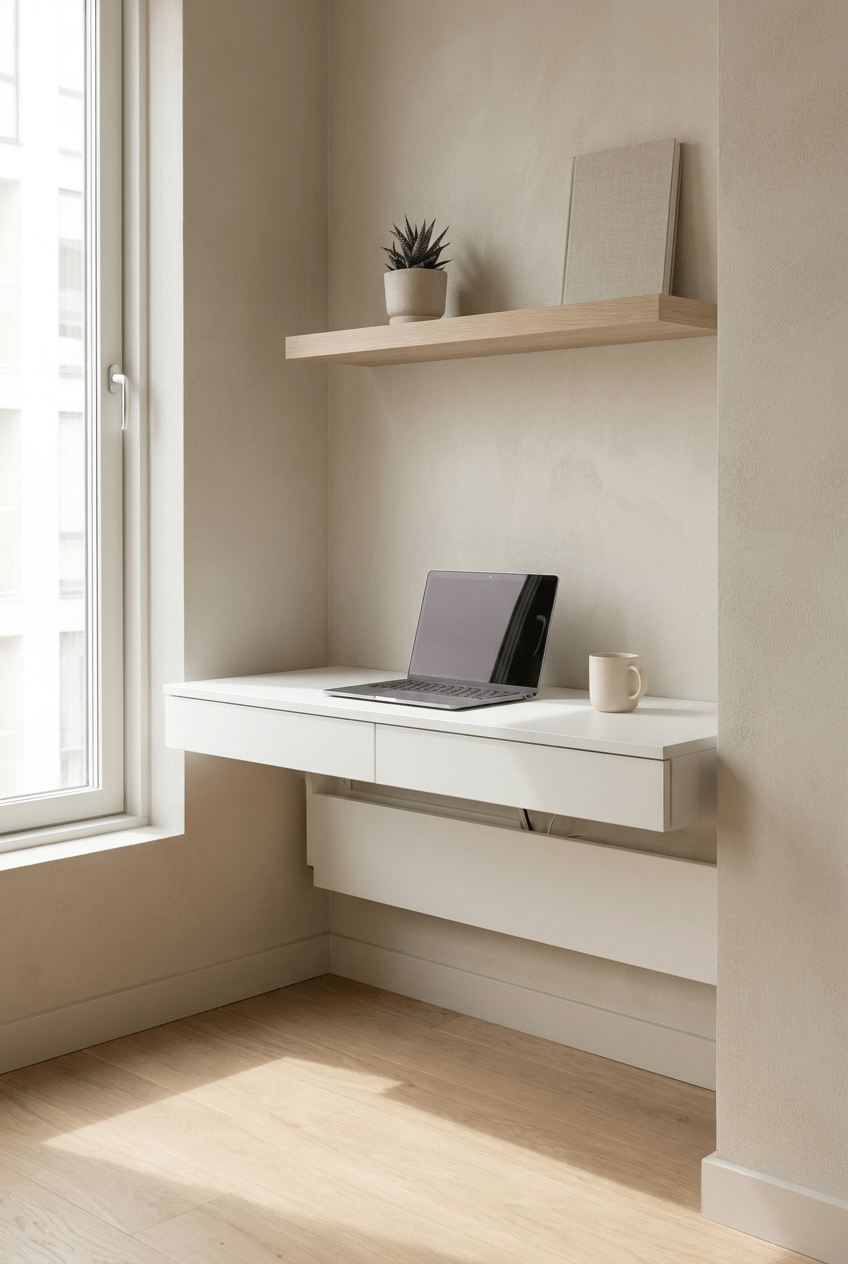
A desk mounted to the wall, like the white one by the window in this photo, leaves the floor clear underneath, which makes a small room look less crowded. With a single slim drawer, there's room for a laptop and a mug and not much else, which is the point.
Wall-mounted desks are typically 30 to 48 inches wide and 18 to 24 inches deep. Mount the surface 28 to 30 inches from the floor for a standard chair, and screw the brackets into at least two studs, since people lean on desks.
In a rental, check your lease before drilling. A narrow freestanding desk with thin legs gives a similar light look without wall fixings.
A single floating shelf above the desk, as here, holds one plant and a notebook. Resist adding a second shelf until you know you need it.
2. Hide the cables
Cables are the biggest source of visual mess on most desks. A cable tray screwed or clipped under the desk holds the power strip and the extra length of every cord, so only one cable runs down to the outlet.
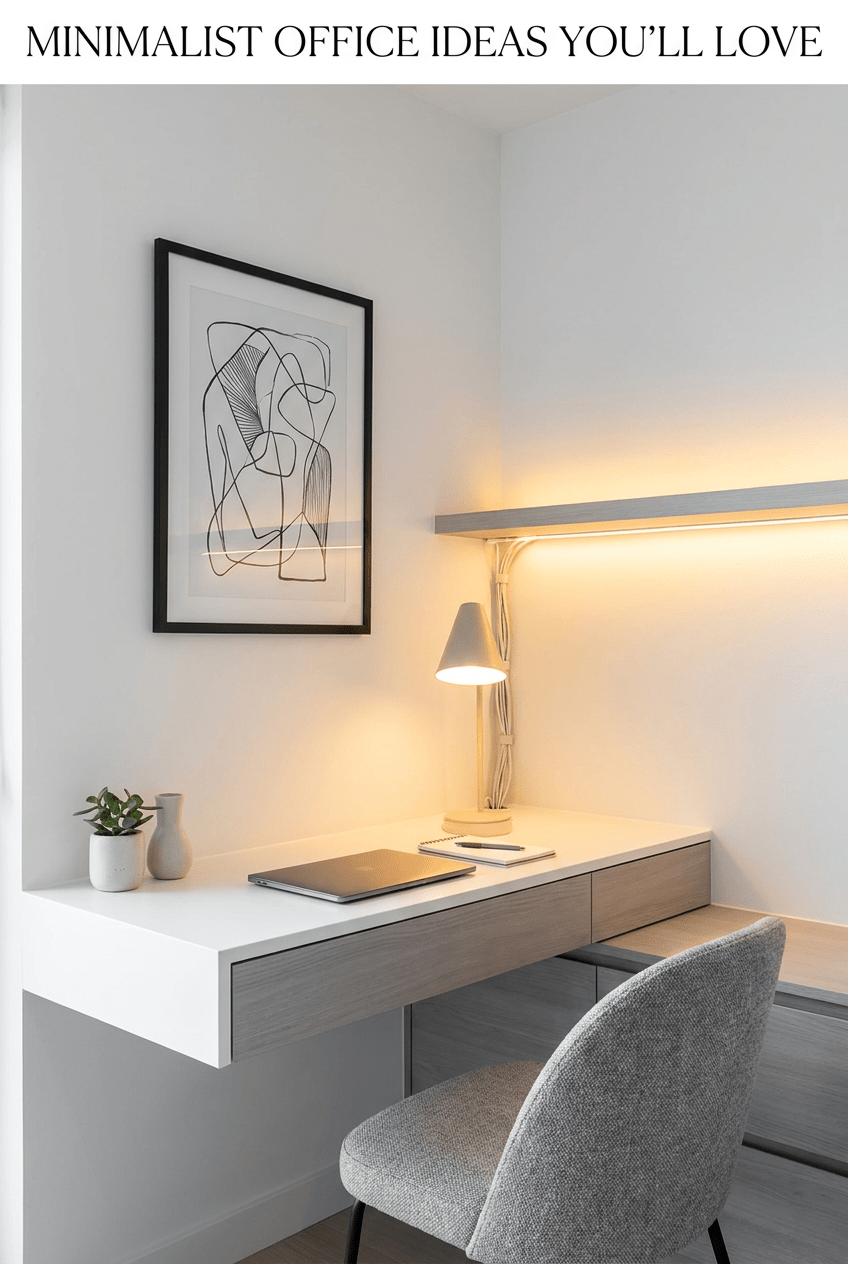
Under-desk trays cost about $15 to $35. Add a few reusable velcro ties to bundle cords, and a cord cover painted the wall color for any cable that runs up or down the wall. The LED strip under the shelf in this photo is a good example of a light that needs one short, hidden cord.
Don't overload the power strip, and leave some air around chargers and adapters in the tray, since they get warm. A surge protector is worth the few extra dollars for a computer and monitor.
A wireless keyboard and mouse remove two more cables from the desk surface.
3. A calm, neutral palette
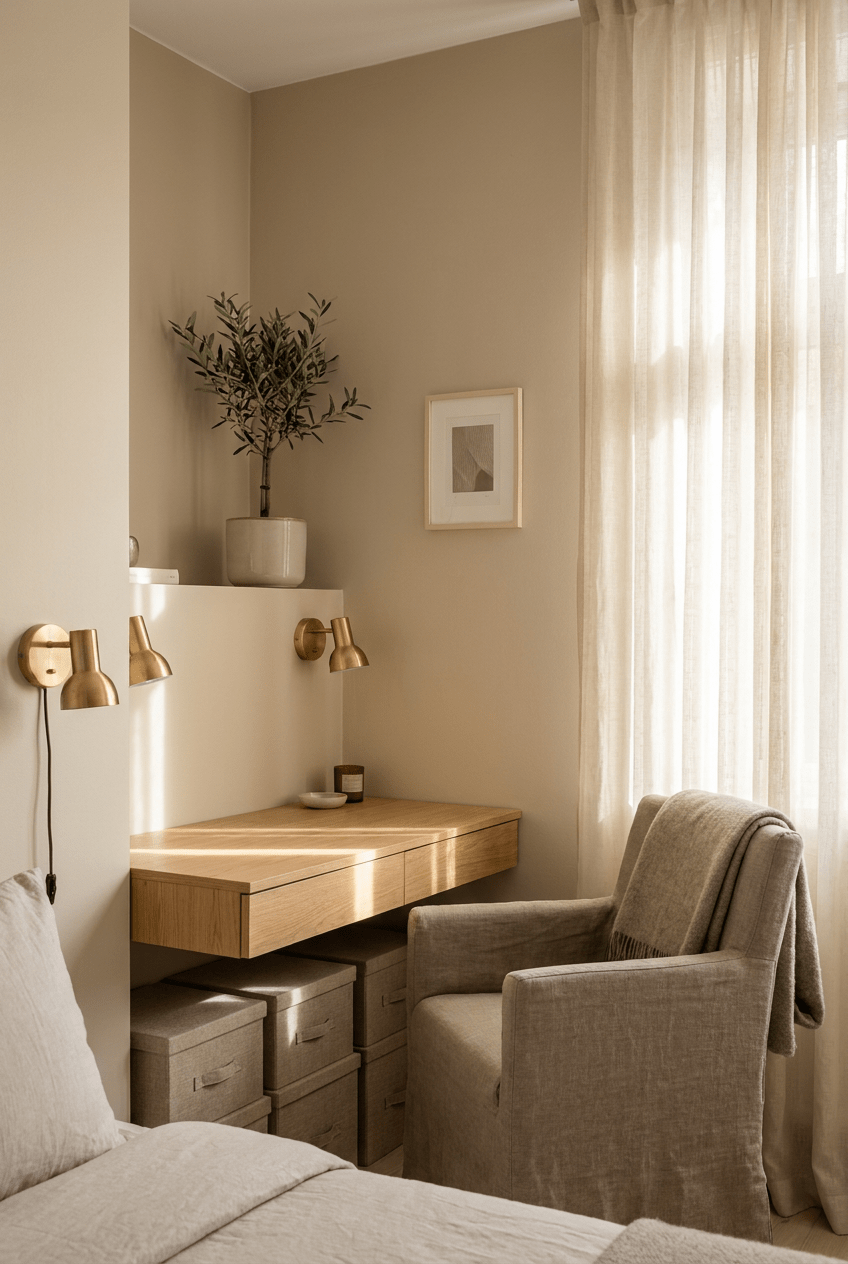
A small office in one family of colors looks tidier even when there's some mess. The corner desk in this photo uses beige walls, light oak and linen, so the eye moves across the room without stopping on clashing objects.
Pick two or three colors, a light neutral for the walls, a wood tone and one accent like black or brass, and choose desk accessories that match. The brass wall sconces here add a little warmth without breaking the palette.
Neutral doesn't have to mean white. Warm beige, greige and soft taupe feel more comfortable for long working hours than stark white, which can look clinical.
The lidded boxes under this desk match the walls, so the storage nearly disappears.
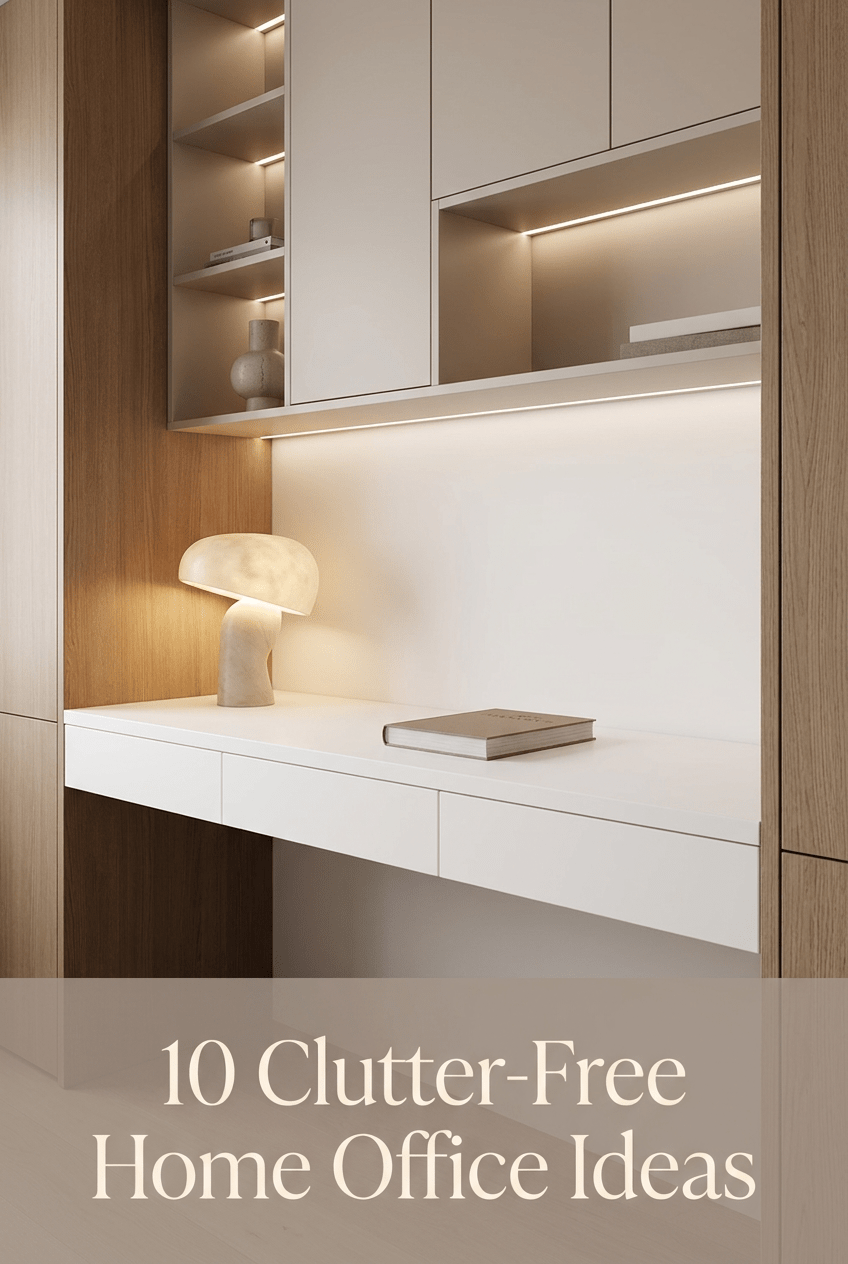
4. Closed storage
Open shelves fill up. Closed cabinets and drawers, like the built-in setup in this photo, let you keep printers, files and supplies close by without seeing them. The few open niches, lit from above, hold a single vase or book each.
You don't need a built-in to get the look. Flat-pack wall cabinets or a slim cabinet beside the desk work well, and a rolling drawer unit tucks under the desk. Lidded boxes and magazine files on an existing shelf do the same job for less.
Give every category its own home: one drawer for cables and chargers, one for stationery, one box for papers to deal with. When everything has a place, clearing the desk takes seconds.
5. Cut down on paper
Paper piles up faster than anything else. Scanning bills, receipts and documents with your phone and storing them in cloud folders removes most of the need to keep paper at all.
For paper you do need to keep, use one slim file box or accordion file with labeled sections. Sign up for paperless billing where you can. A single inbox tray on the desk catches incoming mail until you deal with it once a week.
Shred anything with account numbers or your Social Security number before recycling it. A small cross-cut shredder costs about $30 to $50 and fits under most desks, or many office supply stores run shredding services for a small fee.
6. Keep only the essentials on the desk
Decide what lives on the desk permanently, usually a laptop or monitor, a lamp, a notebook and a pen. Everything else goes in a drawer or on a shelf after you use it.
A small tray holds the few things that stay out. If something sits on the desk unused for a week, it doesn't belong there.
A monitor arm or riser lifts the screen to eye level and frees up desk space underneath. Set the top of the screen at or just below eye level, about an arm's length away.
7. One or two shelves for display
A minimal office still benefits from something personal to look at. One floating shelf with a plant, a book and a print, like the shelf in the first photo, adds interest without clutter.
Limit it to three objects per shelf and leave space between them. Hang shelves into studs or with anchors rated for the load.
Choose display pieces that you actually like looking at during a long call or a slow afternoon, such as a postcard from a trip or a small ceramic piece. One meaningful object does more for the room than five decorative ones bought to fill space.
8. A simple chair that's still comfortable
Office chairs can look bulky in a small room. An upholstered task chair with a simple shape, like the gray one in the second photo, looks calmer than a mesh chair with lots of levers.
Comfort still comes first if you work long hours. Check that the seat height adjusts, that your feet rest flat and your thighs are level, and that the back supports your lower spine. A small lumbar cushion helps on a simpler chair.
Push the chair fully under the desk at the end of the day. A tucked-in chair takes up less floor and makes the corner look finished, especially when the office shares a room with the bed or sofa.
9. Lighting that stays out of the way
Wall sconces and under-shelf LED strips, like those in the photos, light the desk without taking any desk space. A slim desk lamp with a small base is the next best option.
Use bulbs around 3000K to 4000K for focused work, a little cooler than you'd want in the living room. Position the light to the side of the screen, not behind it, to avoid glare.
Plug-in sconces avoid new wiring; cover the cord with a paintable cord cover so it disappears into the wall.
10. A five-minute reset at the end of the day
No setup stays clear on its own. Spend five minutes at the end of each workday putting papers in the inbox tray, pens in the drawer and cups in the kitchen, and wiping the desk.
In a bedroom or living room office, a clear desk also helps you stop working. Closing the laptop and putting it in a drawer marks the end of the day.
Common questions
How do you make a small home office look less cluttered?
Hide cables in an under-desk tray, use closed storage instead of open shelves, keep only daily essentials on the desk and stick to a short color palette.
What height should a desk be?
Usually 28 to 30 inches from the floor for most adults with a standard chair. Your elbows should be at about 90 degrees when typing.
Start with the cables and the desktop, which cost little and show results the same day. For more workspace ideas, see our guides to turning a closet into an office, home office lighting and desk setups for tiny apartments.