
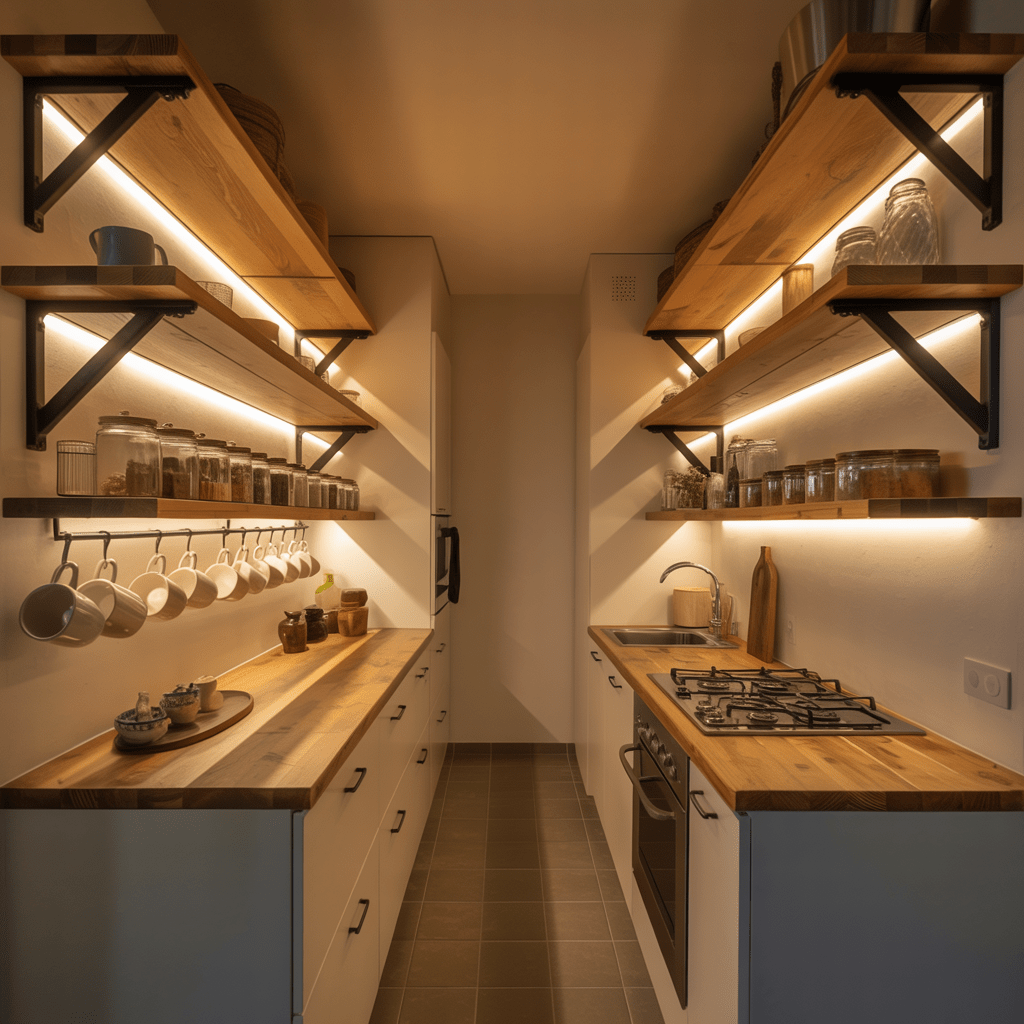
Upper cabinets make a small kitchen feel narrower, because they bring a solid wall of doors out toward your face. Open shelves in their place, or on a bare wall, let the eye see the wall behind and make the room look wider and brighter.
They come with trade-offs: everything on them is on show, and they collect dust and grease in a way closed cabinets don't. The four kitchens in these photos show how to make them work. Removing upper cabinets isn't an option in most rentals, but adding shelves to an empty wall usually is, with the landlord's agreement for the screw holes.
1. Shelves on the longest wall
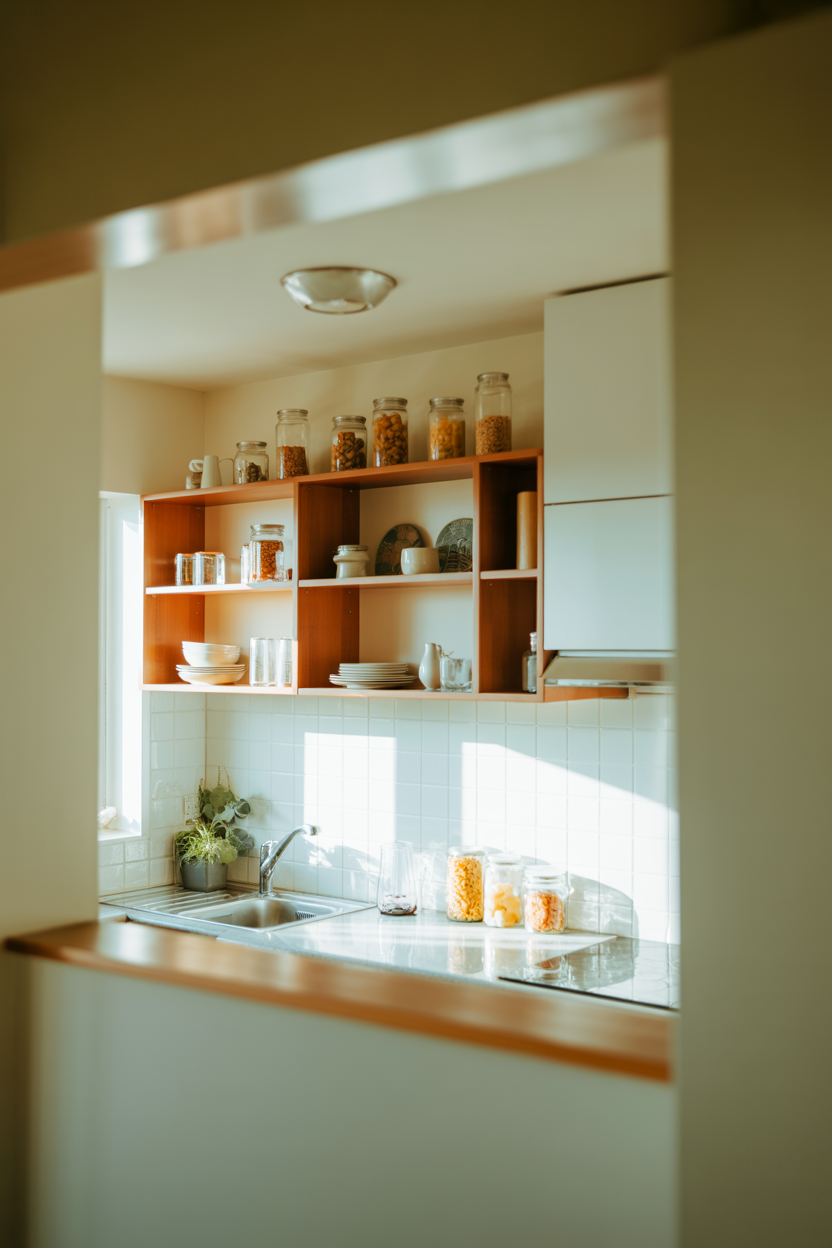
Running shelves along the longest wall, like the warm wood unit above the sink in this photo, makes the kitchen look wider than a row of upper cabinets would. Light from the window passes across the shelves rather than being blocked by doors.
Shelves 10 to 12 inches deep hold dinner plates and bowls. Hang the lowest shelf about 18 to 20 inches above the counter, the same height as the bottom of standard upper cabinets, so you still have room to work under it.
If you're replacing upper cabinets, check the wall behind them first. There may be gaps in the paint or tile that need patching, and the cabinet screws will leave holes in the studs that you can reuse for shelf brackets.
Use the shelves for things you use daily. Dishes that get used and washed every day don't gather dust, while a shelf of rarely used serving platters will.
2. One calm color palette
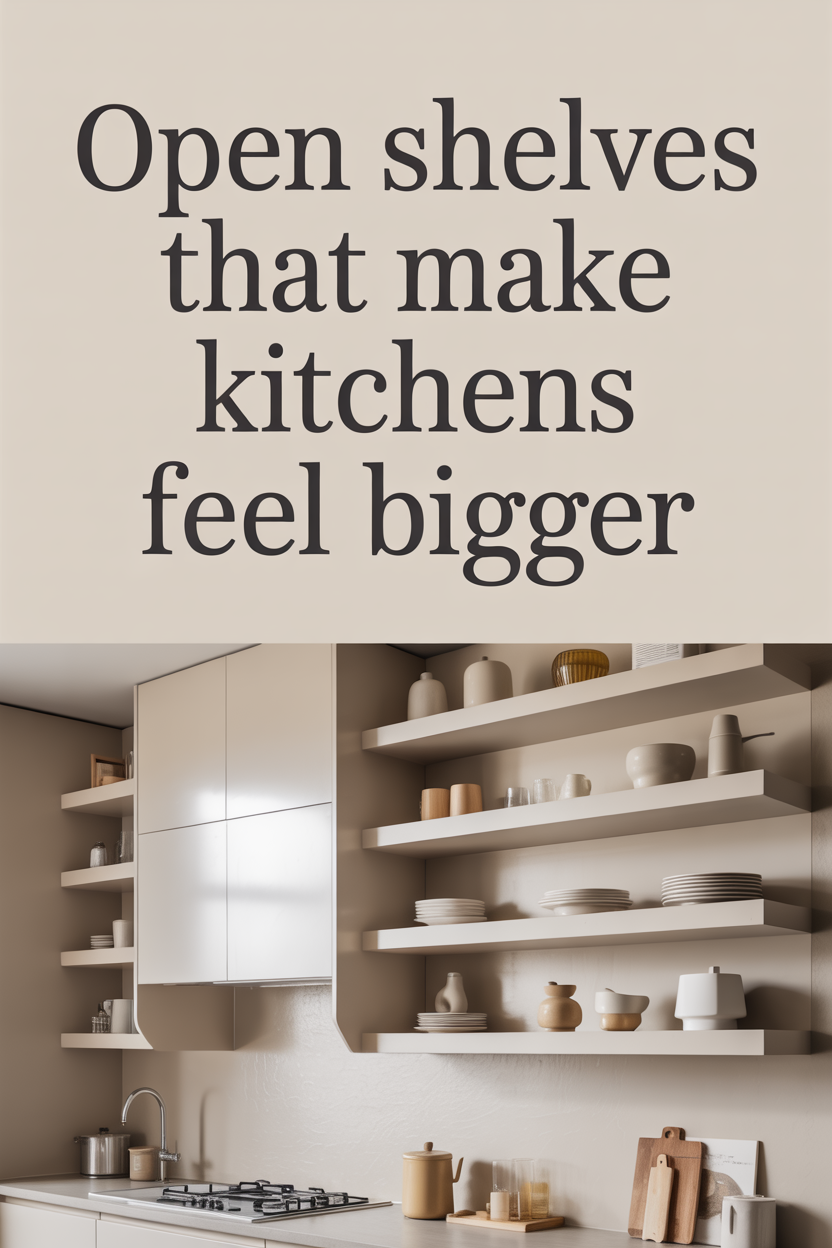
Open shelves look calm when what's on them shares a palette. The white floating shelves in this photo hold cream and white ceramics, plates and bowls, so the wall reads as one soft surface rather than a jumble of colors.
If your dishes are mixed, put the matching ones on the open shelves and the rest in a closed cabinet. White, cream or one other color for everyday dishes is the easiest to style.
Shelves painted the same color as the wall, like these, almost disappear, which suits a very small kitchen. Wood shelves stand out more and add warmth.
Stack plates and bowls in neat piles of the same size, and leave a little space between stacks.
Glass and clear jars count as neutral too, so a shelf of white plates with a row of glass jars still looks calm. Bright packaging is what breaks it up, so keep branded boxes in a cupboard.
3. Matching jars for dry goods
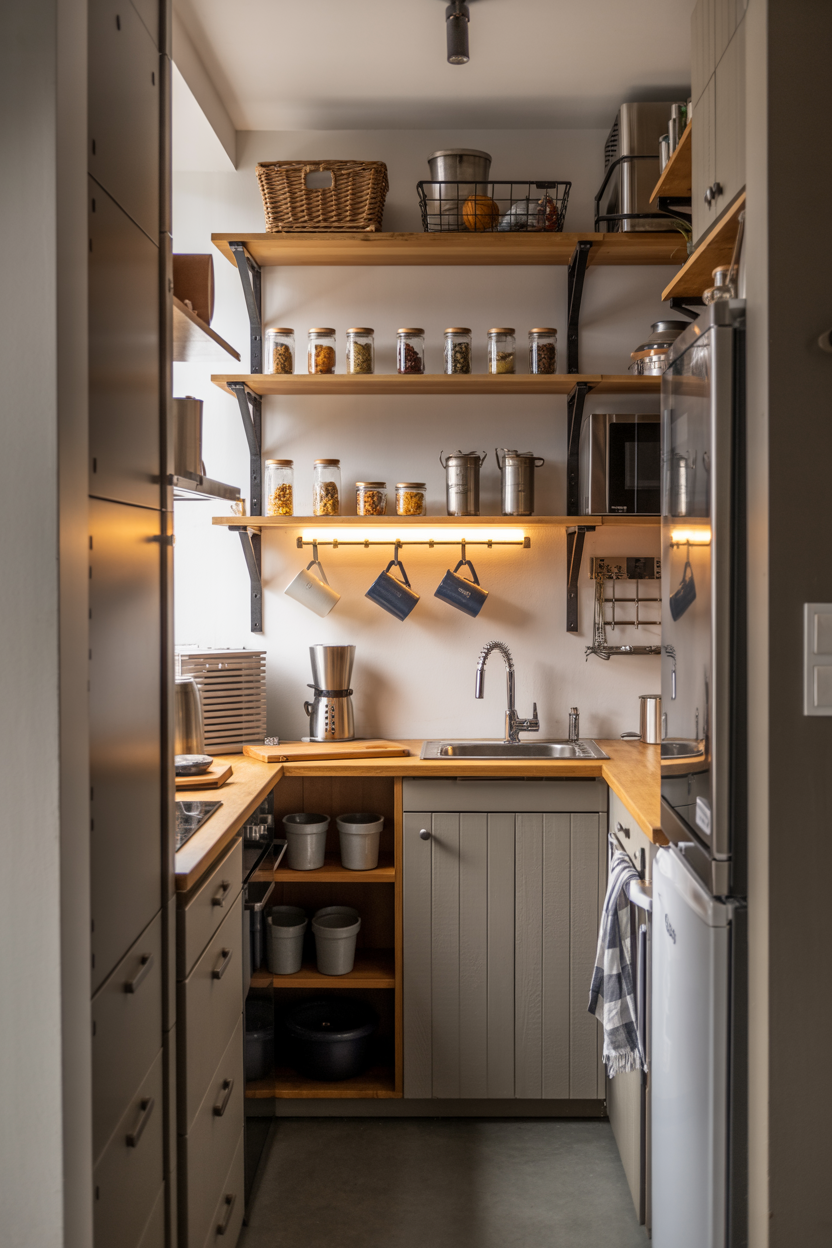
Packets and boxes look cluttered on open shelves. Decanting pasta, rice, spices and coffee into matching glass jars, like the row on the wood shelves in this narrow kitchen, makes them look tidy and lets you see when you're running low.
Choose jars with airtight lids, and label them with the contents and the use-by date. A set of matching spice jars costs about $20 to $35.
Mugs hung from hooks under the lowest shelf, as here, free up a whole shelf. The black brackets match the hooks and the faucet, which ties the wall together.
Keep spices away from the stove if you can, since heat and steam shorten their life.
4. Lighting under or inside the shelves
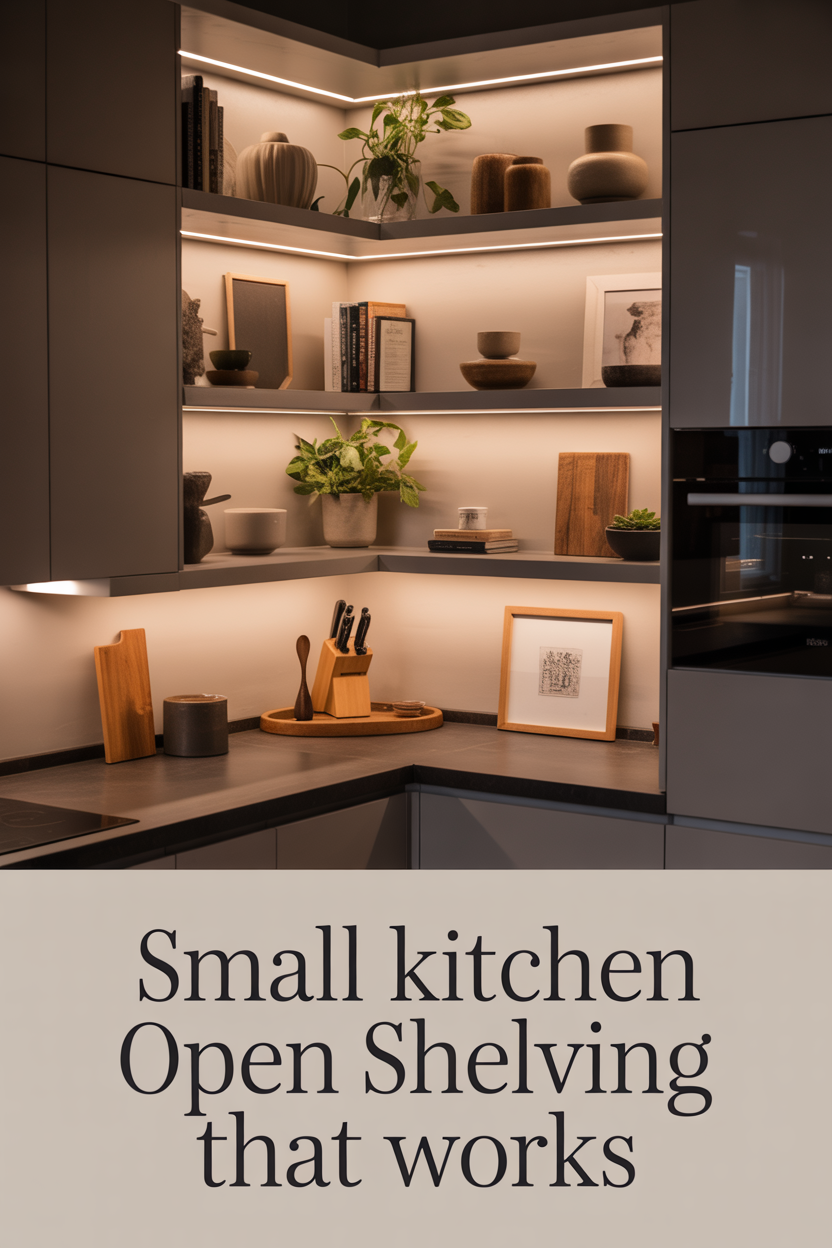
LED strips under each shelf, like the built-in lighting in these corner shelves, light the counter below and show off what's on display. In the evening, lit shelves make a small kitchen look much larger.
Plug-in LED strips with an aluminum channel and a diffuser cost about $20 to $40 and stick to the underside of the shelf. Use a warm white or neutral setting, around 3000K, which looks good on food and ceramics.
Keep electrical connections away from the sink and stove, and run the cord down the back corner of the shelves to an outlet. Hardwired lighting needs an electrician.
5. A few decorative pieces
Open shelves are part storage and part display. A plant, a framed print or a cookbook leaning against the wall, like the pieces in the fourth photo, make the shelves look styled.
Keep decoration to one or two items per shelf. Trailing plants like pothos look good on high shelves, but need light; a good faux one works in a dark kitchen.
A cutting board leaned at the back of the counter, as in the fourth photo, works as decor and stays within reach.
Swap the decorative pieces with the seasons rather than adding more, such as a small pumpkin in fall or a bunch of herbs in a jar in summer. The shelves stay useful and still change through the year.
6. Corners and alcoves
Corner shelves, like the wraparound shelves in the fourth photo, use space that upper cabinets often waste. They make a corner look deliberate and give you more display room.
Small alcoves beside the fridge or above a window can take one or two short shelves for spices or mugs. Measure carefully, since alcoves are rarely square.
Corner shelves need support on both walls. Use L-shaped brackets or a cleat on each wall, screwed into studs.
A short shelf at the end of a run of cabinets, beside the window or the range hood, is a good place for salt, pepper and a utensil crock you reach for while cooking. Keep cookbooks and oils off it, since steam and heat damage both.
Weight and mounting
A shelf of plates and jars is heavier than it looks. A 30-inch shelf of stacked dinner plates can easily hold 40 pounds or more. Screw brackets into studs wherever you can, and use heavy-duty anchors rated for the load where you can't.
Choose brackets rated for well over what you'll put on them, and use a level on every shelf. Floating shelves with hidden brackets look cleaner but usually hold less than visible brackets, so check the weight rating.
In a rental, ask the landlord before drilling into tile, which can crack. Drill through the grout lines where possible, or mount shelves on a painted wall section instead, where holes are easy to fill when you move.
Keeping open shelves clean
Open shelves near the stove collect a film of grease. Wipe them every week or two with warm soapy water, and dust the top of anything you don't use often.
A range hood vented outside, used every time you cook, keeps much of the grease off the shelves. Keep the shelf closest to the stove for things you use and wash daily.
What to keep off open shelves
Some things are better behind doors: anything you use less than once a month, mismatched plastic containers, cleaning products, and food in bright packets. Keep a closed cabinet or a lidded basket for them, so the open shelves only show what you want to see.
Avoid stacking heavy cast iron or glass bakeware on a high shelf, where reaching for it is awkward and a slip can break something. Those belong low down, in a drawer or a base cabinet.
Common questions
Do open shelves make a kitchen look bigger?
Usually, yes. They let the eye see the wall behind them, which makes the room look wider and brighter than a solid row of cabinet doors.
How deep should kitchen open shelves be?
About 10 to 12 inches for dinner plates and bowls, and 6 to 8 inches for spice jars, mugs and glasses.
Start with one or two shelves on an empty wall, and keep them for things you use every day. For more ideas, see our guides to kitchen counter organization and DIY floating shelves.