
In most apartments, the entryway is just the first few feet inside the front door, often opening straight into the living room. It still has to hold keys, coats, bags and shoes, and when it can't, they end up on the sofa and the kitchen counter. A small, well-planned entry stops that.
The four photos here show different ways to do it, from a slim console and mirror to a DIY crate bench. The ideas below cover each, with the measurements that decide whether something fits a narrow space, plus the details people forget: where shoes go, how wet coats dry and how to light the door at night.
1. A slim console with a mirror above
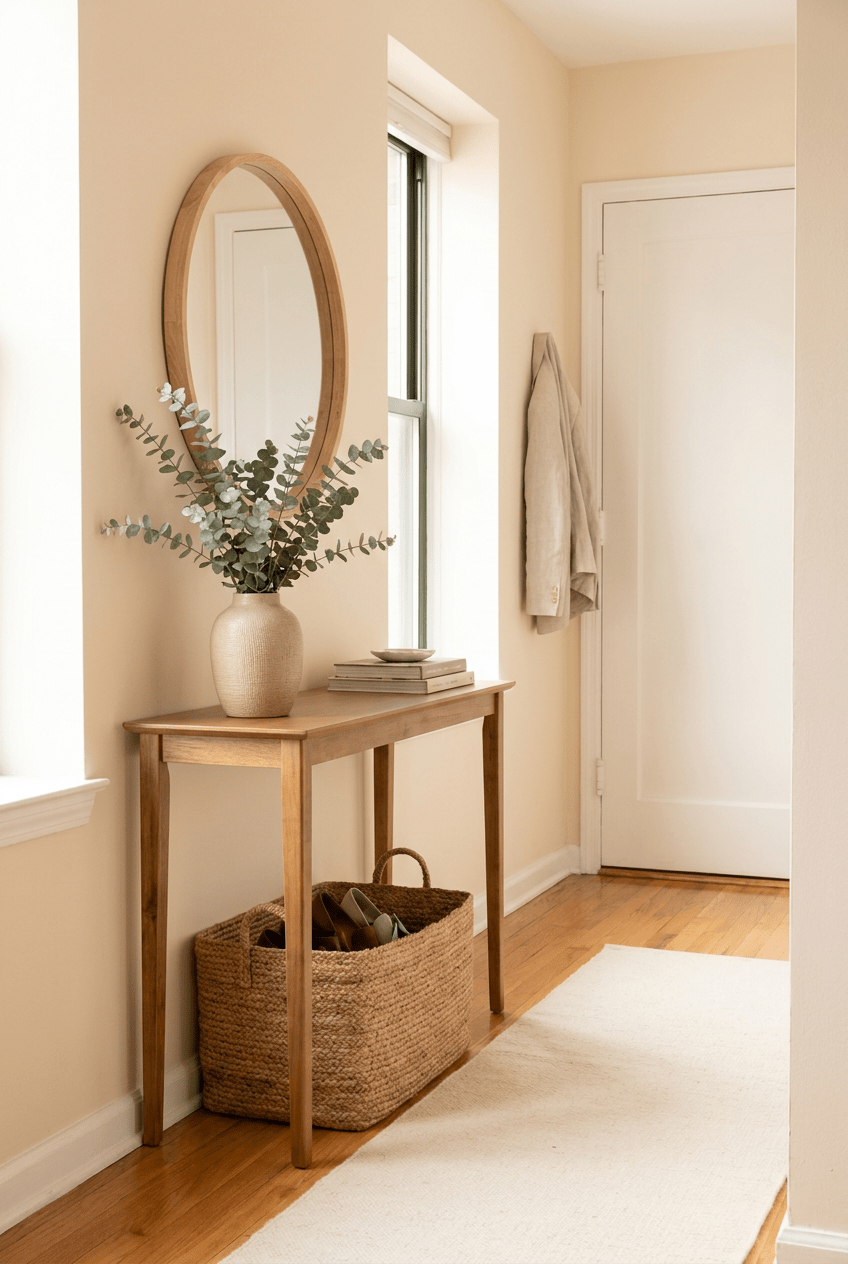
A narrow console table with a mirror above it, like the setup in the photo, gives you a place to drop keys and mail and a last look before you head out. A woven basket underneath holds shoes or bags without adding another piece of furniture.
In a hallway, choose a console 10 to 14 inches deep, so at least 30 to 36 inches of walkway stays clear. Depth is the measurement to get right; for length, a 30- to 40-inch table fits most entry walls.
Hang the mirror so its center is about 57 to 60 inches from the floor, or 6 to 10 inches above the console top. A round or oval mirror softens a narrow, boxy hall.
Put a small tray or bowl on the console for keys. Without one, the surface fills with clutter within a week.
2. A shelf of hooks with light underneath
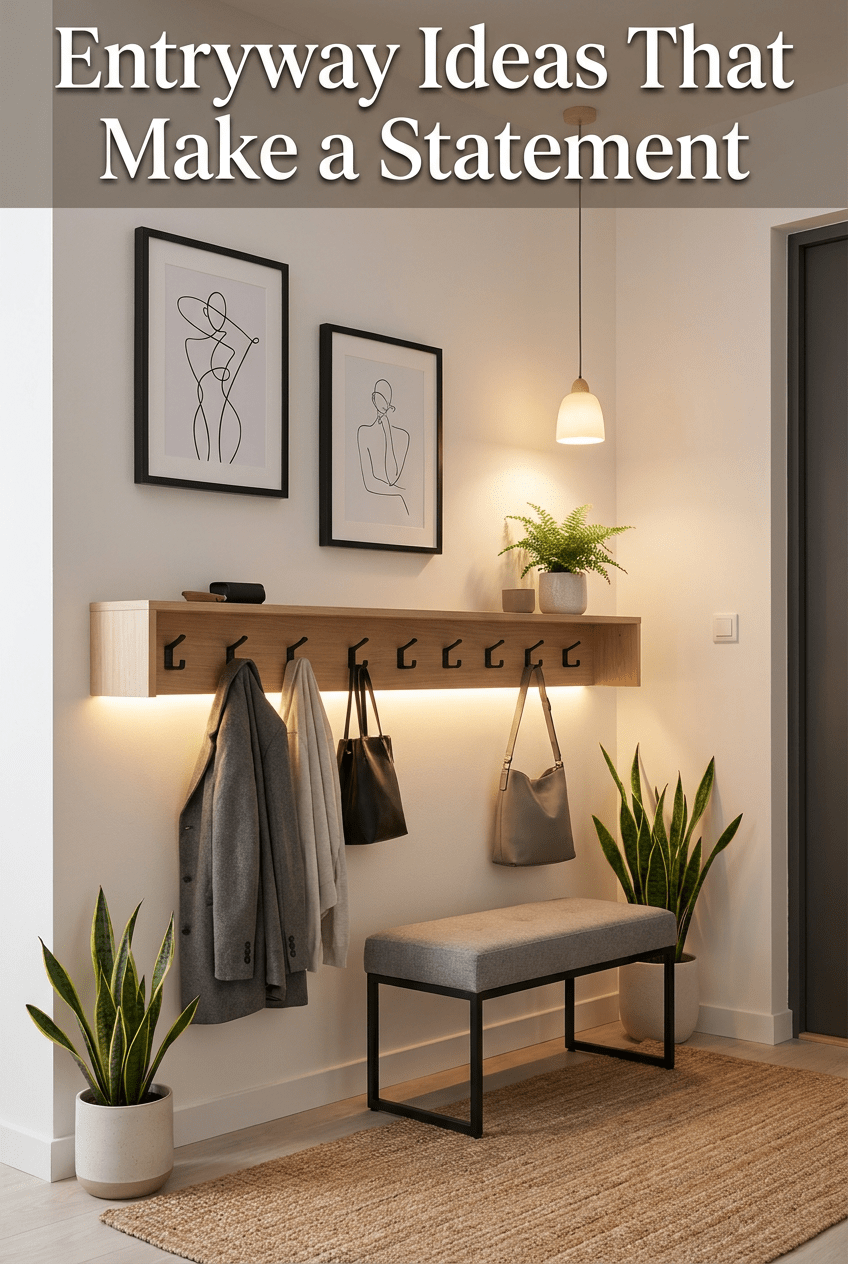
A wall shelf with a row of hooks under it, like the one in the photo, holds coats and bags below and small things like keys and a plant on top. It takes almost no floor space, which suits an entry with no room for a table.
Mount the hooks at about 60 to 66 inches from the floor for adults, and leave 8 to 10 inches between hooks so coats don't pile up. Screw the shelf into studs or proper anchors, since a few winter coats and a full bag weigh more than you'd expect.
The strip of LED light under the shelf in the photo lights the hooks and the bench at night. Battery or plug-in LED strips with a motion sensor turn on when you walk in.
A small bench, like the one below the hooks here, gives you somewhere to sit and take off shoes. A bench 14 to 16 inches deep fits most entries.
3. A DIY crate bench and peg rail
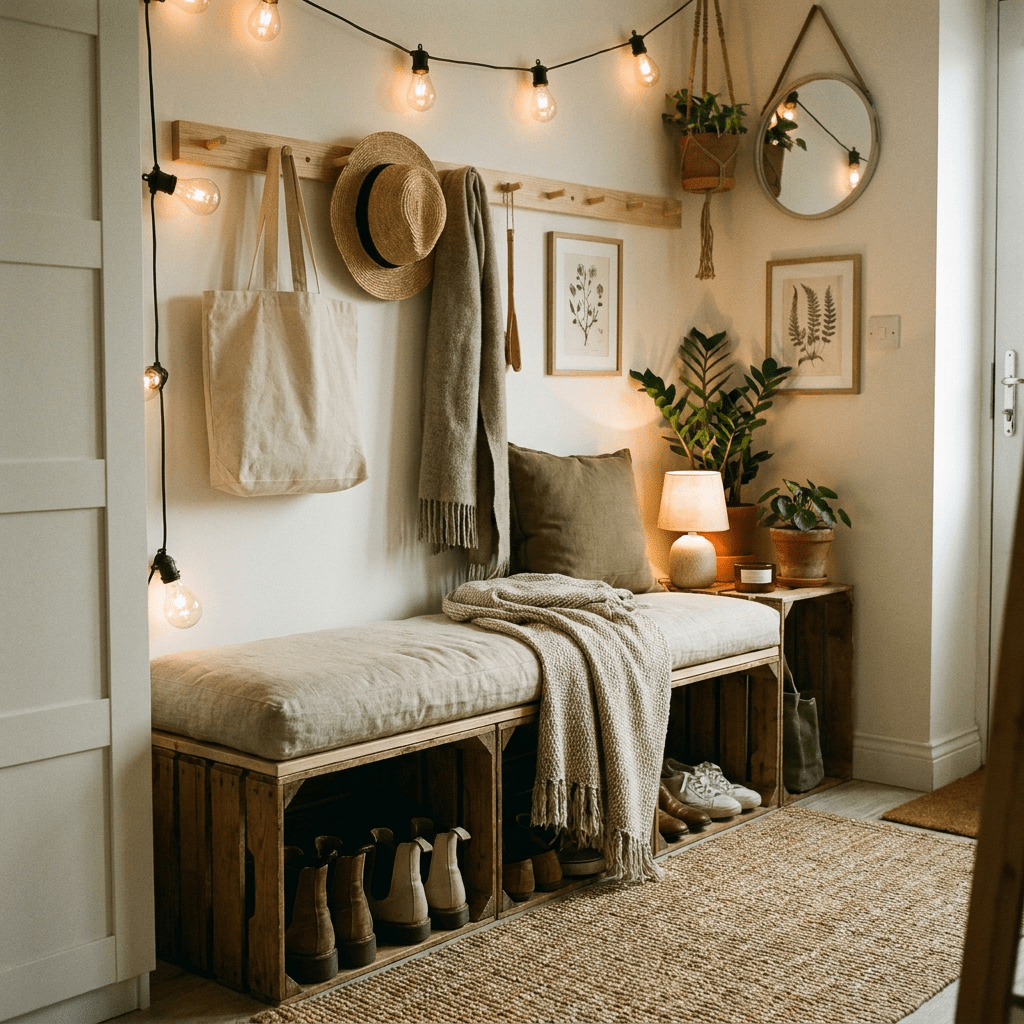
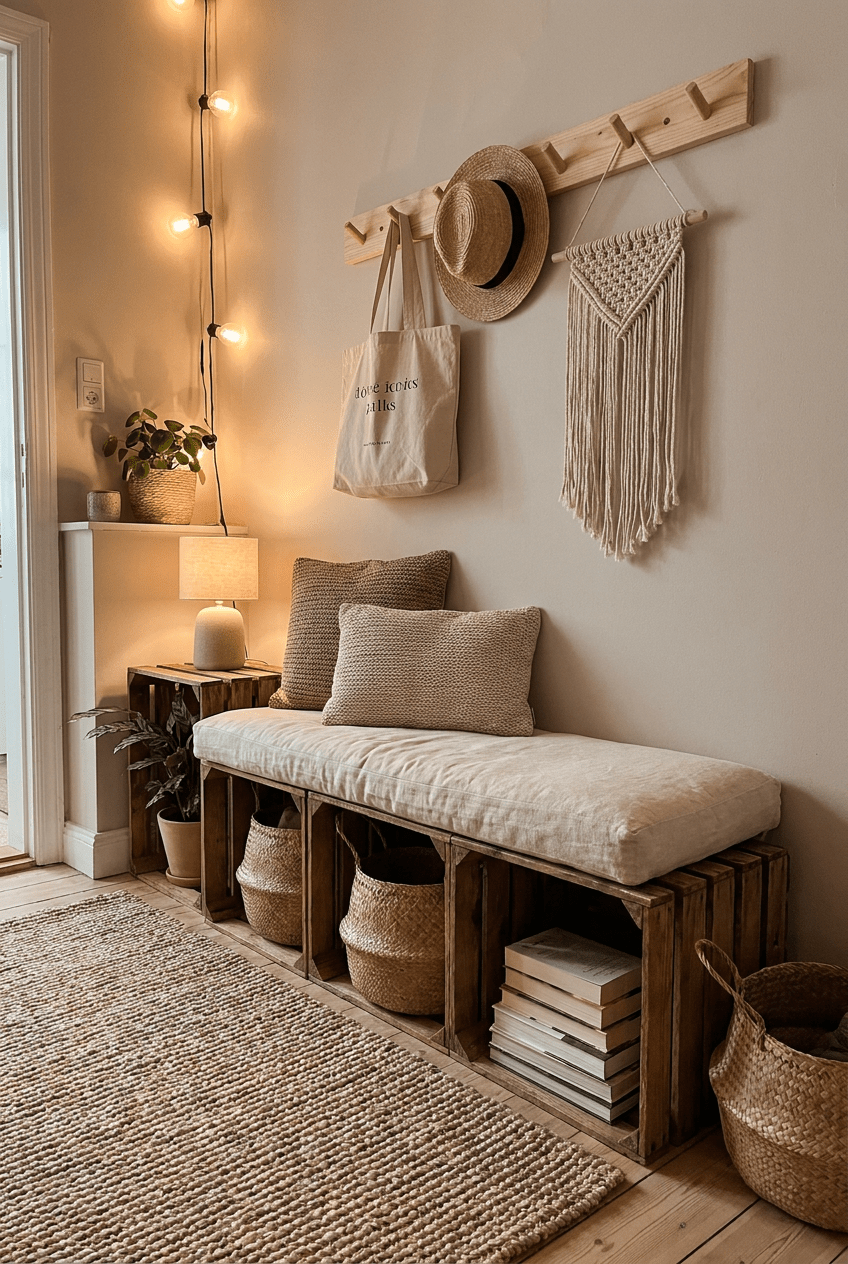
Wooden crates turned on their side and screwed together, with a cushion on top, make a cheap entry bench with storage underneath. In the photo, baskets and books fill the crates, and a peg rail above holds a hat and a tote.
Sand the crates, screw them together at the sides so they act as one unit, and add a seat board on top before the cushion, since crate slats aren't comfortable to sit on directly. A finished bench built this way usually costs $40 to $80.
A peg rail, a strip of wood with wooden pegs, is easy to make or buy and holds hats and bags well. Fix it into studs, since people tend to yank bags off pegs.
Crates are rough inside, so line them with fabric or use baskets, like those in the photo, to stop books and shoes from catching on the slats. Check the crates are sturdy hardwood rather than thin craft-store pine if anyone will sit on the bench every day.
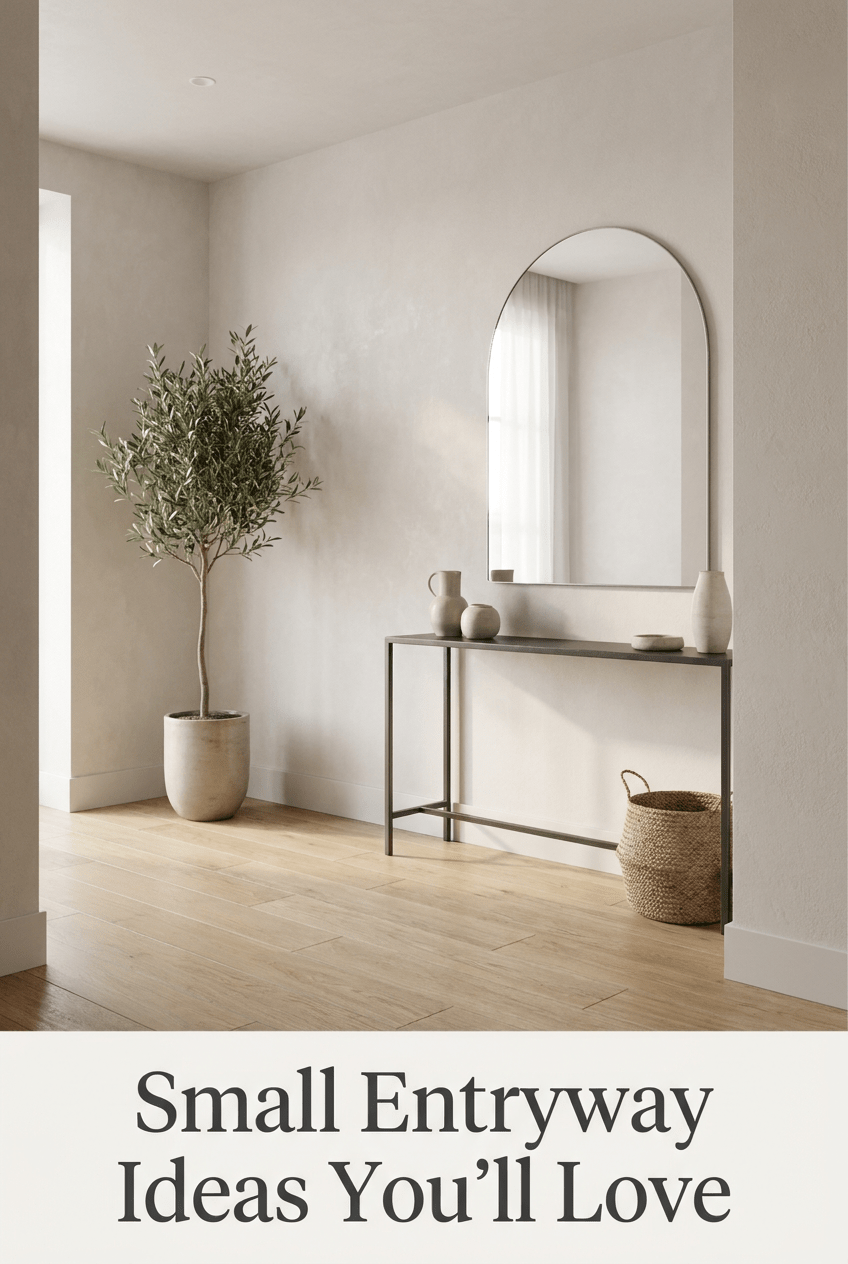
4. A tall arched mirror for a minimal look
A tall arched mirror on a slim console, like the black metal setup in the photo, makes a small entry feel calm and taller. With one plant and one basket, it's all a minimal entry needs.
Tall mirrors are heavy, so hang them from studs or with anchors rated for the weight, or lean them on the console with a strap at the top. Metal consoles 10 to 12 inches deep take very little floor space.
A potted olive tree or another tall plant brings in height and softness. Olive trees need bright light, so they only work if the entry gets sun; in a dark hallway, a snake plant or a good faux plant is a better choice.
5. A runner to mark the entry
In an apartment where the door opens into the living room, a rug or runner at the door marks the entry as its own area. The jute runners in these photos also trap dirt before it reaches the rest of the floor.
A runner about 2 by 6 feet suits a narrow hallway; a 3-by-5-foot rug works where the door opens into a wider space. Choose a low, flat weave so the door can swing over it, and use a rug pad underneath so it doesn't slide.
Washable runners are easiest to keep clean, especially in winter when snow and salt come in on shoes.
6. Shoe storage that keeps the floor clear
Shoes are usually the biggest source of entry clutter. A slim shoe cabinet with tilting drawers, often 7 to 9 inches deep, holds a dozen pairs in very little floor space and closes to hide them.
Shoe cabinets like this tip easily when the drawers are open, so anchor them to the wall. A two-tier shoe rack or a basket for each person, like the baskets in the photos, works where there's no room for a cabinet.
Keep a boot tray by the door in winter, so wet boots don't stain the floor or the rug. Store off-season shoes somewhere else entirely, so only the ones you're wearing this month are at the door.
7. Light the door at night
Coming home to a dark entry makes it hard to find keys or a light switch. A small table lamp on the console, a plug-in pendant like the one in the second photo, or a motion-sensor light near the door solves it.
Plug-in lights on a smart plug or timer can switch on before you get home. String lights, like the ones in the third photo, give a soft glow but not much practical light, so pair them with a lamp.
Use warm white bulbs, around 2700K, so the first thing you see at home feels welcoming.
If the entry has an overhead light on a switch by the door, check that it works and that the bulb is bright enough. A brighter LED bulb in an existing fixture is the quickest fix there is.
8. A small gallery wall
Two or three framed prints, like the line drawings above the hooks in the second photo, give an entry personality without taking any space. In a narrow hallway, a vertical arrangement suits the wall better than a wide one.
Use light frames and small picture hooks, which leave holes that are easy to fill, or removable strips. Keep art above the height of coats and bags, so it doesn't get knocked.
Prints with a little meaning, such as a map of your neighborhood or a photo from a trip, make an entry feel like home rather than a hallway. Frames in one finish, like the thin black ones here, keep a small grouping looking tidy.
Common questions
How do you make an entryway in an apartment that doesn't have one?
Mark the area with a runner, add hooks or a hook shelf on the nearest wall, and a slim console or bench if there's room. Even a 2-foot strip of wall can hold hooks and a small shelf.
How deep should an entryway console be?
About 10 to 14 inches in a hallway, so at least 30 to 36 inches of walkway stays clear.
Start with hooks and a place for keys, then add a bench or console if the space allows. For seasonal ideas, see our guide to fall entryway ideas for small apartments, and for more storage, our vertical storage ideas.