
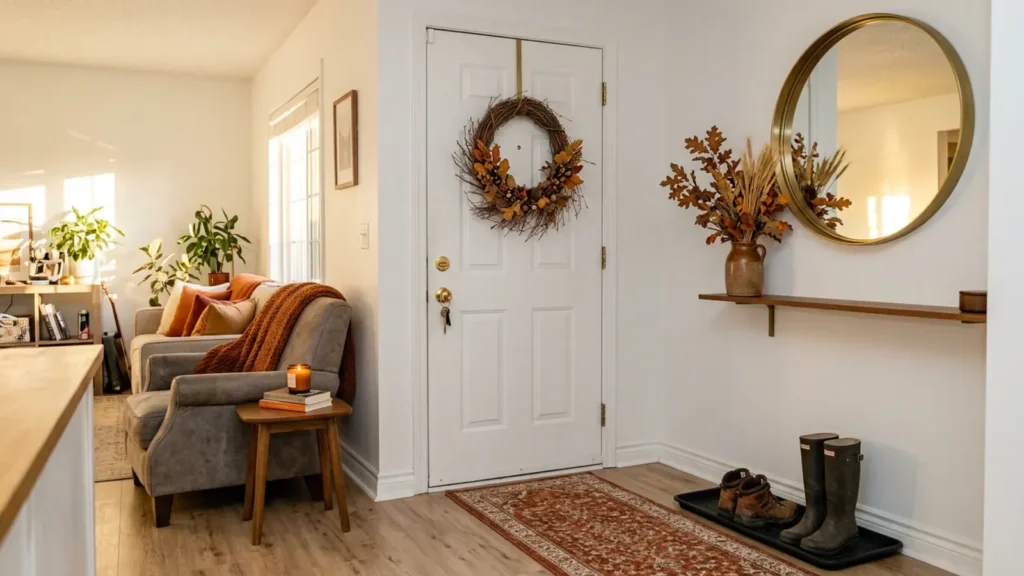
Fall entryway ideas usually assume you have a foyer, a console table and room for a stack of pumpkins. In most small apartments the front door opens into a narrow hallway or straight into the living room, and the “entryway” is about three feet of wall and a doormat. That space still sets the mood for the whole home, and it’s one of the cheapest places to bring in the season.
These nine ideas are built for tight entries and renters. None need drilling into tile or repainting, most use things you can reuse for winter, and none of them require buying a console table.
1. Start with one focal point, not ten small things
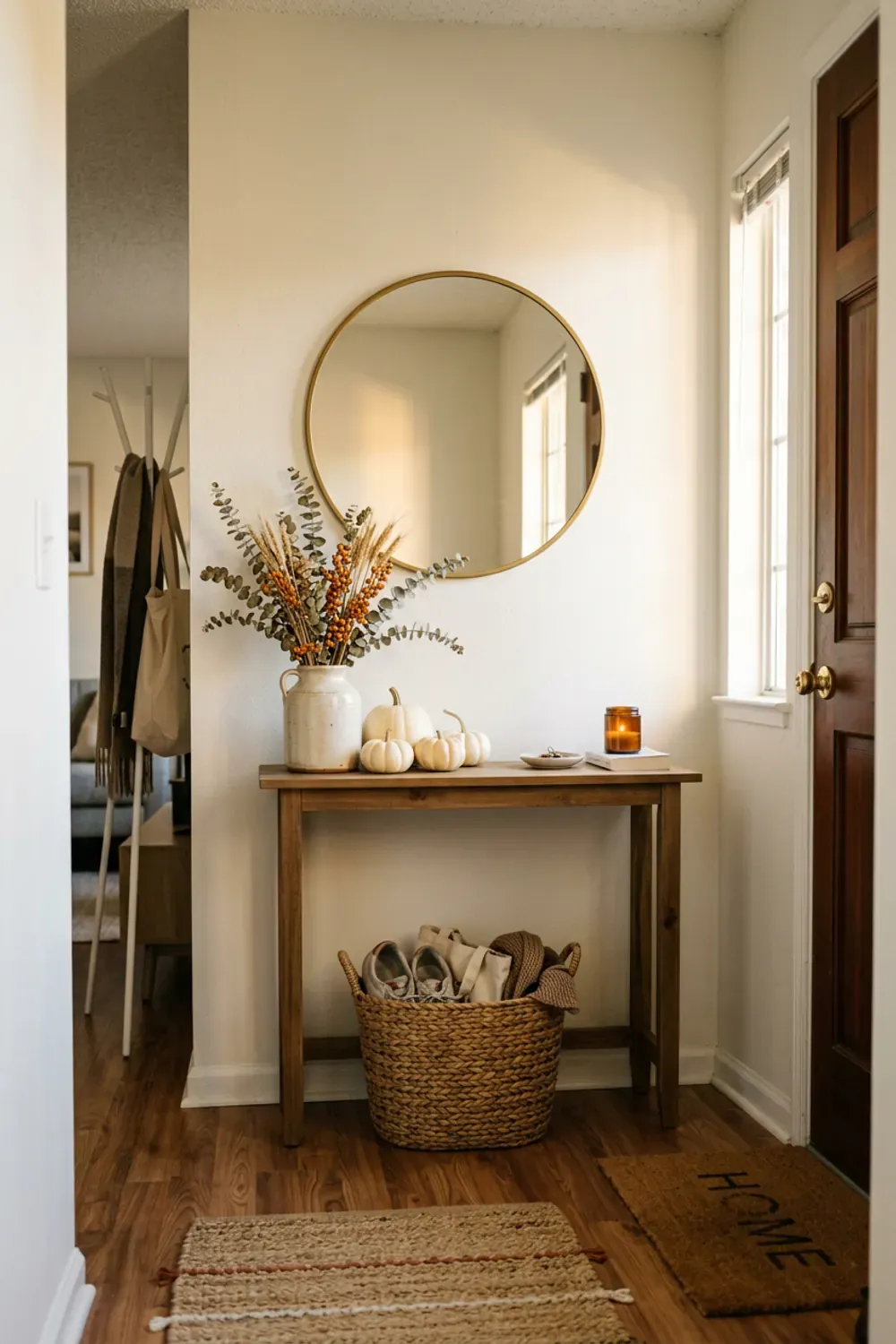
The biggest mistake in a small entry is scattering lots of little seasonal pieces: a pumpkin here, a candle there, a tiny sign on every surface. In a tight space that reads as clutter. Choose one main piece instead, such as a tall vase of dried stems, a wreath or a large mirror, and let it carry the season.
Scale up the hero piece and scale down everything else. A vase of branches about two feet tall looks deliberate on a narrow surface, while five small objects look like they were dropped there on the way in. Add one or two supporting pieces at most, like a pair of white pumpkins or a small candle, and stop. If you want more ideas for the entry itself year-round, these apartment entryway ideas cover the basics.
2. No console? mount a slim floating ledge
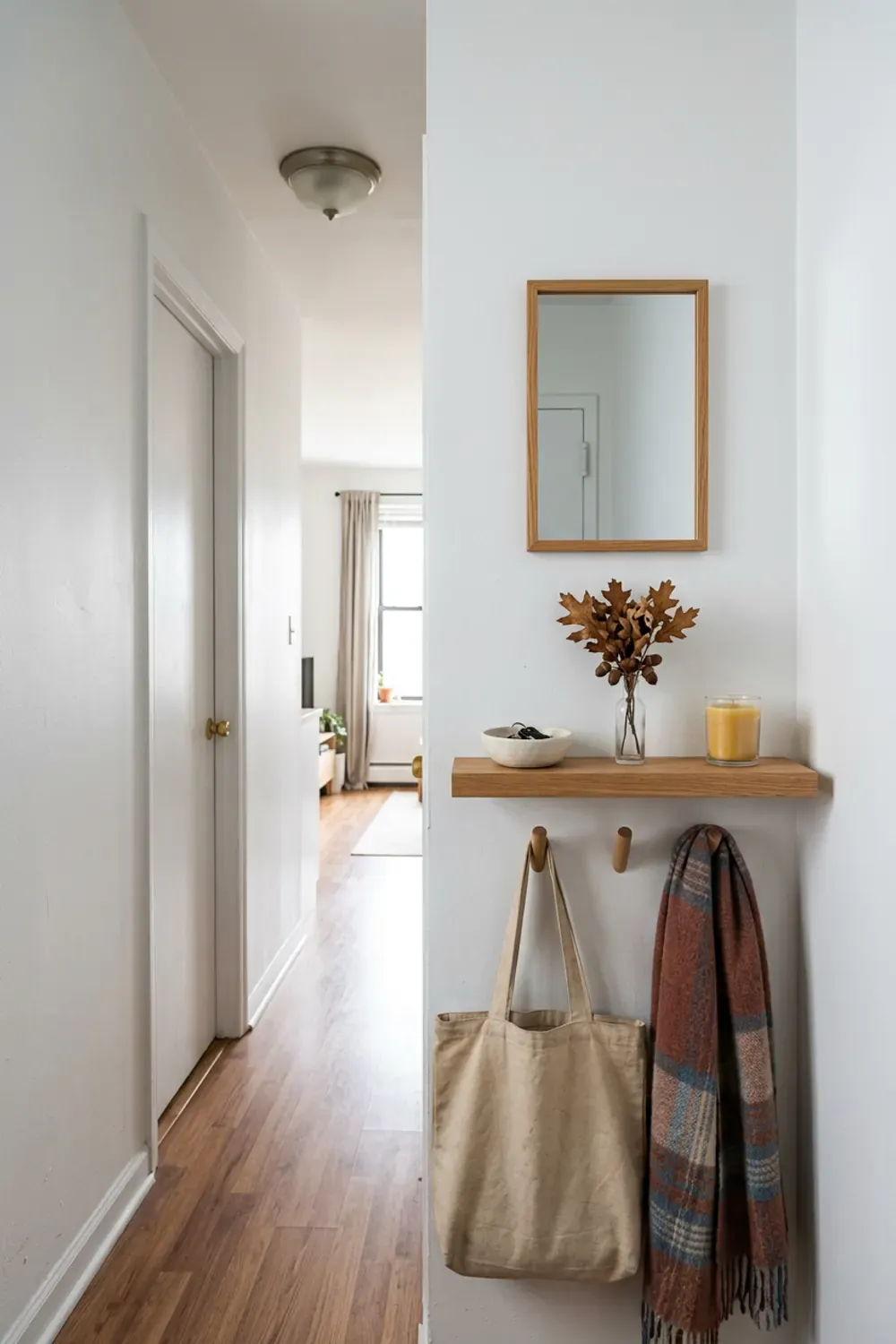
If a console table would block the door or the hallway, go vertical. A floating ledge 4 to 6 inches deep and 18 to 24 inches wide holds keys, a candle and a small vase without stealing floor space. Mount it around waist height so it doubles as a landing spot for your phone and mail, and keep at least roughly 36 inches of clear walkway in a hallway so nobody bumps into it.
For renters, a few small screw holes are usually easy to fill when you move out, but check your lease first. Use anchors rated for more than the weight you plan to put on the shelf, or find a stud. If you like a project, these DIY floating shelves can be built for less than most store-bought ledges.
Tip: Add three peg or adhesive hooks under the ledge for bags and scarves, and the whole wall becomes a mini drop zone.
3. Let the mirror do double duty
A mirror is the most useful thing you can hang in a small entry. It bounces light into a hallway that often has no window, makes the space read wider, and gives you a last look before you leave. A round mirror 24 to 30 inches across suits most narrow walls and softens all the straight lines of doors and frames.
For fall, decorate the mirror instead of adding another surface. Tuck a few dried leaves or a sprig of eucalyptus behind one corner of the frame, or tie a narrow rust velvet ribbon at the top. It takes two minutes, costs almost nothing, and comes off cleanly when you switch to holiday decor. Hang heavier mirrors from a wall anchor or stud rather than adhesive strips, which are only meant for lightweight frames.
4. Choose dried stems that last all season
Fresh flowers in an entry wilt fast because hallways are often warm and dry. Dried stems last for months without water: wheat, eucalyptus, oak or beech branches, pampas, bunny tails or dried hydrangea. A single bundle from a craft store, a farmers market or a grocery store floral section is usually enough for one tall arrangement.
Pick a vase with some weight at the bottom, like stoneware or thick glass, so it doesn’t tip when the door swings open nearby. Keep dried arrangements away from candles and radiators, since they’re very flammable, and expect a little shedding at first. Once the season is over, many dried stems can go into a box and come back next year.
5. Swap the doormat and add a washable runner
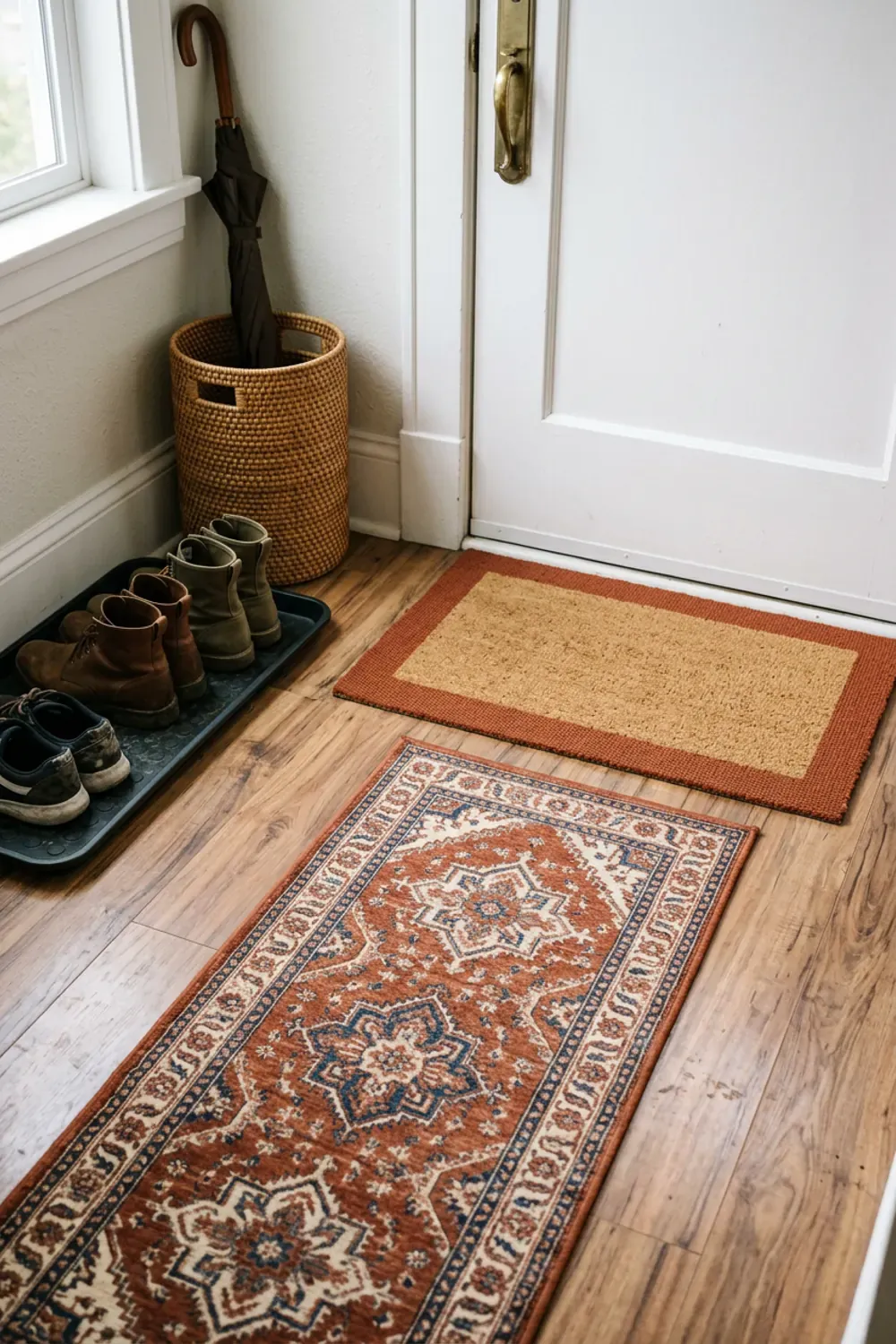
The floor is the easiest place to add fall color without taking up any space. Switch to a coir doormat with a rust or brown border, and check the gap under your door first: a low-profile mat around a quarter of an inch thick won’t catch on the door as it opens. If the mat is outside your door in a shared hallway, check your building’s rules too.
Inside, a narrow washable runner in rust, cream or deep brown warms up a hallway and catches the mud and wet leaves that fall brings in. Put a non-slip rug pad underneath so it stays put on laminate or tile, and choose a size that leaves a few inches of floor visible on each side so the hallway still looks its full width.
6. Give wet shoes and bags their own spot
Fall means rain, mud and suddenly a lot more shoes by the door. A simple rubber or metal boot tray protects floors and keeps wet boots contained, and it slides neatly against the wall. A lidded basket beside it hides sneakers, umbrellas and reusable bags so the entry doesn’t turn into a pile.
If floor space is very tight, use the wall and the back of the door. Over-the-door hooks hold coats and bags, and a narrow wall-mounted shoe rack keeps pairs off the floor. These vertical storage ideas show more ways to use the walls in a small home.
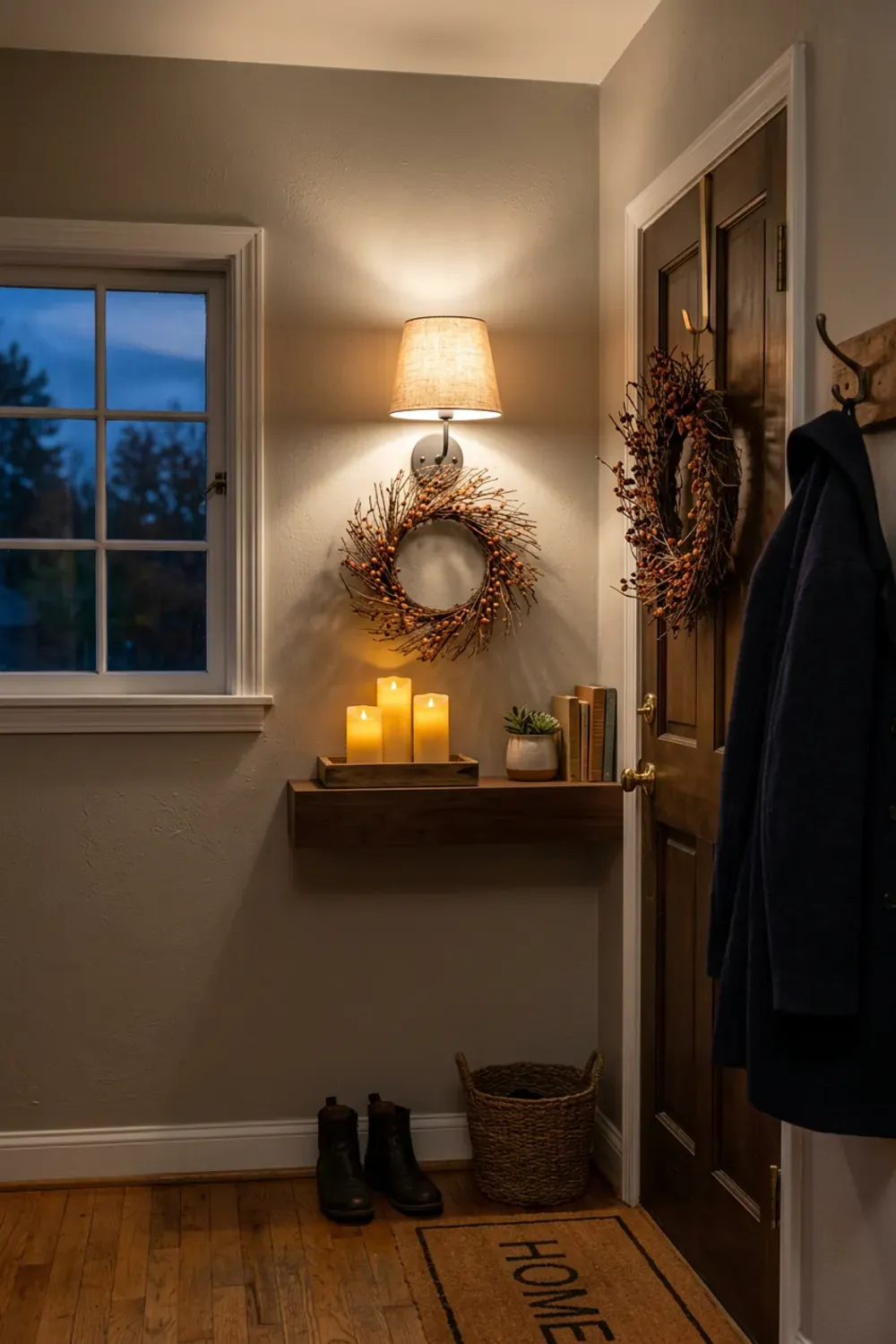
7. Add warm light for dark evenings
Days get shorter fast in fall, and walking into a dark entry every evening feels gloomy. A plug-in wall sconce gives you light exactly where you need it without any electrical work, and the cord can run neatly down the wall in a paintable cord cover. A small battery or rechargeable lamp on a ledge works too.
Choose warm white bulbs, around 2700K, for a cozy glow instead of a harsh office feel. In an entry where coats and scarves hang close by, flameless LED candles on a timer are a safer choice than real ones, and they turn on before you get home. A strand of warm white fairy lights around the mirror adds a soft glow without taking any space.
Tip: A smart plug on the lamp lets it switch on at sunset, so you never come home to a dark hallway.
8. Bring in the season’s colors in small doses
This fall’s palette is deep and warm: burgundy, rust, chocolate brown and creamy neutrals. In a small entry, use those colors in small, deliberate touches rather than covering every surface in orange. A burgundy ribbon on the wreath, a rust runner, a brown ceramic key bowl and a cream throw basket are enough to make the space feel seasonal.
Thrift stores are great for this. Look for stoneware vases, wooden bowls, brass candlesticks and small framed prints in warm tones, which usually cost a few dollars each and work long after fall ends. Keep the walls and big pieces neutral, and the seasonal color does all the work. For more ways to warm up the rest of your home, see these fall apartment decor ideas.
If you’re starting from scratch, here’s roughly what a complete fall entry costs. Prices vary by store and region, so treat these as ballpark ranges, and remember that most pieces carry over to winter:
- Bundle of dried stems: about $10–20
- Low-profile coir doormat: about $15–30
- Washable runner plus rug pad: about $30–70
- Plug-in wall sconce: about $25–50
- Floating ledge and hooks: about $15–40
- Thrifted vase, bowl or candlesticks: a few dollars each
9. Get the entry ready for guests (and the next season)
Fall is hosting season, so set the entry up to handle more coats and shoes than usual. Clear the hooks of anything you don’t use daily, add a second over-door rack for guests, and keep a basket ready for bags and hats. If you’re hosting a holiday dinner, our guide to hosting Thanksgiving in a small apartment covers how to set up a coat landing zone in ten minutes.
Build your fall entry on a neutral base, such as a mirror, a ledge, a runner and a twig wreath, so the switch to winter is quick. In December, swap the pumpkins for greenery and the rust ribbon for velvet in deep green or burgundy, and the same setup carries you straight into the holidays. Store seasonal pieces together in one labeled box so next year’s setup takes minutes.
A small entry doesn’t need a foyer’s worth of decor to feel ready for fall. Start with the boot tray and the light, since those make the biggest difference on wet, dark evenings, and add the seasonal pieces once the practical ones are in place.
Start with the piece that solves your biggest daily annoyance, whether that’s the shoe pile, the dark hallway or the empty wall, and add the seasonal touches on top. Most of it carries straight through to winter, so the effort keeps paying off for months.