
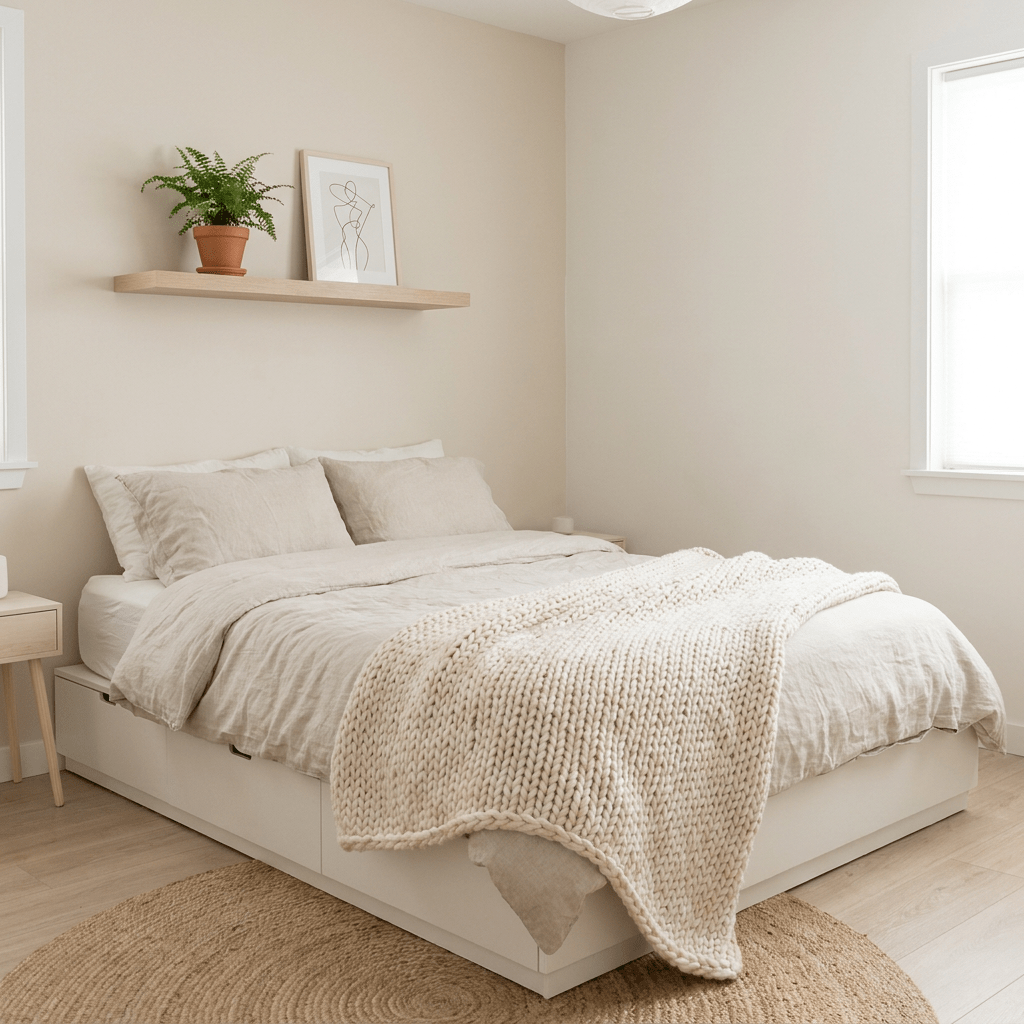
A bedroom can feel stale long before anything in it wears out. Usually the lighting is harsh, the surfaces have filled up and the bedding is the same set you've had since you moved in. None of that needs new furniture to fix.
Each of the seven ideas below costs $30 or less, and three of them are free. You can do most of them in an afternoon, and all of them work in a rental. The four bedrooms in the photos use the same kind of changes: warm light, a few new textiles, cleared surfaces and something living.
1. Change the bulbs and add warm string lights
Lighting makes the biggest difference for the least money. If the ceiling light or bedside lamps use cool white or daylight bulbs, swap them for warm white LEDs around 2700K. A two-pack costs about $5 to $10 and changes the whole feel of the room in the evening.
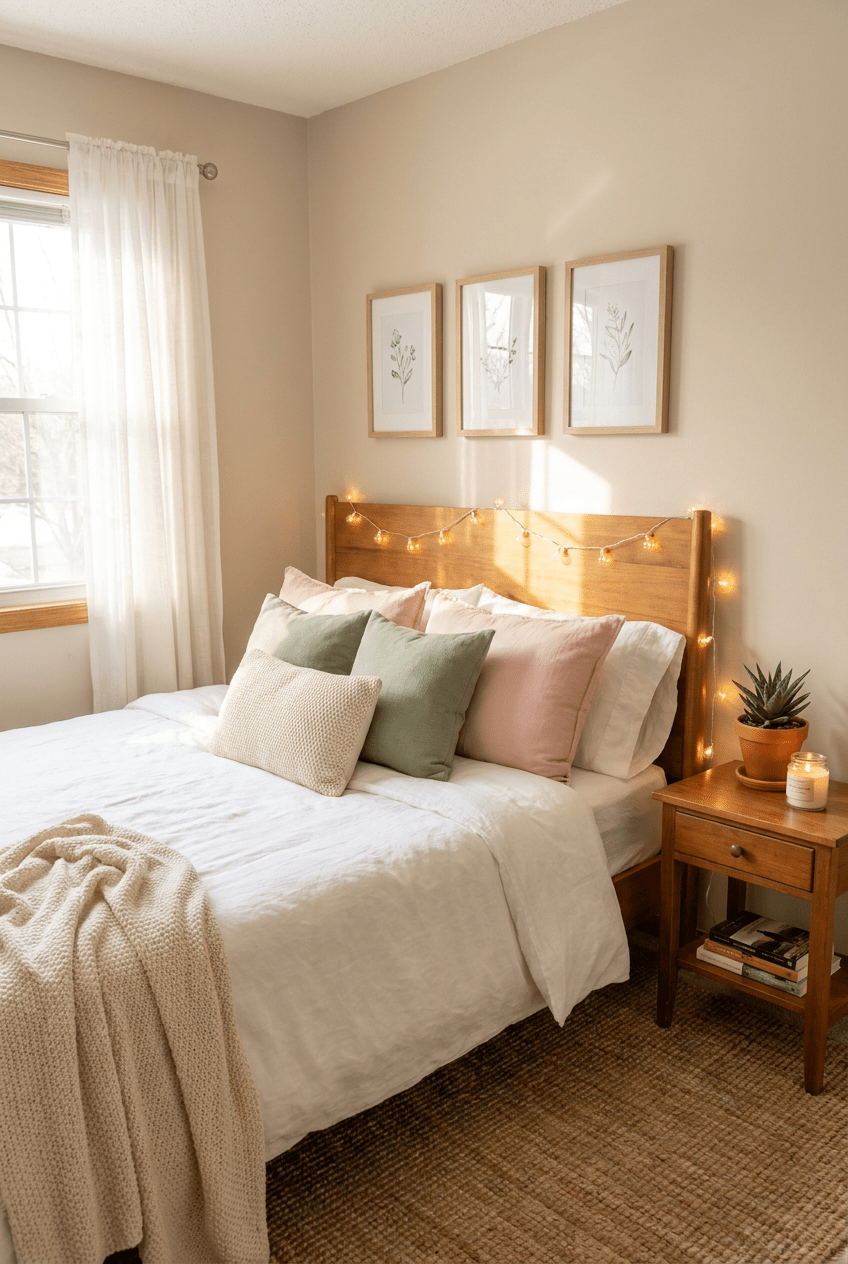
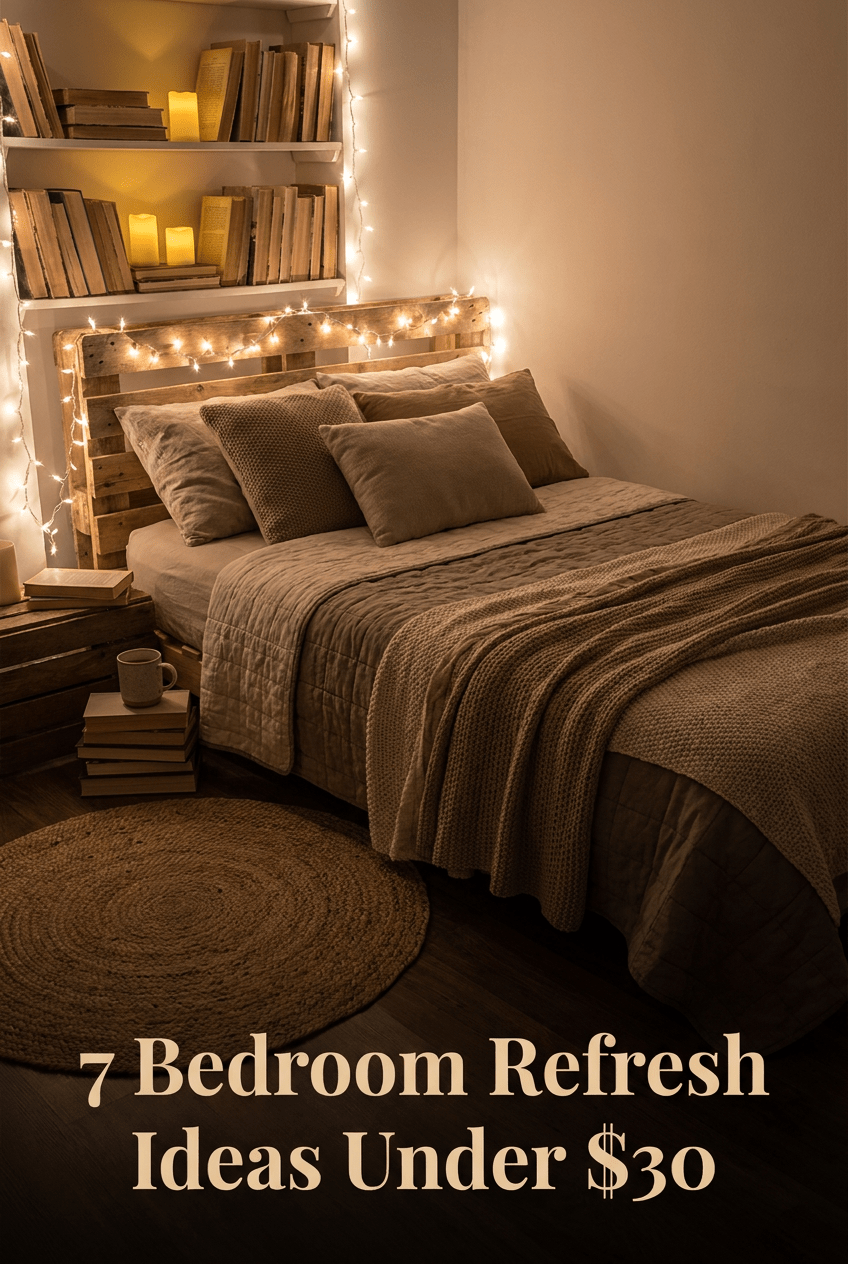
Fairy lights along the headboard, like the strand on the wooden headboard in this photo, add a soft glow for reading or winding down. Battery-powered strands with a timer cost $8 to $15 and need no outlet by the bed.
Use LED strands only, since they stay cool near fabric. Switch them off before you sleep, or use the timer.
A small candle on the nightstand, as here, adds to the mood. Blow it out before you lie down, or use a flameless one.
2. A throw and two new pillow covers
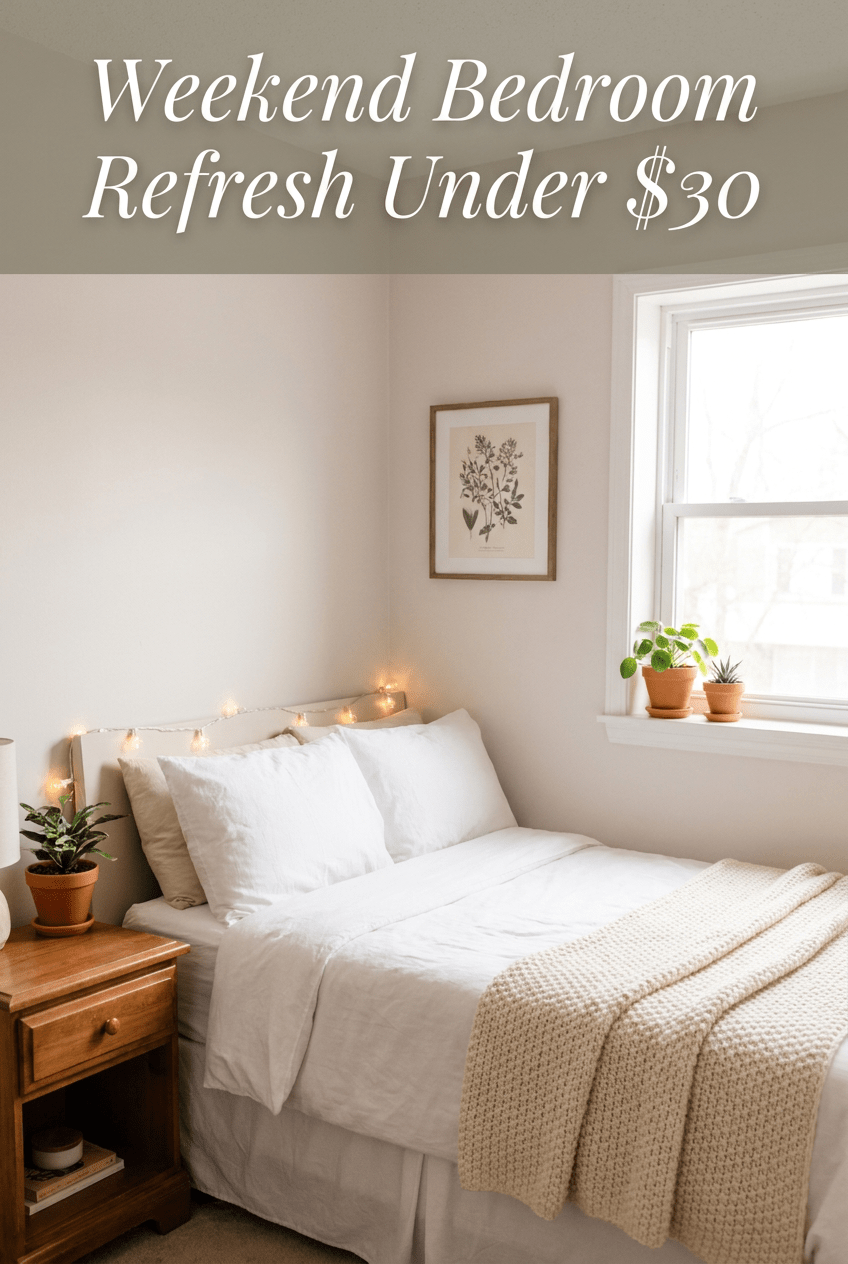
New textiles make a familiar bed look new. In this photo, a chunky cream knit throw folded across the foot of plain white bedding does most of the work.
Pillow covers cost $8 to $15 each and slip over the pillows you already have, so two covers and a basic throw usually come in under $30. Pick one or two colors that go with your bedding, like the sage and blush pillows in the first photo, and mix textures such as knit, linen and velvet.
Fold the throw across the bottom third of the bed rather than bunching it, and stand the pillows up against the headboard. It looks tidy and makes the bed the first thing you notice when you walk in.
Wash and iron your existing bedding, or at least shake out and smooth the duvet. Crisp sheets help as much as anything new.
3. Clear the nightstand and dresser top
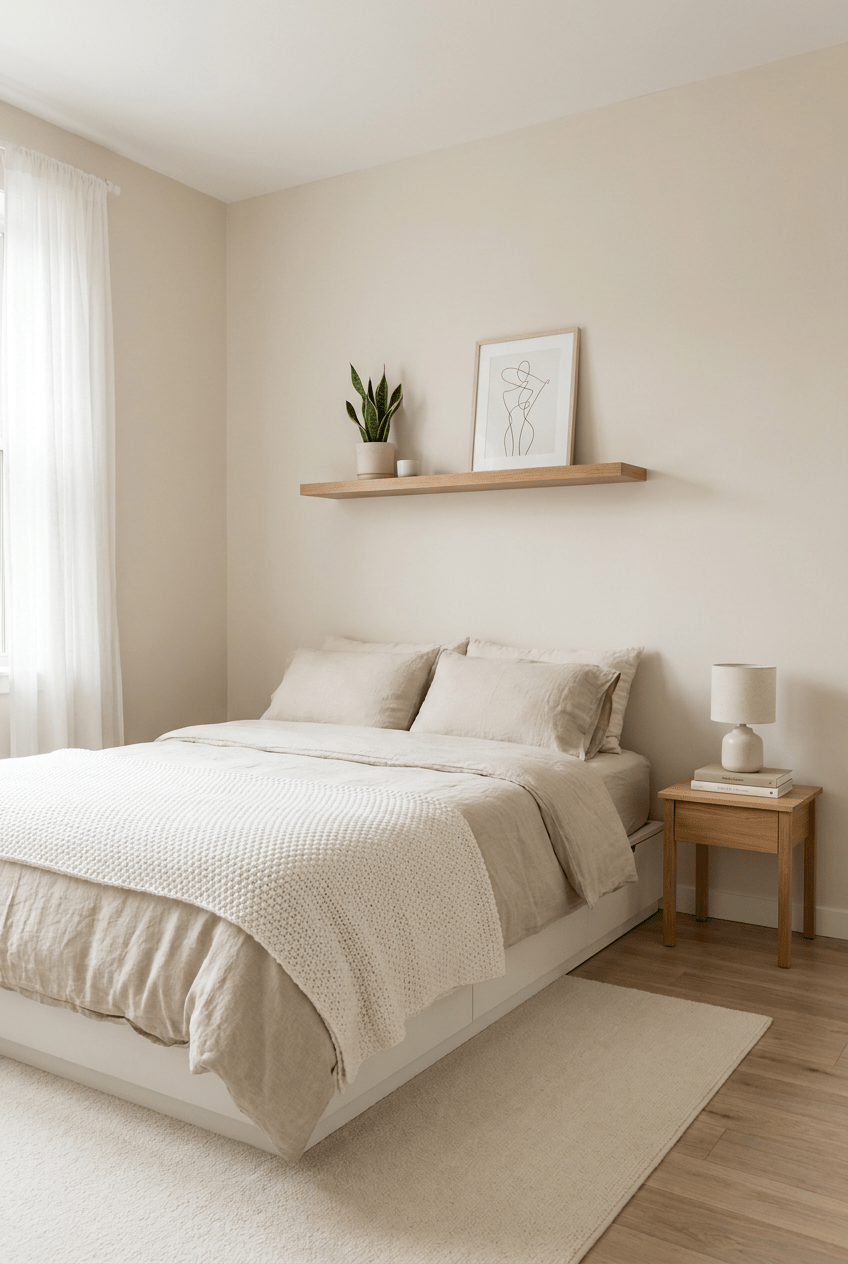
This one is free. Take everything off the nightstand and dresser, wipe them down, and put back only what you use every night: a lamp, a book, a glass of water and maybe a small plant. The minimal bedroom in this photo has a lamp and one book on its nightstand and nothing else.
Put chargers, hand cream and other small things in a drawer or a small lidded box, so they're close by but out of sight. A small tray groups the things that stay out, which looks neater than loose items.
Check under the bed and behind the door while you're at it. A clear floor makes the room feel bigger and calmer.
A single floating shelf above the bed or nightstand, like the wooden one here, gives a plant and a print a home without cluttering the surfaces below. Simple shelves cost $15 to $25; screw them into studs or wall anchors, and check your lease about wall fixings.
If the clutter keeps coming back, the room probably needs more hidden storage rather than more discipline. Our guide to small bedroom storage ideas covers under-bed boxes, over-door organizers and nightstands with drawers.
4. Add a plant or dried flowers
Something living softens a bedroom. Small pots of pothos, snake plant or a succulent cost $5 to $15 at a grocery store or garden center and cope with the lower light of most bedrooms.
The plants in these photos sit on windowsills and nightstands. Use a saucer or a plastic nursery pot inside a decorative one so water doesn't mark the furniture.
If you're away a lot or the room is dark, a bunch of dried flowers or pampas grass in a vase lasts for months and costs about $10 to $20.
Water most small houseplants when the top inch of soil feels dry, roughly once a week in summer and less in winter. Overwatering kills more bedroom plants than neglect does.
5. Move the furniture around
Rearranging is free and can make a room feel completely different. Try moving the bed to the wall opposite the door, so you can see the entrance from bed, or away from the window if drafts or streetlights bother you.
Leave about 24 to 30 inches of walking space around the bed on the sides you get in and out of. If the bed is against a wall to save space, keep the open side facing the door.
Measure before you move anything heavy, and ask for help with the bed frame and dresser. Lift with your legs, and slide heavy pieces on furniture sliders or a folded towel to protect the floor.
6. Use the wall above the bed
A blank wall above the bed is one of the easiest places to add personality. The first photo has three framed botanical prints in a row; the rustic bedroom in this photo has a shelf of books and LED candles above a pallet headboard wrapped in fairy lights.
Free printable art from museum archives and public-domain collections, printed at a local print shop for a few dollars, fills inexpensive frames. Three matching frames cost $15 to $25 together and look better in a row than one small print.
Hang art so the bottom edge is 8 to 10 inches above the headboard, and center the group on the bed. Use light frames with removable hanging strips or small nails in a rental, and avoid anything heavy or glass-fronted directly over your head.
Stacked books, like the pile beside this bed, can stand in for a nightstand if you don't have one. Put the largest books at the bottom and keep the stack below the mattress height.
7. Add a rug or move the one you have
A rug warms a bedroom and gives your feet somewhere soft to land in the morning. The jute rugs in the first and fourth photos cost $20 to $30 in small sizes, and a 3-by-5 runner beside the bed is often enough.
If you already have a rug, try moving it. Placed under the lower two-thirds of the bed so it extends 18 to 24 inches on each side, it frames the bed better than a rug off to one side.
Use a rug pad or rug tape on hard floors so it doesn't slide.
A sample $30 weekend plan
If you want to spend the full $30 on the changes that make the most difference, here's one way to split it: about $8 on two warm white bulbs, $12 on a battery strand of fairy lights and $10 on a single pillow cover in a new color.
Add the free changes alongside it. Clear the nightstand, wash and iron the bedding, and try a new furniture layout. Print a few pieces of free art if you already have frames, and move a plant in from another room. Most of this fits in a Saturday afternoon, with time left to enjoy the room.
Common questions
What's the cheapest way to make a bedroom feel new?
Change the bulbs to warm white, clear every surface and wash and smooth the bedding. Those three cost almost nothing and change the room more than most purchases.
Are fairy lights safe on a headboard?
LED fairy lights stay cool and are safe on a wooden or upholstered headboard. Use a timer or switch them off before sleep, and don't use old incandescent strands near fabric.
Pick two or three of these for this weekend and see how the room feels before doing more. For bigger changes later, see our guides to DIY headboards for under $50 and small bedroom lighting.