
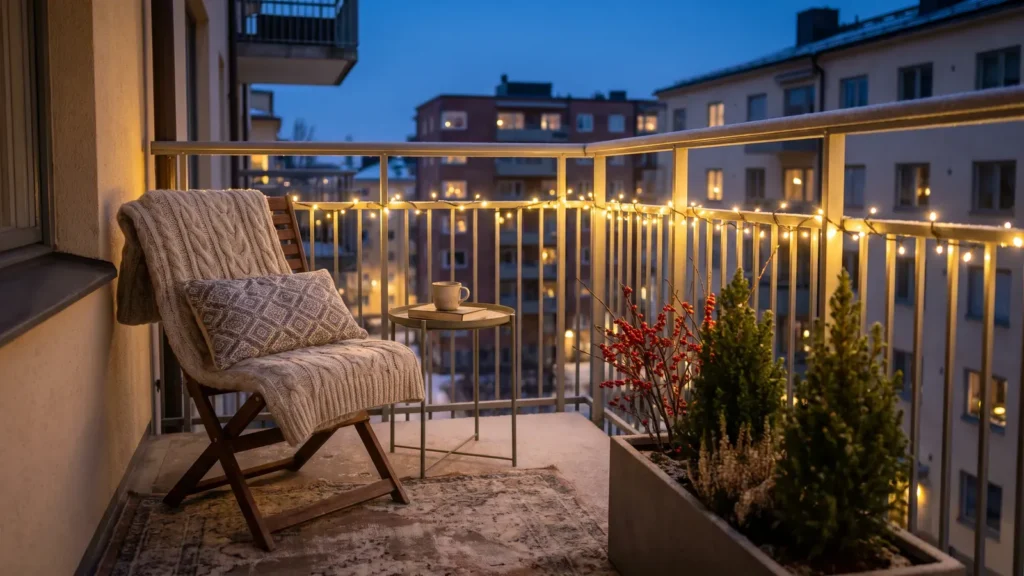
A small balcony works hard all summer, and then winter arrives and it turns into a storage spot for a soggy cushion and a pot of dead basil. Cold, wind and freeze-thaw cycles are tough on everything out there: terracotta cracks, cushions mildew, plants lose their roots and light furniture can end up in a neighbor’s space after one stormy night.
Winterizing a small balcony takes an afternoon and a few inexpensive supplies. The goal is simple: bring in what won’t survive, protect what stays out, secure anything the wind can catch and keep one small, cozy corner you’ll actually use on a bright winter day. The steps below are renter-friendly, with notes on what to check in your lease before you add heat or lights.
1. Do a fall Clear-Out before the first freeze
Start before the first hard frost, which arrives from mid-October to November across much of the country. Take everything off the balcony floor and sort it into three groups: things that come inside for the winter, things that stay out and need protecting, and things that are finished. Annual flowers and summer herbs that are past their best can go into the compost or trash. Empty their pots, brush them out and store them so they don’t fill with water and crack.
With the floor clear, sweep and wash it, and check the drain or the gap at the edge of the floor where water runs off. Fallen leaves and potting soil block drains, and standing water that freezes can damage the surface and drip onto the balcony below. This is also a good moment to look for anything your building asks you to remove in winter. Some buildings require balconies to be cleared for facade or railing inspections.
Make a note of what you used and loved this year and what never left its spot. If a piece of furniture sat unused all summer, winter is the time to sell it or give it away rather than store it.
- Sort into: comes inside, stays out and protected, finished
- Empty and store pots you won’t use, so they don’t crack
- Clear the drain and sweep the floor
- Check your building’s winter balcony rules
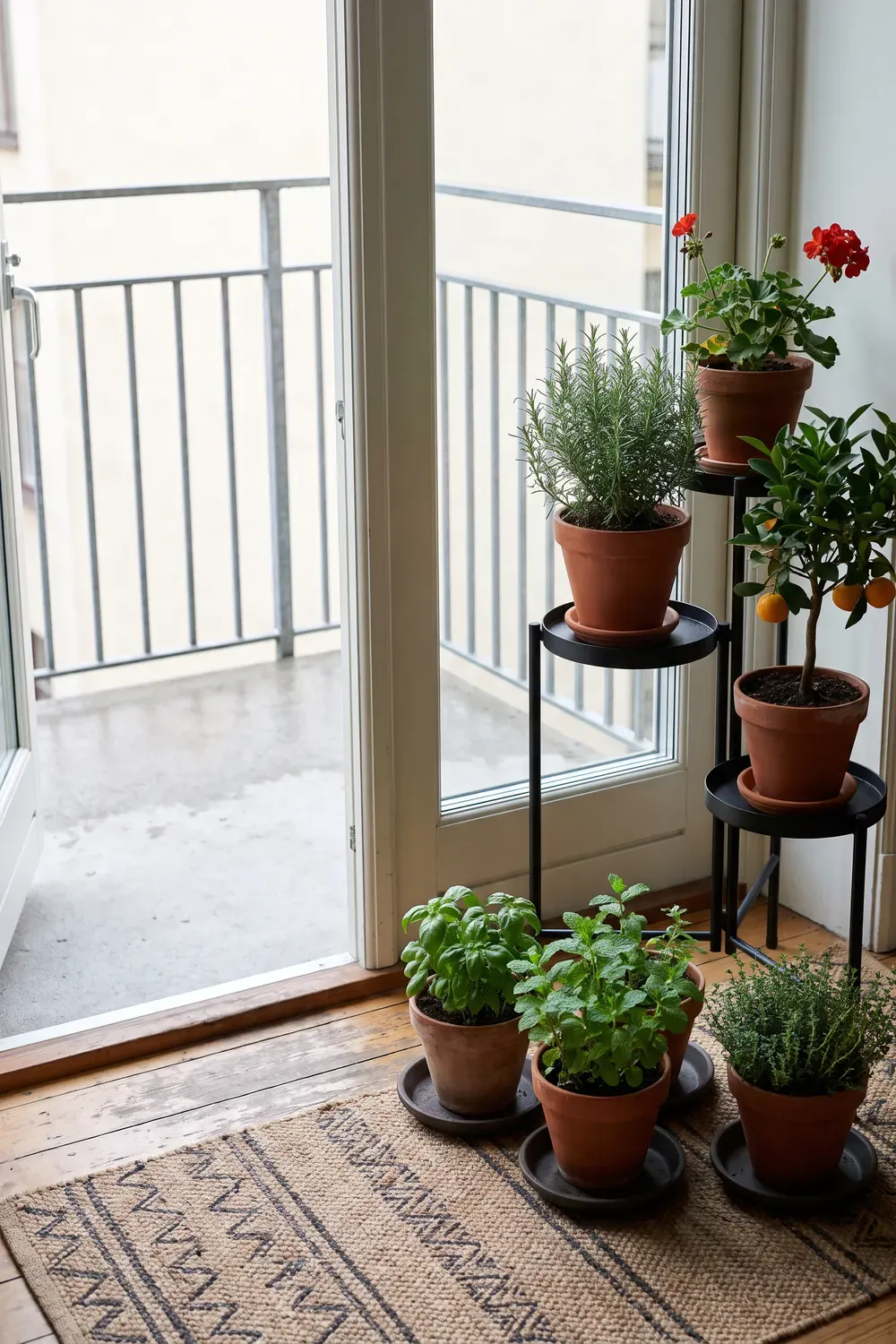
2. Bring tender plants indoors
Most tropical plants, many houseplants that summered outside, citrus trees, geraniums and tender herbs such as rosemary and basil won’t survive a freeze. A good rule of thumb is to bring them in once night temperatures start dropping to around 50°F, before the first frost, because many tropicals are damaged by cold well above freezing.
Before anything comes inside, check it for pests. Look under leaves and around stems for aphids, mealybugs and spider mites, and hose the plant down or wipe the leaves. Keep newcomers apart from your other houseplants for a week or two if you can. Give the plants the brightest window you have, ideally south- or west-facing, and expect a few leaves to drop as they adjust to lower indoor light.
Indoor heating dries the air, so water less often than in summer but check the soil regularly, and use saucers or trays so water doesn’t reach rental floors or windowsills. If you don’t have room for every plant, bring in the expensive ones and the perennials first. Cheap annuals are usually easier to buy fresh in spring.
Tip: Take cuttings of geraniums, coleus or herbs and root them in a glass of water on the windowsill. They take far less space than the full plants.
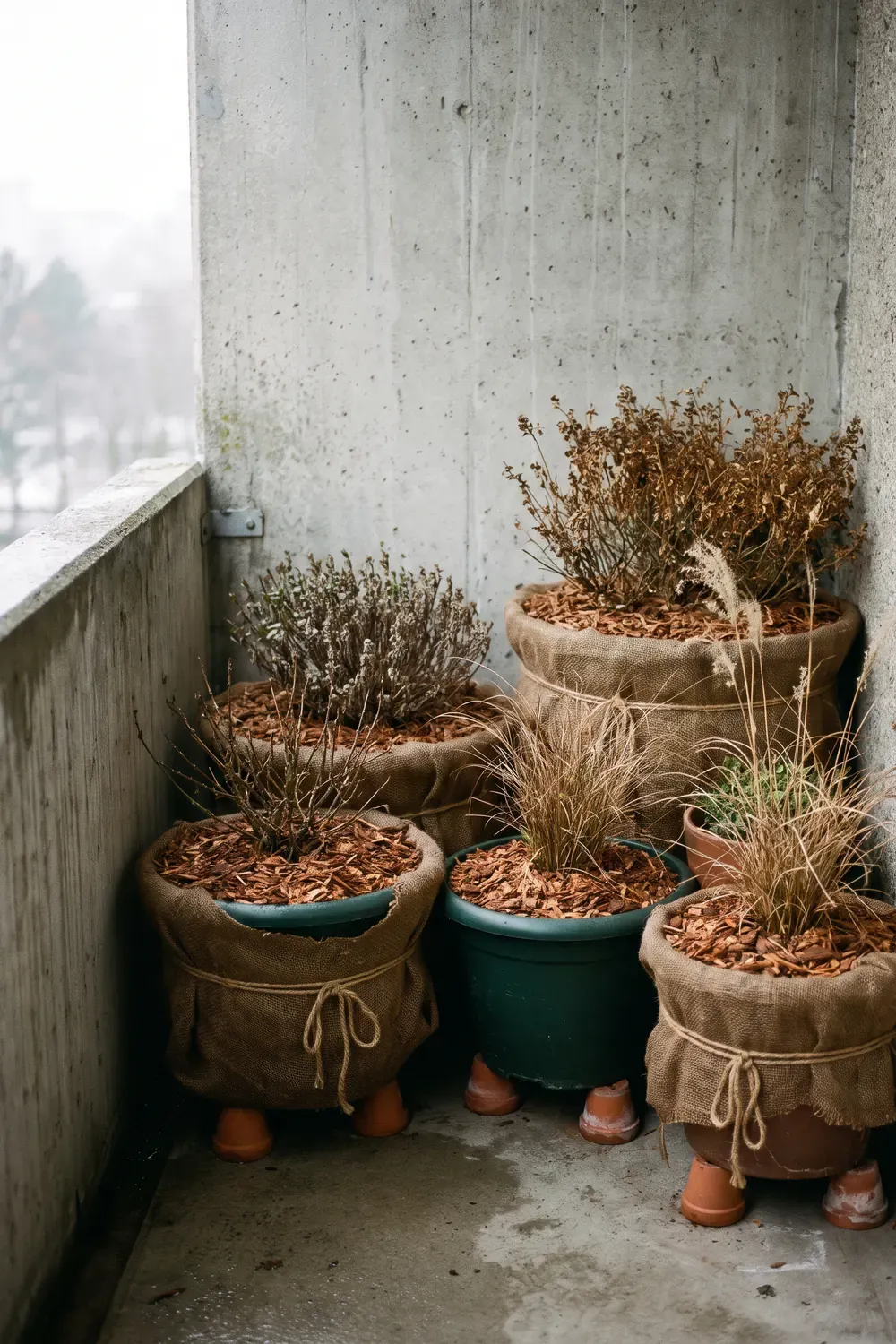
3. Protect the hardy pots that stay out
Plants in pots are more exposed than the same plants in the ground. The soil in a container can get as cold as the air around it, so the roots get no protection. Penn State Extension suggests that a container plant should be hardy to at least two zones colder than your area if it will stay outside all winter. A shrub hardy to zone 6 in the ground may only be safe in a pot in zone 8.
To help hardy plants make it through, group the pots tightly together against the building wall, which is usually warmer and more sheltered than the railing. Wrap the pots, not the plants, in burlap, bubble wrap or old blankets, and tie them with twine. Raise them on pot feet or small bricks so they drain and don’t freeze to the floor. Water them well before a hard freeze, because moist soil holds heat better than dry soil, and evergreens keep losing water through their leaves all winter.
Pot material makes a difference too. Terracotta, glazed ceramic and some concrete pots can crack in freeze-thaw cycles. Plastic, fiberglass, resin, metal and wood planters usually handle winter far better. Move any delicate pots inside or into a closet once they’re empty.
- Choose plants hardy to two zones colder than yours
- Group pots against the wall, away from the windy railing
- Wrap pots in burlap or bubble wrap and raise them on pot feet
- Water before a freeze; store terracotta and glazed pots indoors
4. Store or cover furniture and cushions
Cushions are the first thing to bring in. Even outdoor fabric that is labeled water resistant can stay damp for weeks in winter and grow mildew from the inside. Clean them, let them dry completely and store them in a breathable bag or bin under the bed, in a closet or inside a storage bench. The same goes for outdoor pillows, throws and fabric umbrellas.
Folding furniture is easy: fold it and store it flat behind a door, under a bed or in a closet. Bistro chairs and slim folding tables take very little room. If something has to stay out, use a fitted, breathable cover rather than a plastic tarp, which traps condensation. Secure the cover with its straps so it doesn’t turn into a sail.
Metal furniture can stay out if it’s rust resistant, but a quick wipe and a coat of car wax or furniture wax on the joints helps prevent rust spots. Wood furniture benefits from a fresh coat of outdoor oil before winter. If you’re thinking about replacing pieces next year, our guide to space-saving balcony furniture covers foldable and stackable options.
Tip: Keep one cushion inside by the balcony door. Bring it out on sunny days instead of leaving a cushion outside all winter.
5. Secure anything the wind can catch
Winter storms bring strong gusts, and on a higher floor the wind is stronger still. Lightweight chairs, empty pots, plastic planters, decorations and furniture covers can blow off a balcony and injure someone below or damage a car. Walk around the balcony and imagine a strong gust: anything that could lift or tip needs to come inside, be weighed down or be tied to something solid.
Railing planters deserve special attention. Most building rules ask that they hang on the inside of the railing, not the outside, and that they’re fastened securely with brackets designed for your railing type. If yours are hung on the outside, move them in for winter, or take them down altogether if they’re empty.
Weigh down pots with a few stones in the base and keep them away from the railing edge. Tie down any furniture that stays out with outdoor cord or a bungee to a fixed point, but don’t drill into the building to do it. Most leases forbid it, and the railing itself is part of the building’s structure.
- Bring in lightweight chairs, empty pots and loose decorations
- Railing planters on the inside of the railing, securely fastened
- Weigh down pots and tie down furniture without drilling
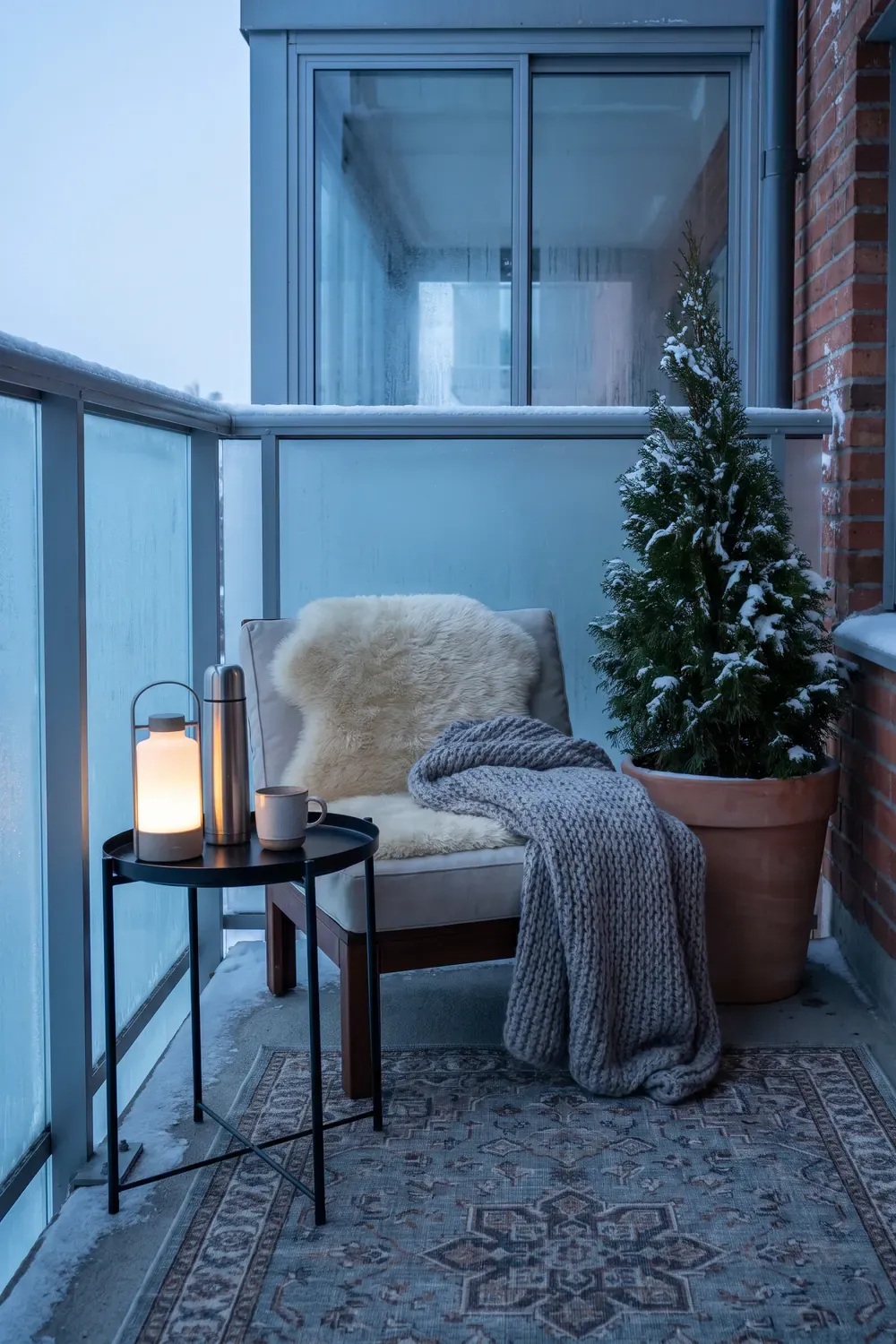
6. Make a cozy corner for short winter sits
A winterized balcony doesn’t have to be off-limits. On a sunny afternoon, ten minutes outside with a hot drink can be one of the best parts of a long winter. Keep one corner ready for those moments: a single sturdy chair, a small table for a mug and an outdoor-rated rug to take the chill off the floor.
Textiles do the heavy lifting. Bring out a thick wool or fleece blanket, a faux sheepskin throw or a chunky knit when you sit, and take them back inside afterward so they stay dry. A thermos keeps a drink hot for a whole sit. Battery or solar lanterns with warm white light make the corner inviting after dark, with no cords to run through the door.
Keep the corner compact so the rest of the balcony stays clear for snow, drainage and access. A single folding chair can be set up in a minute and put away when the weather turns. For more ideas on making a small outdoor space feel good, see our balcony glow-ups.
Tip: Put the chair where the low winter sun reaches. On a south- or west-facing balcony, a sunny corner can feel several degrees warmer than the shade.
7. Stay warm safely: what’s usually allowed
Heat is where small balconies run into rules. The national fire code used by many US cities, NFPA 1, says gas, charcoal and pellet grills can’t be used on the balconies of multifamily buildings, and many local fire codes and leases go further and ban propane patio heaters, fire pits and anything with an open flame. These rules exist because a balcony fire spreads quickly up the outside of a building. Check your lease and your building’s rules before you buy any kind of heater.
Where heaters are allowed, the safer option is usually an electric heater that is specifically rated for outdoor use. Plug it directly into an outdoor outlet with GFCI protection, never into an indoor extension cord run through the door, and keep it well away from throws, cushions and plants. Turn it off whenever you go inside.
Often, the simplest heat is the best: a hot water bottle in your lap, a heated throw that you use indoors and carry out for a few minutes, warm slippers or boots and a hat. They’re cheaper, they need no permission and nothing can tip over.
- No gas, charcoal or pellet grills on multifamily balconies (NFPA 1)
- Propane heaters, fire pits and candles: often banned, so check your lease
- Electric heaters only if outdoor-rated and plugged into a GFCI outlet
8. Handle snow and ice without damaging the balcony
Snow on a balcony adds weight and, when it melts, water that has to drain. Clear heavy snow with a plastic shovel or a stiff broom, and push it into a bucket or toward the drain rather than over the railing, where it can fall on people or balconies below. Metal shovels can scrape waterproof coatings and concrete surfaces.
Be careful with de-icers. Standard rock salt can damage concrete over time and corrode metal railings and furniture, and many buildings ban it on balconies for that reason. For traction, a sprinkle of sand or non-clumping kitty litter on the path to your chair works well. If you need a de-icer, choose one labeled safe for concrete and use it sparingly, and check your building’s rules first.
Keep the drain clear all winter. After each snow or cold snap, check that meltwater can actually run off, and remove leaves and debris that collect at the edges. Ice that builds up against the door frame can let water seep inside, which is worth reporting to your landlord early.
Tip: Lay an outdoor doormat inside and outside the balcony door so snow and grit don’t reach rental floors.
9. Add winter interest with evergreens and lights
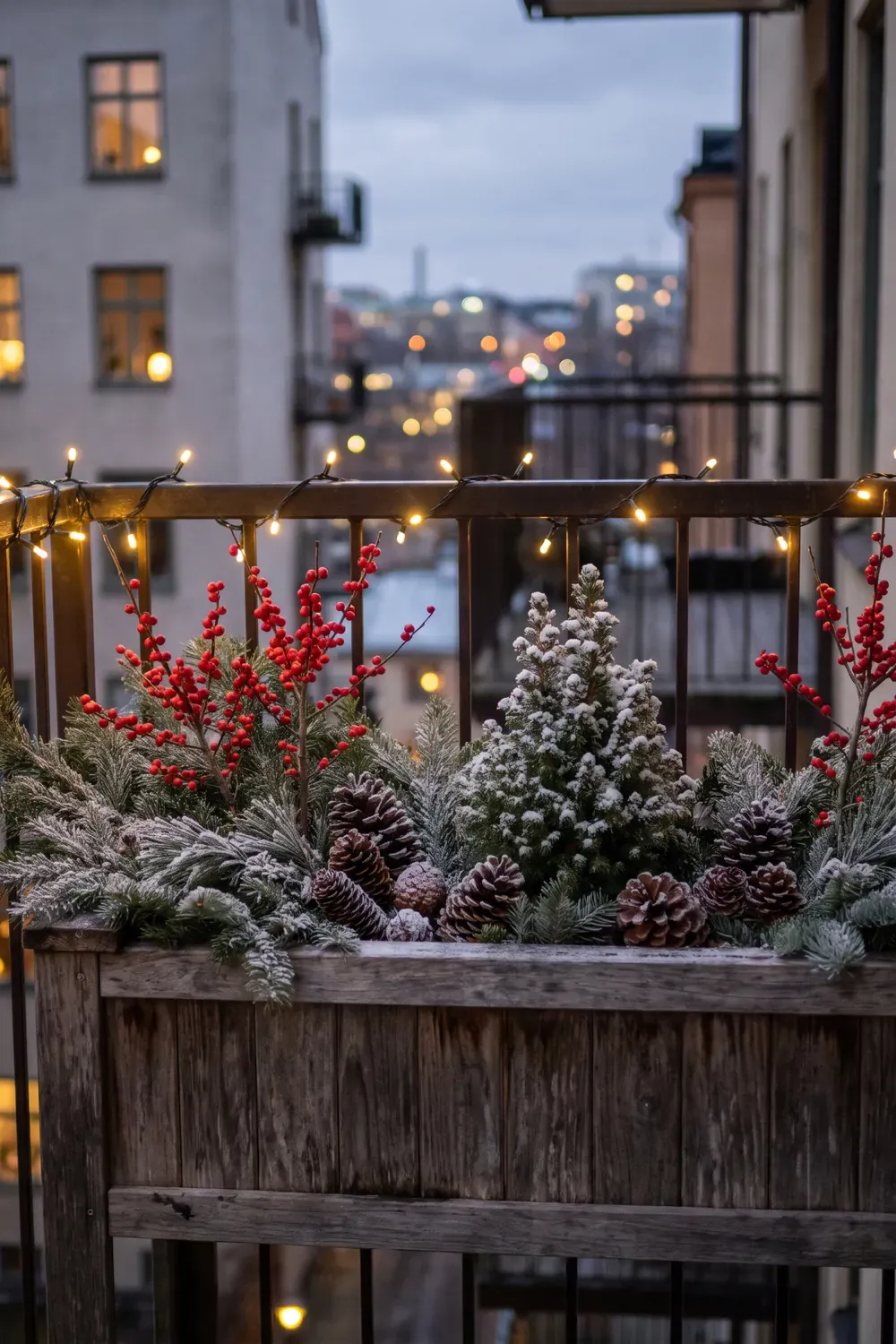
Empty planters look bleak all winter, but they’re easy to fill for very little money. Push cut evergreen boughs, holly or winterberry branches and pine cones into the old potting soil, where they stay fresh for weeks in cold weather. Many garden centers and tree lots sell bundles of greens cheaply in November and December, and trimmings from a real Christmas tree work too.
For living plants, dwarf conifers, boxwood and ornamental grasses in plastic or fiberglass pots can stay out all winter if they’re hardy enough for a container, as described above. A pair of small evergreens in matching pots makes even a tiny balcony look cared for from inside the apartment.
String lights finish the look. Use outdoor-rated lights and wrap them around the railing with clips or ties, not nails or adhesive that could damage the finish. Solar or battery strands avoid running a cord through the door. For more ideas, see our guide to outdoor string lights for a small balcony.
- Cut evergreen boughs, winterberry and pine cones in old planters
- Dwarf conifers or boxwood in frost-proof pots
- Outdoor-rated, solar or battery string lights clipped to the railing
Common questions
When should you winterize a balcony?
Before the first hard frost, which is mid-October to November in much of the US. Bring tender plants in once nights fall to around 50°F.
Can potted plants stay on a balcony all winter?
Only hardy ones. Choose plants rated two zones colder than your area, group the pots against the wall, wrap them and use frost-proof pots.
Can you use a heater on an apartment balcony?
It depends on your lease and local fire code. Grills are banned on multifamily balconies under NFPA 1, propane heaters often are too, and electric heaters must be outdoor-rated.
Should balcony cushions come inside for winter?
Yes. Even outdoor cushions can mildew in damp winter weather. Dry them fully and store them indoors.
Do the clear-out and the plant move before the first frost forecast, and leave the cozy corner for last; it is the part you will enjoy on sunny winter afternoons. An afternoon now saves cracked pots, mildewed fabric and dead plants in spring.
While you’re getting ready for the cold, our guide to winterizing your apartment as a renter covers drafts and heat indoors. And when spring comes, these low-maintenance balcony garden ideas will help you start fresh.