
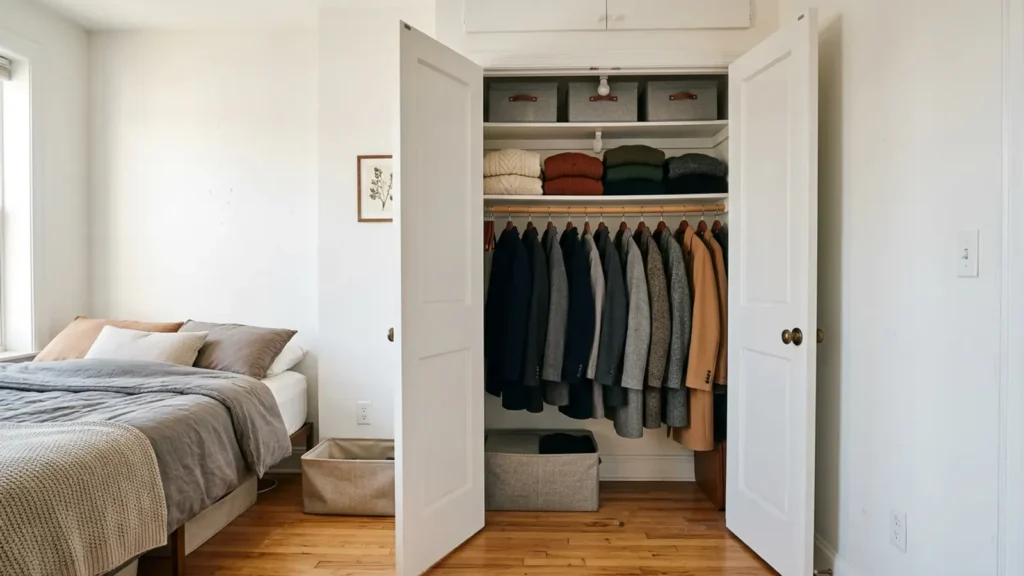
A small apartment closet can hold one season of clothes comfortably and two seasons badly. Come late fall, bulky sweaters and coats start piling onto chairs while summer dresses still take up half the rail. The fix isn’t a bigger closet, it’s a proper seasonal swap: pack away what you won’t wear for months, and make room for the heavy layers you’ll reach for every day.
The steps below cover storing winter clothes in a small apartment, or more accurately, rotating both seasons through a tiny closet without damaging anything. Set aside an afternoon, put on something to listen to, and work through it in order.
1. Edit before you store anything
The easiest clothes to store are the ones you no longer keep. Before packing away summer clothes, pull out anything you didn’t wear this year, anything that doesn’t fit, and anything stained or stretched beyond saving. Do the same with winter things as they come out: count your coats and sweaters, then count how many you actually wore last winter.
Sort what you’re letting go into donate, sell and recycle piles, and get them out of the apartment the same week. In a small home, a bag of donations sitting by the door for a month is just more clutter. Every item you edit now is one less thing to fold, store and move again next spring.
Tip: Turn all your hangers backward at the start of the season and flip each one when you wear the item; by spring, anything still backward is a good candidate to let go.
2. Wash or clean everything first
Never store clothes dirty, even ones that look clean. Invisible body oils, food spots and deodorant marks can set into permanent stains over months, and soiled wool is what clothes moths are most attracted to. Wash or dry-clean everything before it goes away, and make sure it’s completely dry so no moisture is sealed in with it.
Remove dry-cleaning plastic before storing anything long-term, because it traps humidity against the fabric. Empty pockets, close zips and buttons, and repair small tears now while you remember. It’s a little extra work in October that saves you from a disappointing surprise in April.
3. Use your suitcases as storage
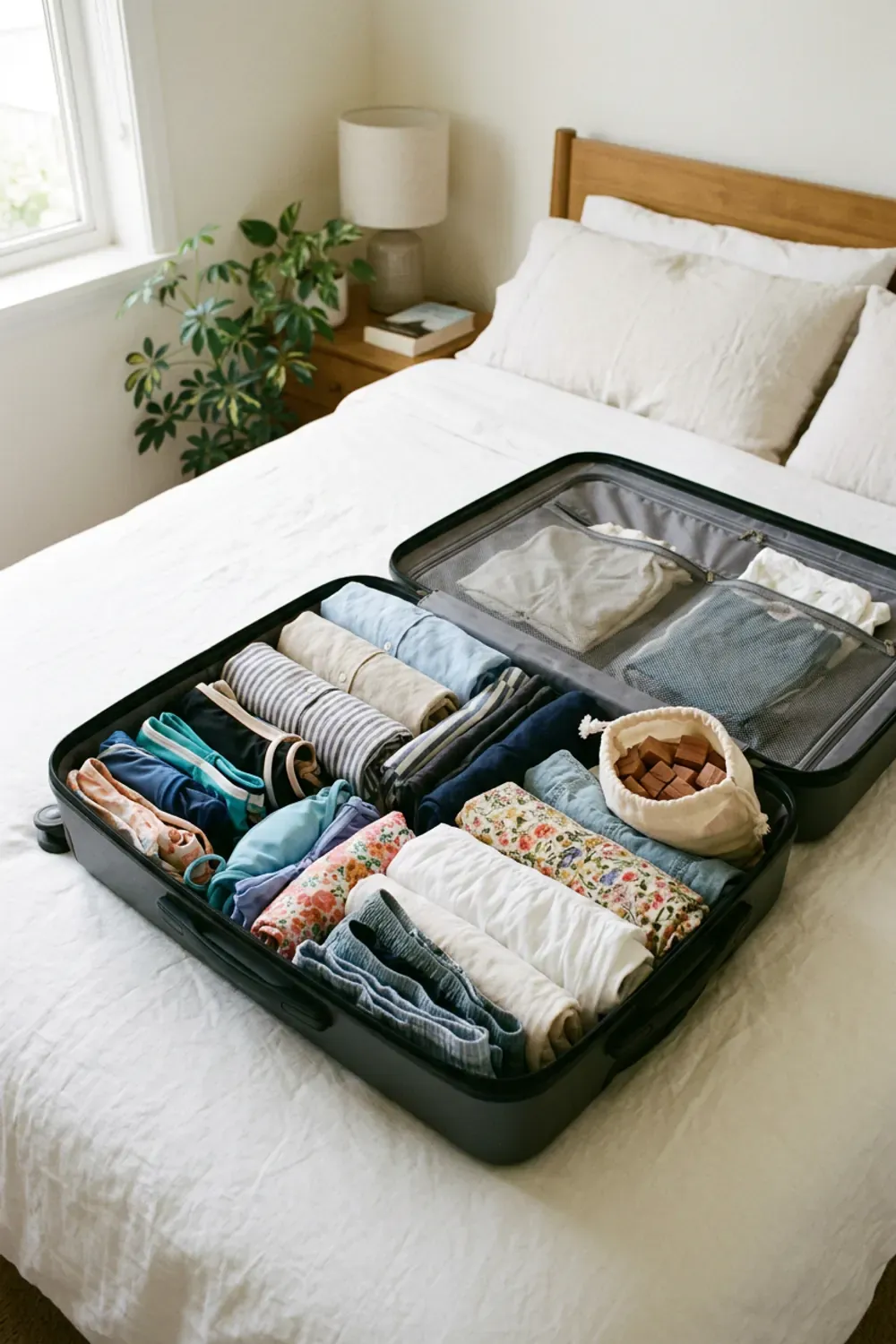
Empty suitcases are one of the biggest space wasters in a small apartment: they take up a closet corner or the top of the wardrobe and hold nothing but air. Fill them with your folded off-season clothes instead. Hard-shell cases keep things clean and stack neatly, while soft ones can squeeze under a bed or into an awkward gap.
Pack heavier pieces at the bottom and lighter ones on top, tuck in a few cedar blocks or lavender sachets, and keep a short list of what’s inside each case on your phone. When you travel, you’ll simply swap the clothes into a bin for the trip, which is a small price for a lot of free storage.
4. Claim the space under the bed
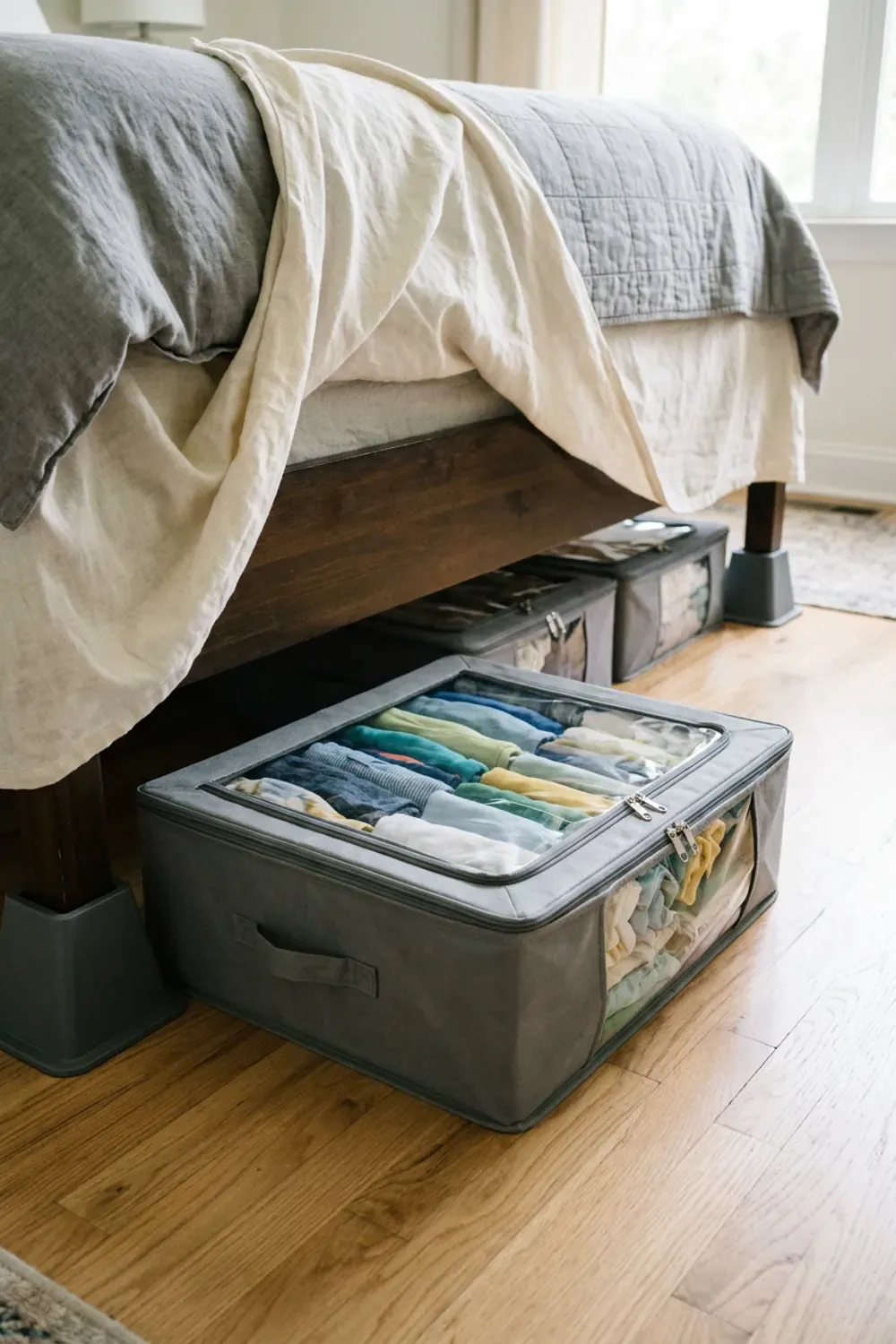
Under the bed is the largest unused storage area in most small apartments. Low, zip-top fabric bins or lidded plastic boxes slide in and out easily and keep dust off folded clothes. Fabric bins with breathable sides are better for natural fibers like wool and cotton, while clear plastic lids make it easy to see what’s inside.
If your bed sits too low, simple bed risers lift it a few inches and can roughly double what fits underneath. A bed skirt hides the bins if you prefer a cleaner look. For more ideas, these under-bed storage ideas show options that look good as well as hold a lot.
5. Know what to vacuum seal and what not to
Vacuum storage bags are tempting because they shrink a pile of clothes to a fraction of its size. They’re great for synthetic items like fleece, polyester jackets, spare bedding and pillows. They’re not good for everything, though, and squashing the wrong things for months can ruin them.
Avoid long-term vacuum sealing for down coats and comforters, which need air to keep their loft, and for wool, cashmere and leather, which do better with some airflow. Store those in breathable cotton garment bags or fabric bins instead. Whatever you do seal, open the bags occasionally if they’re stored for a long time so nothing stays compressed indefinitely.
- Fine to vacuum seal: fleece, synthetic jackets, spare bedding, pillows
- Store breathable instead: down, wool, cashmere, leather
- Never store in dry-cleaner plastic
6. Fold knits and protect them from moths
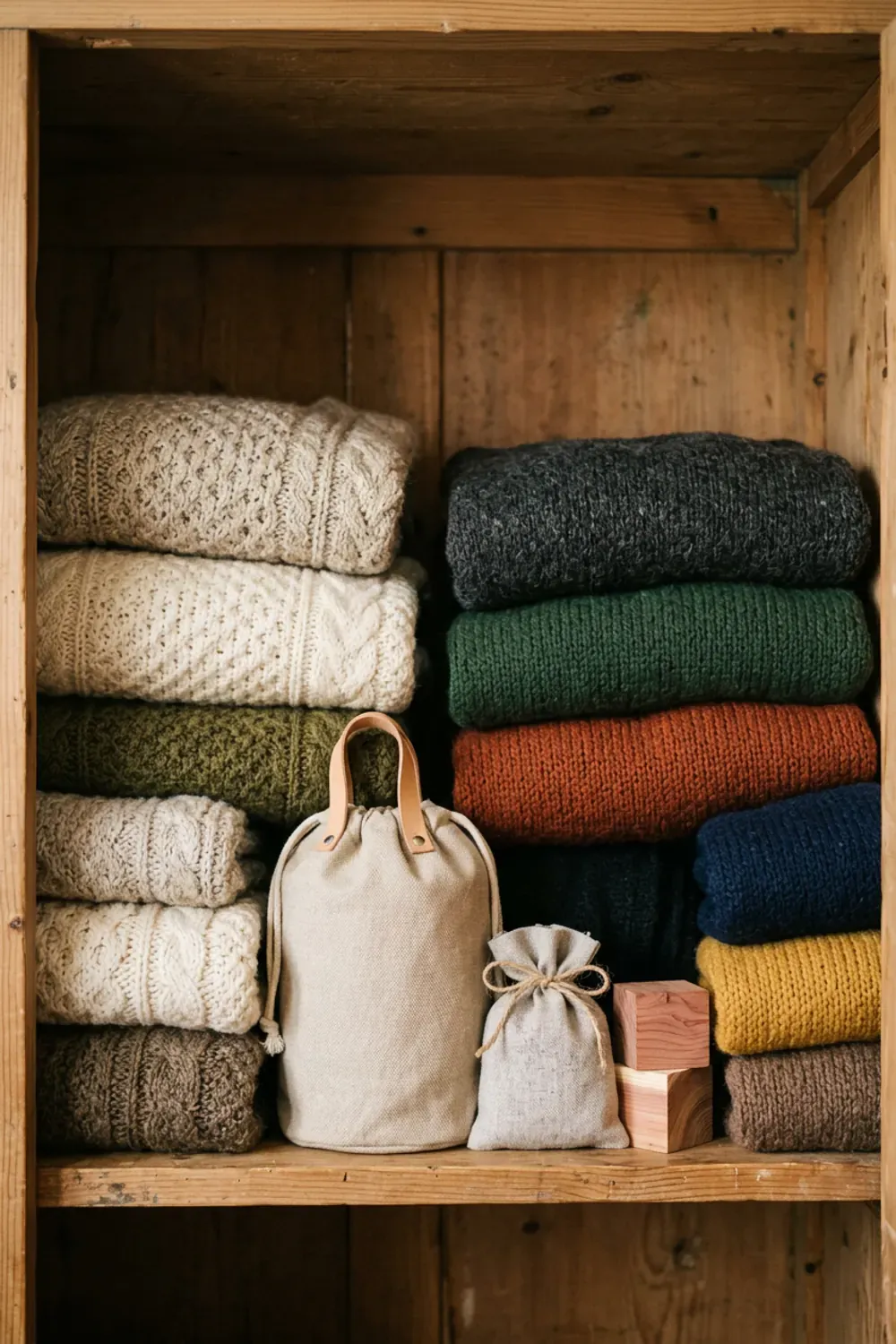
Heavy sweaters stretch out of shape on hangers, so fold them and stack them in short piles on a shelf or in a drawer. Keeping stacks to three or four sweaters means you can pull one out without the whole pile toppling. A hanging fabric shelf organizer inside the closet adds folded storage without needing a dresser.
Clothes moths love wool that’s stored dark and undisturbed. Cedar blocks and lavender sachets tucked between stacks help deter them; lightly sand cedar every season to refresh its scent. Skip mothballs in a small apartment, since their strong fumes linger in small spaces. Most importantly, only store wool clean, because moths go after food and body residue.
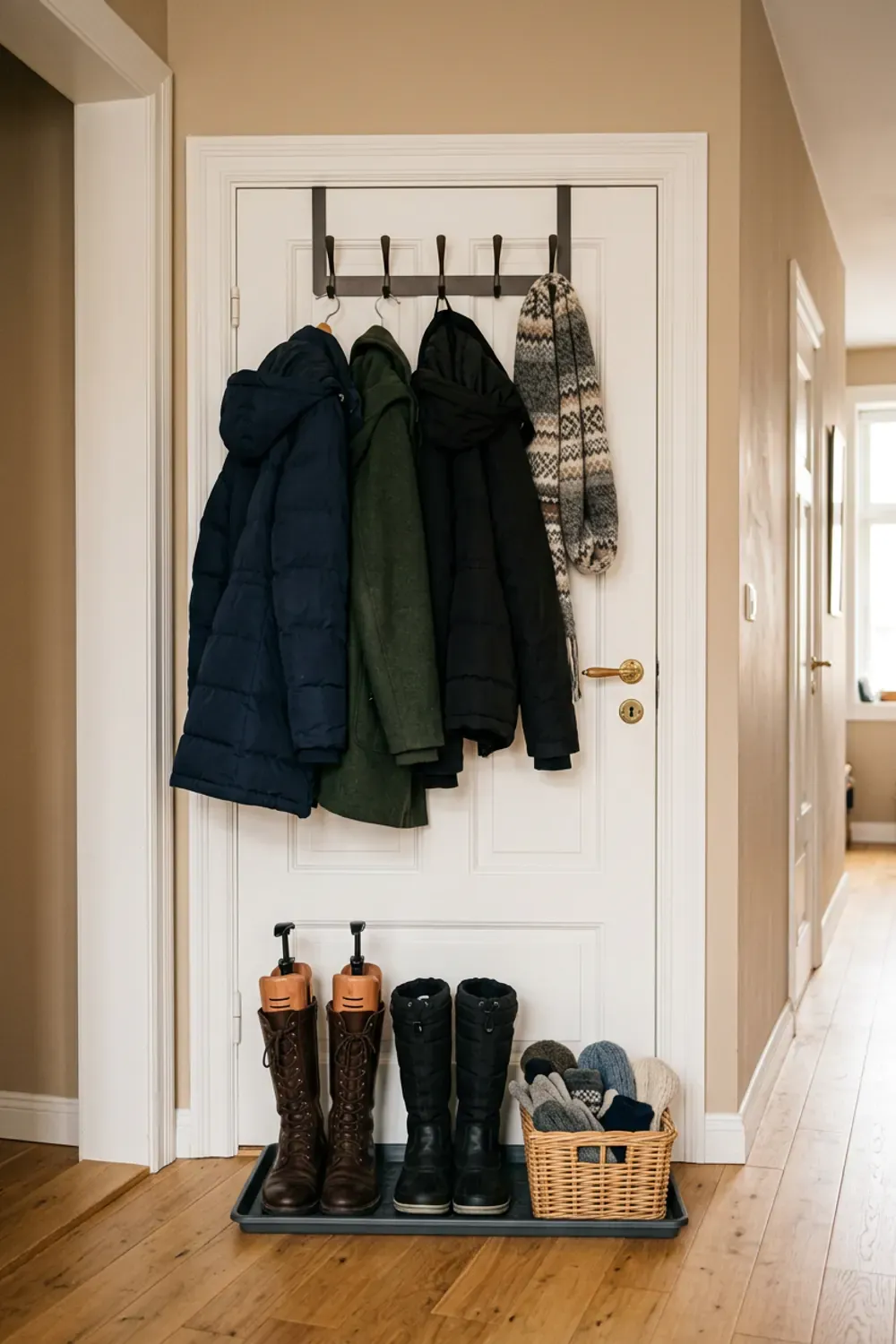
7. Make room for coats and boots by the door
Winter coats are the bulkiest things you own, and in a small apartment they need a home that isn’t the back of a chair. An over-the-door hook rack on a bedroom or entry door holds three or four coats without using any floor space. Use sturdy hangers for heavy wool coats so the shoulders keep their shape.
Boots need a spot too. A slim boot tray by the door catches meltwater and salt, and boot shapers or rolled-up magazines keep tall boots from slumping and creasing. Hats, gloves and scarves fit in a small basket on a shelf. If you’re short on wall space, these vertical storage ideas help you use the height of the room.
8. Use the high and hidden spots
The shelf above the closet rail and the top of the wardrobe are perfect for things you won’t need for months. Lidded fabric boxes keep them dust-free and look tidier than open piles. Put the heaviest boxes lowest and the lightest at the very top, and keep a small step stool nearby so you’re not climbing on chairs.
Look for other hidden spaces too: a storage ottoman, a trunk at the foot of the bed, or the bottom of a coat closet. These storage ottoman ideas double as seating and blanket storage, which is exactly what a small apartment needs in winter.
9. Keep stored clothes dry and label everything
Moisture is the enemy of stored clothes, so avoid damp basements, exterior closets that get cold and humid, and building storage lockers unless you use sealed bins. Keep bins off a concrete floor, add a couple of silica gel packs to boxes that go anywhere damp, and never store anything still slightly wet from the wash.
Label every box and bin on the short end so you can read it without pulling it out, and snap a quick photo of what’s inside before you close it. When a cold snap arrives early or a warm spell hits in March, you’ll know exactly which box holds the thing you need. For more ways to fit it all in, see these clever storage ideas.
10. Keep a small transition capsule
Fall and spring rarely switch overnight. Rather than packing away everything at once, keep a small capsule of in-between pieces in the closet: a light jacket, a couple of long-sleeved tops, one pair of everyday sneakers. That way a mild week in November doesn’t send you digging through boxes.
Once the weather has properly turned, finish the swap and enjoy a closet that only holds what you’ll actually wear this season. It’s easier to get dressed, easier to keep tidy, and the whole apartment feels calmer. For the rest of the bedroom, these small bedroom storage ideas keep everything else in check.
If you want a simple plan for the afternoon itself, work through it in this order so nothing ends up in a pile on the bed overnight:
- Pull everything off-season out of the closet and drawers
- Edit: donate, sell or recycle what you didn’t wear
- Wash or clean what you’re keeping and let it dry fully
- Pack suitcases and under-bed bins, adding cedar or lavender
- Label each box and photograph what’s inside
- Bring winter clothes in, folding knits and hanging coats on sturdy hangers
Storing winter clothes in a small apartment is really about rotation. Edit what you own, clean before you store, use the space you already have in suitcases, under the bed and up high, and give bulky coats and boots their own spot by the door. Down and wool need to breathe, synthetics can be squashed, and everything needs to stay dry.
Do the swap in one afternoon, label as you go, and you’ll do the reverse in spring in half the time. A small closet that only holds one season’s clothes is one you’ll actually enjoy opening every morning.