

In a tiny apartment, the problem is rarely the total amount of space. It's that the storage sits in the wrong places: one closet by the door and a lot of empty wall. Moving storage to where things are actually used does more than buying another shelf unit.
These ideas go room by room, starting with the living area, where the biggest gains usually are. Most of them are renter-friendly. Where something needs screws in the wall, that's noted, along with what it typically costs.
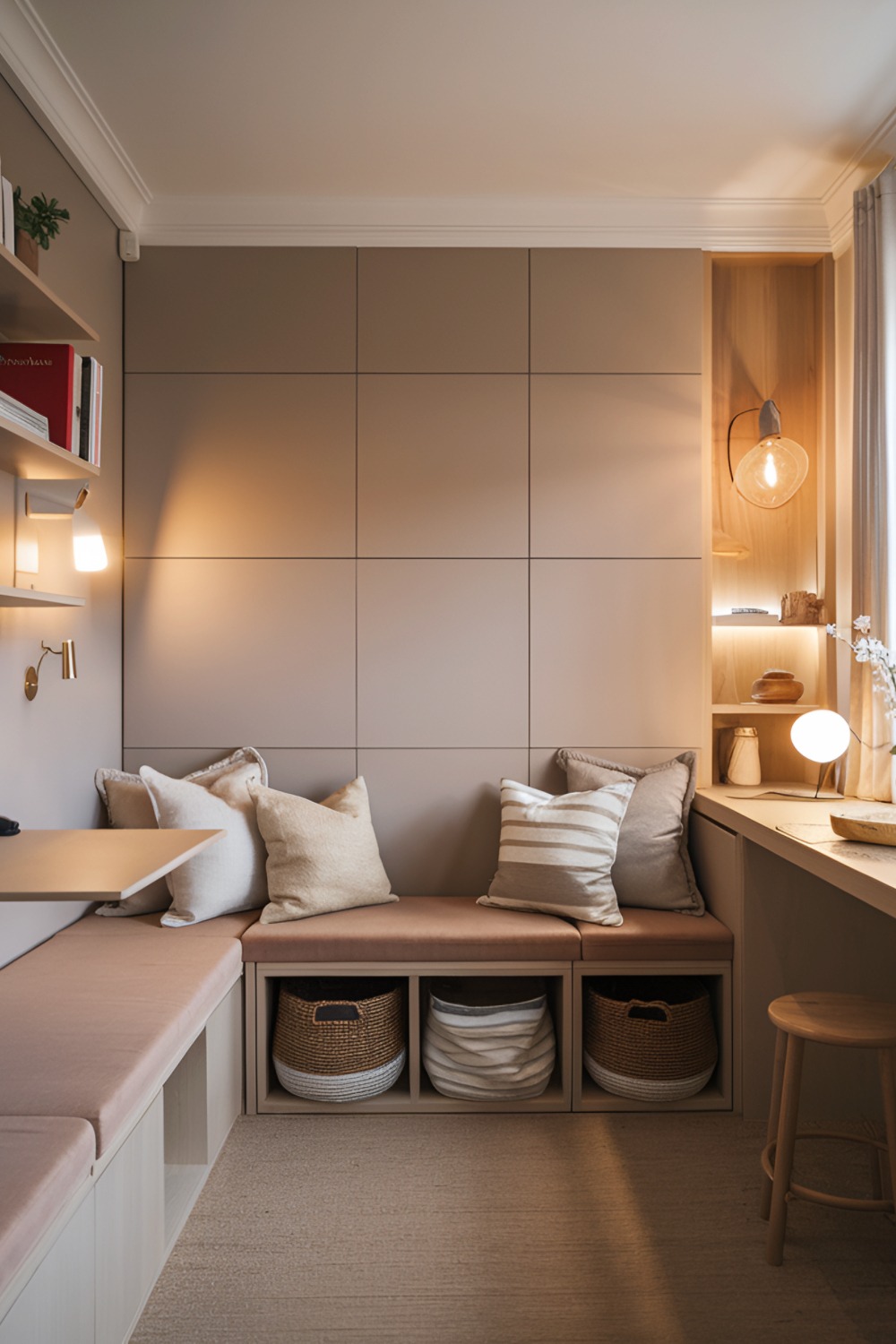
1. Choose seating that stores things
A bench with open cubbies or drawers underneath does the job of a chair and a cabinet at once. Under a window, like the one in the photo, it also uses a strip of wall that's hard to furnish any other way. A comfortable bench seat is 16 to 18 inches high and at least 15 inches deep, and baskets in the cubbies keep the contents from looking messy.
You don't need a built-in. Low cube shelving laid on its side, such as IKEA's Kallax two-by-four unit, makes a sturdy base that holds 13-inch fabric bins. Top it with a 2- to 3-inch foam cushion cut to size and a few pillows. Use the cubbies for things you want close to the sofa, like blankets and board games.
Before you build or buy, sit on the spot you're planning to use for a few evenings. A window bench is lovely in daylight but can be drafty in winter, and if it blocks the only route to the window latch or blind cord, you'll stop using one of them.
Tip: Leave the bench a couple of inches away from a radiator or baseboard heater, and don't block a heating vent with it.
2. Put the high wall to work
The wall space between about 6 feet and the ceiling is empty in almost every apartment. A single long shelf at that height, running the length of a wall or around a door frame, holds things you use a few times a year, such as spare bedding or a slow cooker. Lidded boxes in one color make it look tidy rather than cluttered.
High shelves need to be screwed into studs or with proper wall anchors, so check your lease and keep the anchor holes small so they're easy to fill when you move out. Keep heavy things lower down, and keep a sturdy step stool where you can reach it.
Hallways and the wall above a door frame are good places for this, because nobody looks up there. A shelf 10 to 12 inches deep fits a standard storage box. Leave at least 12 inches between the top of the boxes and the ceiling so you can lift them down without tilting them.
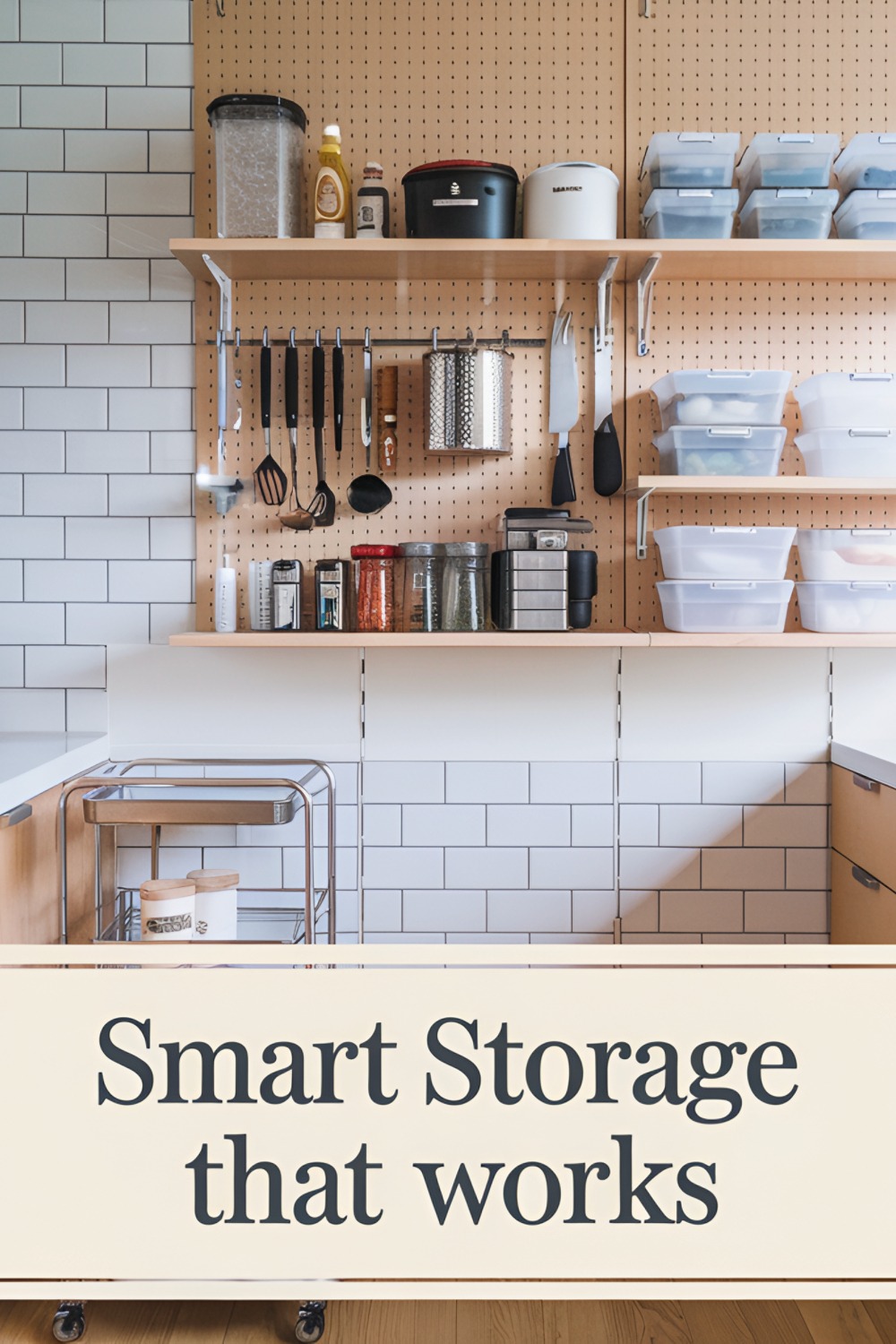
3. Turn one kitchen wall into a pegboard
A pegboard frees up drawers by moving utensils, pans and measuring cups onto the wall, where you can see and reach them. A 2-by-4-foot board with a set of hooks costs about $25 to $50, and painting it to match the wall makes it look like part of the kitchen. Add a couple of short shelves to the board for jars and spices.
Mount it on spacers so the hooks have room behind the board, and into studs or anchors that can take the weight of cast iron. If you can't drill, freestanding pegboard panels and over-the-counter units are sold for renters. Open shelves above the counter, filled with clear containers like those in the photo, hold dry goods well as long as everything has a lid.
The most common mistake is hanging everything. A pegboard covered edge to edge looks cluttered quickly, and grease from the stove settles on anything hung beside it. Keep the tools you use daily on the board, and leave the area right next to the cooktop for a utensil crock you can wash.
4. Double the shelf space inside cabinets
Most kitchen cabinets have a lot of empty air above the stacks of plates. A wire shelf riser, about $10 to $20, splits that height in two, so mugs sit above saucers and small plates above large ones. Stacking bins with a handle on the front make deep cabinets usable, since you pull the bin out instead of reaching blindly into the back.
The inside of cabinet doors takes slim organizers for pot lids, foil and wrap, or cutting boards. Measure the gap between the door and the shelf edge first, since most cabinets only leave an inch or two.
5. Fit the cabinet under the sink
Under-sink cabinets waste space because of the pipes, so what works is storage that goes around them. Two-tier pull-out organizers designed for sink cabinets slide out on runners, and some have adjustable shelves to clear the drain. A tension rod across the top of the cabinet holds spray bottles by their triggers and frees the floor of the cabinet for a bin of sponges and bags.
Put a waterproof tray or mat on the cabinet floor before anything else. A slow leak under a sink can go unnoticed for weeks, and a tray makes it obvious and protects the cabinet.
Measure the space between the pipes before you buy an organizer, including the height under the drain trap, which is often only 8 to 10 inches. Narrow organizers that sit on either side of the pipes often fit better than one wide unit.
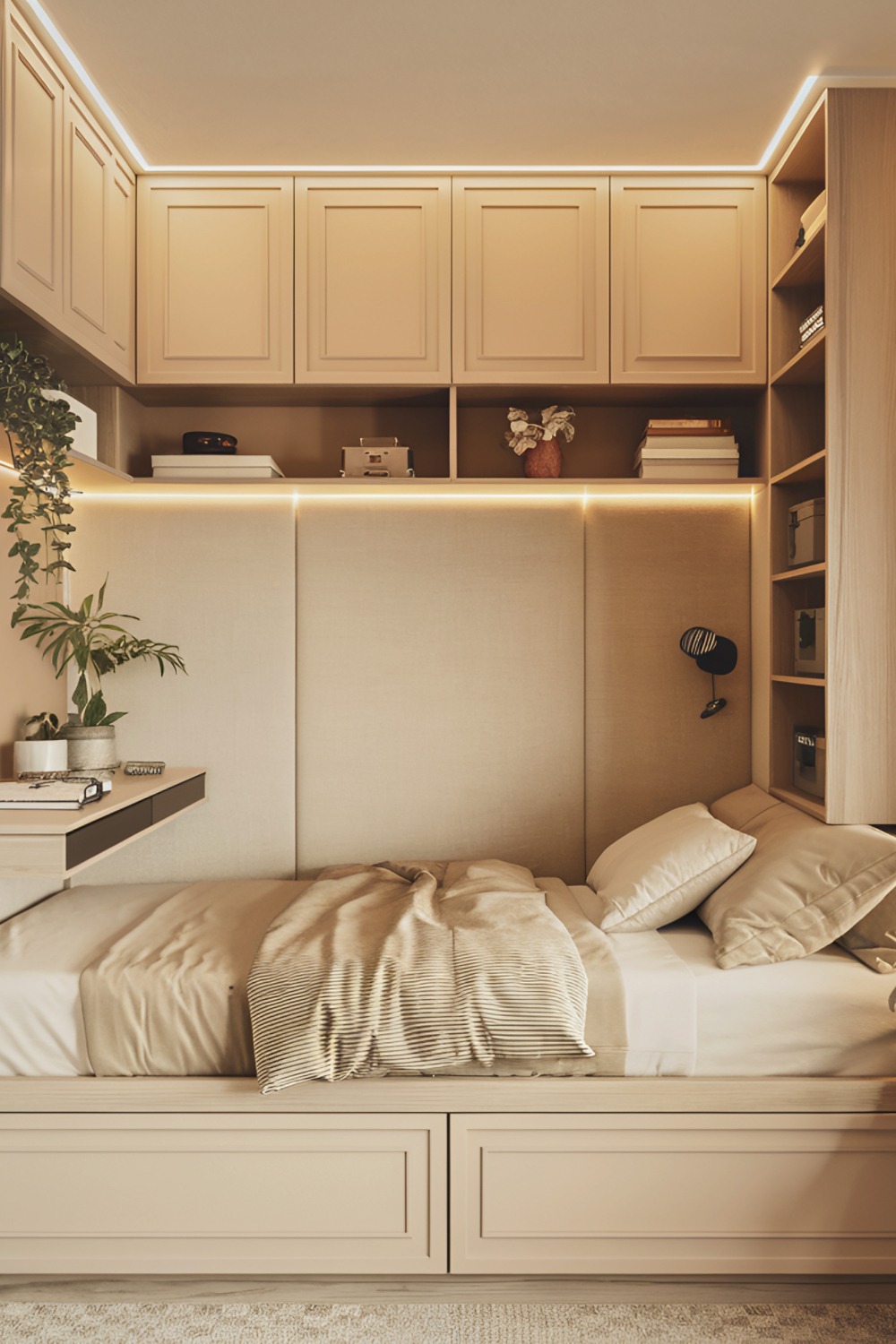
6. Build storage around the bed
In a small bedroom, the bed takes most of the floor, so the space around and under it is where extra storage helps most. A bed with drawers in the base, as in the photo, holds a season of clothes and can replace a dresser. Shelves or wall cabinets above the headboard use height that's otherwise empty. Keep anything above the bed light and securely fixed.
A shallow shelf beside the bed, 6 to 8 inches deep, works as a nightstand without taking floor space. Clip-on bedside shelves that attach to the frame are another option if you can't drill. For more on the space under the bed, see our guide to under-bed storage ideas.
7. Add a second rod to the closet
A standard closet with one rod and one shelf wastes the space below short clothes. Shirts, folded pants and jackets only need about 40 inches of hanging space, so a second rod below the first doubles the hanging length for those items. Hanging closet rod extenders hook onto the top rod and cost $10 to $20, with no tools needed.
Keep one section at full height for dresses and long coats. Slim velvet or felt hangers take less space than plastic ones and stop clothes from sliding off. Clear bins on the top shelf keep off-season clothes visible.
Before adding a second rod, measure your longest short item on its hanger. If your shirts and jackets hang 38 inches, set the lower rod at least 40 inches below the top one, otherwise hems drag on the clothes underneath.
8. Use the back of every door
An over-the-door organizer with clear pockets holds shoes, toiletries or cleaning supplies on a surface that's otherwise empty. They usually cost $15 to $30 and hang on the top of the door with no tools. In the bathroom, one with small pockets holds hair tools and products that would otherwise cover the counter.
Check that the door still closes properly with the hooks in place, and choose an organizer shallow enough not to rub against the frame or a light switch.
9. Make an entry where there isn't one
Many small apartments have a front door that opens straight into the living room. A strip of wall about 2 feet wide is enough for a row of hooks for coats and bags, a narrow shelf above for keys and a slim shoe rack below. Hang coat hooks around 60 to 66 inches from the floor for adults, and a second lower row if there are kids.
A shallow console table or a wall-mounted drop shelf about 8 to 10 inches deep gives you somewhere to put things down without narrowing the walkway. See our apartment entryway ideas for more layouts.
A small tray or bowl on the shelf for keys stops them from scattering, and one hook per person keeps coats from piling up. If shoes are the problem, a rack with two tiers takes the same floor space as one row of shoes and holds twice as many pairs.
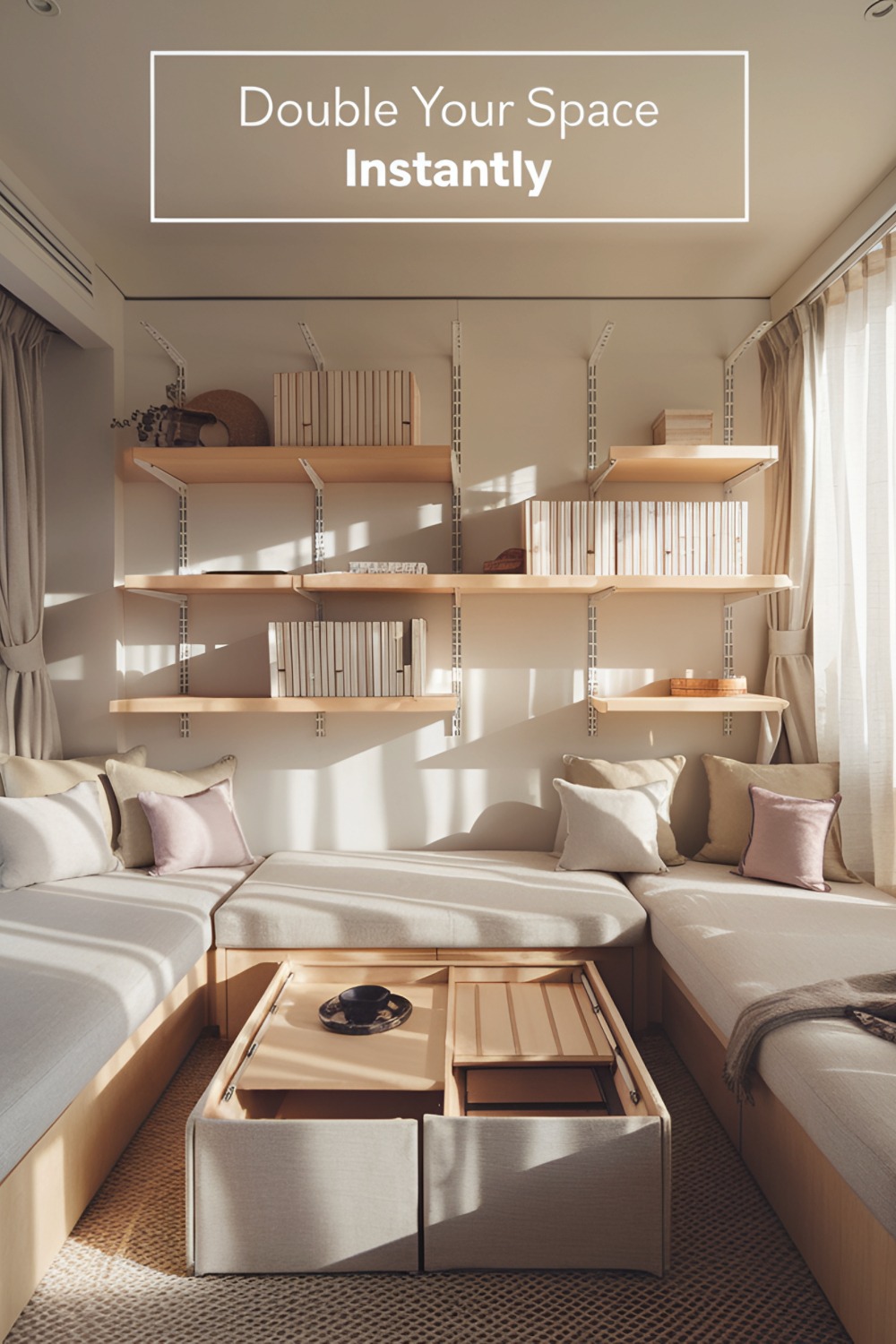
10. Pick living room furniture with storage inside
In a studio, the living room furniture often has to hold half the apartment. A coffee table with a lift-up top or drawers hides remotes, chargers and paperwork. Sofas and corner seating with drawers in the base, like the setup in the photo, hold bedding for guests. A storage ottoman does the same job if you're keeping your sofa.
The wall shelving in the photo is a track system: metal uprights screwed to the wall with brackets that slot in at any height. It's flexible and holds a lot of weight, but it does need several screws into the wall, so ask your landlord first. A tall freestanding bookcase anchored with an anti-tip strap is the renter-friendly alternative.
11. Use hooks, rails and magnetic strips
Small hanging systems free up a surprising amount of drawer and counter space. A magnetic knife strip holds knives on the wall, a rail with S-hooks under a cabinet holds mugs, and a row of hooks in the bedroom can hold bags and tomorrow's outfit.
Removable adhesive hooks work for light things, but check the weight rating on the package and press them on firmly for 30 seconds. They hold best on smooth, painted walls or tile and can peel paint on some finishes, so test one in a hidden spot first.
Think about what's behind a wall before you screw anything into it. Kitchens and bathrooms have pipes, and outlets usually have wiring running straight up and down from them. A cheap stud finder with a wire-detection setting is worth having in any apartment.
If you only try one or two of these, start with the room where clutter bothers you most. For more depth, our guides to vertical storage and pantry organization without a pantry cover the walls and the kitchen in more detail.